Red Hat OpenShift Pipelines 1.21 is now available, improving pipeline performance, security capabilities, and troubleshooting for Kubernetes-native continuous integration and delivery (CI/CD) on Red Hat OpenShift. This release introduces AI-assisted troubleshooting via Red Hat OpenShift Lightspeed and moves Tekton Cache to general availability. It also features several updates designed to enhance pipeline speed, reliability, and ease of use.
This blog post will explore several key highlights of OpenShift Pipelines 1.21.
AI-assisted pipeline troubleshooting with Red Hat OpenShift Lightspeed
OpenShift Pipelines 1.21 integrates with Red Hat OpenShift Lightspeed to enable AI-assisted troubleshooting directly from the OpenShift console.
When a pipeline fails, developers often need to inspect logs and pipeline resources to determine the root cause. Red Hat OpenShift Lightspeed analyzes the context of failed PipelineRun and TaskRun executions and provides AI-generated explanations and remediation guidance based on logs and events. This helps developers quickly understand what went wrong and how to fix it, reducing the time spent manually investigating failures.
The introduction of the command line “opc assist pipelinerun diagnose” also allows users to interact with OpenShift Lightspeed from a terminal.
Explore the interactive demo for more information.
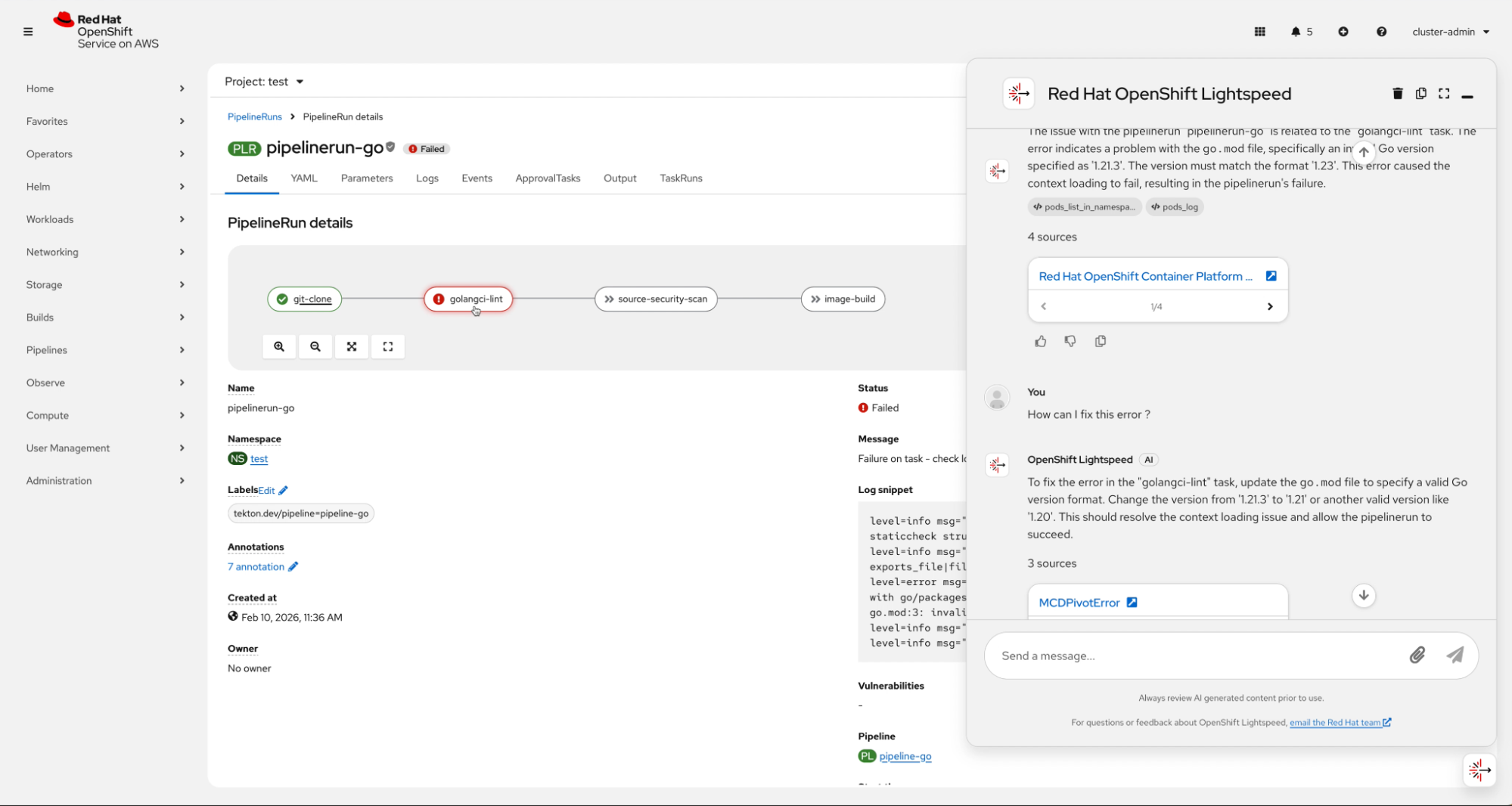
Image 1: Troubleshooting a failed pipeline using OpenShift Lightspeed
Tekton Cache is now generally available
Tekton Cache is generally available with OpenShift Pipelines 1.21, enabling pipelines to reuse dependencies and build artifacts across runs.
By storing cached data in Open Container Initiative (OCI) registries, teams can avoid repeatedly downloading dependencies or rebuilding unchanged artifacts. This capability significantly reduces build times and improves CI efficiency, especially for dependency-heavy workloads such as Maven or Node.js builds.
Resolver caching for faster pipeline execution
This release also introduces resolver caching for bundle, Git, and cluster resolvers.
By caching external tasks and definitions locally, the resolver cache eliminates redundant fetches. This improves pipeline startup performance and enhances reliability, especially in environments that frequently pull tasks from remote repositories.
More control with taskRun timeout overrides
OpenShift Pipelines 1.21 introduces the ability to override timeouts for individual tasks within a pipeline run using the taskRunSpecs[].timeout field.
This allows developers to define different execution limits for specific tasks, providing more control over pipeline behavior and helping prevent long-running tasks from blocking pipeline completion.
Security improvements for pipeline components
Security capabilities are also improved in this release with read-only root filesystems enabled by default for OpenShift Pipelines controller and webhook containers.
This change aligns with Kubernetes security best practices and helps strengthen the overall security posture of the CI/CD platform.
Improvements in Pipelines as Code and console experience
OpenShift Pipelines 1.21 includes several usability improvements across Pipelines as Code and the Red Hat OpenShift console.
Enhancements improve Git provider workflows, CI status reporting, and the reliability of pipeline views in the console, making it easier for developers to track pipeline execution and results.
Conclusion
OpenShift Pipelines 1.21 focuses on accelerating CI/CD pipelines, increasing reliability, and simplifying troubleshooting.
With the introduction of Red Hat OpenShift Lightspeed for AI-assisted troubleshooting and the general availability of Tekton Cache, OpenShift Pipelines 1.21 prioritizes operational excellence. These updates, alongside improved security capabilities and usability, help teams resolve issues faster and keep delivery pipelines running smoothly.
For more information, explore the full OpenShift Pipelines 1.21 release notes.



