
With the release of Red Hat OpenShift 4.2, developers have a lot to be excited about. New developer-facing tools and enhancements in Red Hat OpenShift 4.2 help improve the developer experience, allowing developers to be more productive.
Developer Perspective in the Web Console
The addition of the new Developer Perspective aims to give developers an optimized experience in the web console with the features and workflows they’re most likely to need to be productive. Developers can focus on higher level abstractions like their application and components, and then drill down deeper to get to the OpenShift and Kubernetes resources that make up their application, if desired.
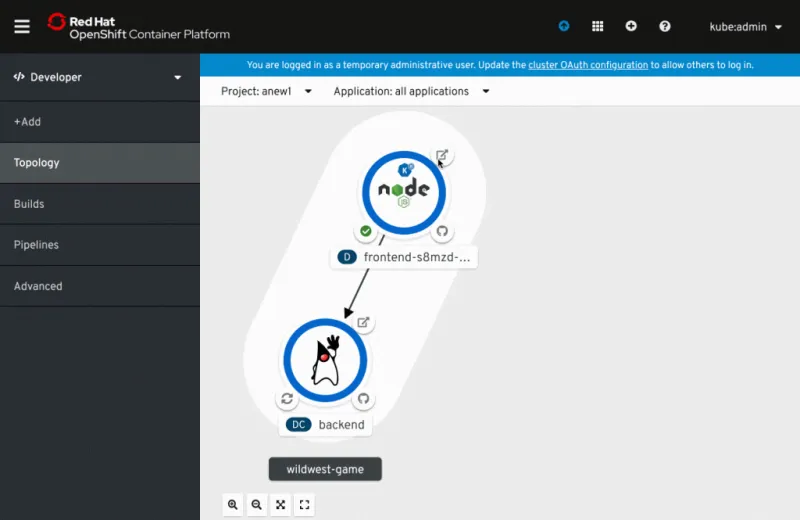
An interactive Topology view makes it easier for developers to deploy and visualize their applications, and provides quick access to important features such as pod and build logs.
 The Developer Perspective has several built-in ways to streamline the process of deploying applications, services and databases. There are options to build and deploy from code in a git repository, to deploy a container image, to deploy from the developer catalog, or from a Dockerfile or YAML/JSON definitions. In addition, you can easily deploy databases for your application to use.
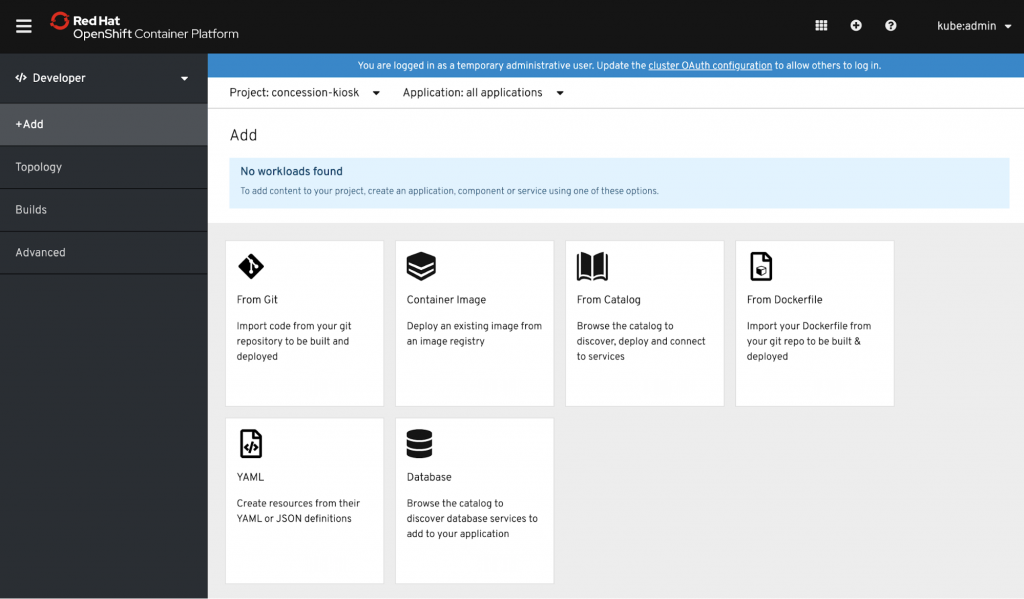
Clicking on most of these options will give you a wizard-style experience that prompts you for the necessary information.
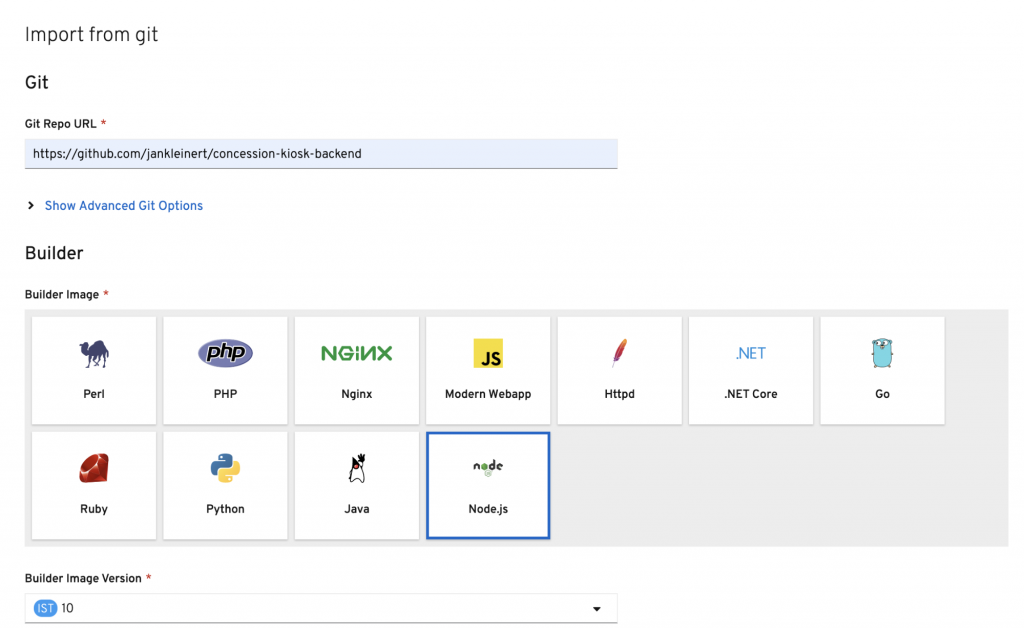
Learn more about the Developer Perspective in this blog post and video.
odo: A Developer-focused Command Line Interface
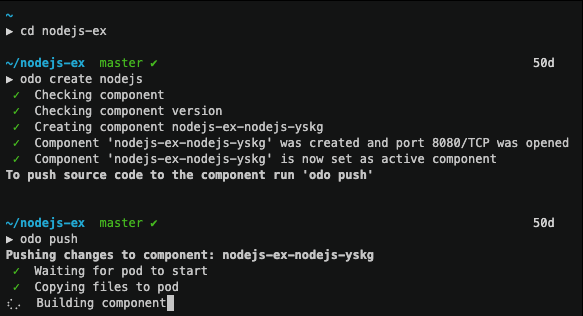
odo is a developer-focused CLI that helps users write, deploy and test source code faster with OpenShift. Using a few CLI commands and a “git push” style interaction, developers can turn their source code into a running container on OpenShift.
In addition to working with source code changes, odo allows developers to manage other aspects of their deployed source code, such as creating a url for the application, linking a deployed application component to other application components deployed on OpenShift, viewing logs of deployed applications and more. odo helps developers focus on the source code they are writing for applications, rather than all the details of deploying that application component on Kubernetes.
Learn more about odo here.
Red Hat CodeReady Containers
Red Hat CodeReady Containers brings developers the ability to install a pre-built OpenShift environment locally on a laptop or desktop. CodeReady Containers enables local development for OpenShift and helps developers get started with OpenShift quickly and easily.
Learn more about CodeReady Containers in this blog post and video.
Red Hat OpenShift Connector for Microsoft Visual Studio Code, JetBrains IDE (including IntelliJ) and Eclipse Desktop IDE
The Red Hat OpenShift Connector allows developers who work with Red Hat OpenShift to use their preferred development environment without interruption. The extension provides a quick, simple way for developers to work their “inner loop” process of coding, building and testing directly, using their IDE.

Red Hat OpenShift Deployment Extension for Microsoft Azure DevOps
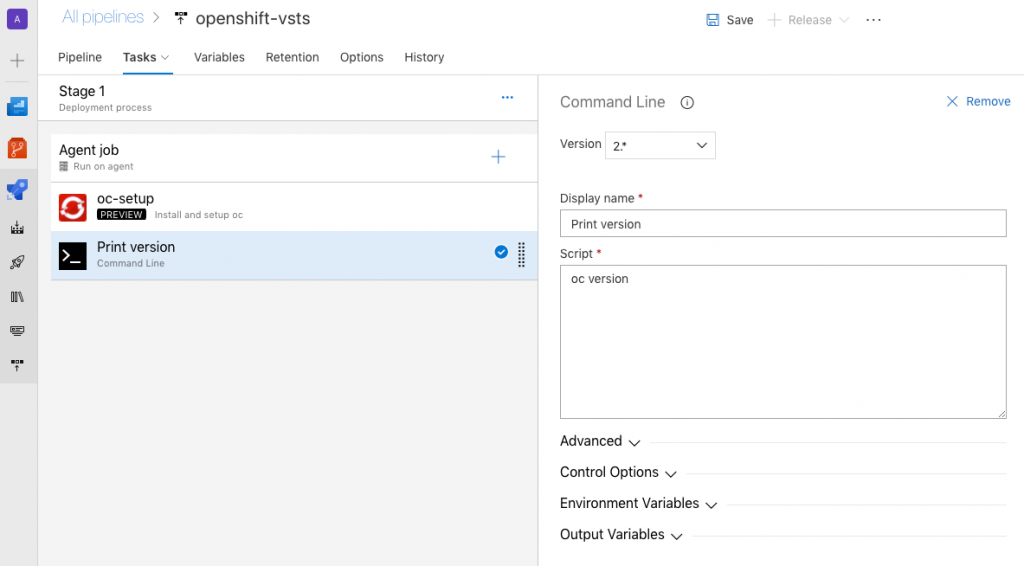
Users of this DevOps toolchain can now deploy their built applications to Azure Red Hat OpenShift, or any other OpenShift cluster directly from Microsoft Azure DevOps. This extension can be downloaded here.
Start Developing on OpenShift 4.2
Developers can access Red Hat developer tools and resources for OpenShift 4.2 along with code repositories, videos and articles at https://developers.redhat.com/openshift/. To get started with OpenShift 4.2 today, go to https://try.openshift.com.
关于作者
Red Hatter since 2018, technology historian and founder of The Museum of Art and Digital Entertainment. Two decades of journalism mixed with technology expertise, storytelling and oodles of computing experience from inception to ewaste recycling. I have taught or had my work used in classes at USF, SFSU, AAU, UC Law Hastings and Harvard Law.
I have worked with the EFF, Stanford, MIT, and Archive.org to brief the US Copyright Office and change US copyright law. We won multiple exemptions to the DMCA, accepted and implemented by the Librarian of Congress. My writings have appeared in Wired, Bloomberg, Make Magazine, SD Times, The Austin American Statesman, The Atlanta Journal Constitution and many other outlets.
I have been written about by the Wall Street Journal, The Washington Post, Wired and The Atlantic. I have been called "The Gertrude Stein of Video Games," an honor I accept, as I live less than a mile from her childhood home in Oakland, CA. I was project lead on the first successful institutional preservation and rebooting of the first massively multiplayer game, Habitat, for the C64, from 1986: https://neohabitat.org . I've consulted and collaborated with the NY MOMA, the Oakland Museum of California, Cisco, Semtech, Twilio, Game Developers Conference, NGNX, the Anti-Defamation League, the Library of Congress and the Oakland Public Library System on projects, contracts, and exhibitions.


