
Red Hat Ansible Automation Platform 2.1 introduced automation execution environments, which is a new way to package automation into a container runtime environment. In addition, private automation hub also joined the party by adding significant support for execution environments.
Let's dive into those features:
Feature 1 - The registry
Private automation hub now ships with the pulp container registry. This means it can store and serve up container images.
We only support the Ansible private automation hub registry serving execution environment images.
Feature 2 - Remote registries
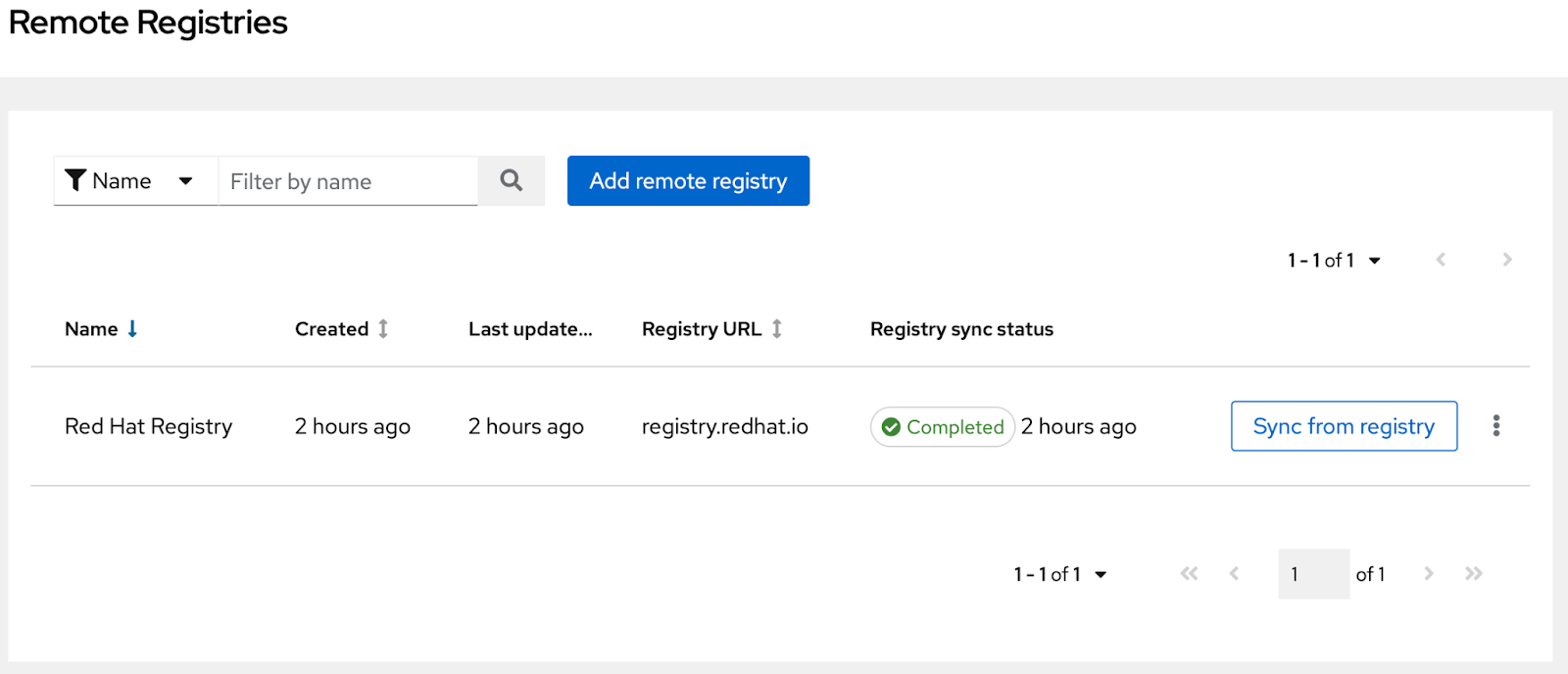
The Ansible private automation hub user interface allows the administrator to define remote registries. This allows for the registry to mirror container images from their source. A good example of remote registries is adding the base execution environment images available at Red Hat.
To access the Red Hat registry, visit registry.redhat.io and use the same username and password that you use for access.redhat.com.
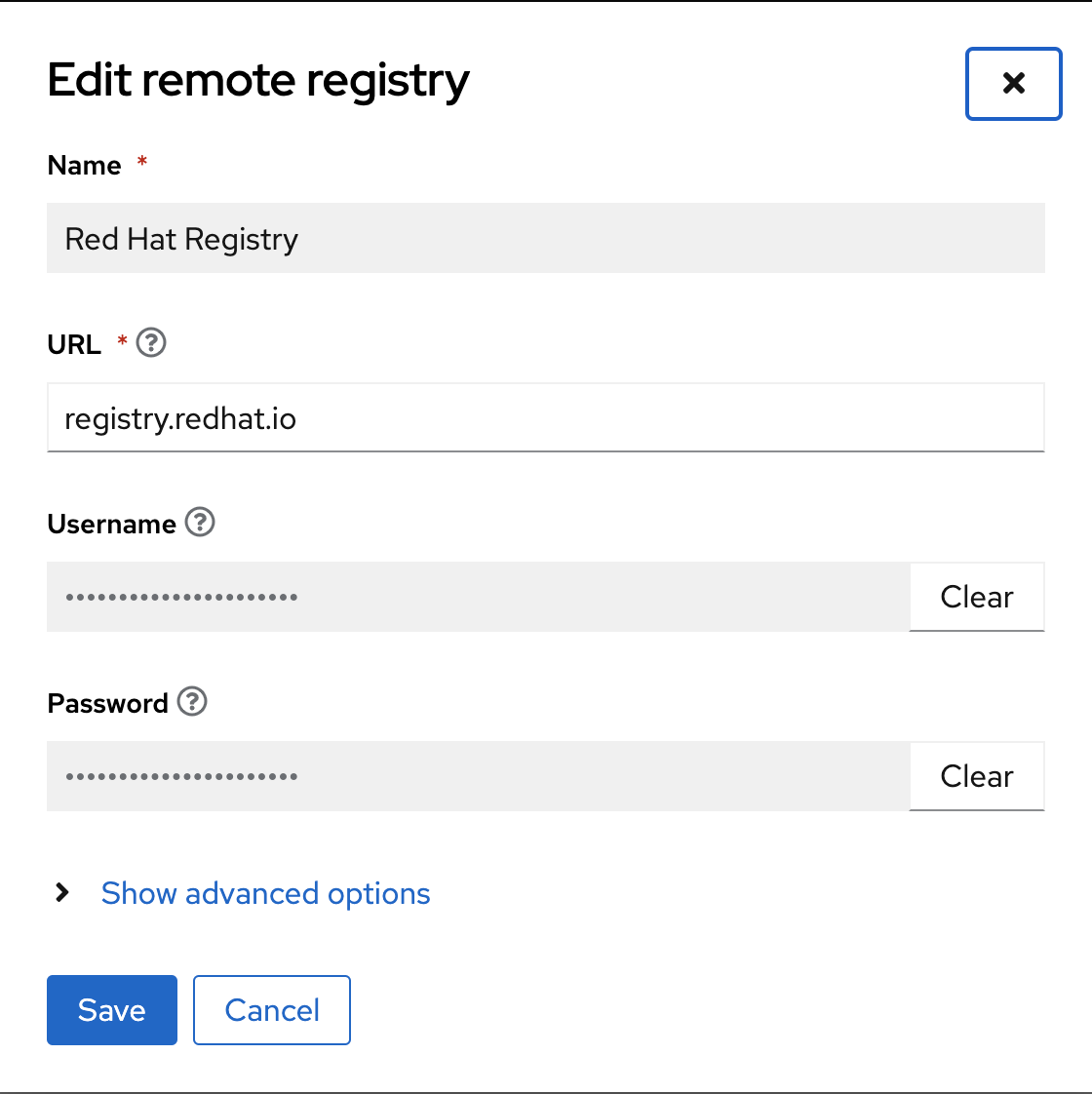
Upon adding the registry, you will see a new remote registry definition.
Feature 3 - Indexing a remote registry
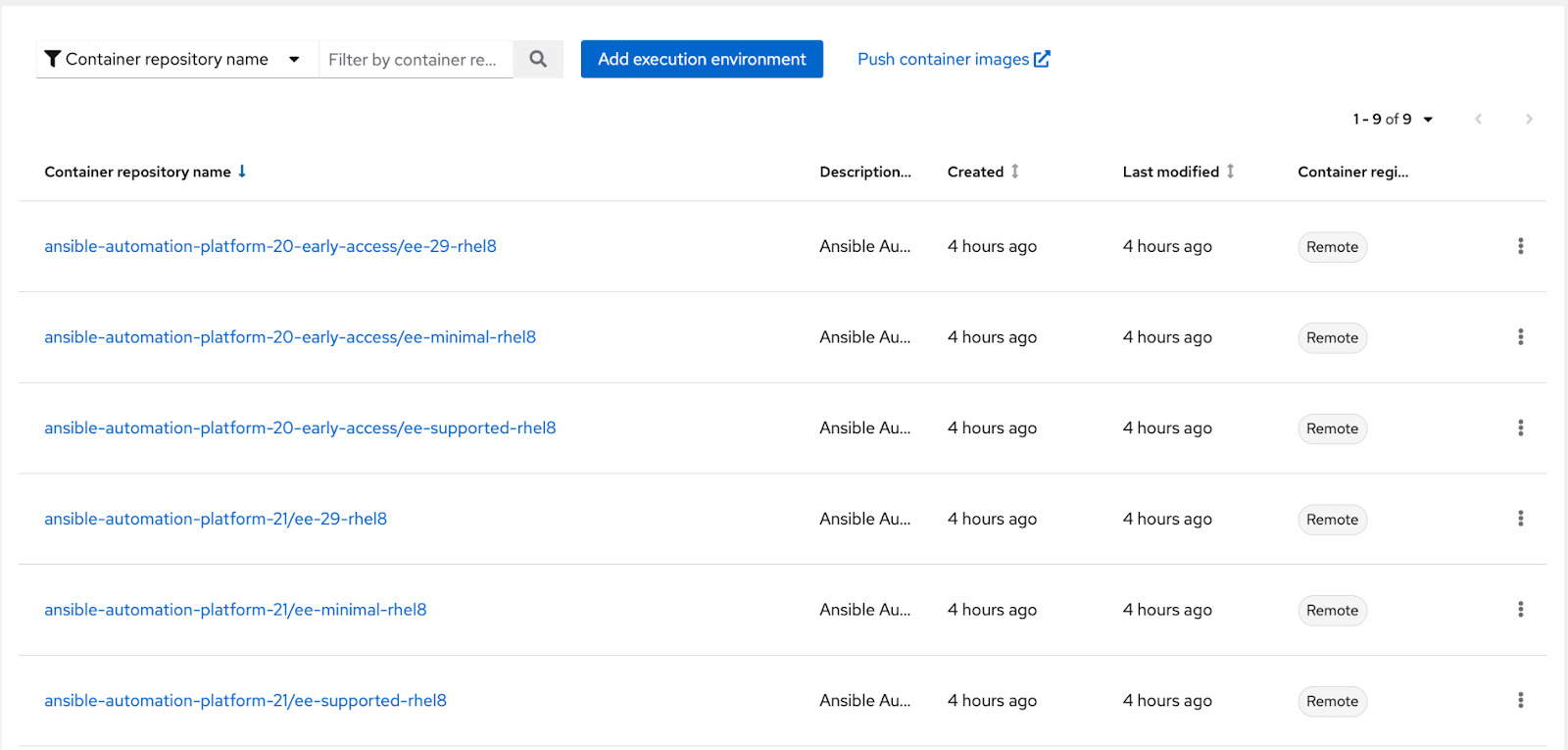
This capability is available after you have added a remote registry as per Feature 2; click the menu on the registry and select “Index Registry”. It will enumerate the remote registry for any execution environment images, and it does this by filtering on any image that matches build_categories=”Automation Execution Environment”. Any images that match are automatically added as execution environments as shown here:
Feature 4 - Mirrored container images
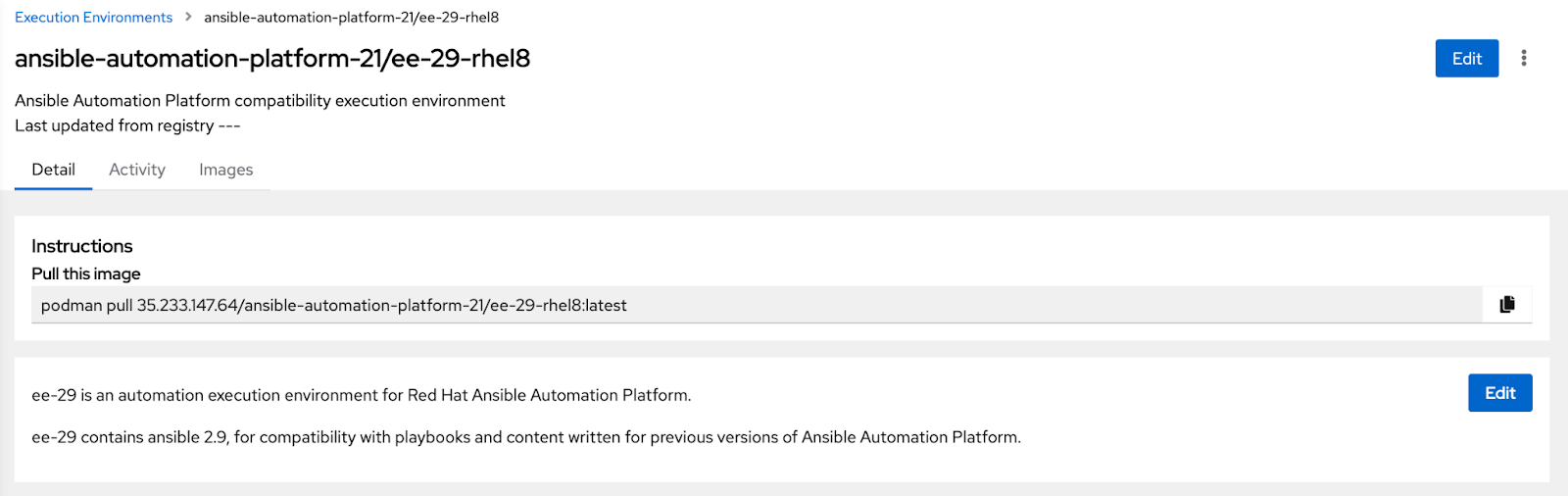
When you have either manually added a remote execution environment container image or had them automatically created for you through indexing (as in Feature 3), these images are mirrored to your private automation hub. This means you can set your automation controller to pull from your private automation hub rather than over the internet to the remote source. Images that are mirrored also include their metadata and coming soon as technical preview the image signatures will also be mirrored. This is shown here with the ee-29-rhel8 base image that was indexed in registry.redhat.io remote registry.
Feature 5 - Audit trail
Something for the security folks is an audit trail of changes to an execution environment image. This includes pushes, sha changes and tags.

Feature 6 - Image pull instructions
The private automation hub user interface displays the instructions on how to download the execution environment container image using the command line, the same as it does for Collections. This is a good example of continuity between Collections and container images.
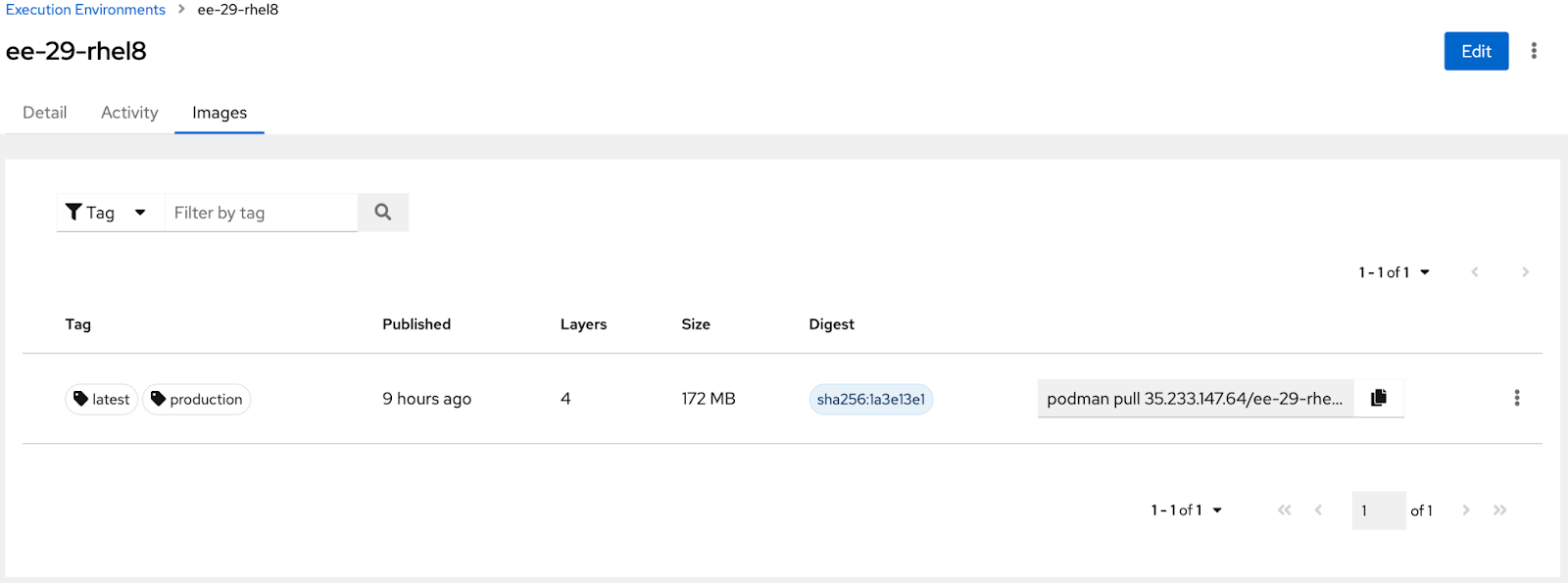
Feature 7 - Use in controller
This feature enhances the user experience for managing execution environment images in the platform. In summary, you can select “use in controller” and it will display the following modal:
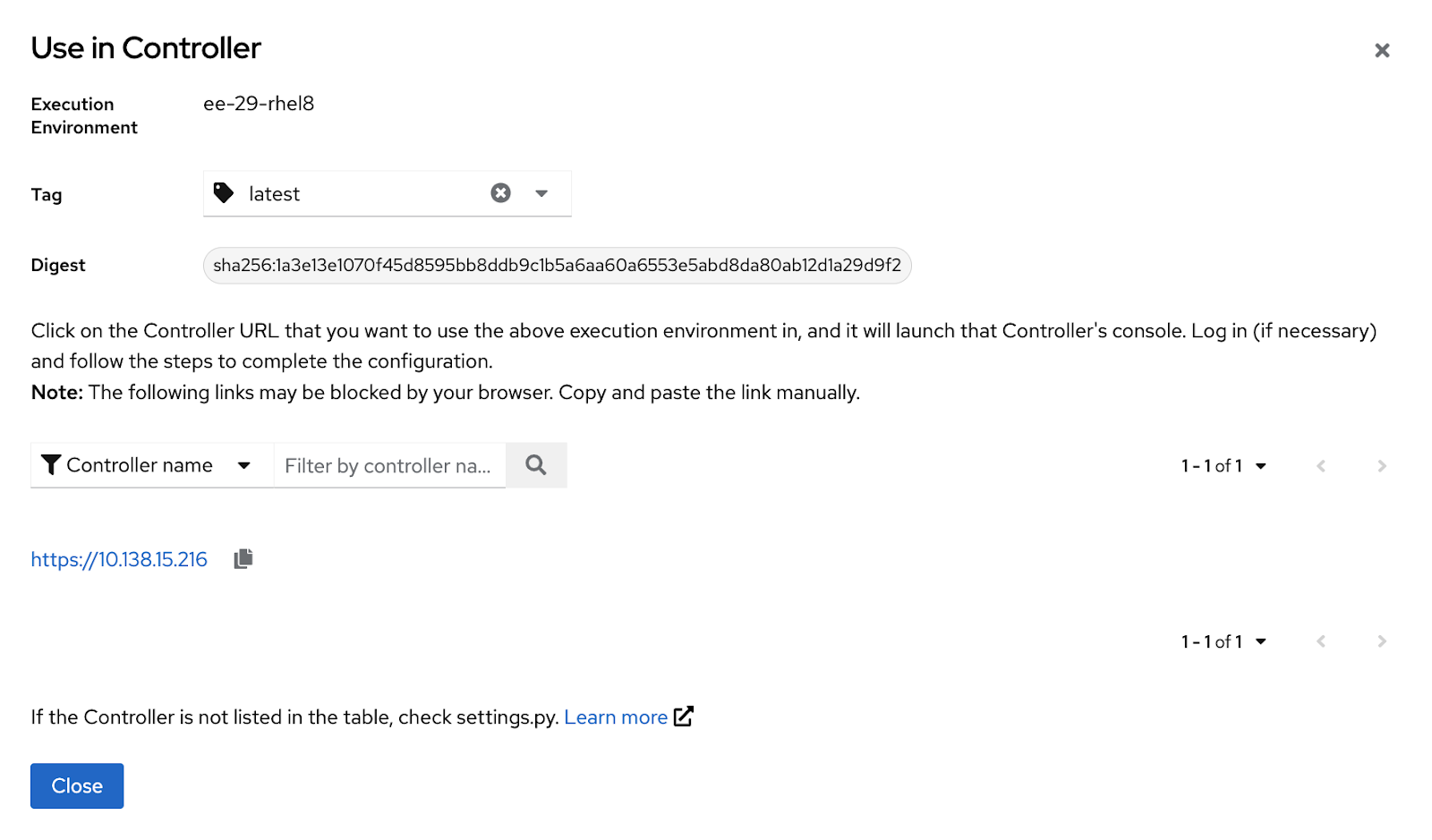
This will create an execution environment in the automation controller pointing to the container image in private automation hub with all the correct references for sha, tag, repo and URL.
Feature 8 - Role based access integration
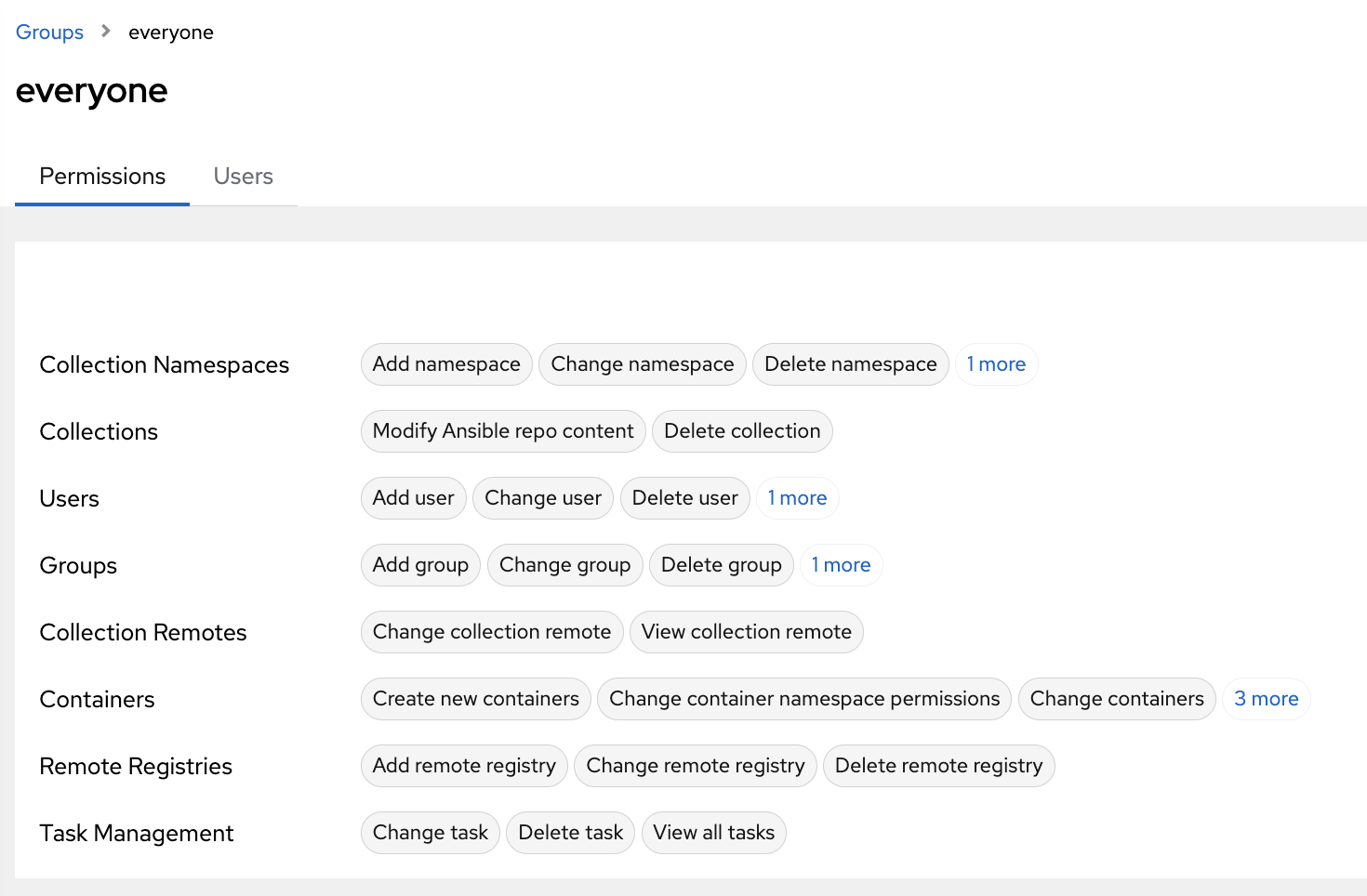
Lastly, the RBAC service in private automation hub has been updated to support the container registry constructs. You can control remote registries and containers to a granular level with your users and groups.
Conclusion
Ansible private automation hub's first release with a built-in container registry for execution environments enhances the user experience for better adoption of execution environments. There is more on the roadmap to , such as container image introspection and building execution environment images in Ansible private automation hub. For now, be on the lookout for new features that enable the signing of Collections and container images. This will allow execution environment builder to create images using signed content through verifying the signature of the base image being pulled in for the execution environment builder session, then outputting a container image that is also signed and can be stored in the Ansible private automation hub container registry along with its signature.
저자 소개

유사한 검색 결과
과거의 운영 방식에서 벗어나 IT의 미래 구축
MCP 카탈로그: Red Hat OpenShift AI에서의 탐색, 배포 및 연결하기
Collaboration In Product Security | Compiler
Keeping Track Of Vulnerabilities With CVEs | Compiler
채널별 검색

오토메이션
기술, 팀, 인프라를 위한 IT 자동화 최신 동향

인공지능
고객이 어디서나 AI 워크로드를 실행할 수 있도록 지원하는 플랫폼 업데이트

오픈 하이브리드 클라우드
하이브리드 클라우드로 더욱 유연한 미래를 구축하는 방법을 알아보세요

보안
환경과 기술 전반에 걸쳐 리스크를 감소하는 방법에 대한 최신 정보

엣지 컴퓨팅
엣지에서의 운영을 단순화하는 플랫폼 업데이트

인프라
세계적으로 인정받은 기업용 Linux 플랫폼에 대한 최신 정보

애플리케이션
복잡한 애플리케이션에 대한 솔루션 더 보기

가상화
온프레미스와 클라우드 환경에서 워크로드를 유연하게 운영하기 위한 엔터프라이즈 가상화의 미래
