
Toward the Cloud: The Past, The Present & The Future
On April 18th, Augustin Husson (Principal Engineer) and Alban Hurtaud (Observability Architect) from Amadeus IT Group joined Red Hatters at the OpenShift Commons gathering in Amsterdam, a co-located event of KubeCon + CloudNativeCon Europe 2023. The pair spoke about the journey that Amadeus took to become a cloud-native open source-fueled organization. Watch the full recording of the presentation below:
Amadeus is the leading technology company in the travel industry, with more than 690 million passengers boarded in 2020 thanks to Amadeus and Navitaire solutions, and more than 646 million bookings processed and recorded in 2019. Given those numbers, it is no mystery that incident management, powered by Observability, is non-negotiable for Amadeus. Let’s take a look at the company’s journey to the cloud, which we here divide into four different stages:
Stage 1
The journey to the cloud for Amadeus started in 2016. Back then, the organization was heavily reliant on logs and a homegrown observability solution - where metrics and traces were built by computing logs (see figure #1 for reference). Nonetheless, the complexity of the system made it difficult for engineers to install it from scratch.
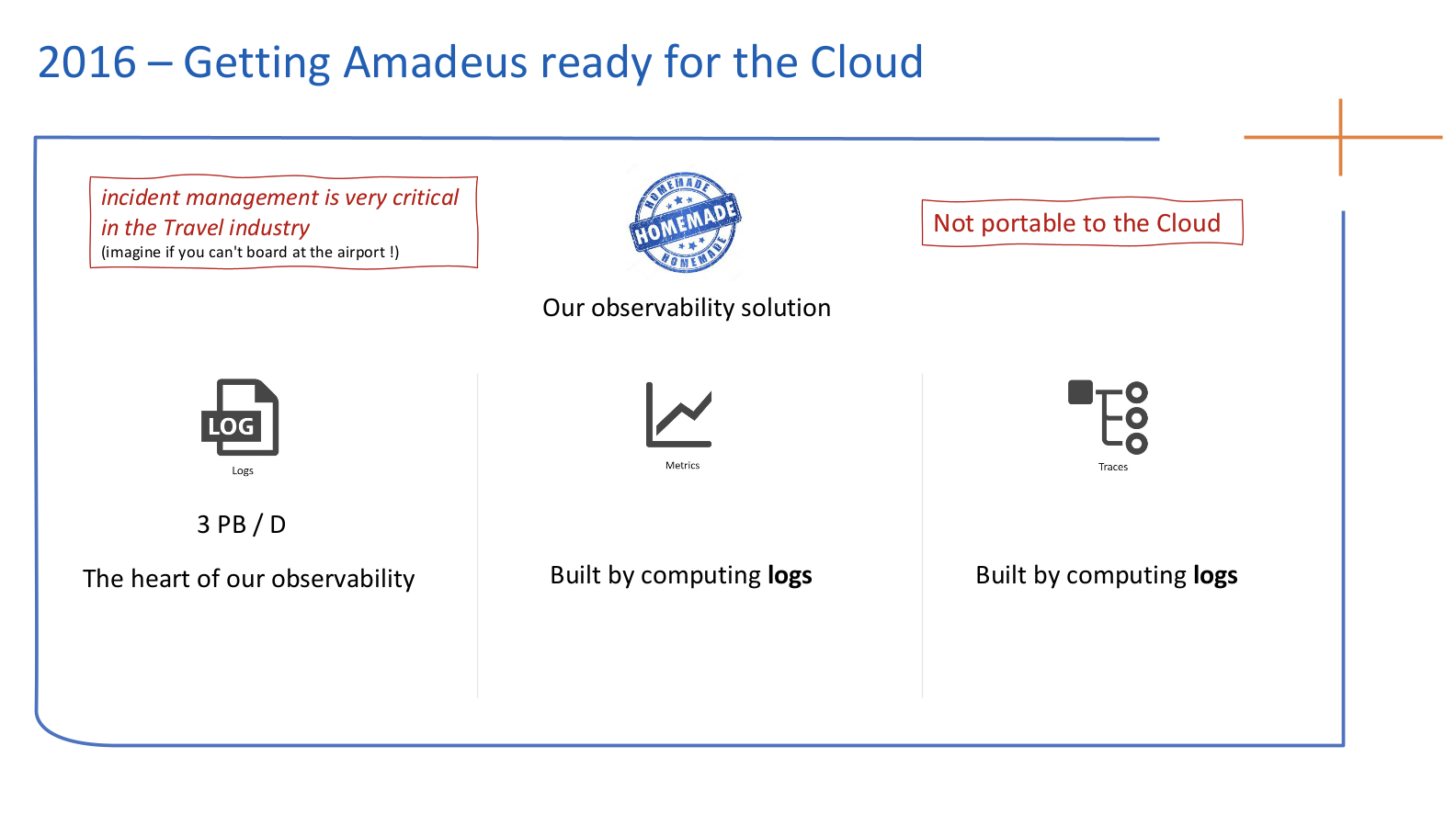
Figure #1
Stage 2
Given the intricacy of the legacy solution (VMs-based) outlined above, Amadeus started to prepare to transition to the cloud. And that is where OpenShift came into play. Everything started by spinning up four OpenShift clusters on-premises (OpenShift 3.5), and deploying Prometheus on top of them. These four data sources were manually added to Grafana for visualization purposes (see figure #2 for reference). Despite those changes, timeseries were exponentially increasing and needed to be better handled. That is when stage #3 started.
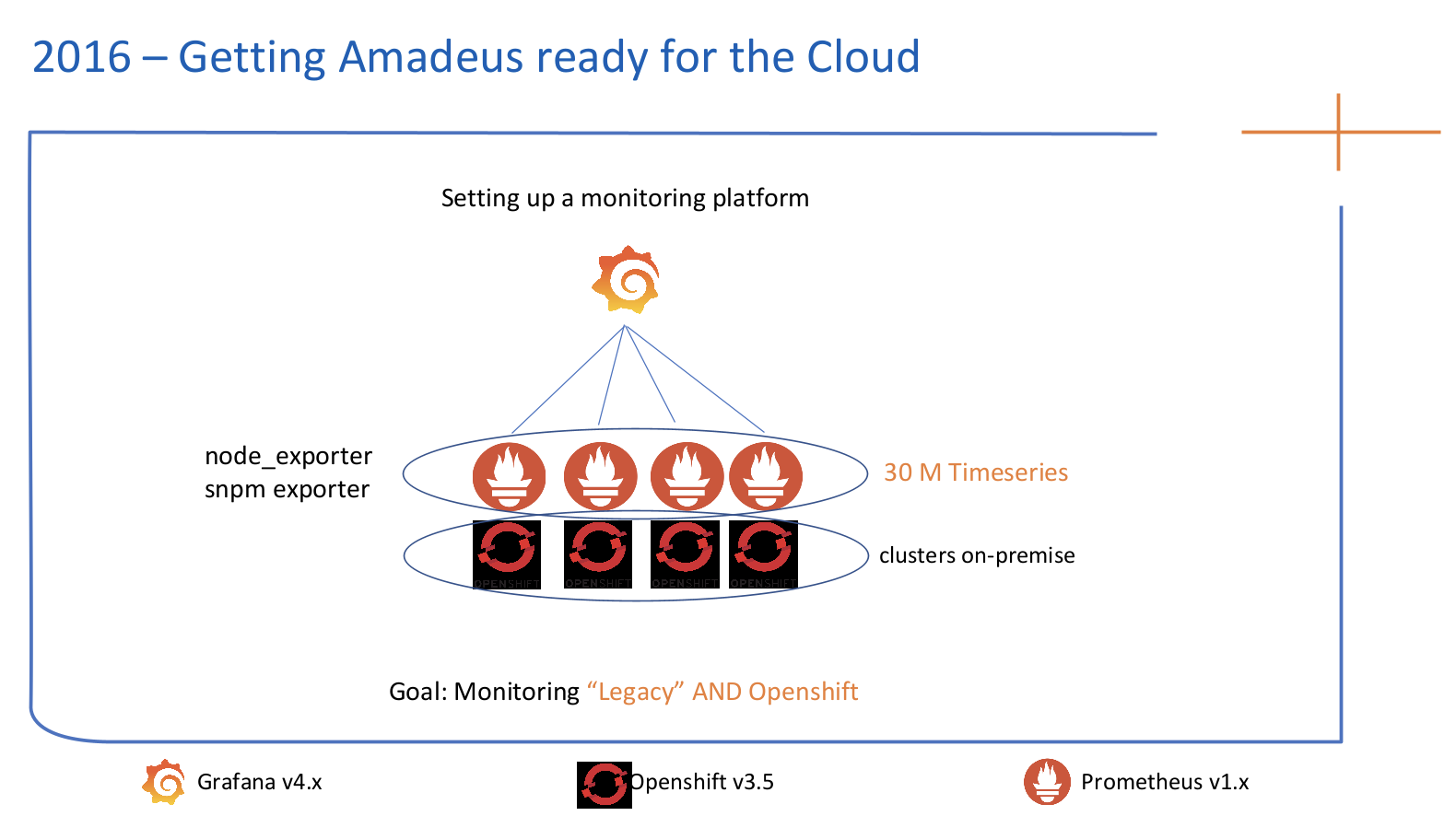
Figure #2
Stage 3
Monitoring Amadeus’ private datacenter and its legacy workload also became a must for the team, in order to compare the response time of applications running in the cloud and the one of applications running on the legacy VMs. In 2019, thanks to Thanos being introduced on top of Prometheus, Amadeus was able to achieve one single data source, managing 300 million timeseries (see figure #3 for reference).

Figure #3
Stage 4
In 2021, thanks to the flexibility and automated installations provided by OpenShift v.4.0, Amadeus could deploy 70 OpenShift clusters on Azure public cloud, and 10 on-premises.To manage all these clusters, Amadeus uses an operator that triggers the installation of OpenShift clusters, its Azure subscription, and internal middleware - required to deploy the actual applications. OpenShift 4.0 truly became an enabler, as it has allowed the organization to run applications everywhere: on public clouds, but also on a self-managed basis (in this case on-premises) - empowering Amadeus to handle more than 1 billion timeseries events. To recap, with the goal of developing and scaling its applications more efficiently, everything as code and automation everywhere have become the motto of Amadeus IT Group (see figure #4 for reference).
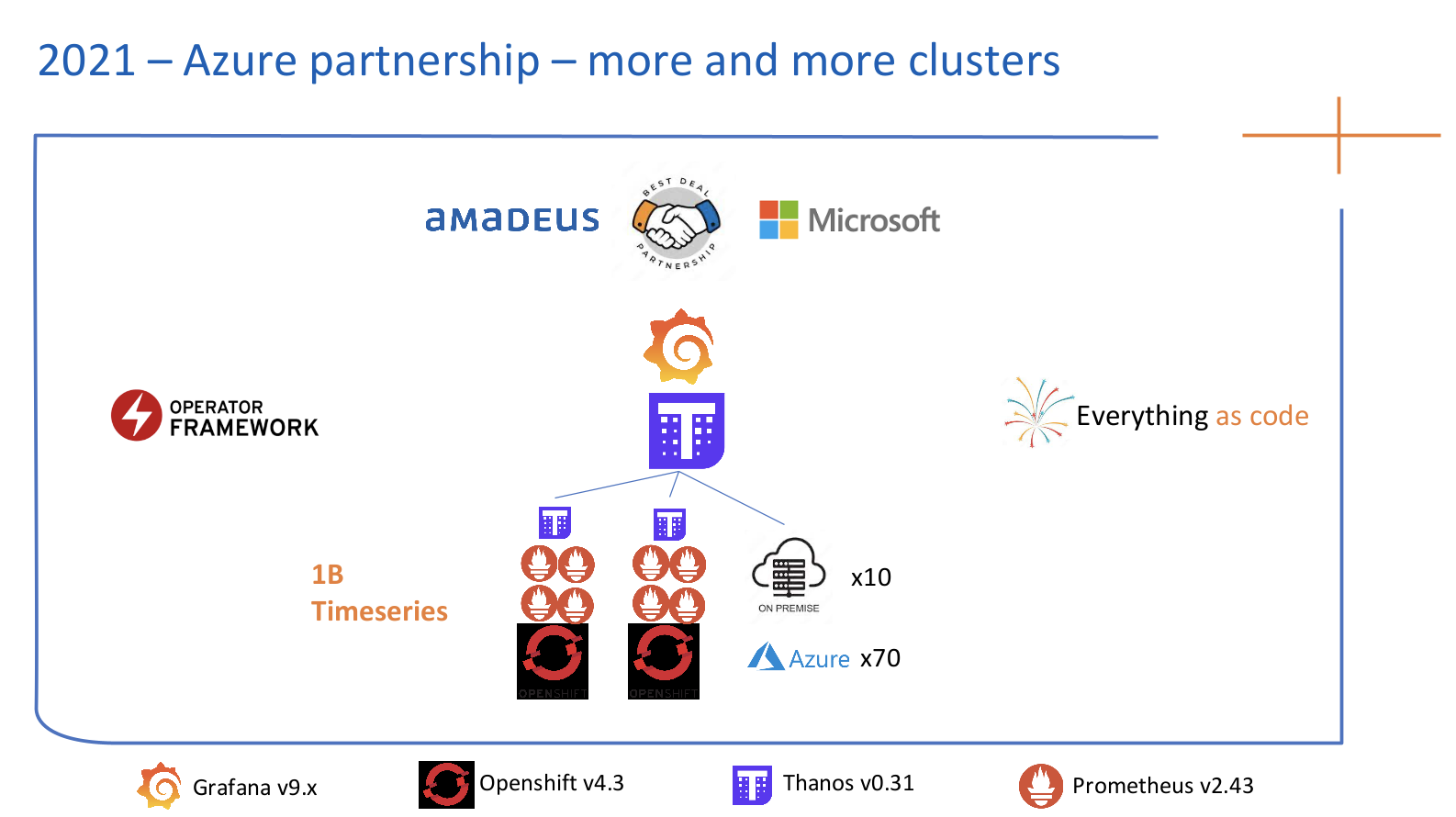
Figure #4
Working on a Single-Pane of Glass: An Open Source Alternative
Visualization is an essential part of any Observability experience. Grafana is traditionally being used as the standard visualization tool for Observability signals. However, despite the multiple backends currently available in the CNCF landscape, displaying Observability data is a piece of the puzzle currently missing. Amadeus, together with Chronosphere, have been working on Perses with the goal of open sourcing a single Observability visualization experience that can consume a variety of different data sources (traces, logs, and metrics). Perses wants to fill the current gap, being GitOps compatible, thus enabling dashboards as code and allowing users to embed charts and dashboards in any UI (see figure #5 and #6 for reference).
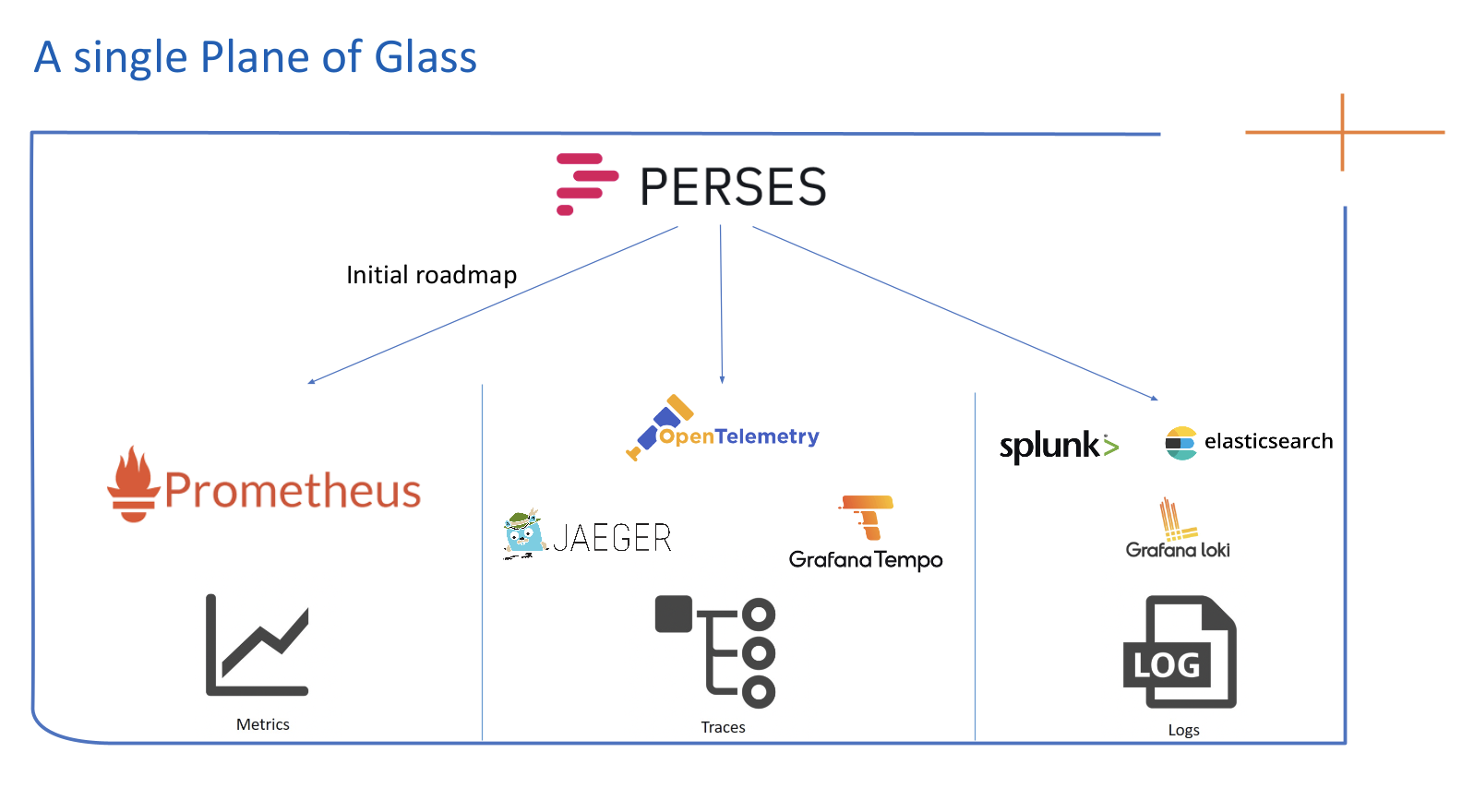
Figure #5
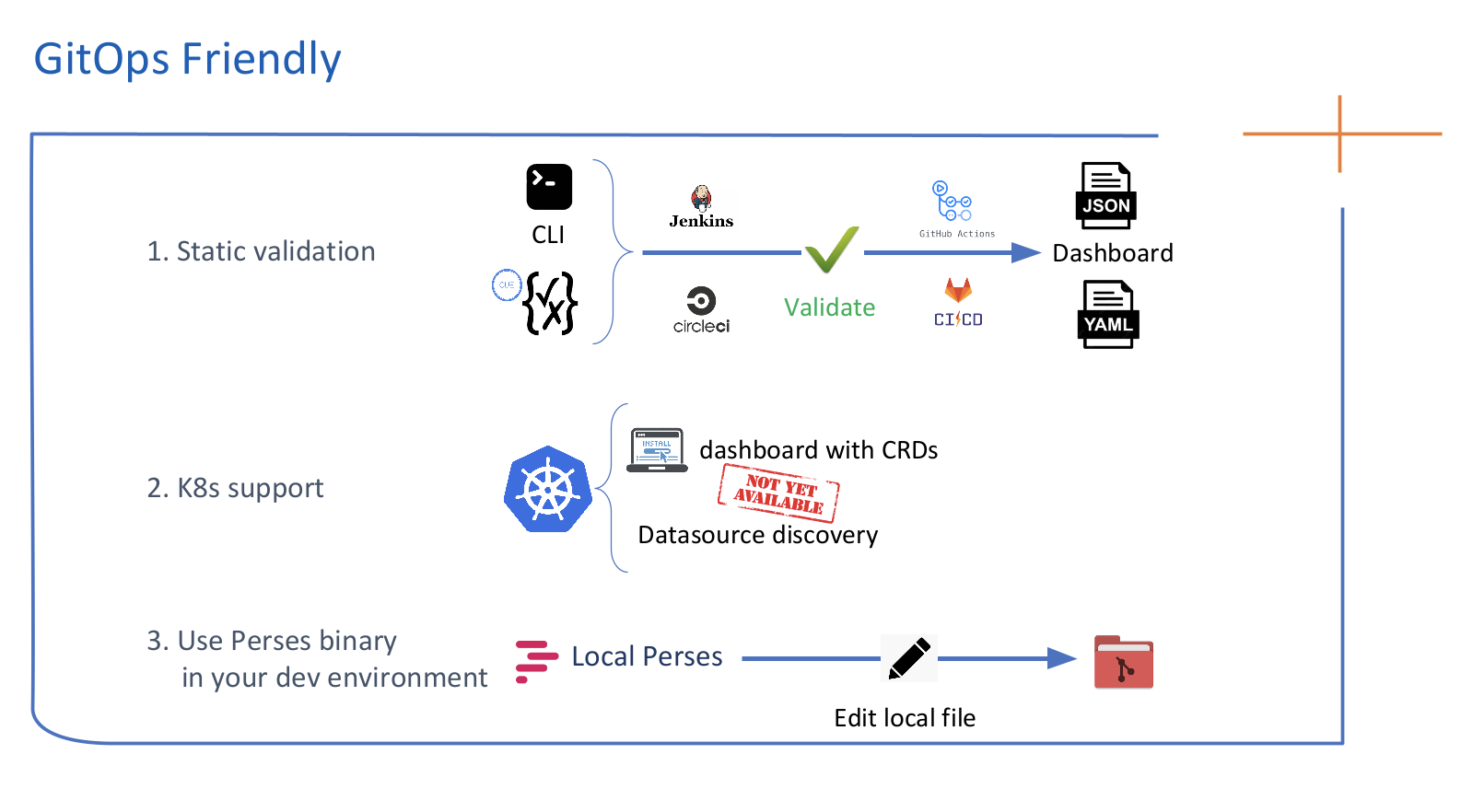
Figure #6
Takeaways
Amadeus is a big player in the Observability space, largely adopting open source. Integrating with OpenShift has given Amadeus the flexibility it needs to run and scale its applications everywhere, efficiently managing its workloads. Nonetheless, Observability can benefit everyone. That is why the collaboration between Red Hat and Amadeus does not stop with OpenShift, as it intensifies with Observability-related projects. Stay tuned to learn more about how the OpenShift Web Console>Observe section could benefit from adopting Perses.
저자 소개
Vanessa is a Senior Product Manager in the Observability group at Red Hat, focusing on both OpenShift Analytics and Observability UI. She is particularly interested in turning observability signals into answers. She loves to combine her passions: data and languages.
유사한 검색 결과
Red Hat Ansible 올스타: 네트워크 및 인프라 자동화의 미래를 주도합니다
글로벌 선도 기업들이 AI에 대한 비전을 비즈니스 가치로 실현하는 방법
Crack the Cloud_Open | Command Line Heroes
Edge computing covered and diced | Technically Speaking
채널별 검색

오토메이션
기술, 팀, 인프라를 위한 IT 자동화 최신 동향

인공지능
고객이 어디서나 AI 워크로드를 실행할 수 있도록 지원하는 플랫폼 업데이트

오픈 하이브리드 클라우드
하이브리드 클라우드로 더욱 유연한 미래를 구축하는 방법을 알아보세요

보안
환경과 기술 전반에 걸쳐 리스크를 감소하는 방법에 대한 최신 정보

엣지 컴퓨팅
엣지에서의 운영을 단순화하는 플랫폼 업데이트

인프라
세계적으로 인정받은 기업용 Linux 플랫폼에 대한 최신 정보

애플리케이션
복잡한 애플리케이션에 대한 솔루션 더 보기

가상화
온프레미스와 클라우드 환경에서 워크로드를 유연하게 운영하기 위한 엔터프라이즈 가상화의 미래
