
Enterprise architecture is, by nature, extensive and complex. As complexity grows, so do the circumstances that can increase single-point-of-failure situations. When you put mobile computing into the mix, things become even more complicated. Resources that we take for granted can vanish in a minute. All it takes is one tornado to disable cell service for an entire community. Thus, when designing large-scale enterprise systems, it's up to enterprise architects to ensure their systems are resilient in the face of such a disaster. This is particularly true for systems with mobile capabilities.
It's not easy.
There are few experiences in enterprise architecture more upsetting than investing large amounts of time and money in your software designs for redundancies and backups only to have your application go offline due to a malfunction at a single physical point of failure.
Avoiding single points of failure
As much as we'd like to think that software can solve just about any IT problem, there are risks inherent in enterprise architecture that need to be addressed physically. This is particularly apparent in mobile architecture. For all the wizardry that goes into the everyday world of mobile networking, one of the riskiest aspects of mobile computing is the dependency of mobile devices on cell towers. In the absence of a custom WiFi connection, if your cellphone can't contact a cell tower, there is no communication to be had. The opportunity for failure is that simple. The effects can be devastating, especially if the need for a connection is mission critical, such as a firefighter trying to use a mobile device to send video information about an ongoing disaster back to a control center.
[ Are you getting the support you need? You might also be interested in reading How to make the case for automation architecture: 5 ways to win investment. ]
Fortunately, those in charge of keeping mobile networks up and running understand that the possibility of cell tower failure is real. Therefore, they've created plans and technologies to address the problem. An essential part of their disaster recovery plans are mobile cell sites known as cell on wheels (COW) and cell on light truck (COLT).
They're the workhorses of mobile disaster recovery, no pun intended. Allow me to elaborate.
Restoring communication using COWs and COLTs
In a disaster situation—when a cell tower goes down due to catastrophe—its capability needs to be restored immediately. You cannot use software solutions to correct the problem. The fix is physical. This is where COWs and COLTS come into play.
A COW is a cell tower and radio network controller (the brains behind the cell tower) that are transported about on a flatbed trailer by truck.
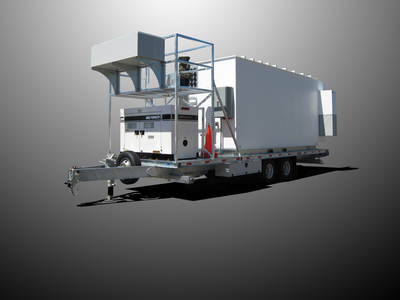
In addition to its wireless communication apparatus, a COW travels with a dedicated power generator. This makes the COW useful for restoring cell service in an affected area and providing new cell service on an ad hoc basis in disaster areas that need cellular communication—for example, firefighters battling a blaze in a remote location.
A COLT is similar to a COW in that it has the ability to provide cell service using its own power generator. But, unlike a COW, which requires a truck to haul the cellular equipment, a COLT is built right on top of a vehicle. You simply drive it where it needs to go.
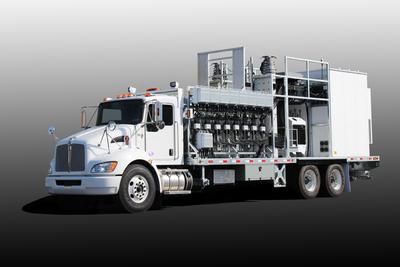
COWs and COLTs are not cheap. According to Scott Tynan, special project manager at Sun West Engineering, a COLT's cost can run into seven figures. While expensive, this is not out of line with the amount of money that major telecommunication companies incur within their cost of doing business. In fact, most COWs and COLTs are purchased by telecommunication companies. This leads into a conversation about the relationship between COWs, COLTs, and carrier networks.
Connecting to the network is key
There's more to getting a COW or COLT up and running than simply driving it to a disaster area, raising the cell tower, and firing up the power generators. The equipment has to connect to a carrier network. The question is, how?
Typically, a cell tower connects back to the core network using a wire. But, when you're in the middle of nowhere battling a wildfire, there are no wires to be had. So, instead of relying on a wired connection, the COW or COLT connects to the core network through a satellite uplink or by transmitting microwaves to another facility miles away.
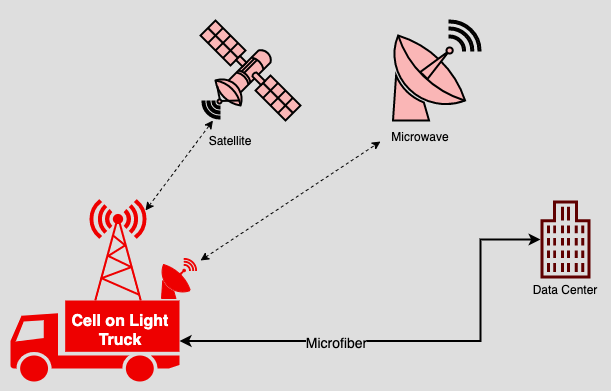
However, if a physical wire is available, the COW and COLT can use it to connect back to the carrier network.
As alluded to previously, COWs and COLTs are dedicated to particular carriers. AT&T has its own fleet of COWs and COLTs, as do Verizon and T-Mobile. They're baked into their disaster recovery plans.
They call it the Animal Farm
Transportable equipment for wireless networks has become so common in the world of mobile telecommunications that the industry has come up with terms of endearment for them. They're called the Animal Farm. There are COWs (cell on wheels), COLTs (cell on light truck), CROWs (cellular repeater on wheels), and GOATs (generator on a trailer).
Predicting the probability of catastrophe
From an architecture perspective, it's essential to have hardware that can restore service during a disruption of service on a wireless network. But that hardware isn't worth much if it's not available for use. In other words, a COLT in Boston is useless when service is needed in a flooded disaster area in Iowa.
While it's true that a natural disaster can be a surprise, disasters are also predictable. As such, the major carriers make weather forecasting a vital part of their disaster recovery planning.
The carriers use weather forecasting to ensure the necessary equipment is available to address the potential of seasonal disasters. They have programs and run drills in preparation for the eventuality. And all the major carriers have comprehensive disaster recovery plans. In addition, many carriers have specific programs focused on national and international disaster recovery. AT&T has FirstNet. Verizon has Disaster Recovery Services Business Continuity and Disaster Recovery.
[ Free eBook: Manage your Linux environment for success ]
Putting it all together
Enterprise architecture is more than defining application logic and managing data. All physical, virtual, and logical parts of an architecture need to be considered and protected. The scope of concern can be broad, including everything from making sure data centers have the electricity they need to meet their operational demands to ensuring that the container images customers use with their Kubernetes clusters are safe to run. If your architecture has a mobile component, this means you need policies and procedures in place to mitigate the risk of loss of service due to catastrophic events.
Understanding the role that equipment such as COWs and COLTs plays in disaster recovery is an integral part of an enterprise architect's work. COWs and COLTs are more than trailers and trucks that provide cell service. For an enterprise architect faced with a natural disaster, understanding what they are and how they're used in a catastrophic situation can make all the difference in the world when it comes to protecting property and saving lives.
저자 소개
Bob Reselman is a nationally known software developer, system architect, industry analyst, and technical writer/journalist. Over a career that spans 30 years, Bob has worked for companies such as Gateway, Cap Gemini, The Los Angeles Weekly, Edmunds.com and the Academy of Recording Arts and Sciences, to name a few. He has held roles with significant responsibility, including but not limited to, Platform Architect (Consumer) at Gateway, Principal Consultant with Cap Gemini and CTO at the international trade finance company, ItFex.
유사한 검색 결과
Red Hat Enterprise Linux Long-Life Add-On: 지원 종료 걱정 없는 RHEL 소개
인프라를 Red Hat Lightspeed에 어떻게 연결해야 할까요?
Infrastructure At The Edge | Compiler
Operating System Management | Compiler
채널별 검색

오토메이션
기술, 팀, 인프라를 위한 IT 자동화 최신 동향

인공지능
고객이 어디서나 AI 워크로드를 실행할 수 있도록 지원하는 플랫폼 업데이트

오픈 하이브리드 클라우드
하이브리드 클라우드로 더욱 유연한 미래를 구축하는 방법을 알아보세요

보안
환경과 기술 전반에 걸쳐 리스크를 감소하는 방법에 대한 최신 정보

엣지 컴퓨팅
엣지에서의 운영을 단순화하는 플랫폼 업데이트

인프라
세계적으로 인정받은 기업용 Linux 플랫폼에 대한 최신 정보

애플리케이션
복잡한 애플리케이션에 대한 솔루션 더 보기

가상화
온프레미스와 클라우드 환경에서 워크로드를 유연하게 운영하기 위한 엔터프라이즈 가상화의 미래
