
The Linux wc command calculates a file's word, line, character, or byte count. Far from just being a utility for word processing, wc is a useful tool for a variety of system tasks.
[ Get the Linux commands cheat sheet. ]
For basic usage, all you need is a file with some text in it. Here's my plan for a zombie apocalypse:
$ wc zombie-apocalypse_plan-A.txt
188  581 3591 zombie-apocalypse_plan-A.txt
The default output of wc is the file's number of lines, words, and characters, followed by its path. (With only 188 lines of text in my plan, it's probably time to work on a Plan B.)
Here are three things you may not know you can do with the wc command.
1. Count items in a directory with wc
Many desktop file managers provide a running total of how many items are in a directory.
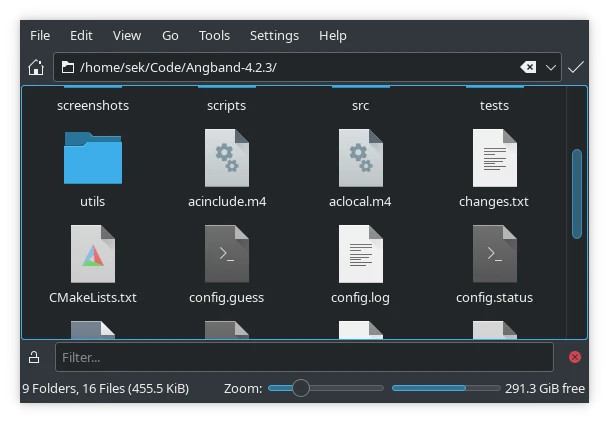
The terminal doesn't do that. At least, not by default.
The -1 (that's the number one, not a lower-case L) option for ls (list) forces the ls command to list files in a single column. Pipe that output to wc with its --lines option for a count of items:
$ ls -1 ~/Code/Angband-4.2.3 | wc --lines
25
There are a few caveats to keep in mind. I alias my ls command to include the --almost-all option, which omits the . and .. entries from directory listings. I also have ls set to ignore files ending in ~ or #, both of which are often used as extensions for backup files. Finally, by default, I don't view hidden files. That means that my report on the directory's contents isn't off by two (. and ..) but doesn't include any backup files or hidden files.
That's exactly the count I want, but keep those conditions in mind in case you want something different. The wc command parses the output of your ls command, so it believes you even when you "lie" to it.
2. Detect hidden characters with wc
I'm involved with some projects that use an XML toolchain, and sometimes users file bugs about a file that breaks the process for them. By the time the report gets to me, it's a verifiable mystery. People have run linters to look for errors or misconfigurations, other people have inspected the file, and nobody can determine the issue.
The --char option of wc shows something suspicious, though:
$ cat hidden.txt
ab
$ wc --char hidden.txt
5
Most files contain some nonvisible characters. For instance, wc sees newlines as valid countable characters. However, the character count of 5 hardly accounts for the single newline at the end of ab (the correct count is 3).
In practice, this is of limited use if you don't know where in a file to look for those hidden characters. After all, a report that a file has 758 characters isn't much good unless you manually count how many characters you can see. However, if your toolchain provides an error for where in a file the problem occurred, then it's trivial to copy and paste a section from the document into a wc command.
In short, using wc has been an easy diagnostic step for users and has saved me from having to explain Emacs' describe-char function to people who aren't used to the magic of GNU Emacs.
For the record, here's an example of the fix (the problem was a "soft hyphen" that wasn't visible in the users' text editors):
$ sed 's/\o302\xAD//' hidden.txt > fixed.txt
wc --char fixed.txt
3
3. Get the size of a file with wc
There are lots of ways to get the size of a file. There's du, of course, and ls (although ls -l requires some parsing). Add wc to the list.
$ wc --bytes ~/pixel.png
258   pixel.png
$ du --bytes ~/pixel.png
258   pixel.png
I haven't yet encountered a system that has wc and not du, but I have encountered implementations of du that don't provide the --bytes option. So far, the wc command has been consistent in its ability to count bytes (although in some implementations, there's only the -c short option).
$ du -h B ~/pixel.png
512B  pixel.png
$ wc -c ~/pixel.png
258   pixel.png
[ Get the guide to installing applications on Linux. ]
Count on wc
The wc command is a simple counter. It doesn't have any special features and it's not a particularly great demo of what's great about Linux. However, it's a reliable and predictable command that does one thing and does it well. Put it to good use.
저자 소개
Seth Kenlon is a Linux geek, open source enthusiast, free culture advocate, and tabletop gamer. Between gigs in the film industry and the tech industry (not necessarily exclusive of one another), he likes to design games and hack on code (also not necessarily exclusive of one another).
유사한 검색 결과
지금 바로 시작해야 하는 이유: 금융 서비스를 위한 포스트 양자 보안을 지금 시작해야 하는 이유
Red Hat Enterprise Linux Long-Life Add-On: 지원 종료 걱정 없는 RHEL 소개
Infrastructure At The Edge | Compiler
Operating System Management | Compiler
채널별 검색

오토메이션
기술, 팀, 인프라를 위한 IT 자동화 최신 동향

인공지능
고객이 어디서나 AI 워크로드를 실행할 수 있도록 지원하는 플랫폼 업데이트

오픈 하이브리드 클라우드
하이브리드 클라우드로 더욱 유연한 미래를 구축하는 방법을 알아보세요

보안
환경과 기술 전반에 걸쳐 리스크를 감소하는 방법에 대한 최신 정보

엣지 컴퓨팅
엣지에서의 운영을 단순화하는 플랫폼 업데이트

인프라
세계적으로 인정받은 기업용 Linux 플랫폼에 대한 최신 정보

애플리케이션
복잡한 애플리케이션에 대한 솔루션 더 보기

가상화
온프레미스와 클라우드 환경에서 워크로드를 유연하게 운영하기 위한 엔터프라이즈 가상화의 미래
