Part four of our nine-part blog series on the various Kubernetes threat vectors and tactics covers Privilege Escalation, which encompasses techniques that enable an attacker to gain additional privileges that can be used to take more actions within the cluster and/or grant access to a wider scope of resources. These techniques include accessing or running a privileged container, taking advantage of roles with broad administrative privileges, and gaining access to cloud resources.
- Part one - Initial Access
- Part two - Execution
- Part three - Persistence
- Part five - Defense Evasion
- Part six - Credential Access
- Part seven - Discovery
- Part eight - Lateral Movement
- Part nine - Impact
Some ways that StackRox provides protections against these privilege escalation techniques are: enforcing policies on whether privileged containers are allowed to run; configuring Kubernetes Network Policies to segment and restrict traffic between, to, and from pods; and monitoring RBAC settings for excess privileges.
Technique 4.1: Privileged container
Issue
In this first technique under Privilege Escalation, an attacker who gains access to a privileged container or has the ability to start a new container that is privileged will have all the capabilities of the host and can therefore gain access to host resources or compromise other containers running on the same host.
Best Practice for Mitigation
Primary area to configure security controls: Kubernetes
Organizations should implement several security practices to address the possibility of privilege escalation. First, they should limit the number of privileged containers that run within clusters, only allowing them when necessary. They should further configure Kubernetes Network Policies to segment network access to privileged containers and restrict RBAC privileges to create new Deployments or pods (in order to prevent a compromised pod’s service account credentials from being used to start a new privileged container).
How StackRox Helps
StackRox helps address the risks associated with privileged containers to enforce policies on whether privileged containers are allowed to run. It helps users visualize, simulate, and automatically generate and configure Kubernetes Network Policies. StackRox also monitors RBAC privileges to ensure that users or service accounts are not unnecessarily able to start privileged containers.

Technique 4.2: Cluster-admin role binding
Issue
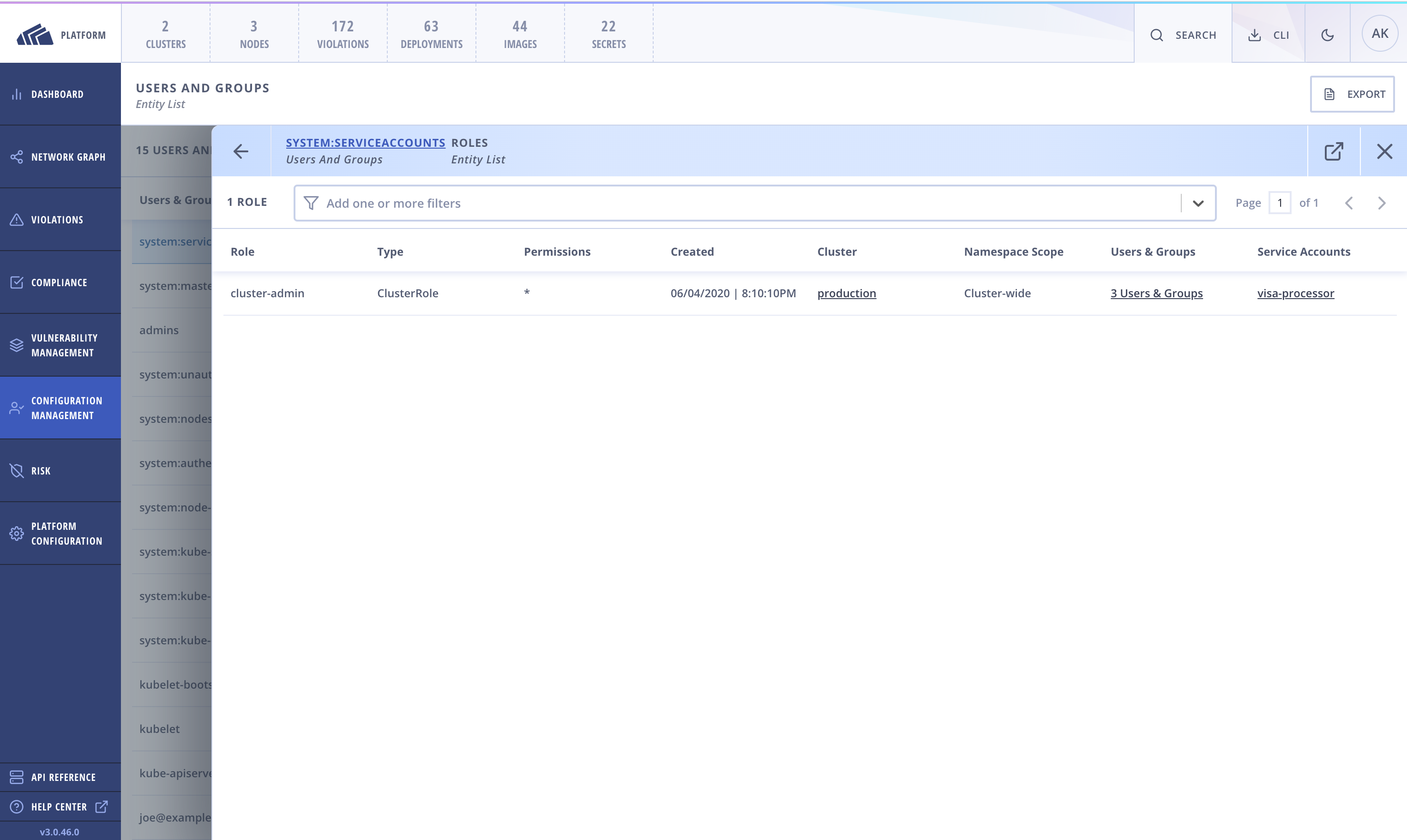
The risk created by this threat vector is that users who are granted the cluster-admin role then have full access to the cluster and, consequently, have the ability to accomplish complete cluster compromise. Additionally, users who have RBAC permissions to create role bindings can create a binding to the cluster-admin role or other roles with high privileges.
Best Practice for Mitigation
Primary area to configure security controls: Kubernetes
Administrators should configure Kubernetes RBAC to limit who in their organization has the cluster-admin role and who can create role bindings. They should also replace uses of the cluster-admin role with users, groups, or service accounts that have more targeted, scoped-down permissions.
How StackRox Helps
StackRox helps mitigate this threat by automatically monitoring RBAC configurations and identifying users, groups, or service accounts with elevated privileges, including the cluster-admin role specifically.
Technique 4.3: hostPath mount
Issue
Similar to Technique 3.2 (Writable hostPath mount), the hostPath volume mounts a file or directory to the container, which would allow an attacker to gain access to resources or compromise other containers running on the same host.
Best Practice for Mitigation
Primary area to configure security controls: Kubernetes
Kubernetes
In Kubernetes, users can apply Pod Security Policies to limit the file paths that can be mounted using a host mount or disallow host mounts completely (note that Persistent Volume Claims bypass this policy) Kubernetes: They can also mark any required host paths as read-only whenever possible.
Cloud Provider
When configuring cloud provider environments, teams can limit node lifetimes by ensuring reverse uptime of 24 hours or less and automatically provision new nodes to replace them.
How StackRox Helps
The StackRox platform helps mitigate this threat by delivering dynamic policy-driven admission control as part of its platform that enables organizations to enforce security policies, including limitations on host mounts and their writability, before containers are ever deployed into Kubernetes clusters.
Technique 4.4: Access cloud resources
Issue
Organizations running Kubernetes clusters in cloud environments, including using cloud provider-managed Kubernetes services, must be aware of additional techniques that adversaries may seek to leverage. In this case, this technique involves an adversary gaining access to a single container, which could allow access to other cloud resources.
Real-world example: In Azure Kubernetes Service (AKS), each node contains a “service principal” credential that is stored in /etc/kubernetes/azure.json. AKS uses this service principal to create and manage Azure resources that are needed for the cluster operation. By default, the service principal has contributor permissions in the cluster’s Resource Group. Attackers who get access to this service principal file (by hostPath mount, for example) can use its credentials to access or modify the cloud resources. Note that this concept of a service principal is specific to AKS and is not directly applicable elsewhere.
Best Practice for Mitigation
Primary areas to configure security controls: Kubernetes and Cloud Provider
Many of the security practices that organizations can implement to mitigate this threat overlap with other techniques that target access to specific types of cloud resources, e.g., instance metadata.
Kubernetes
In Kubernetes, users can apply Pod Security Policies to limit the file paths that can be mounted using a host mount or disallow host mounts completely (note that Persistent Volume Claims bypass this policy). They can also mark any required host paths as read-only whenever possible.
How StackRox Helps
The StackRox platform helps mitigate attacker access to cloud resources with several capabilities. StackRox scans container images for vulnerabilities as they are built and enables users to quickly discover new vulnerabilities in running Kubernetes Deployments.
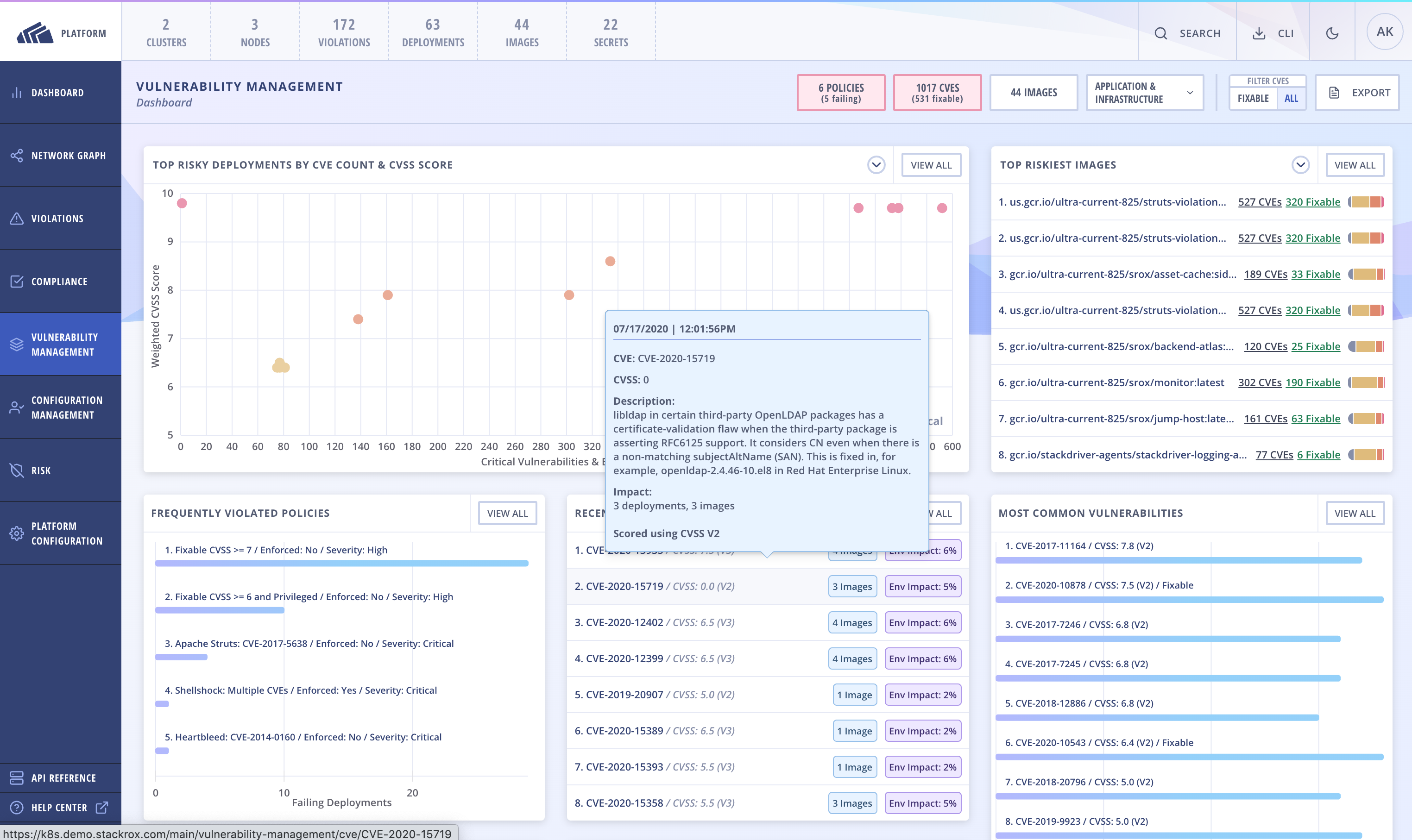
StackRox also enables dynamic admission control to prevent containers with specific vulnerabilities from launching and to enforce broader security policies, including limitations on host mounts and their writability, before containers are ever deployed into Kubernetes clusters. It enforces policies to secure pods such as only allowing non-root users and configuring read-only root file systems.
StackRox visualizes, simulates, and automatically configures Kubernetes Network Policies based on observed network traffic to restrict external access to pods. It also monitors Kubernetes RBAC configurations to help users identify risks and security weaknesses related to access settings.
저자 소개

Wei Lien Dang is Senior Director of Product and Marketing for Red Hat Advanced Cluster Security for Kubernetes. He was a co-founder at StackRox, which was acquired by Red Hat. Before his time at StackRox, Dang was Head of Product at CoreOS and held senior product management roles for security and cloud infrastructure at Amazon Web Services, Splunk, and Bracket Computing. He was also part of the investment team at the venture capital firm Andreessen Horowitz.
Dang holds an MBA with high distinction from Harvard Business School and a BS in Applied Physics with honors from Caltech.
유사한 검색 결과
Announcing Red Hat Advanced Cluster Security for Kubernetes 4.10
AI security: Identity and access control
Keeping Track Of Vulnerabilities With CVEs | Compiler
Post-quantum Cryptography | Compiler
채널별 검색

오토메이션
기술, 팀, 인프라를 위한 IT 자동화 최신 동향

인공지능
고객이 어디서나 AI 워크로드를 실행할 수 있도록 지원하는 플랫폼 업데이트

오픈 하이브리드 클라우드
하이브리드 클라우드로 더욱 유연한 미래를 구축하는 방법을 알아보세요

보안
환경과 기술 전반에 걸쳐 리스크를 감소하는 방법에 대한 최신 정보

엣지 컴퓨팅
엣지에서의 운영을 단순화하는 플랫폼 업데이트

인프라
세계적으로 인정받은 기업용 Linux 플랫폼에 대한 최신 정보

애플리케이션
복잡한 애플리케이션에 대한 솔루션 더 보기

가상화
온프레미스와 클라우드 환경에서 워크로드를 유연하게 운영하기 위한 엔터프라이즈 가상화의 미래
