
Over the last several years, many users I have spoken with have told me they are down to just two operating systems in their production environments: RHEL and Windows Server. They have accomplished a lot with containers in OpenShift and want to replicate that success on the Windows platform. They see signs that Microsoft is committed to making containerization a first-class citizen in Windows Server, and they want Red Hat and Microsoft to come together to offer a container platform.
Although the core reasons may vary, many enterprises have thousands of existing .NET based applications that would be too costly to port to .NET Core. At the same time, they want these investments to take part in their journey to the public cloud or an automated infrastructure on premises. They want to know how they can receive the same application portability, high consolidation ratios, deeper integrations with Jenkins pipelines and git-based solutions, better software version and patching control, and a more efficient use of the network. Could container orchestration deliver the same operational and development workflow benefits for Windows that it has for Linux?
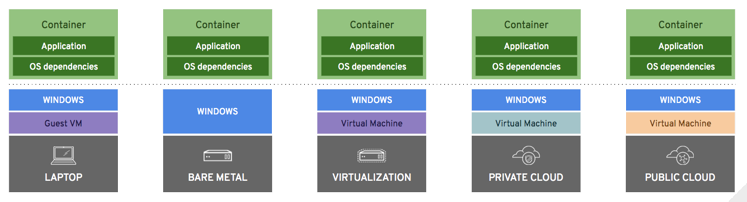
The Red Hat OpenShift and Microsoft Windows engineering teams have been working on bringing Windows containers to OpenShift for the past several months. The teams publicly committed to the project back in August. Over the course of that time, Microsoft has been working with the Kubernetes community to add the core competencies required to make the project possible. Windows support in Kubernetes is really the first time the upstream project has been extended to support a popular operating system other than the Linux derivatives. It is thanks to the dedication and passion of the Kubertnetes community that we now have Windows containers running in OpenShift. In addition to that work, Microsoft has been enhancing their core container support over the last few releases starting from Windows Server 2016 and leading to Windows Server 1709, Windows Server 1803, and later this year Windows Server 2019. OpenShift Origin was the last bit of code that needed to finish. The core areas that caused our joint engineering teams to dig in the deepest where:
- The template relationship to deploymentConfig
- Tags on Windows containers
- TLS bootstraping nodes to join the cluster
- Support for persistent volumes
- Resource quotas
- OVN networking integration
- DNS and MTU configuration automations
Once we had those problems solved, we knew it was time to start allowing users to try out the solution. We don't have all the versions of the core technologies in place yet, but we do have an ability to start soliciting feedback on the solution. If you are interested in offering feedback, please contact openshift-windows@redhat.com for more information about the Developer Preview Program we are launching at the Red Hat 2018 Summit. Reach out via the email address and come see what application portability through container orchestration can bring to your cloud today.
저자 소개
Mike Barrett is the Vice President and General Manager of Red Hat Hybrid Platforms. He looks after Red Hat OpenShift, Red Hat Cloud Services, and most of Red Hat’s Cloud Native Computing Foundation investments.
He joined Red Hat in 2013 and specializes in accelerating application platforms through the use of operating systems, cloud, and hardware technologies. Mike has more than 25 years of experience in datacenter architecture. He previously worked in both services and product management roles at Sun Microsystems and Oracle before joining Red Hat.
유사한 검색 결과
Service Mesh를 활용한 Red Hat OpenShift 가상 머신 관리
신속한 패치 적용이 어려우신가요? 최후의 방어선, 제로 트러스트
Scaling with Orchestrators | Compiler
Container Roundup | Compiler
채널별 검색

오토메이션
기술, 팀, 인프라를 위한 IT 자동화 최신 동향

인공지능
고객이 어디서나 AI 워크로드를 실행할 수 있도록 지원하는 플랫폼 업데이트

오픈 하이브리드 클라우드
하이브리드 클라우드로 더욱 유연한 미래를 구축하는 방법을 알아보세요

보안
환경과 기술 전반에 걸쳐 리스크를 감소하는 방법에 대한 최신 정보

엣지 컴퓨팅
엣지에서의 운영을 단순화하는 플랫폼 업데이트

인프라
세계적으로 인정받은 기업용 Linux 플랫폼에 대한 최신 정보

애플리케이션
복잡한 애플리케이션에 대한 솔루션 더 보기

가상화
온프레미스와 클라우드 환경에서 워크로드를 유연하게 운영하기 위한 엔터프라이즈 가상화의 미래
