
Over the past couple of years, the changing consumer and business environments have impacted retail as much—or more—than any other industry. The pandemic severely affected the retail industry's ability to connect physically with customers. As retail pivots to selling consumer goods and services through multiple channels, it must overcome challenges to enable cloud services, scale online presences, maintain real-time stock control, and manage valuable assets using retail data.
For the past few years, Red Hat's Portfolio Architecture team has been developing reference architectures based on customers' real-world use cases in various industries. We have multiple criteria for developing and vetting an architecture collection before publishing it, which you can read in my intro article about Portfolio Architectures.
We're publishing these architectures for anyone's use on our Red Hat Portfolio Architecture Center and our community site, the Portfolio Architecture Examples repository.
This article presents seven architectures for the retail industry. Retail is the process of selling consumer goods or services to customers through multiple distribution channels to earn a profit. Retailers satisfy customer demand identified through a supply chain.
The term retailer is typically applied when a service provider fills small orders from many individuals (who are end users) rather than large orders from a small number of wholesale, corporate, or government clients.
Following are the seven architectures in the retail collection. I'll provide a short overview of each and allow you to explore them in depth on your own.
- Business optimization: Optimizing delivery routing, automating rostering of staff, and improving the efficiency of tasks across multiple stores
- Headless e-commerce: Deploying a container-based e-commerce website while moving away from tightly coupled existing e-commerce platforms
- Point of sale: Simplifying and modernizing central management of distributed point-of-sale devices with built-in support for container-based applications
- Real-time stock control: Providing near-real-time stock positions and dynamic pricing promotions to retail omnichannels
- Retail data framework: Creating a framework for access to retail data from customers, stock, and staff across multiple internal teams
- Store health and safety: Managing effective in-store compliance, health and safety, and employee checks and procedures
- Supply chain integration: Streamlining integration between different elements of a retail supply chain for on-premises, cloud, and other third-party interactions
In the Red Hat Portfolio Architecture Center, you'll find a table of contents outlining the technologies used in each architecture, several example schematic diagrams with descriptions, and a link to open the diagrams directly into the online tooling in your browser.
Business optimization architecture
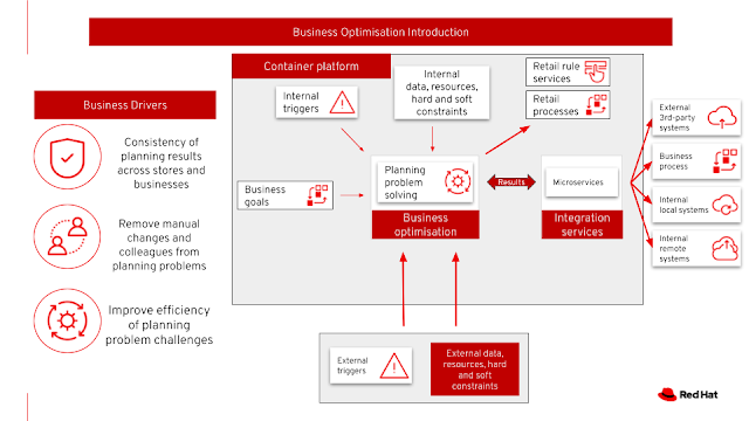
Business optimization helps retailers manage the supply chain's complexity to provide goods and services when and where they are needed.
[ Learn how to Modernize your IT with managed cloud services. ]
The business optimization architecture aids retailers by optimizing delivery routing, automating staff scheduling, and improving the efficiency of tasks across multiple stores.
Headless e-commerce architecture
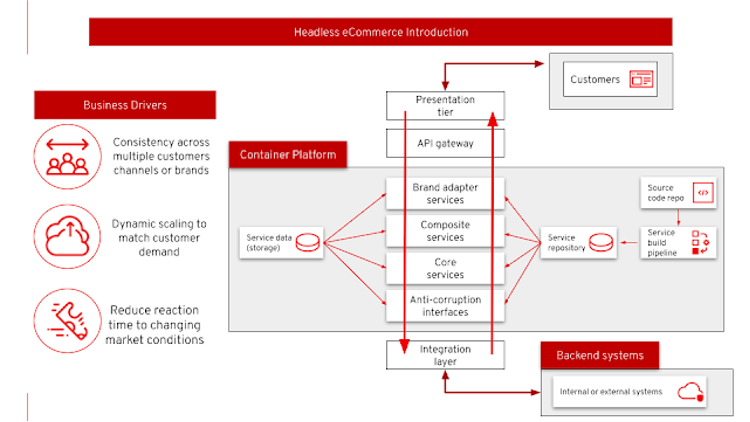
E-commerce (electronic commerce) allows companies and individuals to buy and sell goods and services over the internet. The headless e-commerce architecture helps retailers deploy a container-based e-commerce website while moving away from tightly coupled existing e-commerce platforms.
Point-of-sale architecture
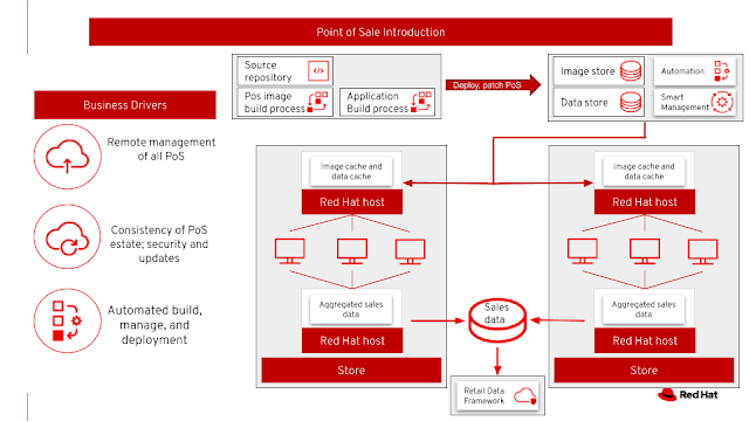
A point of sale (or point of purchase) is the location where you charge customers. When customers check out online, walk up to your counter, or pick out an item from your stand or booth, they're at the point of sale. A point-of-sale system is the hardware and software that enables a business to make those sales.
[ Plan your next cloud project based on your current cloud results by asking these 4 essential cloud project questions. ]
The point-of-sale architecture simplifies and modernizes central management of distributed point-of-sale devices with built-in support for container-based applications.
Real-time stock control architecture
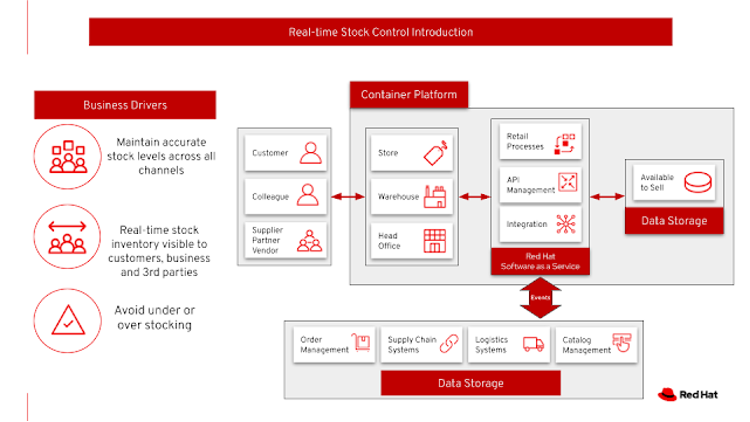
Real-time stock control (also known as inventory management) is an automated process that uses software to record sales and purchases. It gives a complete picture of what's happening with inventory, allowing businesses to react quickly to supply chain needs.
The real-time stock control architecture provides near-real-time stock positions and dynamic pricing promotions information to omnichannel retailers.
Retail data framework architecture
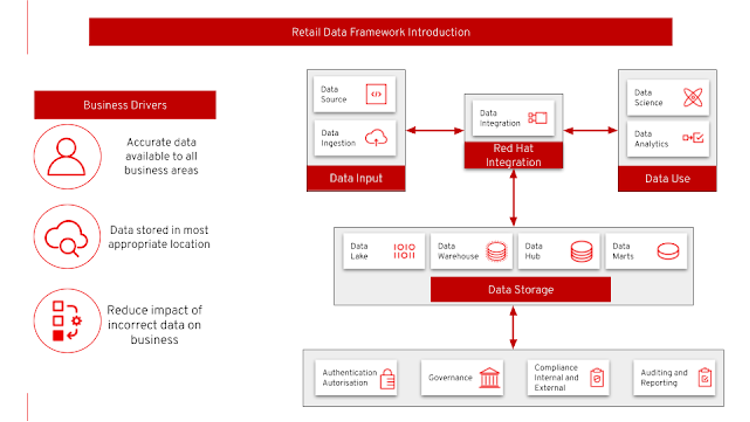
A retail data framework handles managing enterprise retail data. The framework or system sets the guidelines and rules of engagement for business and management activities, especially those dealing with or resulting in data creation and manipulation.
The retail data framework architecture creates a framework for access to retail data about customers, stock, stores, and staff across multiple internal teams.
Store health and safety architecture
Store health and safety are all about managing risks to protect workers and stores. In a global context, health and safety are also an essential part of the movement toward sustainable operational growth.
[ Find out what Red Hat can do for your organization by exploring the Red Hat product trial center. ]
The store health and safety architecture helps retailers manage in-store compliance, health, and safety. It also handles employee checks and procedures effectively.

Supply chain integration architecture
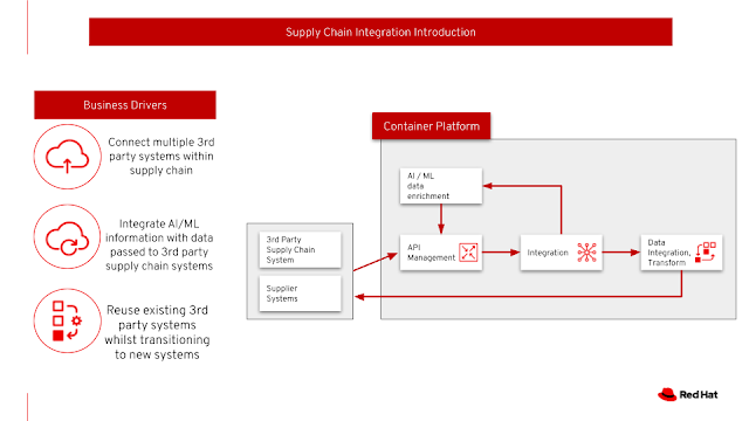
Supply chain integration is a large-scale business strategy that aims to bring the chain's links into a closer working relationship with each other. The goal is to improve response and production time and reduce costs and waste.
The supply chain integration architecture's use case is to streamline integration between different retail supply chain elements for on-premises, cloud, and other third-party interactions.
Learn more
These are seven of the many reference architectures Red Hat's Portfolio Architects have published, and we'll continue to publish them as we complete them. If you are interested in more architecture solutions like these, feel free to explore the Red Hat Portfolio Architecture Center.
This article originally appeared on Eric D. Schabell's blog and is republished with permission.
저자 소개
유사한 검색 결과
클라우드 환경에서 비용 관리하기: CloudKitty를 통한 OpenStack 요금 책정
과거의 운영 방식에서 벗어나 IT의 미래 구축
What’s The Recipe For Burnout? | Compiler
In Defense Of Legacy | Compiler: Legacies
채널별 검색

오토메이션
기술, 팀, 인프라를 위한 IT 자동화 최신 동향

인공지능
고객이 어디서나 AI 워크로드를 실행할 수 있도록 지원하는 플랫폼 업데이트

오픈 하이브리드 클라우드
하이브리드 클라우드로 더욱 유연한 미래를 구축하는 방법을 알아보세요

보안
환경과 기술 전반에 걸쳐 리스크를 감소하는 방법에 대한 최신 정보

엣지 컴퓨팅
엣지에서의 운영을 단순화하는 플랫폼 업데이트

인프라
세계적으로 인정받은 기업용 Linux 플랫폼에 대한 최신 정보

애플리케이션
복잡한 애플리케이션에 대한 솔루션 더 보기

가상화
온프레미스와 클라우드 환경에서 워크로드를 유연하게 운영하기 위한 엔터프라이즈 가상화의 미래
