This article was originally published on the Red Hat Customer Portal. The information may no longer be current.
Satellite 6.0 provisioning fully supports booting over the network (PXE) but it is not always possible to have DHCP and TFTP services under the control of the Satellite server. For these cases, Satellite ships with a plug-in called Bootdisk that allows you to create ISO files that can be written to CD or DVD, or to USB sticks or memory cards. There are two types of boot disk that you can create: per-host and generic images.
Two Types of Images
You can use the host and subnet data in Satellite to create per-host images with fully static networking. The behavior is dynamic, because the image chainloads from Satellite, so the current operating system and build state is provided by Satellite instead of being stored in the image.
Generic images, on the other hand, provide a single ISO that can be used by all registered hosts. But, because IP details cannot be stored within the image, it requires a DHCP pool on the network to bootstrap. The host will boot and contact Satellite for the template of a registered host matching a MAC address or the IP the host was assigned by DHCP. The installation then continues, using either the DHCP or static IP depending on how the operating system iPXE template is configured, and could configure the assigned IP address statically for the installed system using information from the kickstart file.
How to Prepare the Environment
The Bootdisk plug-in is installed by default. After you sign in to the Satellite 6 user interface, make sure that both Boot disk iPXE templates called host and generic host are assigned to the organization, as well as the Kickstart default iPXE template. Navigate to Infrastructure > Subnets and make sure that the target subnet includes sufficient information: Address, Mask, Gateway and Primary DNS are all required fields for Bootdisk images to operate.
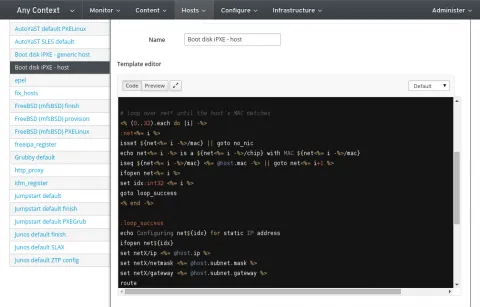
After the content has been synchronized and the operating systems created, check the Organization and Location settings for all the required resources (OS, Installation media, Subnet, Domain). Navigate to Hosts > Provisioning templates and associate both Boot disk iPXE templates with the operating system you want to provision. Review all the tabs on the Operating System page, including Templates, and make sure you have the iPXE template type set to Kickstart default iPXE and provision type set to Satellite Kickstart Default (or your own copies of the same types above).
Navigate to Administer > Settings and verify that the unattended_url value is set to the fully-qualified domain name of the Satellite main server. This works if there is a valid DNS entry in the provisioning network. If the DNS value is not set, you can set these to the IP address of the server. If DNS is not set, the nodes being provisioned will not be able to access the Satellite 6 node to download the chained template.
Provisioning Using the Image
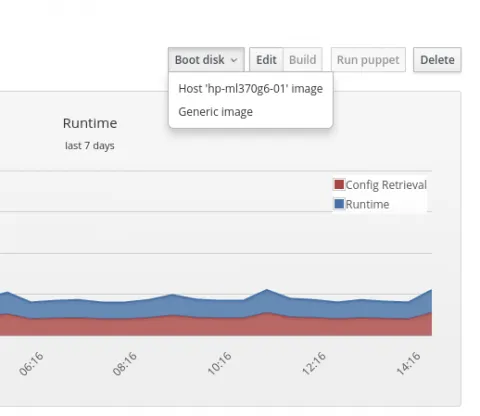
Create a new bare-metal host and make sure you enter the MAC address correctly. After you have created the host, click the Boot disk button in the Host details page to download either a Generic image or Host image. These are hybrid ISO files and so you can write them to a CD or DVD, or copy (using dd) to a USB stick or memory card.
This article shows that host provisioning on networks with limited functionality is easy with the Satellite 6 Bootdisk plug-in. Satellite 6 offers much more, however, and soon we will show you the exact opposite; the automated provisioning of newly-discovered hardware with a single mouse click. Stay with us.
저자 소개

Lukáš Zapletal is a principal software engineer at Red Hat, and is involved in the Foreman and Fedora communities as well as working on Red Hat Satellite 6. He is also interested in security, SELinux, and performance monitoring with Performance Co-Pilot (PCP).
채널별 검색

오토메이션
기술, 팀, 인프라를 위한 IT 자동화 최신 동향

인공지능
고객이 어디서나 AI 워크로드를 실행할 수 있도록 지원하는 플랫폼 업데이트

오픈 하이브리드 클라우드
하이브리드 클라우드로 더욱 유연한 미래를 구축하는 방법을 알아보세요

보안
환경과 기술 전반에 걸쳐 리스크를 감소하는 방법에 대한 최신 정보

엣지 컴퓨팅
엣지에서의 운영을 단순화하는 플랫폼 업데이트

인프라
세계적으로 인정받은 기업용 Linux 플랫폼에 대한 최신 정보

애플리케이션
복잡한 애플리케이션에 대한 솔루션 더 보기

가상화
온프레미스와 클라우드 환경에서 워크로드를 유연하게 운영하기 위한 엔터프라이즈 가상화의 미래
