
일관된 실행 환경을 구축하고 유지 관리하는 과정에서 플랫폼 엔지니어와 개발자는 종속성을 식별하고, 다양한 리포지토리에 흩어져 있는 콘텐츠 컬렉션을 추적하고, 수동 구문 구성과 씨름하느라 귀중한 시간을 낭비하는 경우가 많습니다.
Red Hat Ansible Automation Platform 2.7의 출시로 이러한 문제는 이제 과거의 일이 되었습니다. 오토메이션 포털 내의 실행 환경 빌더와 통합된 콘텐츠 검색 경험이 함께 작동하여 자동화 시간을 크게 단축하는 동시에 거버넌스를 처음부터 통합할 수 있습니다.
이러한 기능으로 어떻게 운영상의 마찰을 없애고 조직 전반에서 일관성을 실현할 수 있는지 알아보세요.
시각적 실행 환경 빌더
이전에는 사용자 정의 실행 환경을 생성하려면 정의 파일 구문을 심층적으로 이해해야 했습니다. 새로운 시각적 실행 환경 빌더는 단계별 워크플로우 가이드를 통해 이러한 장벽을 제거합니다.
- 추측이 필요 없는 시각적 작성: 수동 YAML 구문 오류와 명령줄의 복잡성을 완전히 없앤 깔끔한 인터페이스를 통해 일관성이 뛰어난 실행 환경을 구축합니다.
- 검증된 기반에서 시작: 완전히 처음부터 시작하는 대신 사전 정의된 템플릿 또는 사용자 정의 템플릿을 기반으로 작업할 수 있습니다. Red Hat은 특정 IT 도메인에 맞춤화된 권장 실행 환경 템플릿을 제공하며, 조직은 승인된 자체 템플릿을 추가하여 구조적 표준을 유지할 수 있습니다.
- 통합 및 검색 자동화: GitHub 또는 GitLab 조직에 저장된 팀의 사용자 정의 컬렉션과 함께 Red Hat Ansible Certified Red Hat Collections를 손쉽게 찾아 동기화할 수 있습니다. 인터페이스가 모든 Git 리포지토리와 자동화 채널을 검색 가능한 하나의 카탈로그로 통합하며, 유연한 원클릭 선택과 수동 업로드 옵션을 제공합니다.
- 자동화된 출력 생성: 시각적 설정이 완료되면 툴은 전체 실행 환경 정의 파일을 자동으로 생성하며, 리포지토리에 직접 게시하거나 프로젝트를 위해 다운로드할 수 있는 즉각적인 옵션을 제공합니다.
자동화된 빌드 파이프라인: 빌더가 자동화된 빌드 파이프라인을 사용하여 전체 GitHub 리포지토리를 구성하도록 지정할 수도 있습니다. 대상 레지스트리를 선택하면 생성된 GitHub Actions 워크플로우가 컨테이너 이미지 빌드 및 레지스트리로의 자동 푸시를 처리하여 명령줄에 전혀 손댈 필요 없이 즉시 사용할 수 있는 실행 환경을 제공합니다.

이미지 1: 빌더 내에서 추가할 수 있는 컬렉션 중에서 선택합니다.
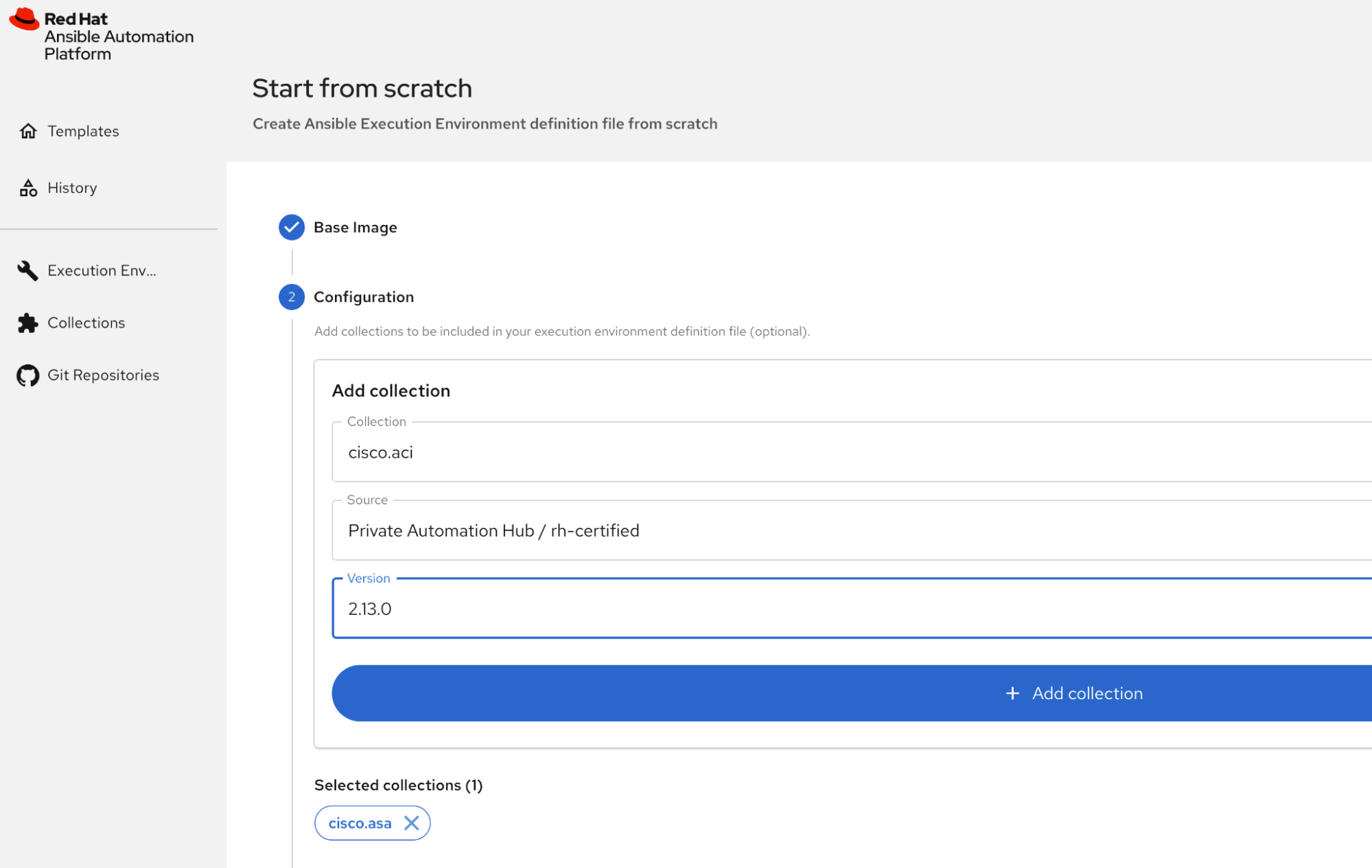
이미지 2: 원하는 컬렉션의 소스와 버전을 제공합니다.
콘텐츠 검색 가이드: 통합 자동화 카탈로그
엔터프라이즈 자동화 콘텐츠는 시간이 지남에 따라 자연스럽게 단편화되어 프라이빗 오토메이션 허브에 감춰져 있거나, 공개 Git 프로바이더에서 호스팅되거나 개별 팀 내에서 흩어져 있게 됩니다. 콘텐츠 검색 엔진은 모든 항목을 검색 가능한 단일 카탈로그에 동기화하여 이러한 단절을 해소합니다.
- 지속적 동기화: 이 플랫폼은 조직의 GitHub 및 GitLab 환경 전반에서, 그리고 프라이빗 오토메이션 허브의 인증되고 검증된 컬렉션에 걸쳐 사용자 정의 컬렉션을 자동으로 검색합니다.
- 빌드 전 고려 사항 확인: 새 코드를 작성하기 전에 기존 컬렉션과 리포지토리를 탐색하여 중복 작업을 방지하고 콘텐츠 재사용을 극대화합니다.
- 직접적인 파이프라인 통합: 신뢰할 수 있는 검색된 컬렉션이 기본적으로 플랫폼의 생성 툴을 채웁니다. 새로운 실행 환경을 가동할 때 개발자는 검증된 알려진 자산 중에서 선택하여 프로세스를 빠르게 시작할 수 있습니다.
- 심도 있는 가시성: 중앙화된 카탈로그 뷰에서 플레이북을 추적하고, 지속적 통합(CI) 활동을 추적하고, 리포지토리 전반에서 직접 소스 링크에 액세스합니다.
- 기반 계층: 콘텐츠 검색은 더 광범위한 엔드 투 엔드 Ansible 콘텐츠 관리 비전을 위한 기반 레이어입니다. 향후 릴리스에서는 이를 전체 라이프사이클 솔루션으로 확장하여 개발자가 초기 검색에서 프로덕션 환경의 콘텐츠 성능 작성, 검증, 모니터링에 이르기까지 안내할 것입니다.
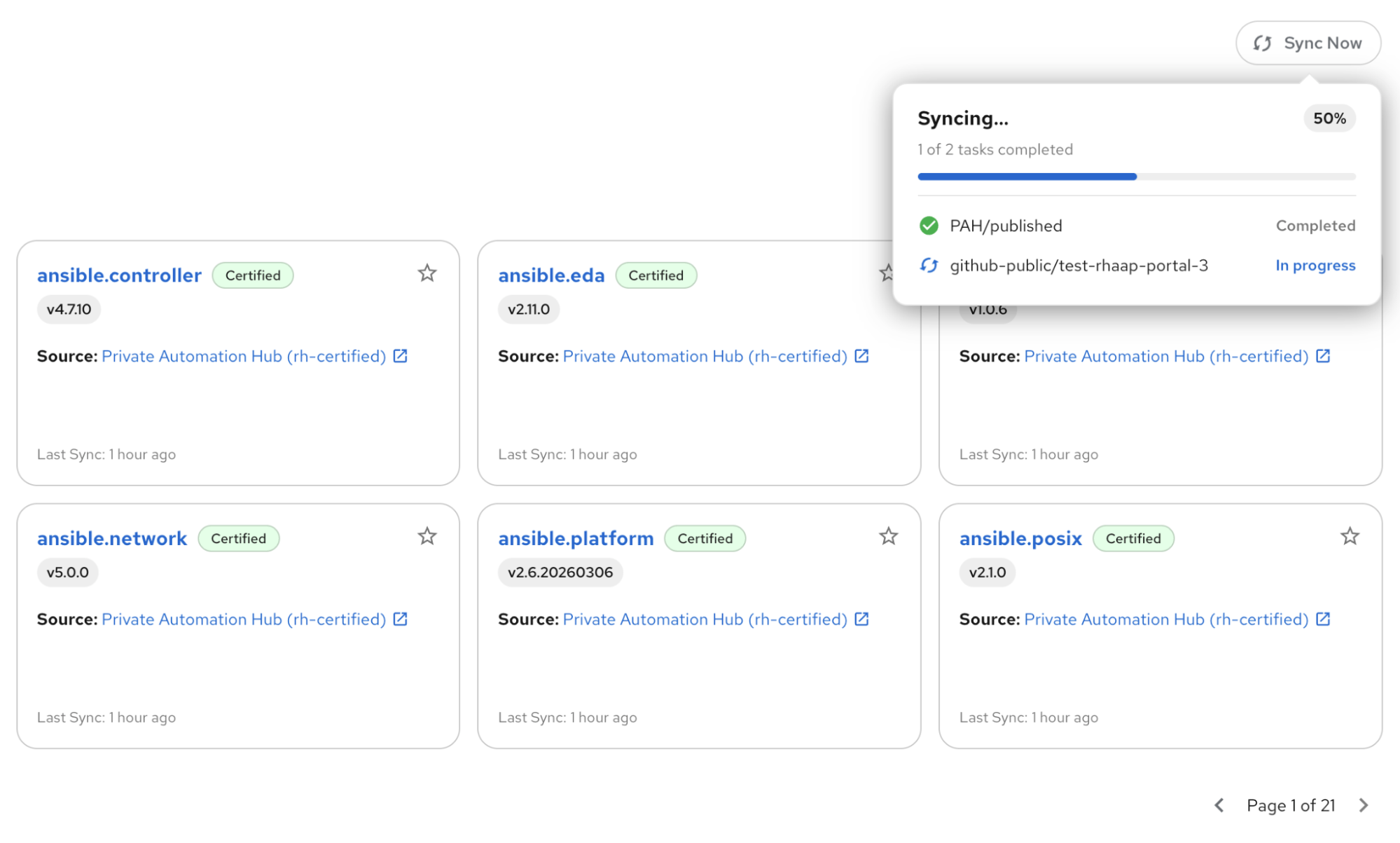
이미지 3: GitHub 및 프라이빗 오토메이션 허브에서 리포지토리 동기화
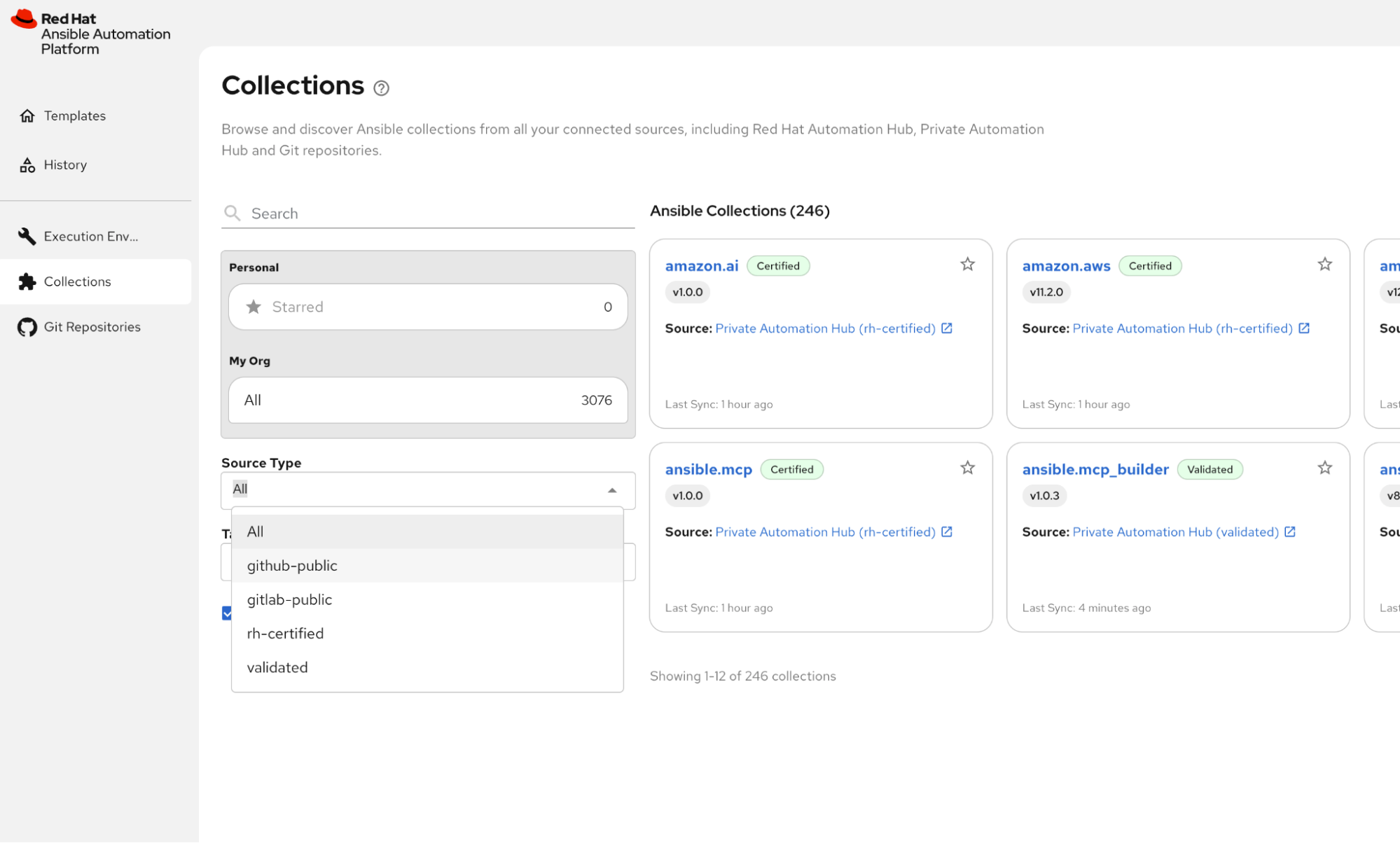
이미지 4: GitHub 및 프라이빗 오토메이션 허브에서 컬렉션 보기
거버넌스 중심의 설계: 관리자의 제어 권한 유지
이러한 기능의 조합을 통해 보안 또는 아키텍처 표준을 저해하지 않으면서 개발자와 도메인 팀의 생산성을 높일 수 있습니다. Ansible Automation Platform 2.7은 플랫폼 관리자가 전사적 사용을 완벽하게 제어할 수 있도록 합니다.
- 사전 정의된 범위 지정: 관리자는 기업 경계에 맞게 사용자 정의 필터링을 적용하여 검색 가능하도록 할 외부 Git 리포지토리와 오토메이션 허브를 정확히 선택할 수 있습니다.
- 가시성 제어: 특정 도메인 팀(예: SecOps 또는 CloudOps)이 볼 수 있는 콘텐츠를 지정하여 팀이 검증된 관련 자동화만 사용하도록 합니다.
- 구성 가능한 스케줄링: 동기화를 필요 시, 또는 사용자 정의 가능한 자동화된 일정에 따라 실행할 수 있으며, 관리상의 목적으로 시기와 빈도를 완전히 제어할 수 있습니다.
시작하기
새로운 시각적 실행 환경 빌더와 콘텐츠 검색 기능을 활용하려면 환경이 다음과 같은 기준 요구 사항을 충족해야 합니다.
- 플랫폼 버전: Ansible Automation Platform 2.5 이상
- 설치 환경: Red Hat OpenShift Container Platform 또는 RHEL(Red Hat Enterprise Linux) VM(가상 머신) 어플라이언스
- 연결: 검색 동기화 및 리포지토리 운영을 위한 소스 제어 관리(SCM/Git) 액세스
Ansible Automation Platform 2.7은 콘텐츠 검색을 통합하고 자동화 패키징 방식을 시각적으로 안정화함으로써 플랫폼 엔지니어링에서 발생하는 운영 오버헤드를 제거하여 개발자가 비즈니스를 발전시키는 고부가가치 자동화 기능을 개발하는 데 집중할 수 있도록 지원합니다.
리소스
오토메이션 포털: 실행 환경 빌더(아케이드)
리소스
비즈니스 자동화의 5단계
저자 소개
Harper Buete is a Product Marketing Manager for Red Hat Ansible Automation Platform. She joined Red Hat in June 2025.
유사한 검색 결과
Red Hat Ansible 올스타: 네트워크 및 인프라 자동화의 미래를 주도합니다
Ansible Automation Platform을 위한 새로운 오토메이션 오케스트레이터로 IT 워크플로우를 규모에 맞게 통합
Random Acts Of Automation | Compiler
Untangling Networks | Compiler
자세히 알아보기
E-book: 기업 자동화영어 (English) 버전으로 제공됩니다 (한국어 미지원) - 체험: 자기 주도식 핸즈온 랩으로 구성된 Red Hat Ansible Automation Platform
- Red Hat Ansible Automation Platform: 초보자 가이드
채널별 검색

오토메이션
기술, 팀, 인프라를 위한 IT 자동화 최신 동향

인공지능
고객이 어디서나 AI 워크로드를 실행할 수 있도록 지원하는 플랫폼 업데이트

오픈 하이브리드 클라우드
하이브리드 클라우드로 더욱 유연한 미래를 구축하는 방법을 알아보세요

보안
환경과 기술 전반에 걸쳐 리스크를 감소하는 방법에 대한 최신 정보

엣지 컴퓨팅
엣지에서의 운영을 단순화하는 플랫폼 업데이트

인프라
세계적으로 인정받은 기업용 Linux 플랫폼에 대한 최신 정보

애플리케이션
복잡한 애플리케이션에 대한 솔루션 더 보기

가상화
온프레미스와 클라우드 환경에서 워크로드를 유연하게 운영하기 위한 엔터프라이즈 가상화의 미래
