
If you’ve developed and deployed applications utilizing OpenShift Service Mesh (OSSM) or the open source project Istio (which is the upstream project OSSM is based on), then you most likely are very familiar with its observability tool known as Kiali. Kiali is a standalone application that allows you to configure, visualize, validate, and troubleshoot your service mesh via its own web frontend.
With the introduction of the new OpenShift Service Mesh Console, users can now have a more seamless experience when using Kiali within an OpenShift environment. OpenShift Service Mesh Console is an open source dynamic-plugin implementation that integrates the Kiali interface directly into the OpenShift Console. Now you no longer need to switch between the standalone Kiali interface and the OpenShift Console when navigating around your cluster and its mesh components since the Kiali features are directly accessible within the OpenShift Console itself.
With the OpenShift Service Mesh Console installed, the OpenShift Console will provide you direct access to Kiali features found under the “Service Mesh” options via the left-hand navigation menu . . .

. . . as well as via “Service Mesh” tabs found within other OpenShift Console pages such as the Workloads page:
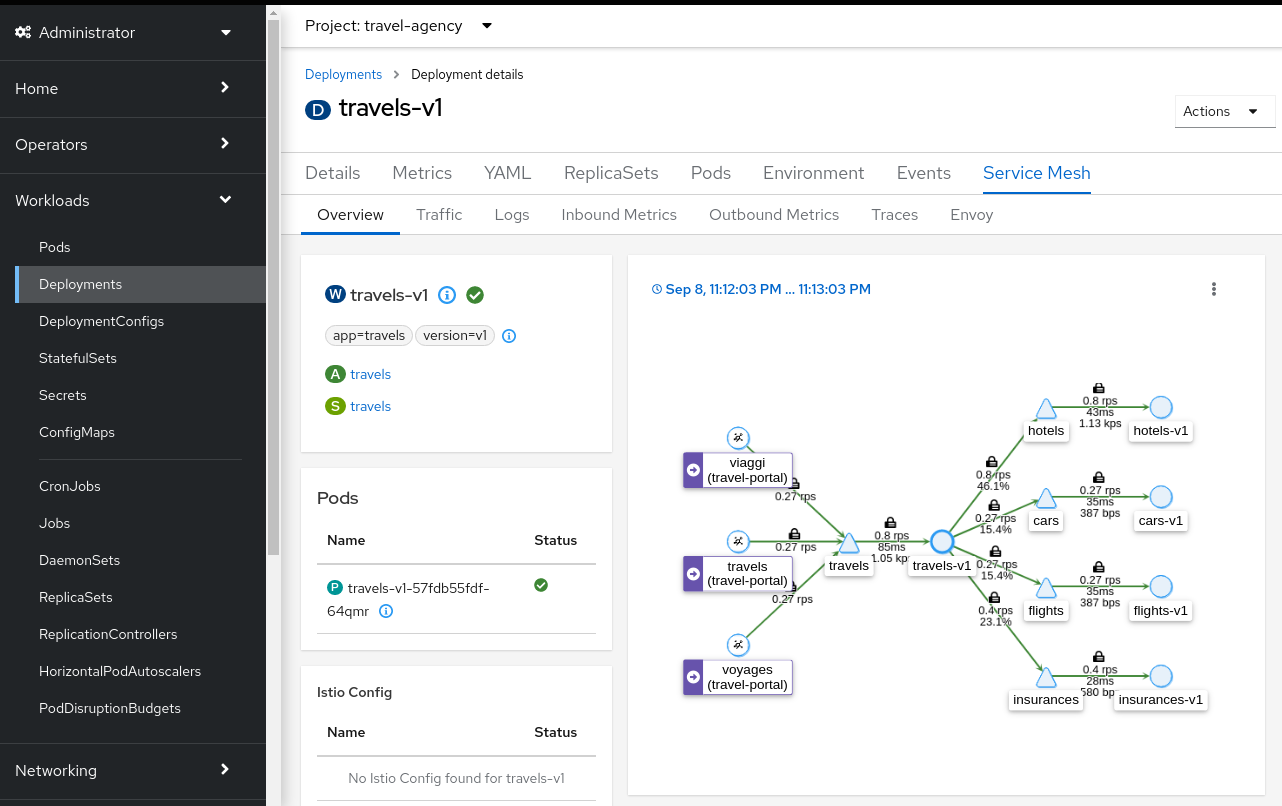
There is both an Install Guide and a User Guide to help you quickly install and use the OpenShift Service Mesh Console.
This new OpenShift Service Mesh Console is a Technology Preview and provides early access to potential product features, enabling users to test functionality and provide feedback during the development process. Because this is a brand new offering, there are some things you should consider:
- It is based on the new OpenShift Console dynamic plugin-in framework, which itself is a Technology Preview feature only. So it is on the bleeding edge - welcome to the party!
- Because it is currently a Technology Preview, we are not yet ready to provide official support for it, and it is not supported with Red Hat production service level agreements (SLAs).
- As with all Technology Preview releases, it is not intended to be run in production environments; Red Hat does not recommend using it in production.
With that said, the Kiali team hopes that the community will try out the new OpenShift Service Mesh Console and enter feedback in our issue tracker. We thank you for joining the effort in trying to provide Service Mesh observability features directly to the OpenShift Console.
저자 소개
유사한 검색 결과
Red Hat 파트너가 최고의 통신 비즈니스 자산인 이유
에이전틱 패러독스와 하이브리드 AI의 필요성
Ready to Commit | Command Line Heroes
Dr. Gladys West | Command Line Heroes
채널별 검색

오토메이션
기술, 팀, 인프라를 위한 IT 자동화 최신 동향

인공지능
고객이 어디서나 AI 워크로드를 실행할 수 있도록 지원하는 플랫폼 업데이트

오픈 하이브리드 클라우드
하이브리드 클라우드로 더욱 유연한 미래를 구축하는 방법을 알아보세요

보안
환경과 기술 전반에 걸쳐 리스크를 감소하는 방법에 대한 최신 정보

엣지 컴퓨팅
엣지에서의 운영을 단순화하는 플랫폼 업데이트

인프라
세계적으로 인정받은 기업용 Linux 플랫폼에 대한 최신 정보

애플리케이션
복잡한 애플리케이션에 대한 솔루션 더 보기

가상화
온프레미스와 클라우드 환경에서 워크로드를 유연하게 운영하기 위한 엔터프라이즈 가상화의 미래
