
Plugins have become an indispensable tool for extending the functionality of various applications and platforms. As a result, existing systems can be enhanced without modifying their core code, making them flexible, scalable, and easy to maintain.
Understanding Minimal Dynamic Plugins
A minimal dynamic plugin provides additional functionality by dynamically loading lightweight modules into an application or system. Compact plugins deliver specific features or services without burdening the host application with unnecessary overhead.
Unlike traditional plugins, which may consist of large libraries or extensive codebases, minimal dynamic plugins adopt a lean and effective approach. They aim to accomplish their objectives using the least amount of resources possible, thereby reducing memory consumption, startup time, and potential conflicts with other components.
Benefits of Minimal Dynamic Plugins
Modularity: Using minimal dynamic plugins, developers can break down complex functionalities into smaller, manageable units. This modular approach simplifies development and enhances code reusability, as these plugins can be easily repurposed across different projects.
Performance: Due to their lightweight nature, minimal dynamic plugins have less impact on system resources. They are optimized to execute specific tasks efficiently, resulting in improved overall performance of the host application.
With the ability to dynamically load and unload plugins, systems can adapt to changing requirements as needed. It allows for easy expansion and customization, allowing developers to add or remove functionality without disrupting the whole system.
Maintenance and Updates: The modular structure of minimal dynamic plugins simplifies maintenance tasks. Individual plugins can be developed without the risk of affecting other parts of the application. Updates and bug fixes can also be applied to specific plugins, reducing the complexity and potential risks associated with making changes to the entire system.
UX Design Guidelines
This blog provides design guidelines and useful information on adding a minimal dynamic plugin to the OpenShift console.
The CronTab CRD is also used in official k8s docs for various examples.
The design work includes:
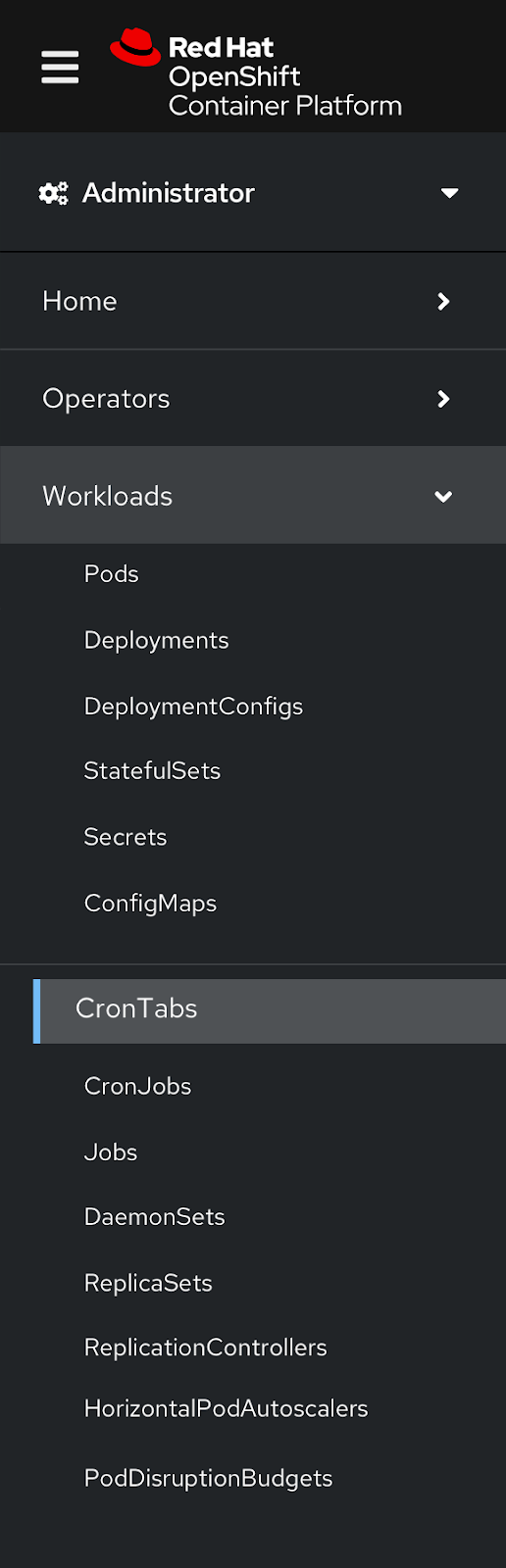
- Navigation: The Workloads Nav section is extended to include the CronTab nav item.
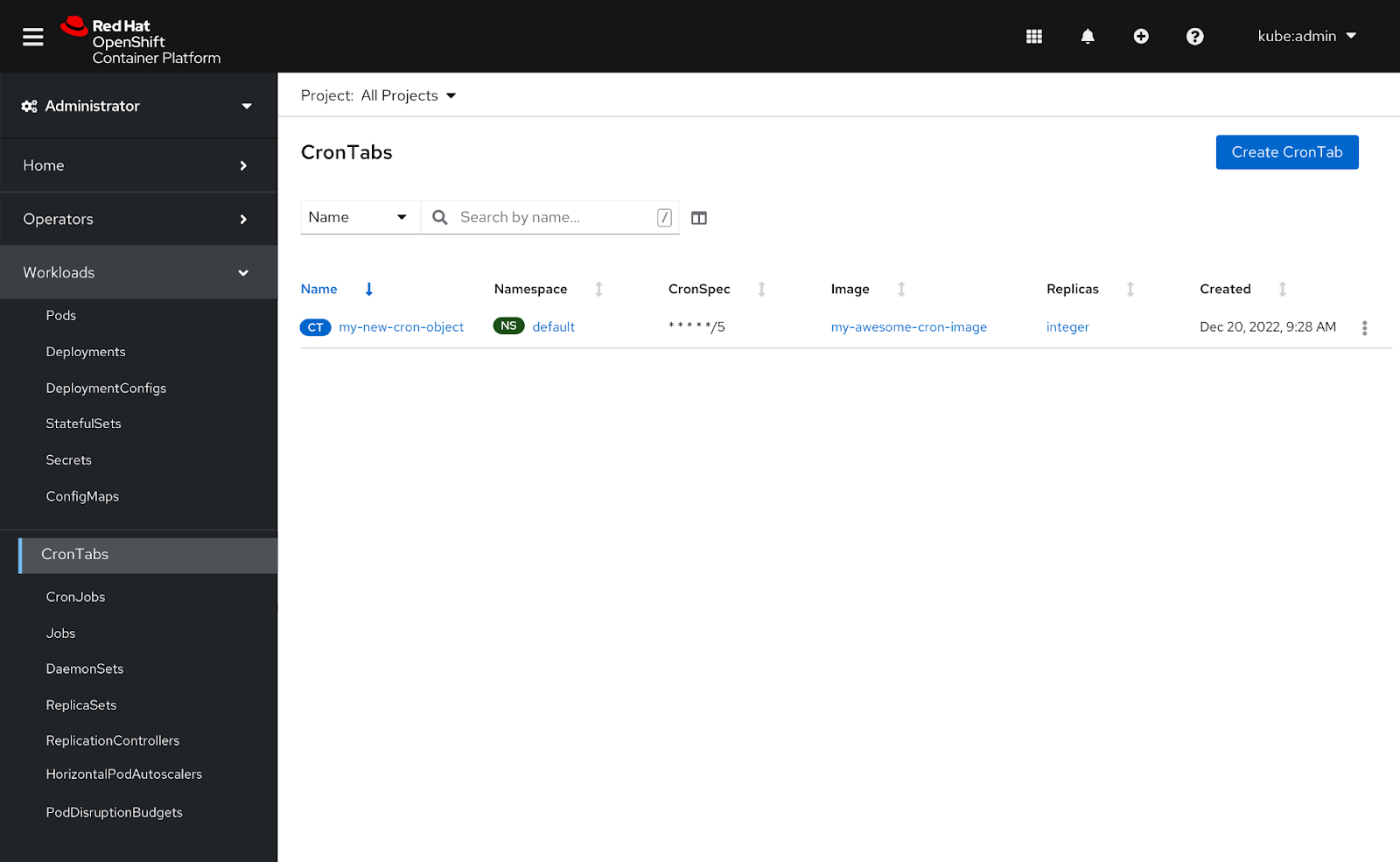
- CronTabs list page
- Details page per each CronTab
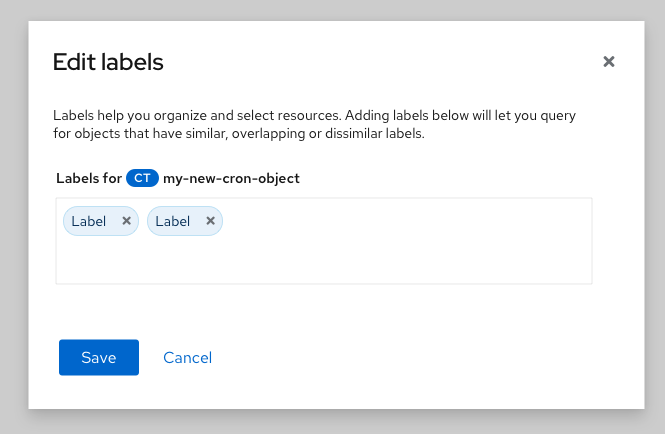
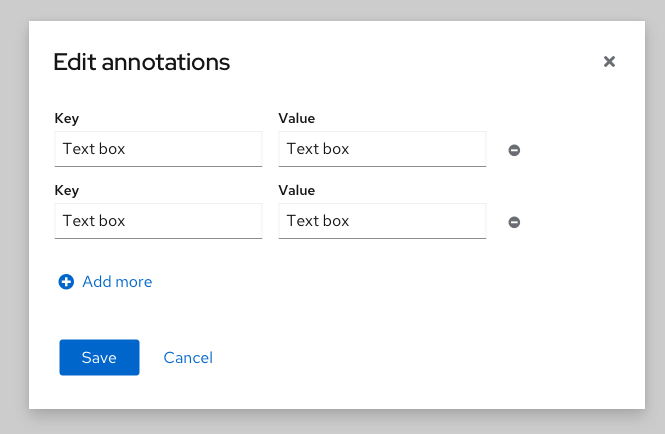
- 3 Modals are opened based on the kebab menu actions include Edit labels, Edit annotations, and Delete CronTab.
Navigation
CronTabs list page
Details page per each CronTab

The kebab menu actions open3 modals
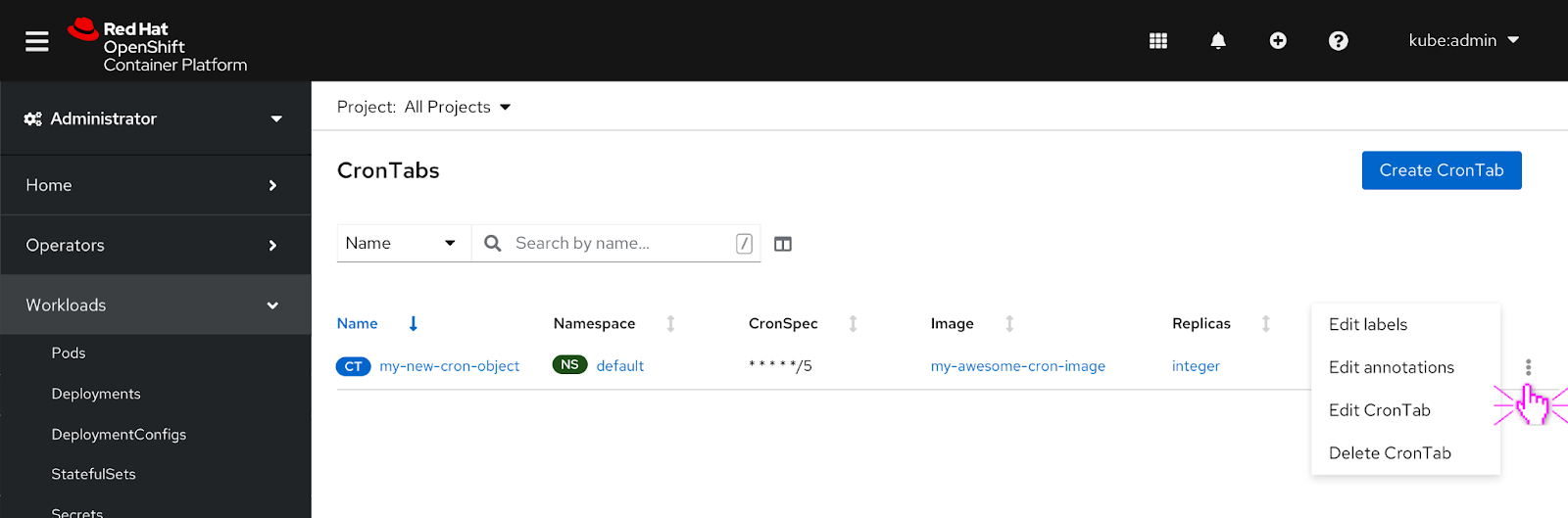
Edit labels
Edit annotations
Delete CronTab

Edit CronTab
The Edit CronTab action is enabled via the YAML page. It redirects to the YAML edit page of the selected CronTab CR.
Conclusion
Minimal dynamic plugins offer a powerful approach to extending the functionality of applications while keeping resource usage to a minimum. Their modular nature, combined with efficient performance and scalability, makes them a valuable tool for developers. Developers can achieve greater flexibility, maintainability, and overall system performance by adopting a minimalistic and focused approach to plugin development.
As software systems continue to evolve, embracing the concept of minimal dynamic plugins can unlock new possibilities and pave the way for more efficient and adaptable applications.
Connect with us
We challenge ourselves to continue to improve OpenShift and are actively looking for ways to further enhance your experiences in future releases.
But to do that, we need your help. If you would like to participate in our user research or share your feedback with us, please reach out to uxdresearch@redhat.com.
To help us improve OpenShift experiences based on feedback from users just like you, sign up to participate in our future UX research efforts.
À propos de l'auteur
Designing user experiences at Red Hat since 2018
Plus de résultats similaires
Gérer des machines virtuelles sur Red Hat OpenShift avec Service Mesh
Vos correctifs sont trop lents ? Le Zero Trust comme dernière ligne de défense
Scaling with Orchestrators | Compiler
Container Roundup | Compiler
Parcourir par canal

Automatisation
Les dernières nouveautés en matière d'automatisation informatique pour les technologies, les équipes et les environnements

Intelligence artificielle
Actualité sur les plateformes qui permettent aux clients d'exécuter des charges de travail d'IA sur tout type d'environnement

Cloud hybride ouvert
Découvrez comment créer un avenir flexible grâce au cloud hybride

Sécurité
Les dernières actualités sur la façon dont nous réduisons les risques dans tous les environnements et technologies

Edge computing
Actualité sur les plateformes qui simplifient les opérations en périphérie

Infrastructure
Les dernières nouveautés sur la plateforme Linux d'entreprise leader au monde

Applications
À l’intérieur de nos solutions aux défis d’application les plus difficiles

Virtualisation
L'avenir de la virtualisation d'entreprise pour vos charges de travail sur site ou sur le cloud
