
At the OpenShift Commons gathering in Amsterdam on March 23—the high-energy "Day Zero" event of KubeCon and CloudNativeCon Europe 2026—the stage was set for a deep dive into the intersection of cutting-edge technology and global safety. Francesco Giannoccaro, Head of High Performance Computing at the UK Health Security Agency (UKHSA), shared a compelling journey of how an executive agency of the UK Department of Health and Social Care is using open source and AI to protect the public.
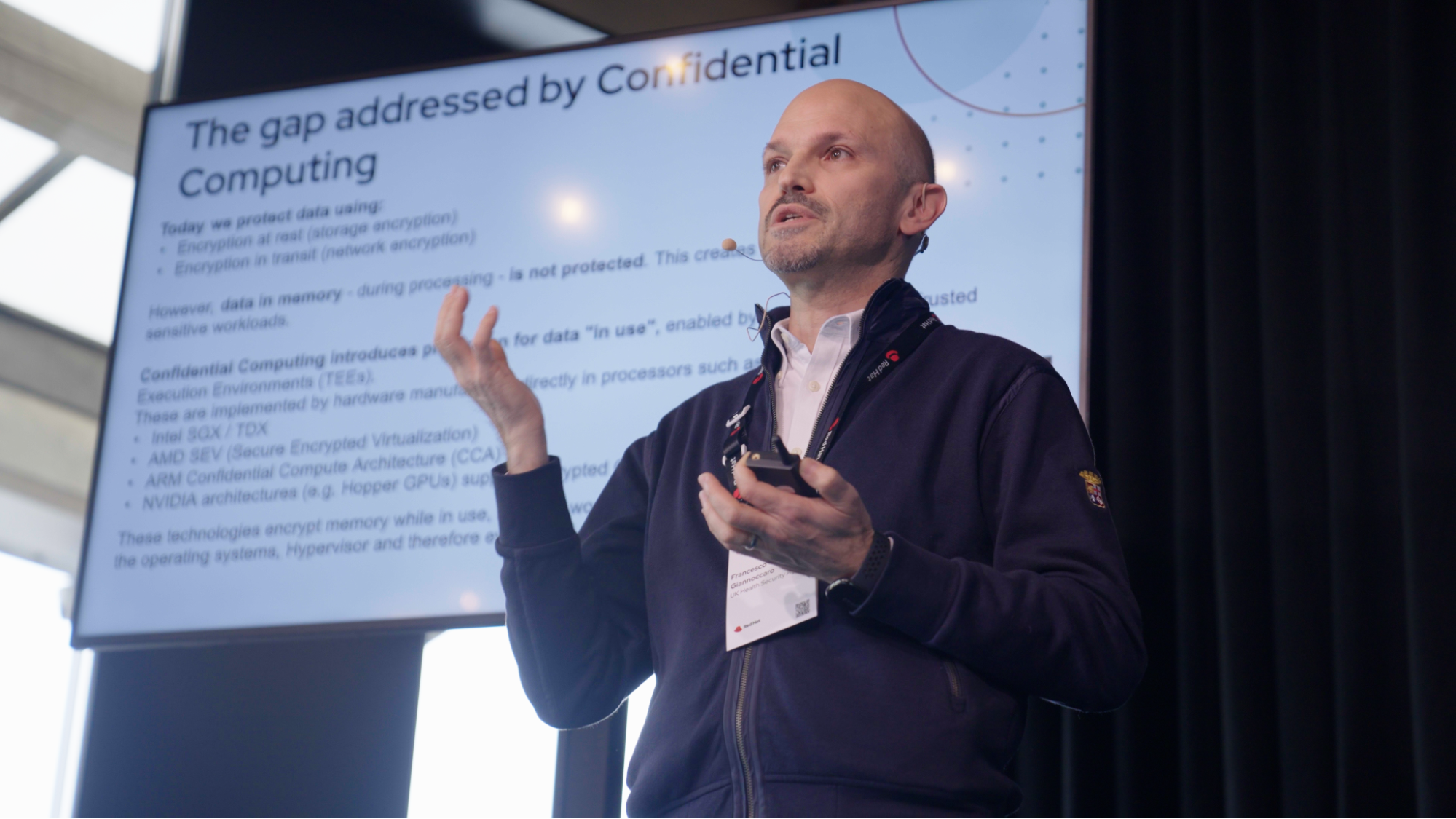
Figure 1. Francesco Giannoccaro, Head of High Performance Computing at the UK Health Security Agency (UKHSA)
The mission: Guarding public health
The UKHSA provides essential health security services underpinned by world-class science and technology, while contributing to the UK’s life sciences sector. One critical example is their Pathogen Genomic Service, which helps hospitals rapidly identify aggressive pathogens through DNA sequencing. Additionally, the agency runs complex predictive models to understand outbreak dynamics and assess how changes in public behaviour may influence their spread and potential containment.
For the UKHSA, technology is not just an administrative tool; it is the engine of life-saving science.
The challenge: Complexity, portability, and opaque proprietary models
Before embracing a unified platform, the UKHSA faced several significant hurdles:
- Complexity for scientists: Many of the agency's brilliant minds come from scientific backgrounds rather than software engineering. They needed an environment that offered enterprise capabilities without requiring a deep dive into complex infrastructure management.
- The "Black Box" of AI models: Proprietary models can limit transparency and adaptability. Scientists needed the ability to evaluate and fine-tune models with domain-specific data to improve accuracy for specific scientific applications.
- Data sensitivity: Data sensitivity is central in public health, and strict confidentiality and security requirements shape how new technologies are evaluated and adopted.
- Infrastructure silos: During the Covid-19 pandemic, the UKHSA was formed by merging 3 separate agencies that used different technology ecosystems spanning on-premises and public cloud environments. This created a need to reduce complexity through greater standardization and a common platform layer across environments.
The solution: A protected, consistent AI foundation
To address these challenges, the UKHSA expanded its use of Red Hat OpenShift to support its evolving AI workloads. OpenShift acts as a comprehensive application platform that simplifies the entire software development lifecycle with a focus on developing a strong security posture.

Figure 2. Benefits of OpenShift and OpenShift AI
Key components of their solution include:
- Red Hat Advanced Cluster Manager for Kubernetes: Allows UKHSA to consistently manage, observe, and operate hybrid, multicloud, and edge clusters from a unified control plane.
- Red Hat Advanced Cluster Security for Kubernetes: Takes the worry out of OpenShift safety and compliance by automatically protecting applications from build, deploy, and runtime so the team can deploy with confidence.
- Confidential computing with Azure Red Hat OpenShift: To protect data even while in use, the UKHSA is running a minimum viable product (MVP) using confidential clusters on Azure Red Hat OpenShift. This allows them to query encryption keys from their own data center, so they maintain control over sensitive data.
- Research and inference: Through Red Hat OpenShift AI, which builds on OpenShift, UKHSA can streamline data pipelines and train domain-specific machine learning (ML) models to track and respond to health threats.
- Data classification: Evaluate and deploy open weight LLM models on OpenShift AI to automate classification of public health events and extraction of free text data.
- Accelerated deployment: With OpenShift AI, UKHSA can automate resource management, allowing the agency to scale AI workflows to meet real-time health emergencies without being bogged down by complex infrastructure.
- Open source AI models: Using OpenShift, scientists can evaluate, test, and fine-tune open source and open-weight models for specific scientific domains, improving accuracy and transparency.
Results: Faster insights, greater trust
By complementing its high-performance computing capabilities with Kubernetes and OpenShift, UKHSA is creating a more accessible and flexible environment for scientists to prototype, test and develop machine learning and generative AI applications, accelerating innovation while maintaining robust security, governance and operational controls.
Scientists can use the platform to evaluate rapidly evolving AI models, assess their accuracy, and explore how AI-assisted approaches could support tasks that otherwise require substantial manual effort, such as extracting and classifying data from free-text surveys or analyzing social media feeds for potential health signals. The platform provides the flexibility to scale computing resources as needed, reflecting lessons learned from the rapid shifts in demand during the COVID-19 pandemic.
Ultimately, the UKHSA has proved that open science and open source technology can accelerate public health responses while maintaining the highest standards of data confidentiality.
See the innovation in action
- Watch the full session from OpenShift Commons Amsterdam to learn how UKHSA is pioneering protected AI for public health.
- Explore how Red Hat OpenShift can help you build, run, and manage AI applications at scale across the hybrid cloud.
- Get started with Azure Red Hat OpenShift today and experience the same high-performance, managed application platform the UKHSA uses to power their public health AI.
Recurso
IA y disrupción tecnológica para líderes de TI
Sobre el autor
Debbie Margulies is a principal product marketing manager for Red Hat OpenShift and has been at Red Hat since 2019 through the acquisition of StackRox.
Más como éste
El marco de los agentes de la IA no es suficiente: 7 funciones de la plataforma que faltan en producción
Asago: Orquestación de la seguridad y la gobernanza de la inteligencia artificial open source
How Red Hat cleared IT debt for scalable AI
Standardizing the AI stack with PyTorch
Navegar por canal

Automatización
Las últimas novedades en la automatización de la TI para los equipos, la tecnología y los entornos

Inteligencia artificial
Descubra las actualizaciones en las plataformas que permiten a los clientes ejecutar cargas de trabajo de inteligecia artificial en cualquier lugar

Nube híbrida abierta
Vea como construimos un futuro flexible con la nube híbrida

Seguridad
Vea las últimas novedades sobre cómo reducimos los riesgos en entornos y tecnologías

Edge computing
Conozca las actualizaciones en las plataformas que simplifican las operaciones en el edge

Infraestructura
Vea las últimas novedades sobre la plataforma Linux empresarial líder en el mundo

Aplicaciones
Conozca nuestras soluciones para abordar los desafíos más complejos de las aplicaciones

Virtualización
El futuro de la virtualización empresarial para tus cargas de trabajo locales o en la nube
