
A lot of people use Gmail daily to send and receive mail. The estimated number of global users in 2020 was 1.8 billion. Gmail works on the SMTP protocol over port number 587. In this article, I demonstrate how to configure your SMTP web server and send mail automatically from Ansible and using ansible-vault to secure passwords.
Encrypt your password file
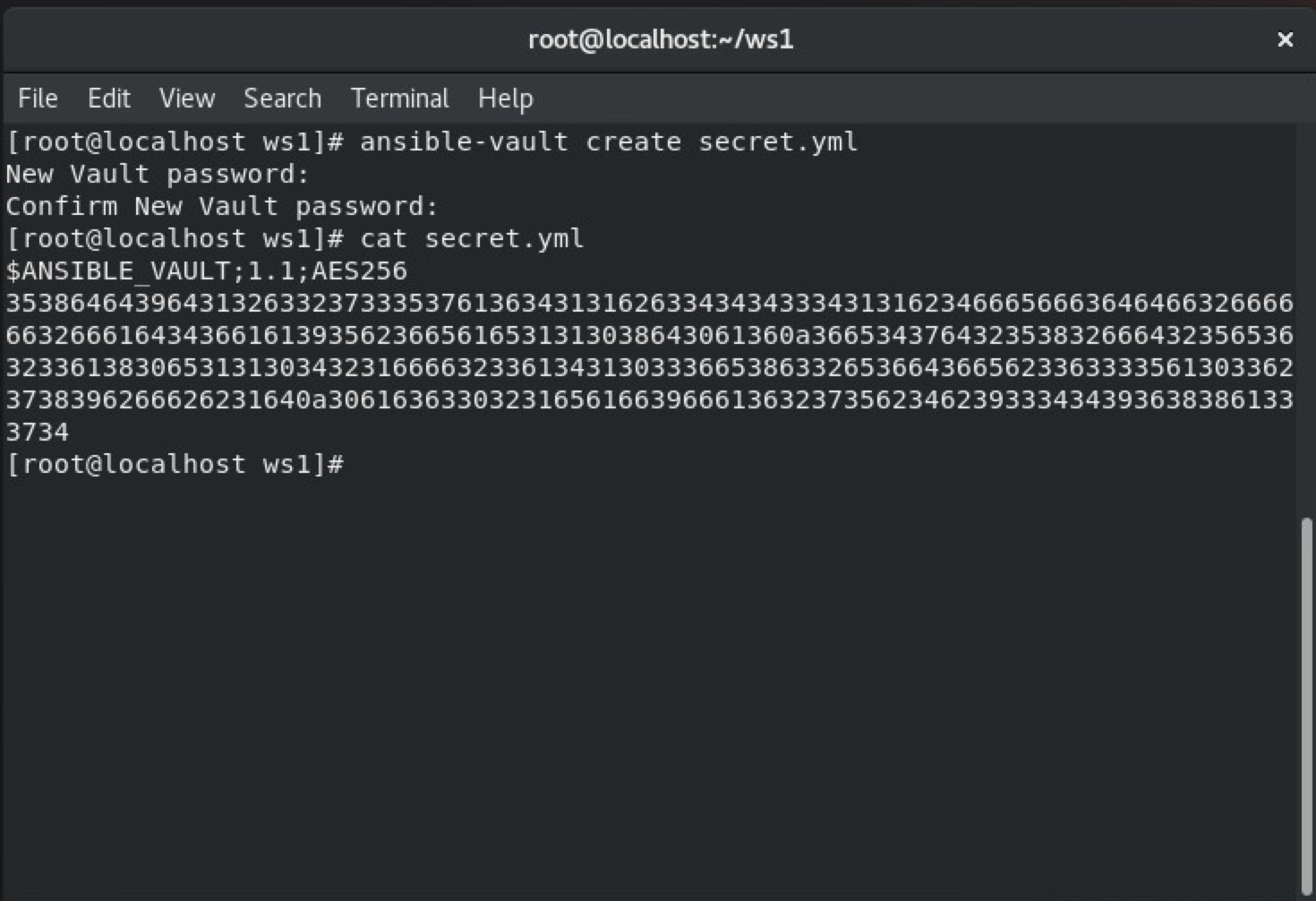
The ansible-vault command creates an encrypted file where you can store your confidential details.
ansible-vault create secret.yml
[ You might also like: A sysadmin's guide to configuring an email server ]
Gmail setup
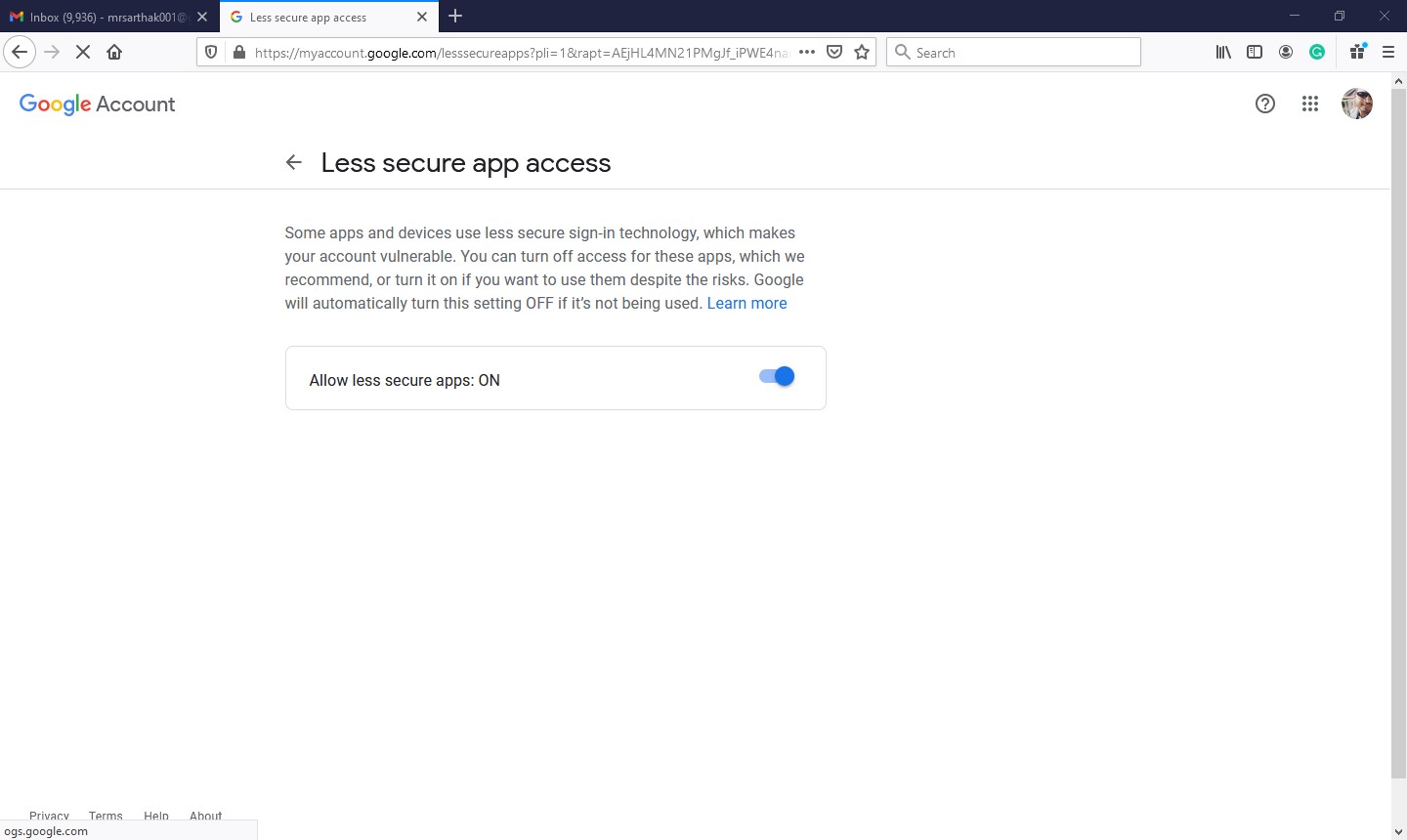
By default, Gmail doesn’t permit Less secure app access to their web server. For this, you have a solution: You can change the setting to enable Less secure app access.
Go to your Google account:
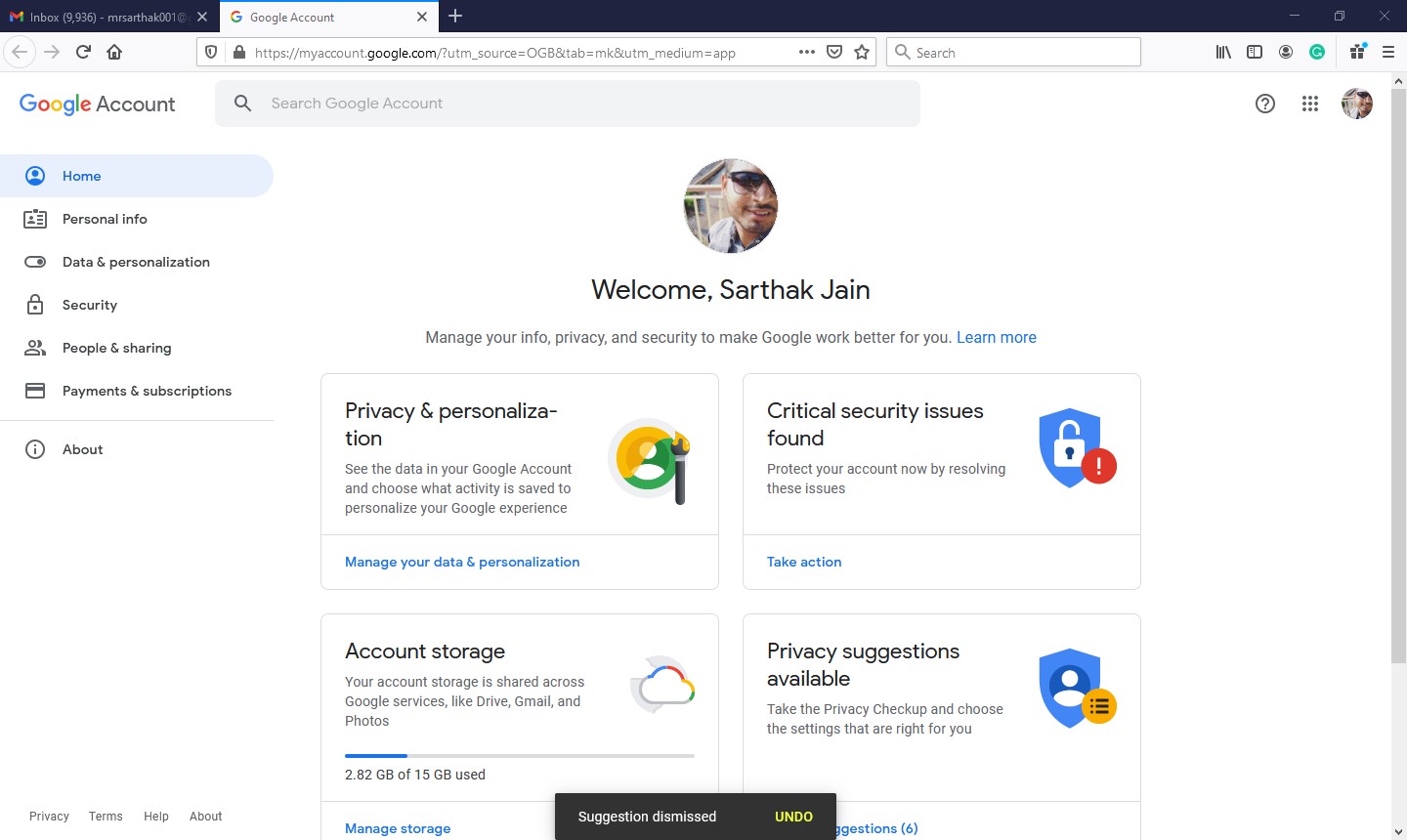
Click on Security and scroll down:
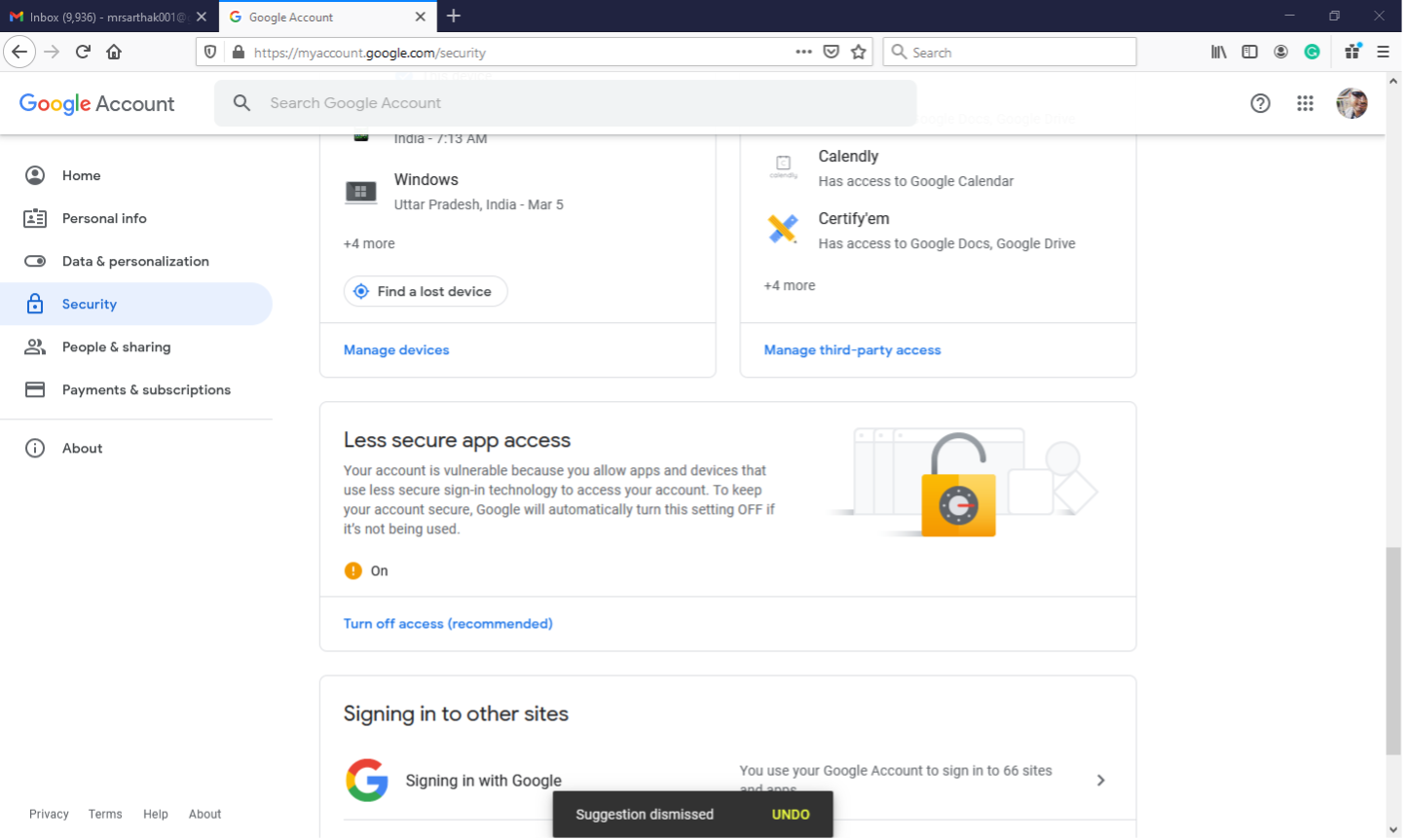
Click on Less secure app access and allow it:
Email Playbook
Configure the localhost as your web server, which is working on SMTP protocol over port 587. Username, password, and to fields are the Ansible modules. Subject and body are modules in which you can provide our subject and body content. The following is the email.yml file.
---
- hosts: localhost
  vars_files: secret.yml
  tasks:
  - name: Sending an email using Ansible
    mail:
      host: smtp.gmail.com
      port: 587
      username: 500069614@stu.upes.ac.in
      password: "{{ p }}"
      to: mrsarthak001@gmail.com
      subject: Email By Ansible
      body: Test successful
      delegate_to: localhost
Run the playbook
Run the playbook with the given command below. Use –ask-vault-pass flag while running the playbook with this keyword Ansible ask vault password and run your playbook.
ansible-playbook –ask-vault-pass email.yml
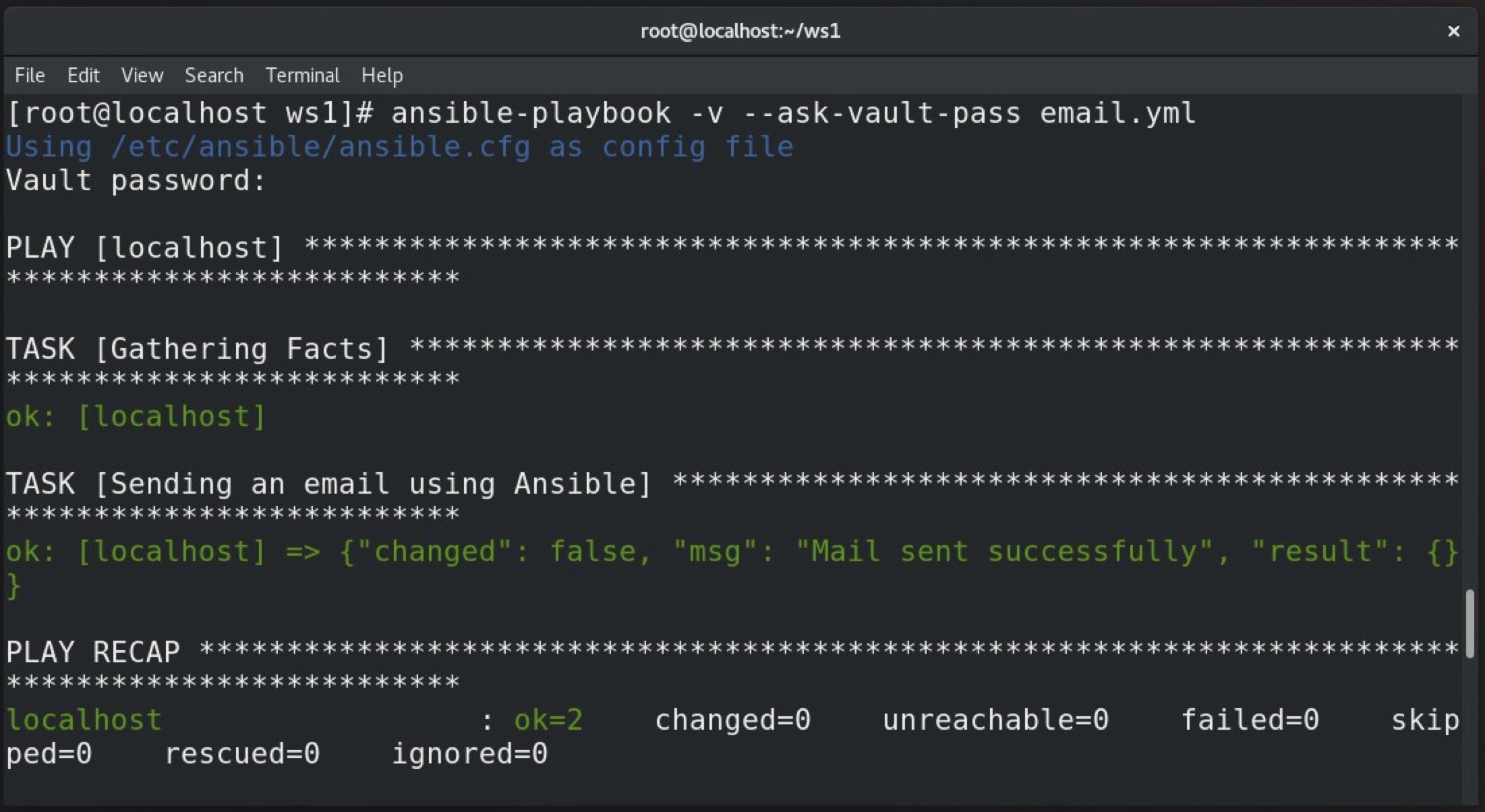
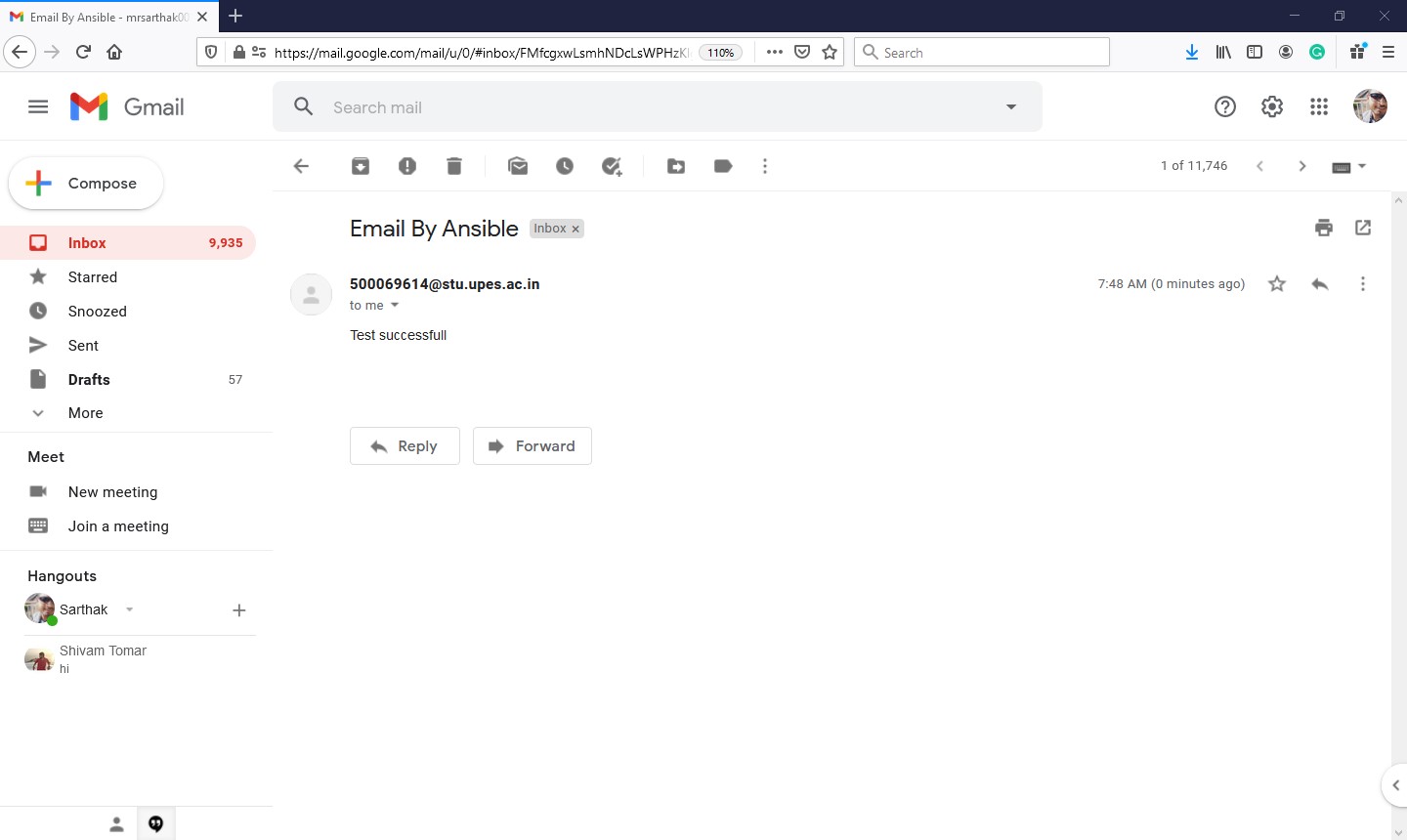
The email is sent successfully:
[ A free guide from Red Hat: 5 steps to automate your business. ]
Wrap up
These steps demonstrate how to configure Gmail to send email messages from Ansible. In addition, you can secure your passwords in Ansible Vault.
Sobre el autor
Sarthak Jain is a Pre-Final Year Computer Science undergraduate from the University of Petroleum and Energy Studies (UPES). He is a cloud and DevOps enthusiast, knowing various tools and methodologies of DevOps. Sarthak also Mentored more than 2,000 students Regarding the Latest Tech trends through their community Dot Questionmark.
Más como éste
Ansible Automation Platform 2.7: Guía de Visual Execution Environment Builder y detección de contenido
Red Hat Ansible Automation Platform: el futuro de la automatización de redes e infraestructura
Random Acts Of Automation | Compiler
Untangling Networks | Compiler
Navegar por canal

Automatización
Las últimas novedades en la automatización de la TI para los equipos, la tecnología y los entornos

Inteligencia artificial
Descubra las actualizaciones en las plataformas que permiten a los clientes ejecutar cargas de trabajo de inteligecia artificial en cualquier lugar

Nube híbrida abierta
Vea como construimos un futuro flexible con la nube híbrida

Seguridad
Vea las últimas novedades sobre cómo reducimos los riesgos en entornos y tecnologías

Edge computing
Conozca las actualizaciones en las plataformas que simplifican las operaciones en el edge

Infraestructura
Vea las últimas novedades sobre la plataforma Linux empresarial líder en el mundo

Aplicaciones
Conozca nuestras soluciones para abordar los desafíos más complejos de las aplicaciones

Virtualización
El futuro de la virtualización empresarial para tus cargas de trabajo locales o en la nube
