
We recently announced the general availability (GA) of managed identity and workload identity for Microsoft Azure Red Hat OpenShift clusters. With this, users benefit from short-lived, limited permission credentials that enhance security and reduce operational overhead that may otherwise come with longer lived credentials such as service principals.
Now, we’d like to call attention to a significant enhancement to the cluster creation process. A fully integrated portal experience for deploying managed identity-based Azure Red Hat OpenShift clusters is now available.
Simplicity and speed: Deploy in a few clicks
Creating a managed identity-based Azure Red Hat OpenShift cluster involves several steps:
- Creating user-assigned managed identities
- Performing role assignments with correct scopes
- Passing those identities into the cluster creation command
This process is necessary to realize the benefits of managed identities, but adds steps that could make cluster creation more complex.
With the new Azure portal experience, we have added the option to automate the entire process. You can now deploy a new, fully configured managed identity-based Azure Red Hat OpenShift cluster in just a few clicks.
The portal handles the heavy lifting, automatically creating all the necessary user-assigned managed identities and applying the appropriate role assignments on your behalf, simplifying the deployment process.
Demo of the portal experience
In the demo below, you will create a cluster using the defaults to see how easy the process is. You will start by clicking the Azure Red Hat OpenShift resource in the portal to enter the create flow. Next, select your resource group and enter a name for your cluster. You will then review your selections on the validation page and begin cluster creation.
Using your own identities
While the above process is perfect for quickly creating a cluster, many organizations already have existing, well-defined identity management strategies. For these use cases, the portal also provides an option to create a cluster using existing user-assigned managed identities and role assignments.
In the Authentication tab, there is a new section allowing you to select the Authentication type. This defines the authentication mechanism that the cluster uses. Managed identity is the default, but you can still select Service principal if desired.
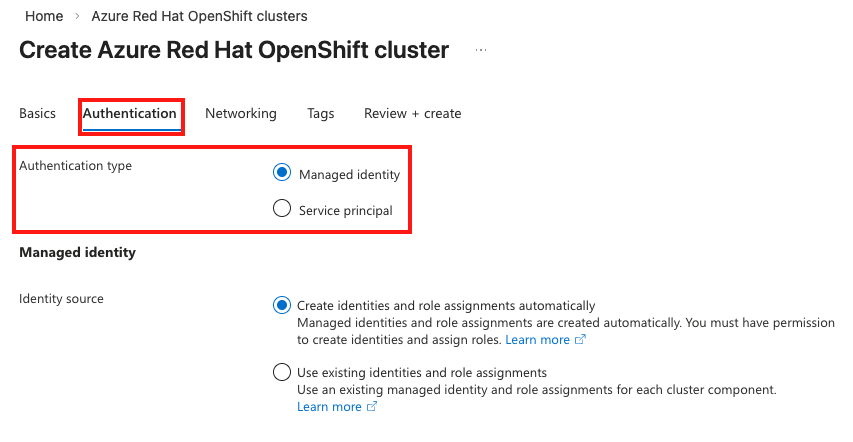
Figure 1. Selecting an authentication type
If you select Managed identity, you can select the source for your identities in the section underneath, with two options. The automated option will create the identities and role assignments for you, but be aware that the user that is logged into the portal must have the appropriate permissions to create identities and role assignments.
There is also an option to Use existing identities and role assignments. When you choose this option, a selection area will appear for each component. Clicking the Select link will open a managed identity selection blade that will allow you to choose the correct identity corresponding to that component.
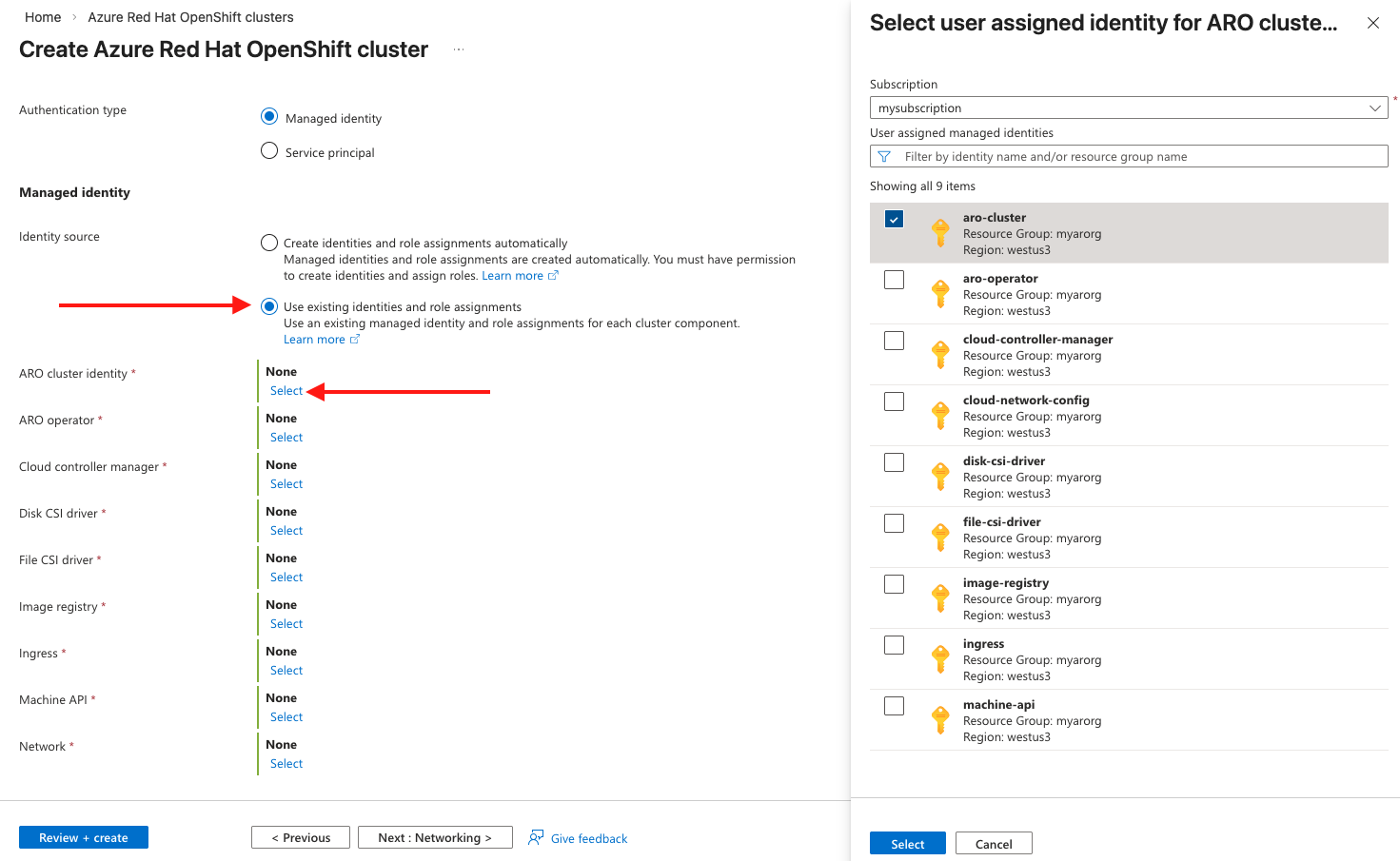
Figure 2. Choosing existing identities and role assignments
This flexibility allows you to follow your own process and requirements for identity creation while still benefiting from the streamlined provisioning experience in the portal.
Get started today
Managed identity based clusters are a cloud-native best practice for Azure Red Hat OpenShift which was covered in our public preview blog post. The new portal experience now combines that enhanced underlying security with a more streamlined, user-friendly workflow. You can access the new creation workflow directly in the Azure portal when provisioning your next Azure Red Hat OpenShift cluster.
For more details on Azure Red Hat OpenShift and managed identities, please refer to the documentation:
Prueba del producto
Red Hat OpenShift Container Platform | Versión de prueba del producto
Sobre el autor
Más como éste
Red Hat OpenShift: Supportability Review con IA
Modernice las máquinas virtuales en Google Cloud con Red Hat OpenShift Virtualization
Scaling with Orchestrators | Compiler
SREs on a plane | Technically Speaking
Navegar por canal

Automatización
Las últimas novedades en la automatización de la TI para los equipos, la tecnología y los entornos

Inteligencia artificial
Descubra las actualizaciones en las plataformas que permiten a los clientes ejecutar cargas de trabajo de inteligecia artificial en cualquier lugar

Nube híbrida abierta
Vea como construimos un futuro flexible con la nube híbrida

Seguridad
Vea las últimas novedades sobre cómo reducimos los riesgos en entornos y tecnologías

Edge computing
Conozca las actualizaciones en las plataformas que simplifican las operaciones en el edge

Infraestructura
Vea las últimas novedades sobre la plataforma Linux empresarial líder en el mundo

Aplicaciones
Conozca nuestras soluciones para abordar los desafíos más complejos de las aplicaciones

Virtualización
El futuro de la virtualización empresarial para tus cargas de trabajo locales o en la nube
