
The journey to enterprise-wide Kubernetes adoption can be challenging for organizations facing complex requirements within complex environments. Drawing on their expertise at the Red Hat OpenShift Commons Gathering, software engineering managers Joe McConnell and Randy Ellefson shared the lessons they learned while building a modern, multicloud Kubernetes platform for Northrop Grumman built on Red Hat OpenShift.
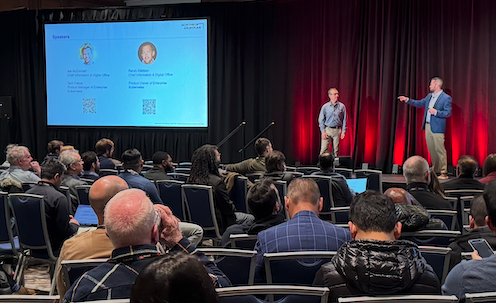
Image 1: From Left, Randy Ellefson and Joe McConnell, Northrop Grumman’s Chief Information and Digital Office
Standardizing on Red Hat OpenShift
Initially, Northrop Grumman was looking for a highly available, low-cost, multicloud, secure environment for containerized applications. They purchased Red Hat OpenShift to leverage the comprehensive suite of modern application tools to create a holistic, single platform. This strategic relationship with Red Hat was essential for support, as the company aimed to build a fully self-service platform.
A year after the initial deployment, the team achieved high availability and a fully self-service platform, allowing customers to trigger any request via an automated API. They also successfully implemented GitOps managed releases. This transition empowered the organization to achieve the following results:
- Red Hat OpenShift successfully enabled a self-service model, automating all customer requests via a streamlined API.
- By using Red Hat Advanced Cluster Security within the Red Hat OpenShift ecosystem, the team moved beyond a failed centralized model to a more flexible, automated process that allowed individual programs to efficiently scan and adjudicate their own vulnerabilities.
- The platform’s versatility allowed the team to pivot from complex, legacy migrations to rapidly onboarding greenfield applications and modern Commercial Off-The-Shelf (COTS) tools for AI and machine learning (M/L), providing customers with all the capabilities of a modern infrastructure, including a security-hardened environment.
They purchased Red Hat to help them navigate the complexity of their Kubernetes adoption. “By integrating a full suite of tools into a single platform, Red Hat enabled us to move away from disparate environments toward a solution that is both reliable and highly effective," said Joe McConnell.
Embracing a managed service for velocity and scale
The rise of COTS apps that have AI enablement capabilities and augmented reality tools, presented a new challenge: many required kubeadmin or admin-level privileges, which couldn't be allowed in shared tenancy clusters. Furthermore, customers' demands for cluster delivery shrank from weeks to hours.
This led Northrop Grumman to adopt Red Hat OpenShift Cluster-as-a-Service (CaaS). Adopting Azure Red Hat OpenShift—a managed service jointly operated by Red Hat and Microsoft—accelerated cluster automation by offloading the infrastructure burden to specialized Site Reliability Engineering (SRE) teams. While this shifted the focus toward application delivery, the team initially struggled with inconsistent deployments caused by varying versions of the Azure CLI and WSL on individual admin laptops. To solve this, they leveraged of OpenShift’s container-native strengths to develop 'build containers'—a collection of portable images containing standardized tools. This ensured that every OpenShift cluster was delivered as a consistent, compliant market product, effectively turning their deployment process into a reliable, repeatable Infrastructure as Code (IaC) pipeline.
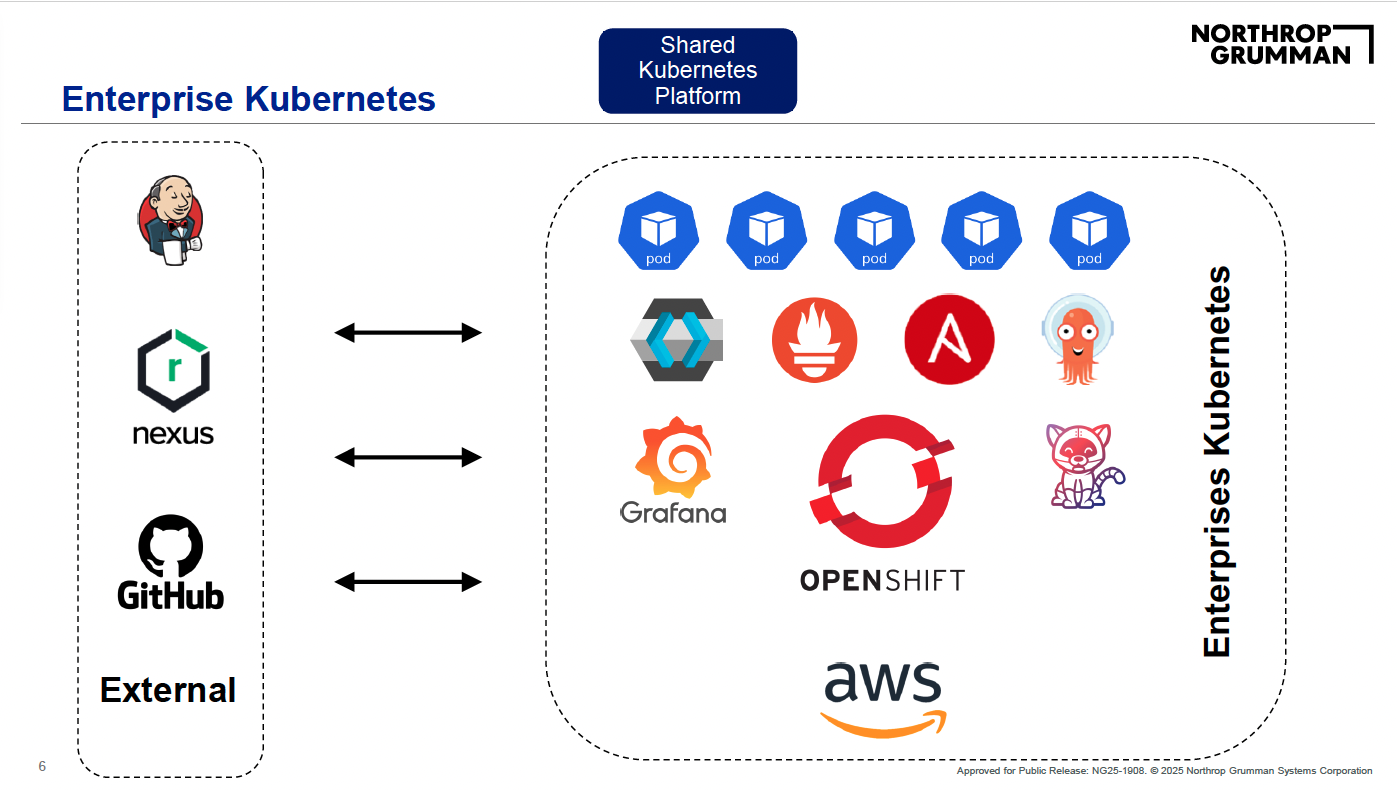
Image 2: Northrop Grumman’s shared enterprise Kubernetes platform
The push to hybrid cloud and GitOps
Building on this momentum, the team expanded their scope to deploy Red Hat OpenShift clusters across Microsoft Azure, AWS, and on-premise environments. Even in complex, disconnected settings, they maintained rigorous compliance with NIST 800-53 and CMMC 2 standards by applying the same GitOps principles and 'build container' concepts that had proven successful in their initial Azure Red Hat OpenShift rollout.
For bare-metal deployments, they used a multilayer approach:
- Layer 1: Ensuring hardware, network, and storage are in place, followed by a vanilla CoreOS and vanilla OpenShift install.
- Layer 2: Using ArgoCD to build out governance and common capabilities.
- Top stack: Laying down observability tools (Grafana, Prometheus, Loki), single sign-on (Keycloak), and a customer CI/CD pipeline using ArgoCD and Tecton. Red Hat Advanced Cluster Management for Kubernetes and Red Hat Advanced Cluster Security for Kubernetes are also installed for governance, compliance, and vulnerability scanning.
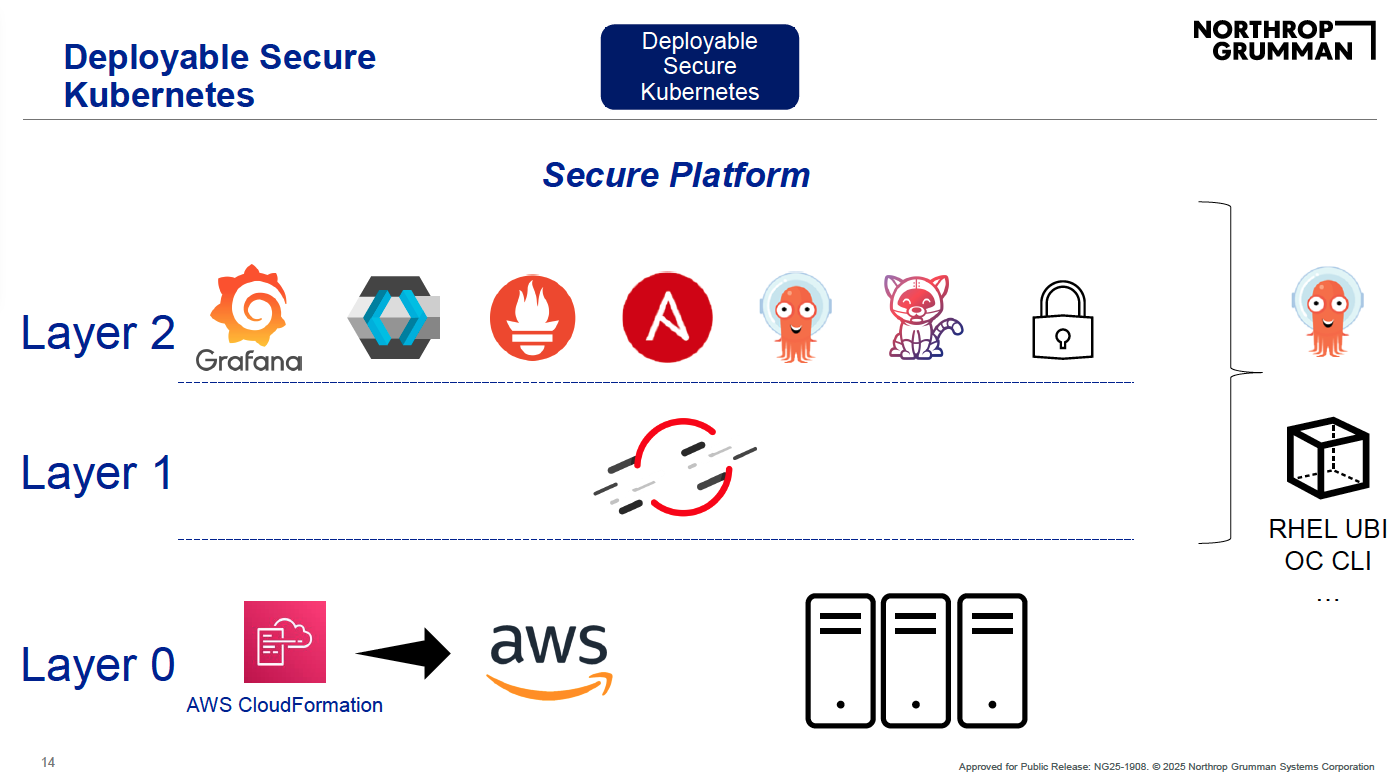
Image 3: Northrop Grumman’s layered approach for deploying security-focused Kubernetes
The decision to pivot to using ArgoCD strictly for installation automation (at Layer 2) proved highly beneficial. This standardized approach has drastically reduced Day 2 operational overhead, enabling a single operations team to manage many day-to-day tasks, such as patching, across all clusters.
Next stop: Red Hat OpenShift AI and high-performance computing
Looking ahead, Northrop Grumman is focused on maximizing its current investments by integrating Red Hat OpenShift AI to streamline its AI/ML data processing and platform capabilities.
This will be central to their next major milestone: delivering a next generation, on-premise GPU farm for high-performance computing (HPC) and AI workloads on an ambitious timeline. The rapid delivery of this GPU farm, in a matter of months, will be powered by OpenShift AI. This collaboration will produce a standardized environment combining all necessary hardware, software licensing, and services in a bundle, which can be repeated in disconnected environments.
They are also exploring Red Hat OpenShift Dev Spaces and hosted control planes for disconnected and classified environments. For their next step in AWS, they plan to use Red Hat OpenShift Service on AWS, which offers hosted control planes. This dedication to a hybrid strategy, unified by Red Hat OpenShift, is the foundation for their next generation of critical development.
Are you ready to build, run, and scale AI-enabled applications on the world’s leading enterprise Kubernetes platform? Explore Red Hat OpenShift and OpenShift AI today.
- Take the next step with Red Hat OpenShift and Red Hat OpenShift AI.
- Watch this session from OpenShift Commons in Atlanta.
- Read TechTarget’s article about Northrop Grumman's adoption of Infrastructure-as-Code and GitOps on Red Hat OpenShift.
Prueba del producto
Red Hat OpenShift Container Platform | Versión de prueba del producto
Sobre el autor
Debbie Margulies is a principal product marketing manager for Red Hat OpenShift and has been at Red Hat since 2019 through the acquisition of StackRox.
Más como éste
OpenShift: Integración consistente para la empresa híbrida
¿Tu plataforma de aplicaciones está preparada para lo que viene?
Command Line Heroes: tercera temporada: Primero lo BASICo
Compiler: Re:Role | The Designer And The Blueprint
Navegar por canal

Automatización
Las últimas novedades en la automatización de la TI para los equipos, la tecnología y los entornos

Inteligencia artificial
Descubra las actualizaciones en las plataformas que permiten a los clientes ejecutar cargas de trabajo de inteligecia artificial en cualquier lugar

Nube híbrida abierta
Vea como construimos un futuro flexible con la nube híbrida

Seguridad
Vea las últimas novedades sobre cómo reducimos los riesgos en entornos y tecnologías

Edge computing
Conozca las actualizaciones en las plataformas que simplifican las operaciones en el edge

Infraestructura
Vea las últimas novedades sobre la plataforma Linux empresarial líder en el mundo

Aplicaciones
Conozca nuestras soluciones para abordar los desafíos más complejos de las aplicaciones

Virtualización
El futuro de la virtualización empresarial para tus cargas de trabajo locales o en la nube
