Automation analytics is a suite of cloud services available on the Red Hat Hybrid Cloud Console, powered by an expert system that is built upon years of data collected from across Red Hat’s worldwide customer base. For Red Hat Ansible Automation Platform customers, it provides predictive reporting of your Ansible automation.
This blog breaks down the new reports that analyze module usage within the Ansible Automation Platform.
In summary, module usage is really important because modules can contain security vulnerabilities and require updates to support new integrations of hardware or software. It is paramount to know which modules you are using in your automation.
Let's look at each report and what each of them can deliver for you.
Reports
Most used modules
Description: The number of job template and task runs, grouped by Ansible module usage.
Use Case: You can use this report to discover which modules are being used the most across your automation, helping you to check things like organization-wide adoption of purpose-built modules over potentially less performant, catch-all solutions.
Example:
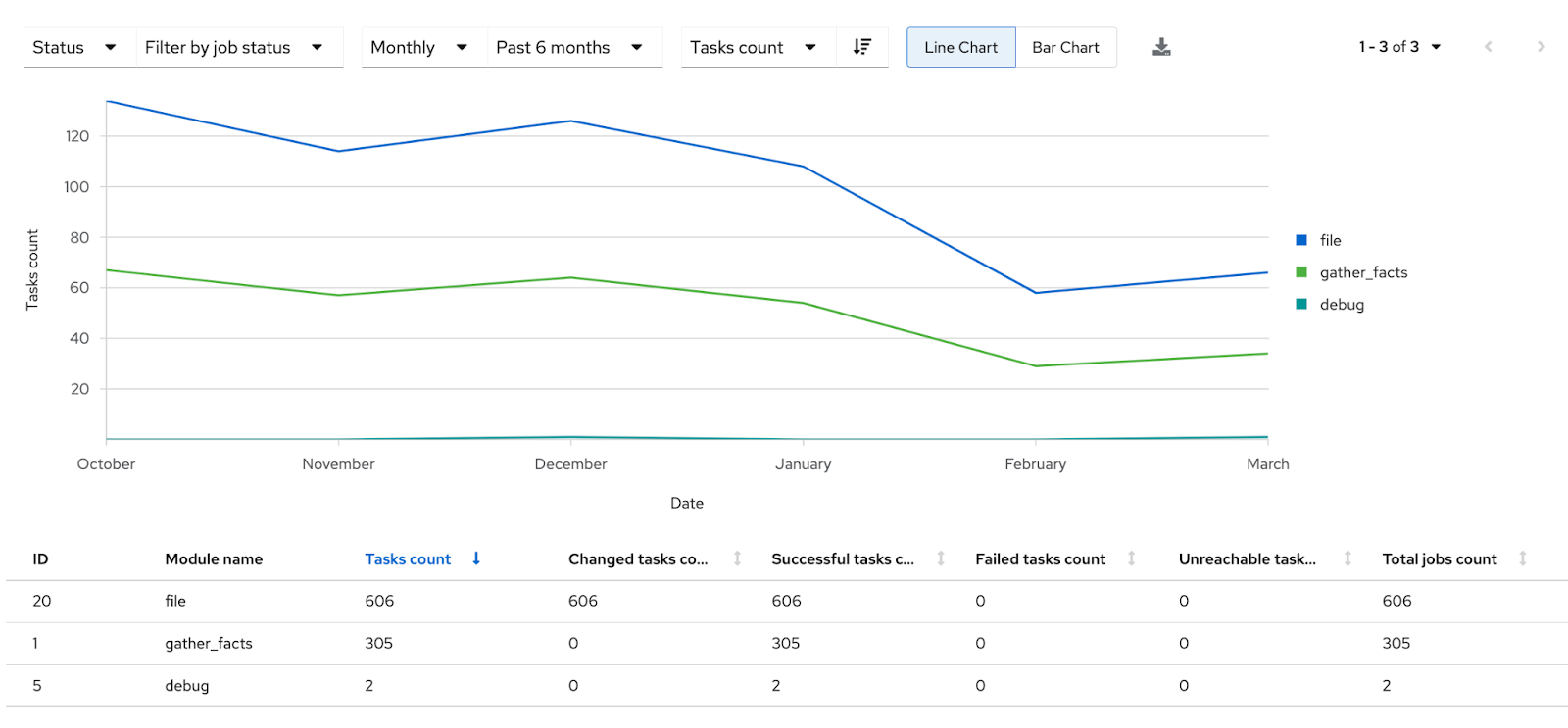
This chart shows how the file and gather_facts modules are the most used, but also shows that over the past 6 months their overall use is in decline.
Module usage by organization
Description: The number of job template and task runs for a specified set of Ansible modules, grouped by organizations from automation controller.
Use Case: You can use this report to see which organizations are using particular modules, helping you to check things like adoption of purpose-built modules of particular teams.
Example:
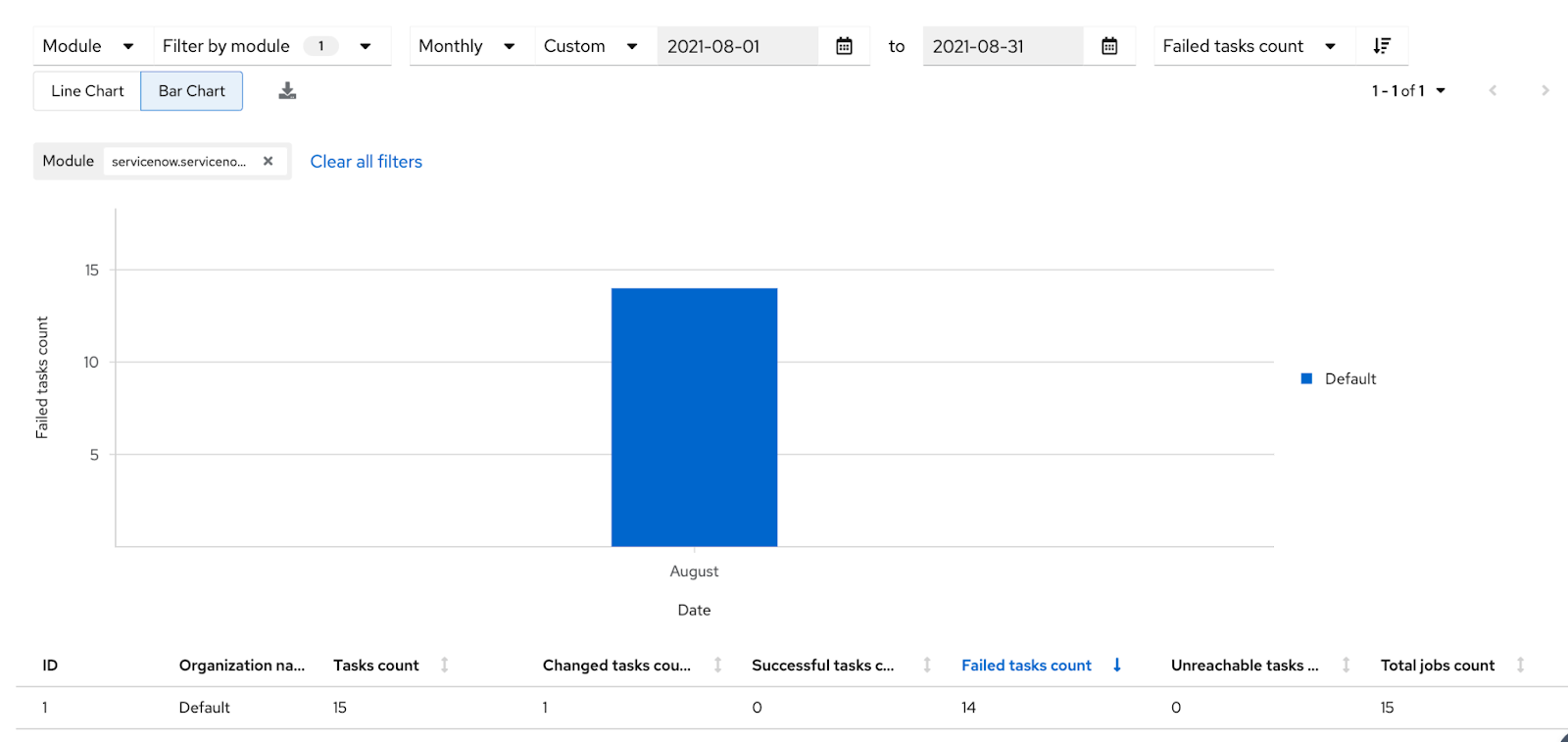
I have filtered this report for specific details to use as an example. I wanted to see which organizations are using a module that has been causing problems. So I filtered to a specific month period, selected the ServiceNow module in question and changed to failed task count.
Many of our customers create organizations based on their team structures, such as Linux, Windows and Networks. With this report, you can see which teams are using what modules and to what frequency or success.
Module usage by job template
Description: The number of job template and task runs for a specified set of Ansible modules, grouped by job template.
Use Case: You can use this report to find which job templates are using particular modules, helping you to check things like adoption of purpose-built modules for particular templates.
Module usage by task
Description: The number of job template and task runs for a specified set of Ansible modules, grouped by task.
Use Case: You can use this report to find which tasks are using particular modules, helping you to check things like adoption of purpose-built modules for particular tasks.
Exporting
Automation analytics reports can now be saved as a PDF file or emailed as a link from within the console.redhat.com platform. PDF exports can include the roll up rows or expand all rows to multiple sheets; the bar or line graph is also included in the export.

Roadmap
New reports are being added all the time, and you can see any new ones that are close to being released by changing into beta mode. Click on the settings wheel within console.redhat.com and select “Use Beta” and you may see new reports.

We are adding the ability to email a magic link to unauthenticated users of the platform. The use case for this is for administrators to be able to email a report to their superiors whom may not have access to the platform. This feature is coming very soon.
The roadmap for reports includes the ability to schedule the sending of the reports automatically by email, and direct api access to the report results so you can integrate with 3rd party dashboarding tools.
Sobre el autor

Más como éste
Friday Five — May 15, 2026 | Red Hat
Agent-ready AI means token-ready strategy
Collaboration In Product Security | Compiler
Keeping Track Of Vulnerabilities With CVEs | Compiler
Navegar por canal

Automatización
Las últimas novedades en la automatización de la TI para los equipos, la tecnología y los entornos

Inteligencia artificial
Descubra las actualizaciones en las plataformas que permiten a los clientes ejecutar cargas de trabajo de inteligecia artificial en cualquier lugar

Nube híbrida abierta
Vea como construimos un futuro flexible con la nube híbrida

Seguridad
Vea las últimas novedades sobre cómo reducimos los riesgos en entornos y tecnologías

Edge computing
Conozca las actualizaciones en las plataformas que simplifican las operaciones en el edge

Infraestructura
Vea las últimas novedades sobre la plataforma Linux empresarial líder en el mundo

Aplicaciones
Conozca nuestras soluciones para abordar los desafíos más complejos de las aplicaciones

Virtualización
El futuro de la virtualización empresarial para tus cargas de trabajo locales o en la nube
