
Embracing container orchestration has many implications for an enterprises’ technology stack. An image registry becomes a critical component of the deployment pipeline. Red Hat Quay is a mature enterprise-centric container image registry which has a rich history of meeting the needs of cloud native technologists.
When Red Hat acquired CoreOS earlier this year, we were looking to amplify our leadership in enterprise container-based solutions. CoreOS at the time had two primary products, Tectonic and Quay. Quay was added directly into Red Hat’s portfolio of products and renamed Red Hat Quay.
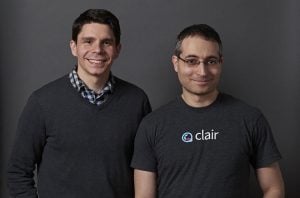 The creators of Quay: Jake Moshenko is on the left and Joey Schorr is on the right.
In 2013 Quay was the first enterprise hosted registry. Offering innovative capabilities such as image rollback and zero-downtime garbage collection, it gained traction for its excellent developer experience and highly responsive support. Quay was acquired in 2014 by CoreOS to bolster its mission to secure the internet through automated operations. Shortly after the CoreOS acquisition, the on-premise offering of Quay was released.
Quay Enterprise was the first on-premise registry, delivering highly available geographically replicated deployments. Baked into Quay Enterprise were integrations with multiple authentication and authorization systems, permitting fine grained access control of repositories. Additional critical security features, such as team and organization mapping, CLI password encryption, and meticulous event logging set Quay apart from other registries. Clair, a leading open source container image vulnerability scanner was developed and optimized for Quay Enterprise. This feature-set led Quay Enterprise to be adopted by organizations like Qualcomm, NASA, and Autodesk.
 Complete control over who can access your containers, track changes, and automatically scan for vulnerabilities.
In January 2018, CoreOS was acquired by Red Hat, and Quay joined the Red Hat portfolio of products. With the acquisition came a wealth of additional resources for the development and support of Quay. Quay Enterprise has become Red Hat Quay, and is available in tandem with Red Hat OpenShift. In upcoming releases, the two will have increasingly tighter integrations, so it is an ideal choice for prospective and current OpenShift customers. OpenShift is currently packaged with a basic image registry. By adding Red Hat Quay to their deployments, OpenShift customers can take advantage of advanced capabilities such as geographic replication, image rollback, and event logging.
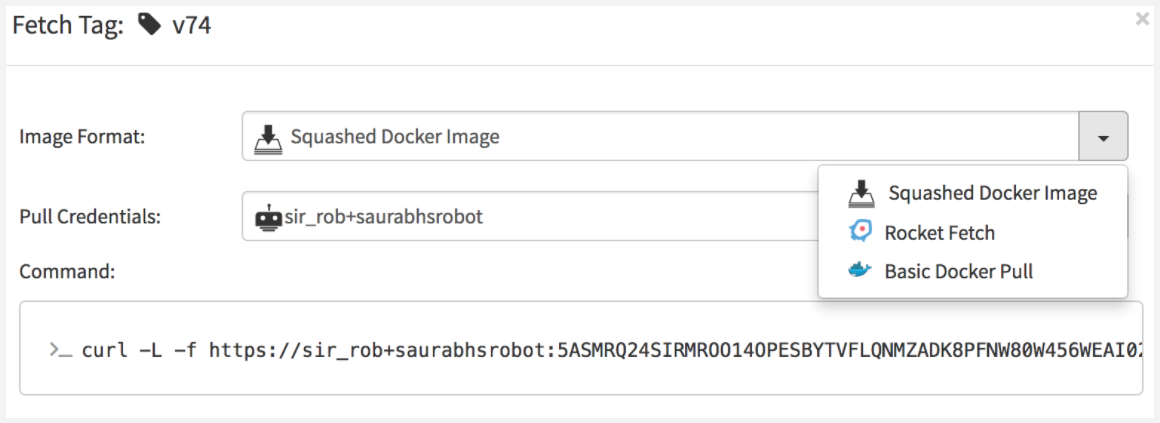 Build and deploy containers automatically in response to git pushes: GitHub, BitBucket, Gitlab, and others. Secured with a robot account, and an easy-to-audit history.
Comparison of Red Hat Registries
September 2018
| Default OpenShift Registry | Red Hat Quay | Quay.io (hosted) | |
| Hosted | X, OpenShift Online & Dedicated | X | |
| Basic Registry Features (Push/Pull/Sync/Prune) | X | X | X |
| Role-Based Access Control | X | X | X |
| Vulnerability Scanning | X, only for images with Red Hat Enterprise Linux | X | X |
| Build triggers | X | X | X |
| High availability | X, OpenShift Dedicated | X | X |
| Image rollback | X | X | |
| Activity logging | X | X | |
| Robot accounts | X | X | |
| Automatic layer squashing | X | X | |
| Geographic Replication | X | Data replication via global cdn | |
| Torrent Distribution | X | X | |
| Multiple authentication providers supported (LDAP, OAuth/OIDC, Keystone, etc.) |
X | ||
| Prometheus support | X |
Organizations like Cisco have seen the benefits of using Quay and OpenShift together. Check out their talk at the 2018 OpenShift Commons Gathering about their experience using Red Hat Quay and OpenShift.
Red Hat Quay can be used separately or in conjunction with OpenShift. It is compatible with any container environments or orchestration platforms. Quay.io will continue to be available as a hosted offering, meeting the needs of smaller teams and those who do not need a registry behind their own firewall.
For more information, download the Quay datasheet.
À propos de l'auteur
Plus de résultats similaires
Partenaires Red Hat : l'atout commercial ultime pour les télécommunications
Le paradoxe agentique et l'intérêt de l'IA hybride
Crack the Cloud_Open | Command Line Heroes
Edge computing covered and diced | Technically Speaking
Parcourir par canal

Automatisation
Les dernières nouveautés en matière d'automatisation informatique pour les technologies, les équipes et les environnements

Intelligence artificielle
Actualité sur les plateformes qui permettent aux clients d'exécuter des charges de travail d'IA sur tout type d'environnement

Cloud hybride ouvert
Découvrez comment créer un avenir flexible grâce au cloud hybride

Sécurité
Les dernières actualités sur la façon dont nous réduisons les risques dans tous les environnements et technologies

Edge computing
Actualité sur les plateformes qui simplifient les opérations en périphérie

Infrastructure
Les dernières nouveautés sur la plateforme Linux d'entreprise leader au monde

Applications
À l’intérieur de nos solutions aux défis d’application les plus difficiles

Virtualisation
L'avenir de la virtualisation d'entreprise pour vos charges de travail sur site ou sur le cloud
