|
|
|
|
|
|
Red Hat OpenShift: Your intelligent platform for applications and virtualization
Join our Red Hat OpenShift roadmap session for an overview of its evolution into an intelligent application platform.
Discover how OpenShift integrates agentic AI to streamline operations, accelerate troubleshooting, and improve efficiency for container, VM, and AI/ML workloads. We will also cover new support for post-quantum cryptography, native multi-cluster capabilities, extended lifecycles, and digital sovereignty.
Learn how these built-in capabilities simplify development and management across hybrid cloud environments, positioning OpenShift as your catalyst for innovation and success in today’s digital ecosystem. Simon Tan, OpenShift Virtualization Senior Specialist Solution Architect, Red Hat |
|
|
Modernize fast without losing your safety net
Join Red Hat and Veeam to learn how to modernize on OpenShift without leaving a protection gap behind you regardless running on containers or virtualization. Veeam Backup & Replication v13.1 now protects OpenShift Virtualization VMs natively, so teams lifting and shifting off legacy hypervisors keep the workflows, repositories, and immutable backups they already trust. Khoo Wen Keat, Senior Sales System Engineer, Veeam Software |
|
|
Powering the future: The next-generation IT automation platform
Already have automation in place but unsure how to integrate AI? You don't need to start from scratch. Instead, you can build directly on your existing investments. In this session, we will demonstrate how to converge task-driven, event-driven, and AI-driven automation to solve complex operational challenges. You will learn: How to harmonize task-driven, event-driven and AI-driven automation into a unified workflow, how Red Hat Ansible Automation Platform serves as the central orchestration engine across these different types of automation and why existing governance and security policies are critical when scaling AI. Through a practical, real-world walkthrough, discover how to operationalize AI without disrupting your production infrastructure. If you want to leverage AI while maintaining operational stability, this session is for you. Robert Agustian, Automation Platform Sales Specialist, Red Hat |
|
|
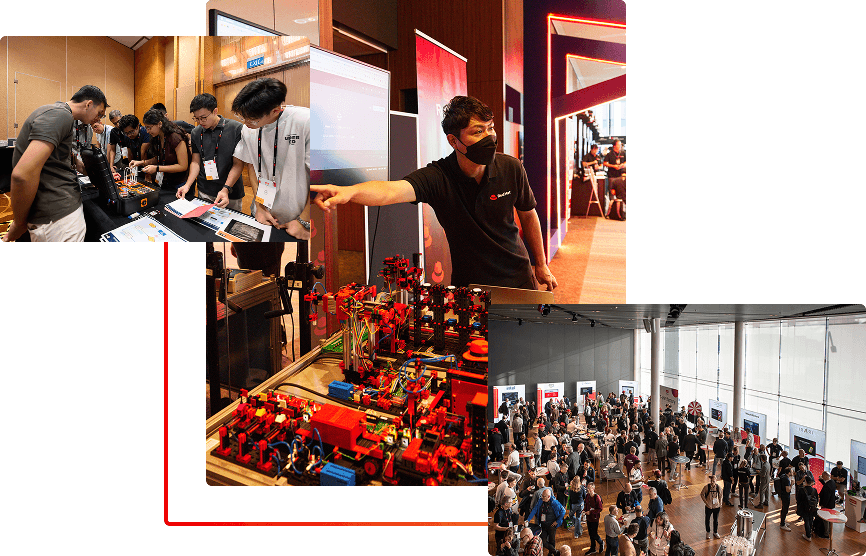
Coffee break, networking and solution showcase
|
|
|
Navigating the challenges of sovereign AI: From principles to deployment patterns
As organizations transition AI from experiments to foundational applications, they face complex mandates. True Sovereign AI requires more than data localization; it demands a comprehensive strategy across data, operations, assurance, and technology. Many leaders mistakenly believe this necessitates fully isolated, on-premise deployments, which can hinder scalability and create fragmentation. This session demonstrates how to translate these constraints into scalable architectures using a pattern-based approach. We will explore deployment models, such as the Sovereign Cloud Pattern, to help balance regulatory requirements with AI innovation. Attendees will learn to establish a layered platform architecture for a closed-loop AI lifecycle, ensuring models and data remain within legal boundaries while providing the verifiable audit trails required for trust. Join us to discover how to leverage open hybrid foundations to deploy policy-driven, auditable Sovereign AI at scale.
Rambabu Parvatina, IBM Technical Partner, Global Solutioning, IBM Consulting Sivaram Shunmugam, Ecosystem Solutions Architecture Director, APAC, Red Hat
|
|
|
Stabilize costs and simplify operations with HPE Morpheus Software and Red Hat
As organizations face growing virtualization disruption, rising licensing costs, and increased vendor lock-in, enterprises are seeking a more open, cost-effective, and future-ready approach to managing their hybrid cloud environments. HPE Morpheus Enterprise, together with Red Hat OpenShift Virtualization and HPE GreenLake, delivers a modern hybrid cloud platform that simplifies operations, accelerates automation, and provides greater flexibility across on-premises and public cloud environments. Jack Lean, Country Presales Manager, Hewlett Packard Enterprise, Malaysia |
|
|
Navigating the AI and quantum frontier with Red Hat Enterprise Linux
The next generation of Red Hat Enterprise Linux (RHEL) is here, designed to accelerate IT operations while future-proofing your critical infrastructure. This session explores how the latest RHEL updates help you balance rapid innovation with uncompromising security. Key highlights include: AI-Powered operations: streamline maintenance and reduce toil with advanced AI-driven tools and AI-guided upgrades. Next-gen security: protect your environments against emerging threats using sealed images and quantum-resistant certificates. Hybrid Cloud Efficiency: Scale seamlessly with robust image-mode enhancements and deep Red Hat Satellite lifecycle management integration. Join us to discover how to maintain rock-solid stability while empowering modern enterprise workloads across any scale. Gulshan Prasad, Specialist Solution Architect, APAC, Red Hat |
|
|
From zero CVE to zero trust
The "Mythos moment" has arrived, and frontier AI is now capable of autonomously discovering, chaining, and exploiting vulnerabilities at machine speed. How do you defend your infrastructure, when the time to exploit vulnerabilities is now measured in hours, not on weeks?
In this session we'll explore how Red Hat takes a "Defence in Depth" approach across our products. We'll explore new capabilities like Red Hat Hardened Images, the Zero Trust Workload Identity Operator, and even using AI to better secure AI.
Join this session to learn how you can better use the "batteries included" security capabilities with your Red Hat subscriptions. Cheng Kuan Gan, Associate Principal Specialist Solution Architect, Red Hat |
|
|
|
|
Turning AI ambition into AI reality: How Red Hat AI Enterprise delivers production-ready AI with confidence, control, and efficiency
Join Red Hat as we tackle why most AI initiatives stall, not because the models don't work, but because organisations can't operationalise them.
We'll identify the four barriers to real AI value: spiralling economics, safety and trust gaps, inconsistent quality, and the struggle to reach production.
Underlying all four is one root cause: embedding non-deterministic models into business processes that demand predictability. We'll unpack the six controls that resolve this tension and turn ambition into reliable, governed AI systems, and introduce GenAIOps: the discipline, practices, and platform capabilities that make those controls real at enterprise scale.
Walk away with a clear framework for assessing where your own AI initiatives stand and what's needed to get them to production with confidence. Sandip Sharma, AI Sales Specialist - Cross Segment, Red Hat |
|
|
Accelerate OpenShift with Dell Private Cloud, powered by Dell Automation Platform
This session highlights how Dell streamlines OpenShift deployment and operations with validated blueprints, centralized orchestration, and full-stack lifecycle management. It positions the solution as a way to reduce operational complexity while keeping infrastructure flexible, secure, and easy to manage. Oo, Htoon Ko Ko, Red Hat Specialist Solutions Architect, Dell Technologies |
|
|
Become your organization’s AI provider: Private model-as-a-service with Red Hat AI
AI adoption often leads to siloed models, fragmented infrastructure, and governance challenges. This session explores how Red Hat AI enables organizations to become their own Private Model-as-a-Service provider, delivering secure, governed AI models through self-service APIs.
Learn how to centralize model serving, optimize GPU utilization, enforce governance, and provide a scalable AI platform across hybrid cloud environments, empowering developers to consume AI without managing the underlying infrastructure. Jing Wen Ng, Specialist Solution Architect, AI, APAC, Red Hat |
|
|
Coffee break, networking and solution showcase
|
|
|
Implementing a trusted agentic software factory
Join Red Hat as we explore how AI agents are reshaping software development and why the security foundations built for human-speed development can't keep pace with machine-speed risk.
Regulators are raising the bar for secure software supply chains and AI governance as autonomous coding agents move from novelty to mainstream practice, creating both opportunity and risk at speed. We'll introduce the Trusted Software Factory: an SLSA Level 3-aligned architecture that embeds security, policy enforcement, and traceability directly into the build pipeline, built on Red Hat OpenShift Platform Plus and the Red Hat Advanced Developer Suite. We'll then look ahead to the agentic SDLC spectrum, from simple copilots to autonomous, self-directed development agents, and to what it takes to safely operationalise agentic coding at enterprise scale.
Walk away with a practical model for securing software as development itself becomes agentic. Faruq Zafir, OpenShift Specialist Solution Architect, ASEAN, Red Hat |
|
|
From internal automation to AIOps transformation
AI transformation does not begin with technology alone—it starts by identifying real operational challenges and proving value from within.
In this session, Wiki Labs shares its practical journey from adopting AI and automation internally to helping enterprises modernise their IT operations at scale. The presentation explores how internal use cases such as automated code reviews, intelligent ticket triage, knowledge RAG systems and process automation helped establish the foundation for broader enterprise adoption. The session will then examine how technologies including Red Hat Ansible Automation Platform, Red Hat OpenShift and OpenShift AI can support the evolution from traditional infrastructure operations toward hybrid cloud automation, intelligent observability and event-driven remediation. Attendees will gain a practical perspective on building an AI maturity roadmap—from standardising and automating foundational operations to introducing AI-driven insights and ultimately progressing toward proactive, self-healing AIOps environments—while maintaining governance, security and measurable business outcomes. Alban Seah, Chief Technology Officer, Wiki Labs |
|
|
Operationalizing the full AI stack with Red Hat AI: From bare metal to Agentic AI
Agentic AI is reshaping enterprise application development, but realizing its value requires more than deploying models. It requires an operational AI platform spanning infrastructure, inference, model serving, evaluation, governance, and lifecycle management.
This session explores how Red Hat AI operationalizes the full AI stack, from Model as a Service, AgentOps, AI Safety and Evaluation for production workloads. Attendees will learn how Red Hat AI provides a secure, scalable, and open foundation for building, deploying, evaluating, and governing AI applications across hybrid cloud environments. The presentation also examines emerging trends including open weight models, token economics, AI governance, and the evolution toward agentic AI.
Through architectural guidance and real-world examples, participants will gain practical strategies for operationalizing enterprise AI with continuous evaluation, observability, security, and governance while maintaining flexibility, compliance, and control. Cheng Bin Tham, AI Senior Specialist Solution Architect, APAC, Red Hat |
|
|
Unlock AI-driven automation: From AIOps insights to trusted action
Your observability and AI platforms are generating insights faster than teams can act on them. Yet insights alone do not resolve incidents. Every manual handoff between detection and remediation adds delay, inconsistency, and operational risk.
In this session, we will explore the missing layer in many AIOps strategies: a trusted, governed execution framework that transforms insights into action while preserving the auditability, change control, and compliance enterprise operations demand.
Using Red Hat Ansible Automation Platform, we will show how organizations are closing the loop between insights and action through automated remediation, self-healing workflows, and intelligent orchestration, while establishing the governance and execution foundation required for agentic AI. Darrick Leong, Ansible Specialist Solution Architect, Red Hat |
|