
Durante la creazione e la gestione di ambienti di esecuzione coerenti, gli ingegneri della piattaforma e gli sviluppatori perdono regolarmente tempo prezioso per identificare le dipendenze, rintracciare le raccolte di contenuti sparse nei diversi repository e gestire configurazioni manuali della sintassi.
Con il rilascio di Red Hat Ansible Automation Platform 2.7, queste sfide appartengono al passato. L'execution environment builder e l'esperienza unificata di content discovery all'interno del portale di automazione collaborano per ridurre drasticamente i tempi di automazione, includendo la governance sin dall'inizio.
Ecco come queste funzionalità eliminano gli attriti operativi e favoriscono la coerenza in tutta l'organizzazione.
Visual execution environment builder
In passato, la creazione di ambienti di esecuzione personalizzati richiedeva una profonda familiarità con la sintassi dei file di definizione. Il nuovo visual execution environment builder elimina questo ostacolo grazie a un flusso di lavoro guidato passo dopo passo.
- Authoring visivo senza incertezze: crea ambienti di esecuzione coerenti tramite un'interfaccia intuitiva che elimina completamente gli errori manuali di sintassi YAML e la complessità della riga di comando.
- Parti da basi consolidate: basa il tuo lavoro su modelli predefiniti o personalizzati, anziché iniziare da zero. Red Hat fornisce modelli consigliati di ambienti di esecuzione su misura per domini IT specifici, e le organizzazioni possono aggiungere i propri modelli approvati per mantenere gli standard strutturali.
- Integrazione e individuazione automatizzata: individua e sincronizza in modo semplice le raccolte Red Hat Ansible Certified Content Collections e le raccolte personalizzate del tuo team archiviate GitHub o GitLab. L'interfaccia riunisce tutti i repository Git e i canali di automazione in un unico catalogo ricercabile, con opzioni flessibili per la selezione con un clic e il caricamento manuale.
- Generazione automatizzata dell'output: una volta completata la configurazione visiva, lo strumento genera automaticamente il file di definizione completo dell'ambiente di esecuzione, offrendoti opzioni immediate per pubblicarlo direttamente in un repository o scaricarlo per il tuo progetto.
Pipeline di compilazione automatizzata: puoi anche impostare il builder per predisporre la struttura di un repository GitHub completo con una pipeline di build automatizzata. Seleziona un registro di destinazione e il flusso di lavoro GitHub Actions generato gestirà la creazione dell'immagine del container e il pushing automatico nel registro, fornendo un ambiente di esecuzione pronto all'uso, senza dover usare la riga di comando.

Immagine 1: Seleziona le raccolte disponibili da aggiungere all'interno del builder.
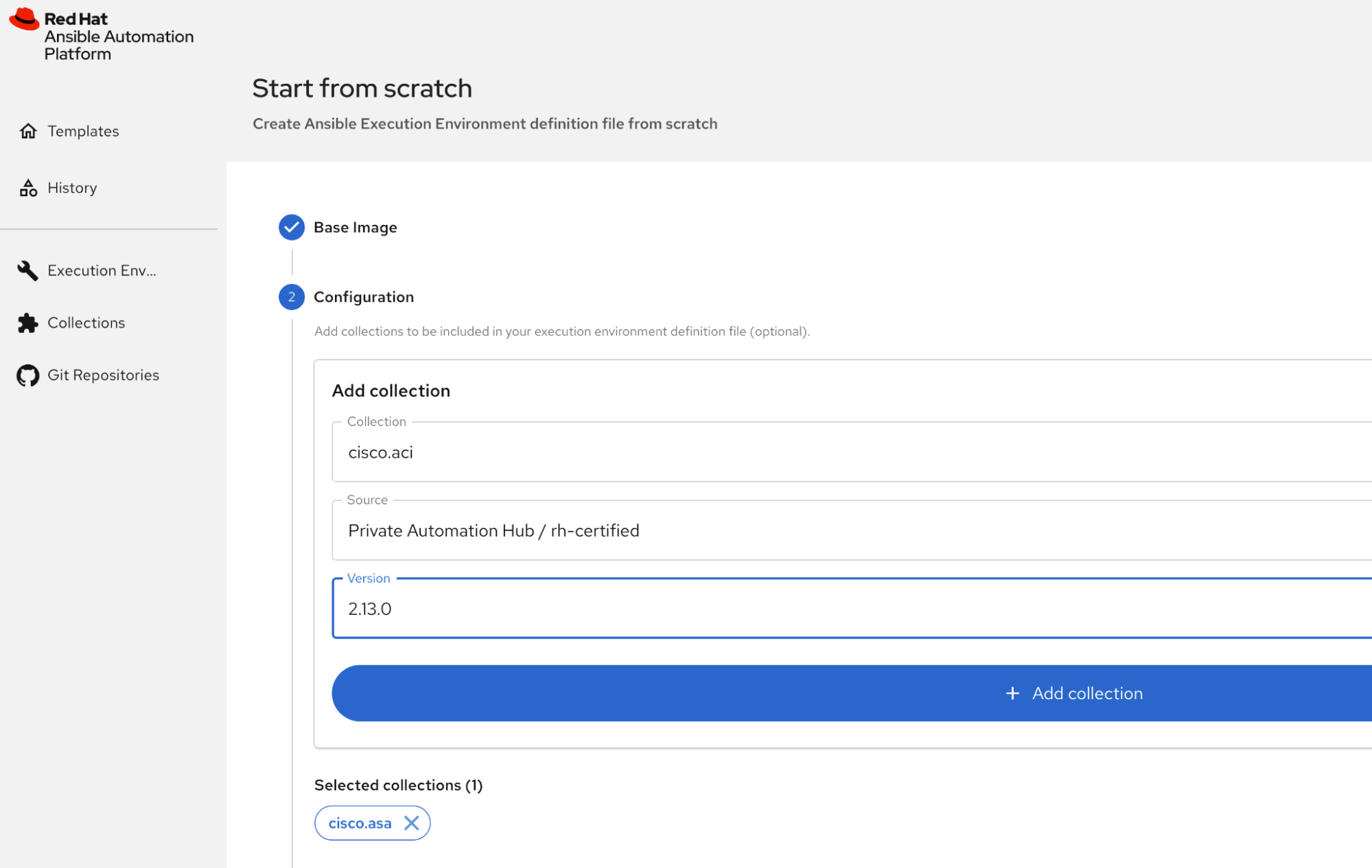
Immagine 2: Fornisci la sorgente e la versione delle raccolte desiderate.
Content Discovery Guide: il tuo catalogo di automazione unificato
I contenuti di automazione aziendali tendono a frammentarsi nel tempo, restando isolati in hub per l’automazione privati, ospitati su provider Git pubblici o distribuiti internamente, ai singoli team. Il motore per l’individuazione dei contenuti colma queste lacune sincronizzando ogni elemento in un unico catalogo ricercabile.
- Sincronizzazione continua: la piattaforma rileva automaticamente le raccolte personalizzate negli ambienti GitHub e GitLab dell'organizzazione, oltre alle raccolte certificate e convalidate da hub per l’automazione privati.
- Verifica prima di creare: esplora le raccolte e i repository esistenti prima di scrivere nuovo codice, per evitare di fare il doppio del lavoro e massimizzare il riutilizzo dei contenuti.
- Integrazione diretta nella pipeline: le raccolte individuate e verificate alimentano in modo nativo gli strumenti di creazione della piattaforma. Quando avviano un nuovo ambiente di esecuzione, gli sviluppatori possono velocizzare il processo selezionando risorse note e verificate.
- Visibilità approfondita: dalla vista centralizzata del catalogo, traccia i playbook, monitora le attività di integrazione continua (CI) e accedi direttamente ai collegamenti alle sorgenti nei vari repository.
- Il livello di base: l’identificazione dei contenuti costituisce il livello di base per la nostra visione più ampia di gestione dei contenuti Ansible end to end. Nelle prossime release estenderemo questa soluzione all'intero ciclo di vita, guidando gli sviluppatori dalla fase iniziale di identificazione fino alla creazione, alla convalida e al monitoraggio delle prestazioni dei contenuti in produzione.
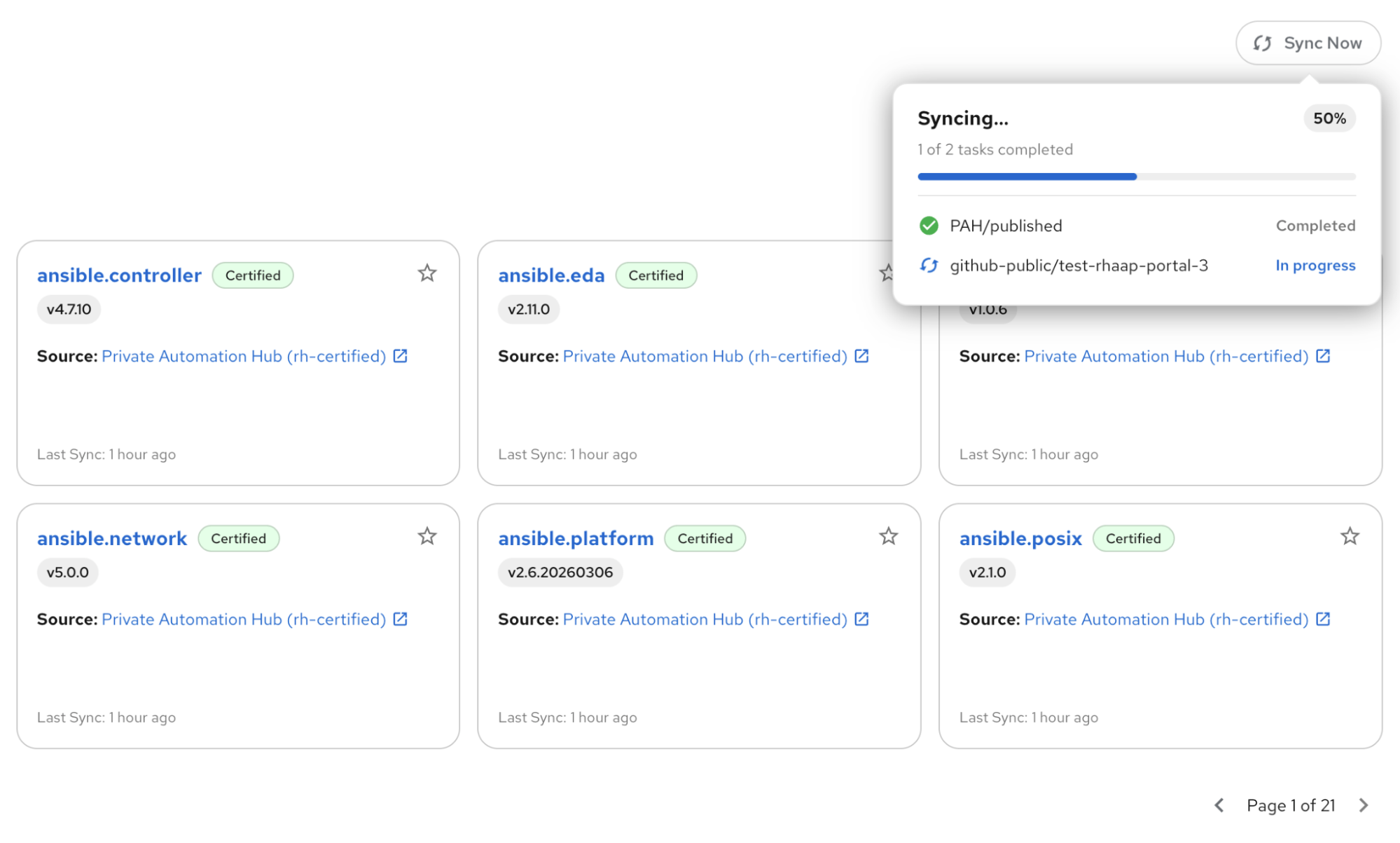
Immagine 3: Sincronizza i repository da GitHub e hub per l’automazione privati
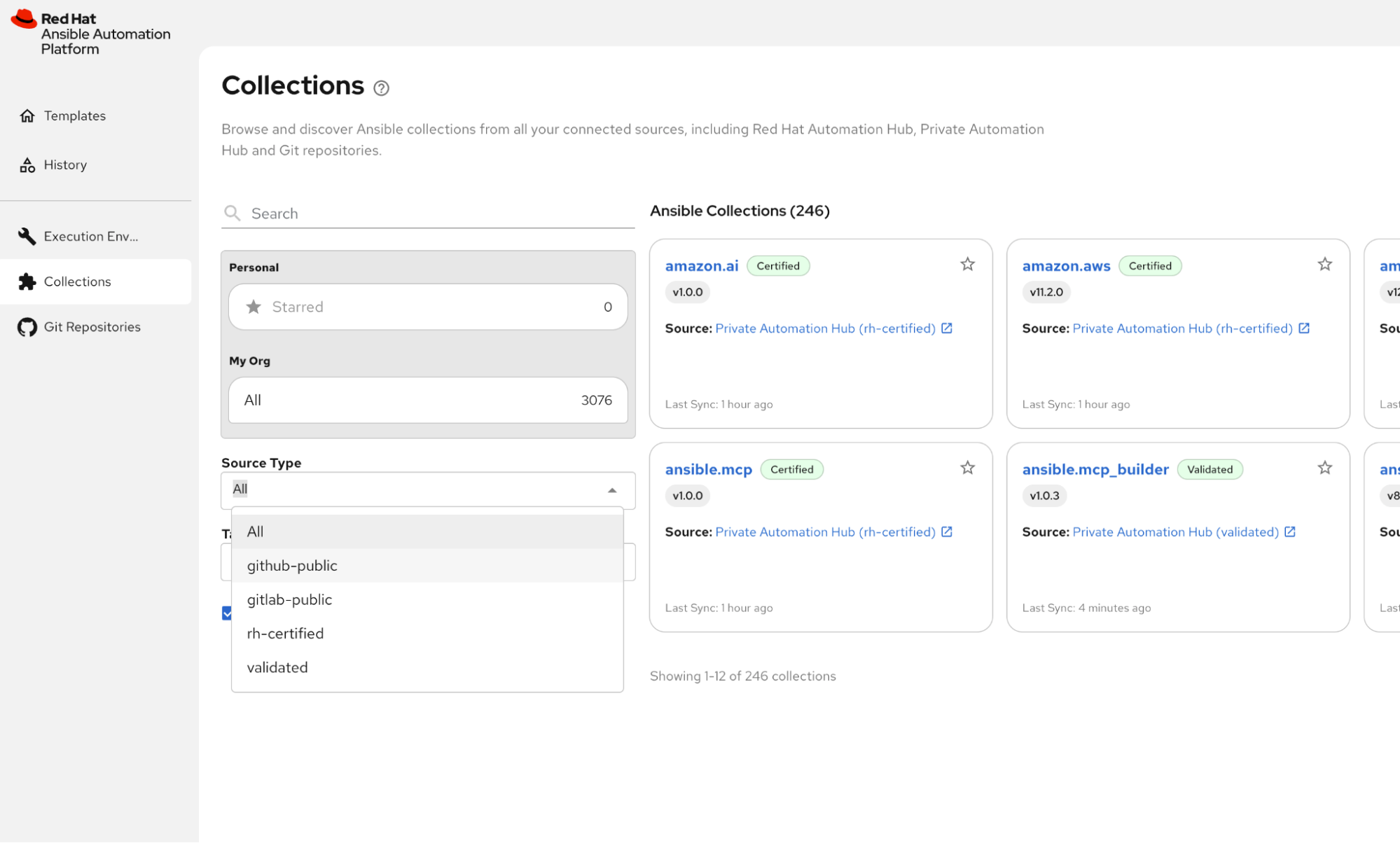
Immagine 4: Visualizza le raccolte da GitHub e dagli hub per l’automazione privati
Integra la governance a partire dalla progettazione: pieno controllo per gli amministratori
Insieme, queste funzionalità aumentano la produttività degli sviluppatori e dei team di dominio senza compromettere la sicurezza o gli standard architetturali. Ansible Automation Platform 2.7 consente agli amministratori della piattaforma di mantenere il pieno controllo sull'utilizzo a livello aziendale.
- Ambito predefinito: gli amministratori selezionano esattamente quali repository Git esterni e hub di automazione siano rilevabili, applicando filtri personalizzati per rispettare i criteri aziendali.
- Visibilità controllata: stabilisci quali contenuti rendere visibili a team di dominio specifici (come SecOps o CloudOps), in modo che utilizzino solo automazioni verificate e pertinenti.
- Pianificazione configurabile: esegui le sincronizzazioni su richiesta o secondo una pianificazione personalizzabile e automatizzata, con il pieno controllo amministrativo su tempi e frequenza.
Inizia subito
per sfruttare le nuove funzionalità del visual execution environment builder e della content discovery, l'ambiente deve soddisfare i seguenti requisiti di base.
- Versione della piattaforma: Ansible Automation Platform 2.5 o versioni successive
- Ambiente di installazione: appliance di macchine virtuali (VM) Red Hat OpenShift Container Platform o Red Hat Enterprise Linux (RHEL)
- Connettività: accesso alla gestione del controllo del codice sorgente (SCM/Git) per le sincronizzazioni di rilevamento e le operazioni sui repository
Unificando l'individuazione dei contenuti e stabilizzando visivamente la modalità di creazione dei pacchetti di automazione, Ansible Automation Platform 2.7 elimina i costi operativi legati alla gestione della piattaforma, consentendo agli sviluppatori di dedicarsi alla creazione di automazioni ad alto valore aggiunto che fanno progredire l'azienda.
Risorse
Portale dell'automazione: Execution environment builder (arcade)
Sull'autore
Harper Buete is a Product Marketing Manager for Red Hat Ansible Automation Platform. She joined Red Hat in June 2025.
Altri risultati simili a questo
Red Hat Ansible All-Stars: alla guida del futuro dell'automazione delle reti e dell'infrastruttura
Unifica i flussi di lavoro IT in modo scalabile con il nuovo automation orchestrator per Ansible Automation Platform
Random Acts Of Automation | Compiler
Untangling Networks | Compiler
Scopri di più
Ebook: L'azienda automatizzataPagina disponibile in Inglese (Italiano non disponibile) - Prova Red Hat Ansible Automation Platform con laboratori pratici e di autoapprendimento
- Red Hat Ansible Automation Platform: guida introduttiva
Ricerca per canale

Automazione
Novità sull'automazione IT di tecnologie, team e ambienti

Intelligenza artificiale
Aggiornamenti sulle piattaforme che consentono alle aziende di eseguire carichi di lavoro IA ovunque

Hybrid cloud open source
Scopri come affrontare il futuro in modo più agile grazie al cloud ibrido

Sicurezza
Le ultime novità sulle nostre soluzioni per ridurre i rischi nelle tecnologie e negli ambienti

Edge computing
Aggiornamenti sulle piattaforme che semplificano l'operatività edge

Infrastruttura
Le ultime novità sulla piattaforma Linux aziendale leader a livello mondiale

Applicazioni
Approfondimenti sulle nostre soluzioni alle sfide applicative più difficili

Virtualizzazione
Il futuro della virtualizzazione negli ambienti aziendali per i carichi di lavoro on premise o nel cloud
