
I flussi di lavoro di sviluppo distribuiti presentano da sempre un problema: non sempre il codice funziona in tutti gli ambienti. Le aziende accelerano il passaggio alle pratiche cloud native ed è emersa una lacuna critica: gli strumenti che gli sviluppatori utilizzano sulle loro workstation locali spesso non sono allineati con gli ambienti Kubernetes aziendali di produzione, la cui sicurezza è rafforzata. Questa incoerenza porta spesso a errori di dipendenza, a un aumento del rischio di vulnerabilità della sicurezza e risultati inattesi durante il deployment nelle fasi avanzate, riducendo la produttività e aumentando il debito tecnico.
Per rispondere a queste sfide, siamo lieti di annunciare la disponibilità generale (GA) di Red Hat build of Podman Desktop. Questa release è una risposta diretta alle numerose richieste dei nostri clienti, desiderosi di sfruttare l'enorme successo della community di Podman Desktop, che ha recentemente superato i 3 milioni di download. Le organizzazioni puntano a portare la stessa esperienza popolare e di facile utilizzo nell'ambiente enterprise, con un percorso integrato e completamente supportato, dallo sviluppo locale a Red Hat OpenShift, progettato tenendo presenti le esigenze di sicurezza di livello di produzione.
Perché è importante per l'azienda
Quando parliamo di un'esperienza di sviluppo più ampia, dobbiamo pensare a come garantire il supporto. Fino ad ora, molti team hanno dovuto fare affidamento su strumenti open source non supportati oppure su alternative prive dei Service Level Agreement (SLA) necessari. Red Hat build of Podman Desktop è una soluzione convalidata dal fornitore che include il supporto ufficiale di Red Hat e fornisce l'accesso alle correzioni di sicurezza, agli ingegneri del prodotto e agli esperti di container. Per i responsabili delle decisioni IT e gli ingegneri della piattaforma, questo si traduce in una gestione più prevedibile del ciclo di vita, nell'applicazione di patch di sicurezza e nella possibilità di gestire gli strumenti container su migliaia di workstation sin dalla fase iniziale di configurazione.

Come colmare il divario dal desktop all’ambiente di produzione
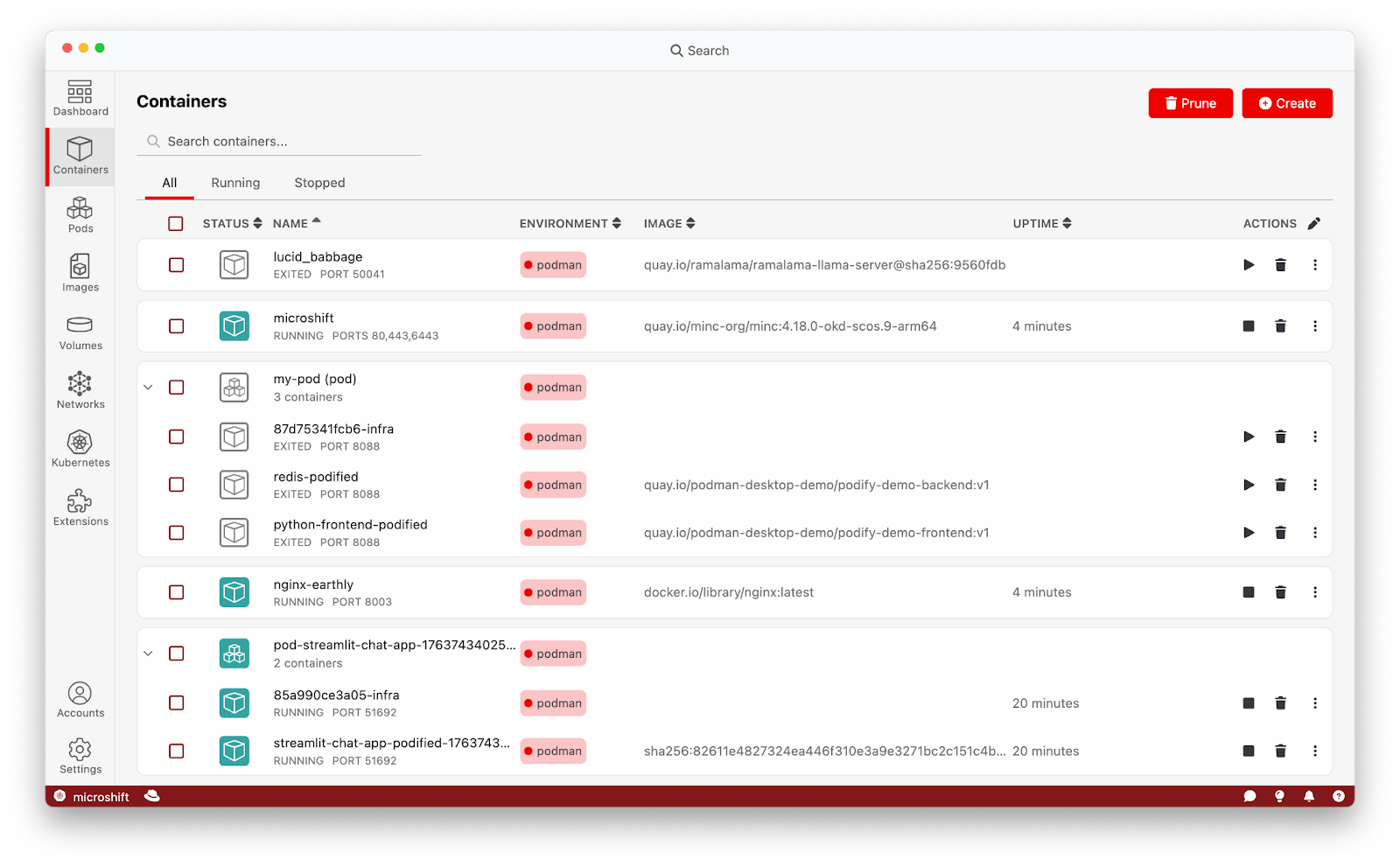
Per molti sviluppatori, il desktop è il punto di partenza dell'innovazione, ma anche il punto in cui possono sorgere rischi per la sicurezza. Gli strumenti desktop tradizionali per i container non sono progettati per essere simili agli ambienti di produzione e non dispongono del supporto di livello enterprise. Red Hat build of Podman Desktop cambia la dinamica di questo flusso di lavoro, in quanto fornisce una distribuzione downstream del progetto Podman Desktop pronta per l'ambiente aziendale. Offre i seguenti vantaggi.
- Architettura "Secure-by-design": basata sulla stessa tecnologia affidabile presente in Red Hat Enterprise Linux (RHEL), aiuta a prevenire l'utilizzo involontario di comportamenti non sicuri in produzione.
- Un ambiente più coerente: utilizzando ambienti locali più simili a un cluster di produzione, è possibile verificare che i carichi di lavoro testati sul laptop funzionino in modo identico quando vengono distribuiti nel cloud ibrido.
- Flussi di lavoro perfettamente integrati: grazie al supporto nativo di Kubernetes e dei pod, gli sviluppatori possono creare e distribuire in modo sicuro in OpenShift, limitando al contempo il rischio di risultati inattesi.
Migrazione semplificata degli strumenti
Sappiamo che molti sviluppatori al momento utilizzano altri strumenti standardizzati. Ecco perché abbiamo lavorato intensamente per offrire una alternativa immediata e senza interruzioni. Red Hat build of Podman Desktop supporta in modo lineare i flussi di lavoro containerizzati standard di settore, includendo immagini, file Compose e volumi già in uso, senza alcuna modifica.
Questa release è più di un semplice strumento: consente agli sviluppatori di concentrarsi sullo sviluppo invece che sulla gestione dell'infrastruttura. Fornendo un ambiente locale leggero, sicuro e ad alte prestazioni, aiutiamo le organizzazioni a colmare la distanza tra la postazione dello sviluppatore e il cloud di produzione. Per maggiori informazioni su Red Hat build of Podman Desktop visita questa pagina.
Sull'autore
James Labocki is senior director of Product Management at Red Hat.
Altri risultati simili a questo
La nuova moneta di scambio delle aziende per guadagnare velocità
Oltre la migrazione delle VM: cosa accade dopo la migrazione
Fail Better | Command Line Heroes
Consoles | Command Line Heroes
Ricerca per canale

Automazione
Novità sull'automazione IT di tecnologie, team e ambienti

Intelligenza artificiale
Aggiornamenti sulle piattaforme che consentono alle aziende di eseguire carichi di lavoro IA ovunque

Hybrid cloud open source
Scopri come affrontare il futuro in modo più agile grazie al cloud ibrido

Sicurezza
Le ultime novità sulle nostre soluzioni per ridurre i rischi nelle tecnologie e negli ambienti

Edge computing
Aggiornamenti sulle piattaforme che semplificano l'operatività edge

Infrastruttura
Le ultime novità sulla piattaforma Linux aziendale leader a livello mondiale

Applicazioni
Approfondimenti sulle nostre soluzioni alle sfide applicative più difficili

Virtualizzazione
Il futuro della virtualizzazione negli ambienti aziendali per i carichi di lavoro on premise o nel cloud
