Negli ultimi anni, la virtualizzazione è stata un aspetto di ITOps in continua evoluzione. Diverse applicazioni vengono eseguite su tecnologie di virtualizzazione e molte aziende stanno valutando nuove piattaforme su cui eseguire questi carichi di lavoro di importanza critica. Gli obiettivi includono l'ottimizzazione dei costi, la protezione del budget, l'individuazione dei vantaggi offerti dalle nuove piattaforme e la modernizzazione.
Red Hat e Cisco hanno collaborato per fornire una piattaforma di elaborazione completa per la virtualizzazione. Sebbene l'argomento principale di questo articolo sia la virtualizzazione, questa piattaforma può supportare anche altri tipi di elaborazione. Combina le seguenti soluzioni per offrire un ambiente enterprise facile da gestire e in linea con le esigenze di sicurezza e conformità, fornendo al contempo servizi di virtualizzazione resilienti:
- Cisco Unified Computing Solution (UCS), una piattaforma di infrastruttura convergente che unifica elaborazione, rete e accesso allo storage per semplificare le operazioni dei server;
- Cisco Intersight unisce la gestione dei server Cisco UCS situati in qualsiasi parte del mondo, dall'edge ai data center, offrendo la gestione dei server Cisco UCS sia on premise (air gapped) sia su cloud (SaaS);
- Red Hat OpenShift Virtualization ti consente di eseguire VM attraverso il cloud ibrido, fornendo al contempo un percorso per la modernizzazione delle applicazioni e consentendoti di eseguire la migrazione o la modernizzazione secondo i tuoi ritmi;
- Red Hat Ansible Automation Platform automatizza in modo flessibile la gestione su vasta scala per l'intero ciclo di vita di VirtOps, inclusa la migrazione, e automatizza le attività di gestione e i workflow in base alle esigenze per l'intero ciclo di vita. Inoltre, funge da agente di orchestrazione per Cisco Intersight, Red Hat OpenShift e l'infrastruttura correlata, come risorse di rete e storage, osservabilità e altro ancora.
Insieme, Red Hat e Cisco offrono una soluzione completa per semplificare le operazioni di elaborazione, rete e storage per applicazioni e carichi di lavoro virtualizzati. Ulteriori informazioni sono disponibili nel documento Cisco Validated Design.
Scenari di utilizzo di Cisco Intersight con Ansible Automation Platform
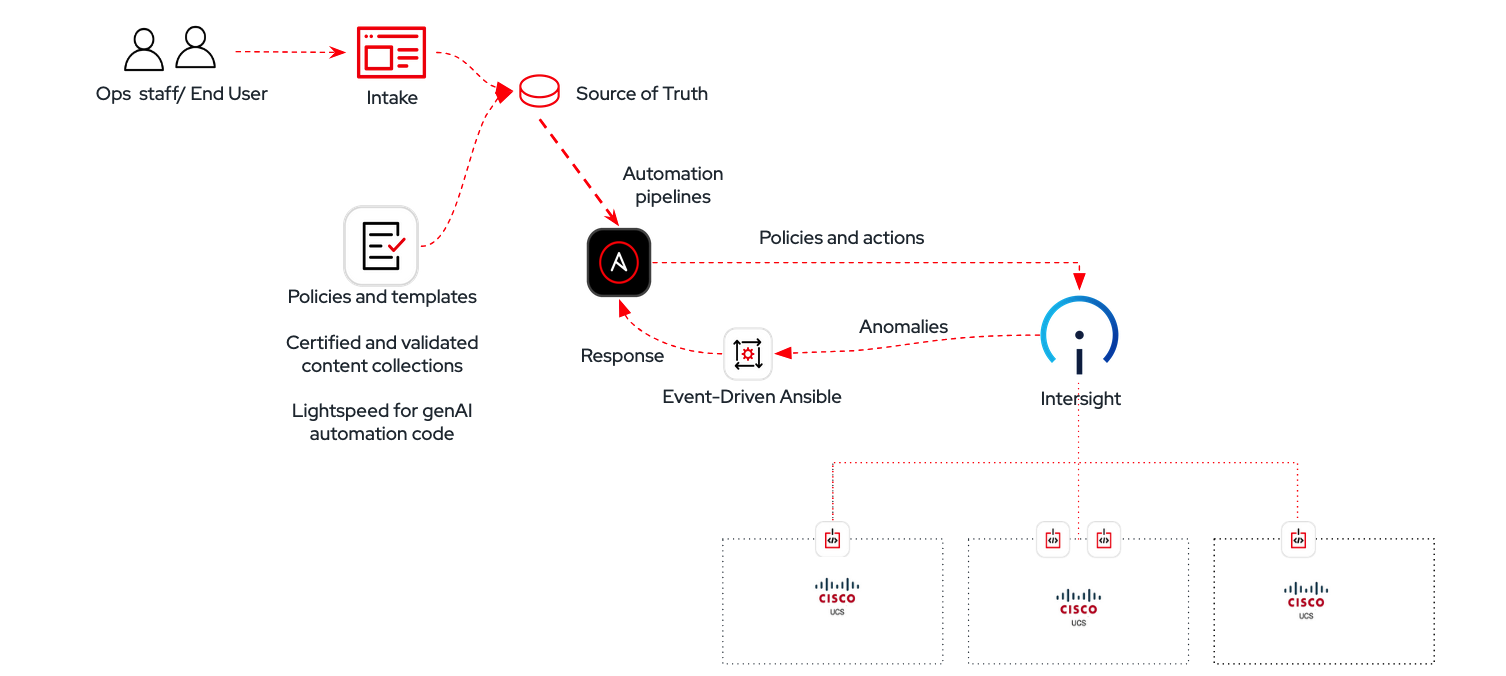
Cisco Intersight automatizza in modo nativo la gestione completa del ciclo di vita dell'infrastruttura tramite una configurazione basata su policy e uno strumento di progettazione dei flussi di lavoro drag-and-drop integrato, offrendo attività specifiche per elaborazione, rete e storage. Intersight è efficiente poiché è un singolo endpoint API per l'automazione dei server UCS situati ovunque nel mondo. La sua architettura API-first consente inoltre una solida integrazione dell'ecosistema, dato che permette di estendere le funzionalità a soluzioni come Ansible Automation Platform, che a sua volta le estende in modo scalabile a Red Hat, Cisco, allo storage multivendor e ad altre infrastrutture.
Di seguito sono riportati alcuni scenari di utilizzo ed esempi, basati su Red Hat Ansible Certified Content Collection per Cisco Intersight.
- Flussi di lavoro automatizzati: Ansible Automation Platform è in grado di automatizzare le attività oppure utilizzare diversi strumenti per completare il lavoro nel modo desiderato. Ad esempio, il deployment completo di un'applicazione virtualizzata in produzione richiede molti passaggi. Una volta eseguito il provisioning dell'hardware, potrebbe essere necessario eseguire il provisioning della macchina virtuale (VM) o richiamare la soluzione desiderata, orchestrare strumenti di monitoraggio multivendor e distribuire l'applicazione. Ansible Automation Platform offre l’efficienza e la flessibilità necessarie per orchestrare tutti i passaggi nel modo desiderato e in modo scalabile.
- Configurazione automatizzata come codice (CaC): Si tratta di un metodo flessibile, estendibile e spesso multivendor, per standardizzare e gestire la configurazione delle tue tecnologie. Può includere il controllo della versione tramite una source of truth (SoT), che spesso è un file di configurazione. Ansible Automation Platform supporta la configurazione as code per l'intero insieme di tecnologie di virtualizzazione, inclusi Cisco UCS, virtualizzazione, rete, storage e altro ancora. Supponiamo che il tuo metodo preferito per UCS sia utilizzare regole basate su policy all'interno di Cisco Intersight. È possibile utilizzare questo metodo all’interno di un flusso di automazione in cui richiamare l'API per Cisco Intersight al fine di gestire e applicare le regole al tuo flusso di lavoro automatizzato.
- Risposta ai problemi basata su eventi: Event-Driven Ansible è incluso in Ansible Automation Platform per rispondere alle modifiche del tuo ambiente. Può ricorrere alla rotazione automatica di un certificato scaduto per ridurre al minimo i tempi di inattività oppure arricchire un ticket per accelerare il tempo medio di risoluzione (MTTR). Funziona con una vasta gamma di strumenti di registrazione e monitoraggio, tra cui Splunk, ServiceNow, Dynatrace, Grafana, BigPanda e altri.
- Integrazione CI/CD: Ansible Automation Platform può essere utilizzato per nell’intero insieme di tecnologie per le applicazioni basate su Cisco UCS. Puoi gestire aspetti del ciclo di vita dello sviluppo del software con l'automazione, come lo spostamento di un'applicazione da una fase all’altra nei processi di sviluppo, test e produzione, ma anche automatizzare le fasi di test e proteggere l'applicazione per l'utilizzo in produzione.
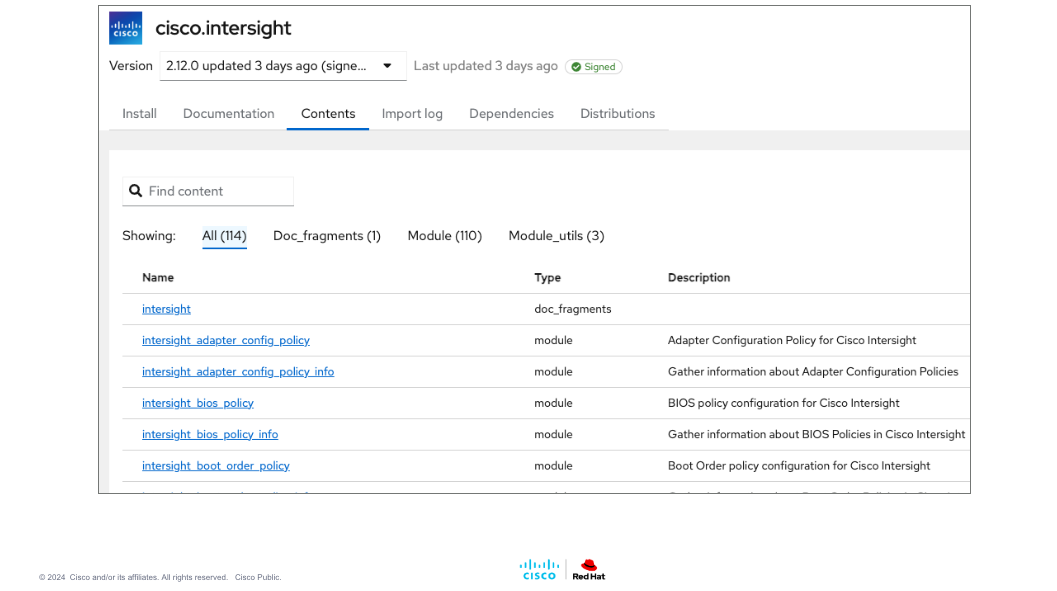
Novità della content collection di Cisco Intersight
Ansible Automation Platform include un'ampia gamma di content collection che ti aiutano ad avviare rapidamente l'utilizzo dell'automazione con una tecnologia specifica. Per Cisco, sono disponibili diverse content collection che puoi utilizzare e Cisco Intersight è una di queste.
L'ultima cisco.intersight content collection colma il divario tra l'automazione software-defined e l'hardware fisico. Abbiamo ampliato la content collection di Cisco Intersight da 10 a oltre 100 moduli per renderla più efficiente. Sfruttando l'architettura di elaborazione software-defined basata su policy di Cisco UCS, la content collection cisco.intersight ti consente di automatizzare la gestione dei server, in modo da poterne definire lo stato, la configurazione e le azioni interamente tramite codice.
Le funzionalità principali includono:
- Modelli di profili server come codice: automatizza la creazione, il deployment e la modifica dei modelli di profili server. Questi modelli possono quindi essere utilizzati per creare un'istanza di un profilo server al fine di configurare da centinaia a migliaia di server. Definisce le impostazioni di un server UCS (UUID, indirizzi MAC, impostazioni del BIOS) prima ancora che un sistema operativo lo utilizzi.
- Gestione massiva delle policy: configura decine di policy granulari (firmware, ordine di avvio, rete, storage, alimentazione, NTP, syslog) e applicale su migliaia di server per mantenere la conformità ed eliminare la deriva di configurazione.
- Gestione automatizzata del firmware: orchestra gli upgrade del firmware senza interruzioni per l'elaborazione e le fabric interconnect come parte dei playbook e dei moduli Ansible standard.
- Inventario dinamico: utilizza il modulo intersight_info per popolare dinamicamente il tuo inventario Ansible in base ai dati hardware in tempo reale provenienti da Intersight (ad esempio, "Target all servers with X tag" o "Update all specific model servers").
- Copertura API al 100%: include un modulo intersight_rest_api che funge da wrapper "catch-all", consentendoti di automatizzare immediatamente qualsiasi nuova funzionalità di Intersight, anche se non è ancora stato scritto un modulo Ansible specifico.
Nel contesto della migrazione a OpenShift Virtualization, questa content collection è importante perché gestisce l'infrastruttura di elaborazione alla base. Automatizza la preparazione dell'hardware fisico Cisco UCS in modo che sia pronto per l'installazione bare metal di OpenShift, dove Intersight è anche integrato in OpenShift Assisted Installer.
Migrazione scalabile a OpenShift Virtualization su Cisco UCS con la gestione della manutenzione dell'infrastruttura virtuale
Ansible Automation Platform funziona in combinazione con il migration toolkit for virtualization (MTV) di Red Hat OpenShift per completare le migrazioni su vasta scala. MTV può essere utilizzato per definire come migrare le VM. Ansible Automation Platform interviene per completare la migrazione in modo scalabile, considerando le esigenze dell'infrastruttura. Puoi aggiungere ulteriori passaggi in base alle necessità, come la creazione di snapshot automatizzati, la registrazione delle VM nel monitoraggio della sicurezza o dell'osservabilità, l'aggiunta a un CMDB e altro ancora.
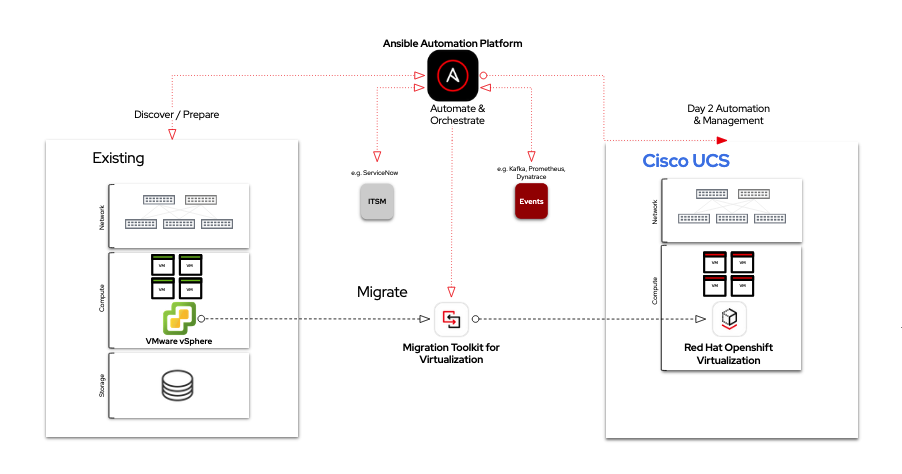
Una volta eseguita la migrazione, l'automazione supporta le attività di gestione della manutenzione, inclusi workflow orchestrati, controlli di integrità, gestione dei problemi, infrastruttura di base (rete, storage, ecc.) e altro ancora. Puoi gestire tutte le tue esigenze di provisioning e orchestrazione delle VM all'interno del tuo processo operativo, così come l'infrastruttura correlata. Altri flussi di lavoro possono gestire backup e ripristino, controlli di integrità e convalide di conformità, nonché un processo di deprovisioning per le VM e le risorse che non vengono più utilizzate. Event-Driven Ansible può anche aiutarti ad automatizzare la risposta a condizioni mutevoli, come un problema di sicurezza, la modifica dei limiti di elaborazione o storage, la rotazione dei certificati, l'arricchimento dei ticket per un MTTR più rapido e altro ancora. Essendo una soluzione estremamente flessibile, puoi progettare i flussi di lavoro che soddisfano le tue esigenze in termini di velocità, coerenza, accuratezza e resilienza.
Qual è il ruolo di Cisco Unified Computing, Cisco Intersight e dei fornitori di rete e storage in questa soluzione? Come mostrato nella Figura 3, la tua piattaforma di elaborazione si basa su UCS. Ansible Automation Platform può aiutare ad automatizzare in modo scalabile le funzioni su questa piattaforma, come specificato da Cisco Intersight (es. policy di conformità, amministrazione del firmware, connettività di rete e altre funzioni).
Per quanto riguarda lo storage, è possibile automatizzare funzioni simili. Sono già disponibili Red Hat Ansible Certified Content Collection pensate per aiutare i clienti ad avviare le attività di gestione per diversi fornitori di storage, tra cui NetApp e Pure Storage, che sono comunemente inclusi nelle soluzioni Cisco UCS.
Gestione dell'IA all'edge e oltre
Molti ingegneri associano la content collection cisco.intersight soprattutto al deployment iniziale dei server UCS nei data center tradizionali. In questa content collection attuale, l’efficacia si rivela durante le operazioni di manutenzione nell'intero panorama di elaborazione Cisco. Sono inclusi Cisco AI POD e la gestione di Unified Edge.
La vera sfida, oltre al deployment, è data dalla deriva della configurazione, dall'applicazione di patch di sicurezza e dal ridimensionamento della capacità. Con questa content collection, puoi standardizzare queste attività di importanza critica del ciclo di vita utilizzando un unico inventario. Immagina di eseguire un playbook che non solo aggiorna il firmware sui tuoi cluster IA ad alte prestazioni per supportare i nuovi driver GPU, ma allo stesso tempo invia una policy di conformità di sicurezza a centinaia di nodi Unified Edge in sedi di vendita al dettaglio remote.
Che si tratti di automatizzare le installazioni del sistema operativo, ruotare le chiavi API o eseguire upgrade continui senza interruzioni sulla tua infrastruttura di elaborazione, la content collection di Intersight trasforma attività di manutenzione disparate in un workflow unificato e basato su codice che garantisce che la tua infrastruttura, dal carico di lavoro AI principale all'edge distribuito, rimanga coerente, protetta e resiliente.
Scopri di più
Esistono diversi modi per avere più informazioni su questa offerta congiunta.
Innanzitutto, presenteremo un webinar insieme a Cisco. Puoi partecipare dal vivo o ascoltare on demand la nostra discussione. Registrati subito.
È disponibile anche il documento Cisco Validated Design, "Enhancing Day 2 Operations with Cisco Compute and the Red Hat Ansible Automation Platform", che approfondisce l'aspetto tecnico.
Sono inoltre disponibili le seguenti risorse di Red Hat:
Prova prodotto
Red Hat Ansible Automation Platform | Versione di prova del prodotto
Sull'autore

Stephen Fulmer is a Product Manager at Red Hat, leading Ansible content strategy. With a background in virtualization and IT operations, he works closely with customers, partners, and engineering teams to deliver trusted, scalable automation content for platforms like OpenShift, Windows, and public cloud. Stephen is passionate about enabling organizations to simplify complex workflows and accelerate their automation journeys with Red Hat Ansible Automation Platform.
Altri risultati simili a questo
Increasing hardware costs? Get more from your VM estate with Red Hat OpenShift Virtualization
AIOps and Ansible Automation Platform: Where AI intelligence meets trusted execution
Technically Speaking | Taming AI agents with observability
You Can’t Automate Expectations | Code Comments
Ricerca per canale

Automazione
Novità sull'automazione IT di tecnologie, team e ambienti

Intelligenza artificiale
Aggiornamenti sulle piattaforme che consentono alle aziende di eseguire carichi di lavoro IA ovunque

Hybrid cloud open source
Scopri come affrontare il futuro in modo più agile grazie al cloud ibrido

Sicurezza
Le ultime novità sulle nostre soluzioni per ridurre i rischi nelle tecnologie e negli ambienti

Edge computing
Aggiornamenti sulle piattaforme che semplificano l'operatività edge

Infrastruttura
Le ultime novità sulla piattaforma Linux aziendale leader a livello mondiale

Applicazioni
Approfondimenti sulle nostre soluzioni alle sfide applicative più difficili

Virtualizzazione
Il futuro della virtualizzazione negli ambienti aziendali per i carichi di lavoro on premise o nel cloud
