
La sicurezza del cloud ibrido non sta solo diventando più complessa: sta raggiungendo un punto critico. Sebbene la sicurezza sia sempre stata una corsa verso un traguardo indefinito, l’edizione 2026 del report di Red Hat intitolato State of Cloud-Native Security rivela che molte organizzazioni sono ora intrappolate in una sorta di caos organizzato. Per uscirne, è necessario andare oltre la gestione reattiva delle emergenze e ancorare la propria strategia a pratiche e a criteri di sicurezza essenziali, in grado di trasformare la sicurezza da un ostacolo a uno standard di riferimento.
La realtà degli incidenti cloud native
Il report stabilisce un comune denominatore preoccupante: gli incidenti di sicurezza sono ormai un'esperienza quasi universale. Il 97% delle organizzazioni ha segnalato almeno un incidente di sicurezza cloud native nell'ultimo anno. Non si tratta solo di attacchi sofisticati e isolati; al contrario, spesso derivano da "errori quotidiani".
Ecco alcune delle tipologie di incidenti segnalati più di frequente.
- Infrastruttura o servizi configurati in modo errato (78%): la principale causa di esposizione, spesso dovuta a errori manuali in ambienti complessi.
- Vulnerabilità note: i carichi di lavoro vengono distribuiti con codice "noto come dannoso", creando finestre di rischio evitabili.
- Accesso non autorizzato: un ostacolo operativo persistente che porta spesso all'esposizione di dati sensibili.
Questi incidenti comportano un costo aziendale tangibile che va ben oltre il reparto IT. Il 74% delle organizzazioni ha ritardato o rallentato la distribuzione delle applicazioni negli ultimi 12 mesi a causa di problemi di sicurezza. Oltre ai ritardi, il 92% degli intervistati ha riscontrato impatti significativi che vanno dall'aumento del tempo dedicato alla risoluzione (52%) e dalla riduzione della produttività degli sviluppatori (43%) fino alla perdita di fiducia dei clienti (32%). In breve, la sicurezza non è più solo un’attività di routine tecnica: è un rischio primario per l'agilità aziendale.
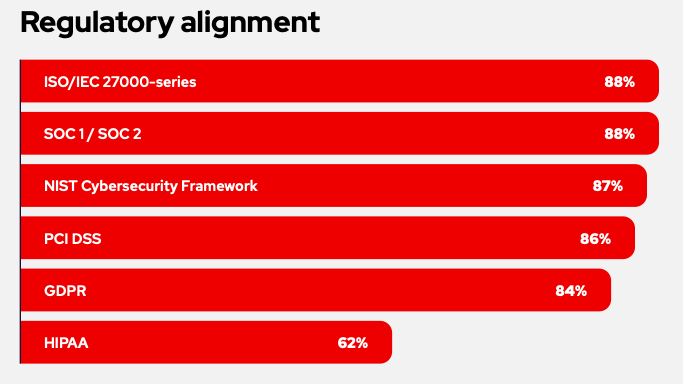
Didascalia: La risposta alla domanda posta alle organizzazioni intervistate ("In che misura prevedi che ciascuno dei seguenti elementi influirà sulla strategia per la sicurezza cloud native della tua organizzazione nei prossimi 12 mesi?) indica un'influenza parziale o forte.
Il paradosso della maturità: aspettativa e strategia
Uno dei risultati più sorprendenti del report è il divario tra la maturità percepita e la strategia effettiva. Mentre il 56% delle organizzazioni descrive le proprie pratiche di sicurezza quotidiane come "altamente proattive". Tuttavia, solo il 39% possiede effettivamente una strategia di sicurezza cloud native matura e ben definita.
Questo suggerisce che, nonostante i team aspirino alla lungimiranza, molti "improvvisano". Infatti, circa il 22% delle organizzazioni opera senza alcuna strategia definita. Questa mancanza di struttura porta a un'adozione incoerente di misure di sicurezza. Eccone alcune.
- Identity and Access Management (IAM): l'adozione è di circa il 75%, poiché l'identità è ampiamente riconosciuta come principale strumento di controllo.
- Firma delle immagini dei container: solo circa la metà delle organizzazioni ha implementato questa funzionalità per l'integrità del software.
- Protezione del runtime: la distribuzione rimane frammentaria e molti team devono affidarsi alle impostazioni predefinite anziché a una governance stabilita.
I dati sottolineano che la maturità dà i suoi frutti: le organizzazioni con una strategia ben definita hanno molte più probabilità di adottare protezioni avanzate e dichiarano una fiducia del 61% nella sicurezza della catena di distribuzione del software, rispetto a una fiducia molto inferiore tra le realtà meno mature.
Trend di investimento in evoluzione: automazione e catena di distribuzione
Consapevoli di queste lacune, le organizzazioni stanno riequilibrando i budget per il 2026. L'attenzione si sposta da singoli strumenti eterogenei verso il consolidamento della piattaforma e l'integrazione della sicurezza direttamente nel ciclo di vita del software.
Le principali priorità di investimento per i prossimi 1-2 anni includono i seguenti aspetti.
- Automazione DevSecOps: oltre il 60% delle organizzazioni prevede di investire nell'automazione della sicurezza all'interno delle pipeline CI/CD. L'obiettivo è passare da controlli manuali a un approccio "security as code" per ridurre l'errore umano.
- Sicurezza della catena di distribuzione del software: il 56% delle organizzazioni dà la priorità a questo aspetto. Con l'aumento vertiginoso degli attacchi alla catena di distribuzione, è urgente verificare le dipendenze open source e le immagini dei container tramite Software Bills of Materials (SBOM) e controlli della provenienza.
- Protezione del runtime: il 54% degli intervistati intende ampliare le difese in grado di rilevare e bloccare le minacce attive, come il cryptojacking o comportamenti anomali dei container, in tempo reale.
La conformità non è più un problema secondario. Il 64% delle organizzazioni prevede che l'EU Cyber Resilience Act (CRA) sarà uno dei principali fattori trainanti delle decisioni di investimento per il 2026. Questo trasforma la governance della sicurezza da un elemento accessorio a un requisito obbligatorio a livello esecutivo.
La nuova frontiera del rischio: IA e sicurezza del cloud
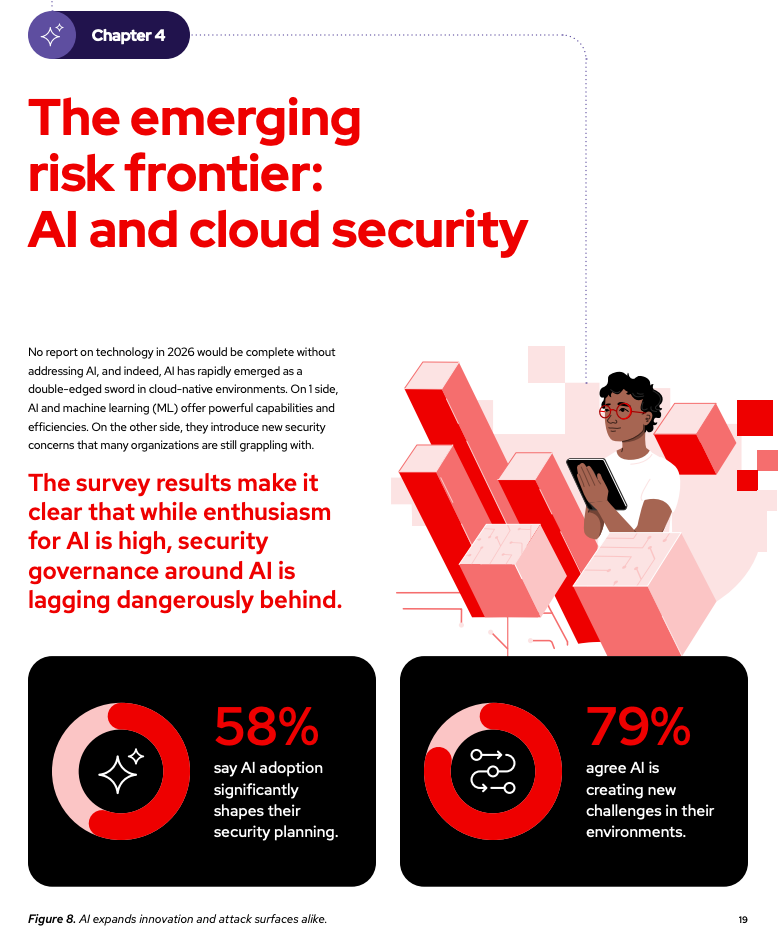
Nel 2026, l'IA è diventata un'arma a doppio taglio per i team cloud native. Sebbene il 58% delle organizzazioni affermi che l'adozione dell'IA sia ormai un fattore chiave per la pianificazione della sicurezza, la governance effettiva è in ritardo in modo preoccupante rispetto al ritmo di distribuzione.
Il report rivela una preoccupazione pressoché universale per l'IA generativa (gen AI) negli ambienti cloud, con il 96% degli intervistati che esprime timori significativi. Queste paure non sono solo teoriche; si concentrano su tre rischi specifici.
- Preoccupazione diffusa: il 96% degli intervistati esprime preoccupazione per l'IA generativa nei propri ambienti cloud.
- Le principali paure: queste includono l'esposizione di dati sensibili, l'uso di strumenti di shadow AI senza approvazione e l'integrazione di servizi di IA di terze parti non sicuri.
Le lacune nella governance: nonostante questi timori, il 59% delle organizzazioni non dispone di policy sull'utilizzo dell'IA o di framework di governance interni documentati.
Senza regole chiare, le organizzazioni rischiano che i comportamenti basati sull'IA alterino le configurazioni o causino la diffusione di codice proprietario al di fuori dei normali processi, amplificando i rischi esistenti per l'identità e la catena di distribuzione.
Consigli basati sui dati per il 2026
Il report si conclude con una chiara direttiva: l'innovazione cloud native viaggia più velocemente rispetto alla sicurezza tradizionale. Per superare il paradosso della maturità, le organizzazioni devono andare oltre la gestione reattiva delle emergenze e adottare un approccio strutturato e incentrato sulla piattaforma.
Cinque azioni critiche per il 2026
- Definisci una strategia formale: le organizzazioni devono andare oltre la "gestione reattiva delle emergenze" creando un percorso strutturato per passare da un approccio reattivo a un approccio proattivo.
- Integra misure di protezione e automazione: La sicurezza deve far parte della piattaforma per impostazione predefinita e deve essere gestita dai team DevOps o di ingegneria della piattaforma, al fine di garantire la scalabilità senza ostacolare gli sviluppatori.
- Dai priorità all'integrità della catena di distribuzione: implementa la firma delle immagini e la scansione delle dipendenze obbligatorie. Come ha osservato un intervistato, sebbene tutti utilizzino l'open source, "quasi nessuno analizza o firma le proprie dipendenze". Essere l'eccezione è fondamentale per la resilienza.
- Chiudi il ciclo di feedback: unifica i dati di osservabilità e sicurezza in modo che le informazioni del rilevamento delle minacce in runtime tornino nel processo di sviluppo per dare priorità alle correzioni più critiche.
- Gestisci subito l'utilizzo dell'IA: le organizzazioni non possono aspettare le normative esterne. Devono riunire team interfunzionali per sviluppare immediatamente linee guida sull'uso accettabile dell'IA e sulla gestione dei dati.
Nel 2026, la sicurezza non sarà più un elemento aggiuntivo, ma un componente fondamentale dell'architettura cloud native. Le organizzazioni di successo saranno quelle che considerano la sicurezza come il principale motore dell'agilità aziendale, piuttosto che come un centro di costo.
Risorsa
L'azienda adattabile: adotta l'IA per innovare
Sull'autore
Red Hatter since 2018, technology historian and founder of The Museum of Art and Digital Entertainment. Two decades of journalism mixed with technology expertise, storytelling and oodles of computing experience from inception to ewaste recycling. I have taught or had my work used in classes at USF, SFSU, AAU, UC Law Hastings and Harvard Law.
I have worked with the EFF, Stanford, MIT, and Archive.org to brief the US Copyright Office and change US copyright law. We won multiple exemptions to the DMCA, accepted and implemented by the Librarian of Congress. My writings have appeared in Wired, Bloomberg, Make Magazine, SD Times, The Austin American Statesman, The Atlanta Journal Constitution and many other outlets.
I have been written about by the Wall Street Journal, The Washington Post, Wired and The Atlantic. I have been called "The Gertrude Stein of Video Games," an honor I accept, as I live less than a mile from her childhood home in Oakland, CA. I was project lead on the first successful institutional preservation and rebooting of the first massively multiplayer game, Habitat, for the C64, from 1986: https://neohabitat.org . I've consulted and collaborated with the NY MOMA, the Oakland Museum of California, Cisco, Semtech, Twilio, Game Developers Conference, NGNX, the Anti-Defamation League, the Library of Congress and the Oakland Public Library System on projects, contracts, and exhibitions.
Altri risultati simili a questo
Introduzione ad asago: orchestrazione della sicurezza e della governance dell'IA open source
Perché il tuo framework degli agenti di IA non è completo: 7 funzionalità della piattaforma mancanti in produzione
Can agentic AI patch the internet?
How Red Hat cleared IT debt for scalable AI
Ricerca per canale

Automazione
Novità sull'automazione IT di tecnologie, team e ambienti

Intelligenza artificiale
Aggiornamenti sulle piattaforme che consentono alle aziende di eseguire carichi di lavoro IA ovunque

Hybrid cloud open source
Scopri come affrontare il futuro in modo più agile grazie al cloud ibrido

Sicurezza
Le ultime novità sulle nostre soluzioni per ridurre i rischi nelle tecnologie e negli ambienti

Edge computing
Aggiornamenti sulle piattaforme che semplificano l'operatività edge

Infrastruttura
Le ultime novità sulla piattaforma Linux aziendale leader a livello mondiale

Applicazioni
Approfondimenti sulle nostre soluzioni alle sfide applicative più difficili

Virtualizzazione
Il futuro della virtualizzazione negli ambienti aziendali per i carichi di lavoro on premise o nel cloud
