Swag handbook
Red Hat® branded items are worn and displayed around the world every day, and seeing one could be the first time someone encounters the Red Hat brand. To make the most of these impressions, it’s important that all swag represents the company well and follows our brand standards.
Overview
Red Hat merchandise, or “swag,” is any tangible branded item that promotes our company, products, or services. This includes items available on the Cool Stuff Store, customized orders, and promotional items given away at events.
We distribute swag to build community, but also to build the Red Hat brand. If we’re going through the trouble of designing and ordering items to give away, those items should always have a job to do.
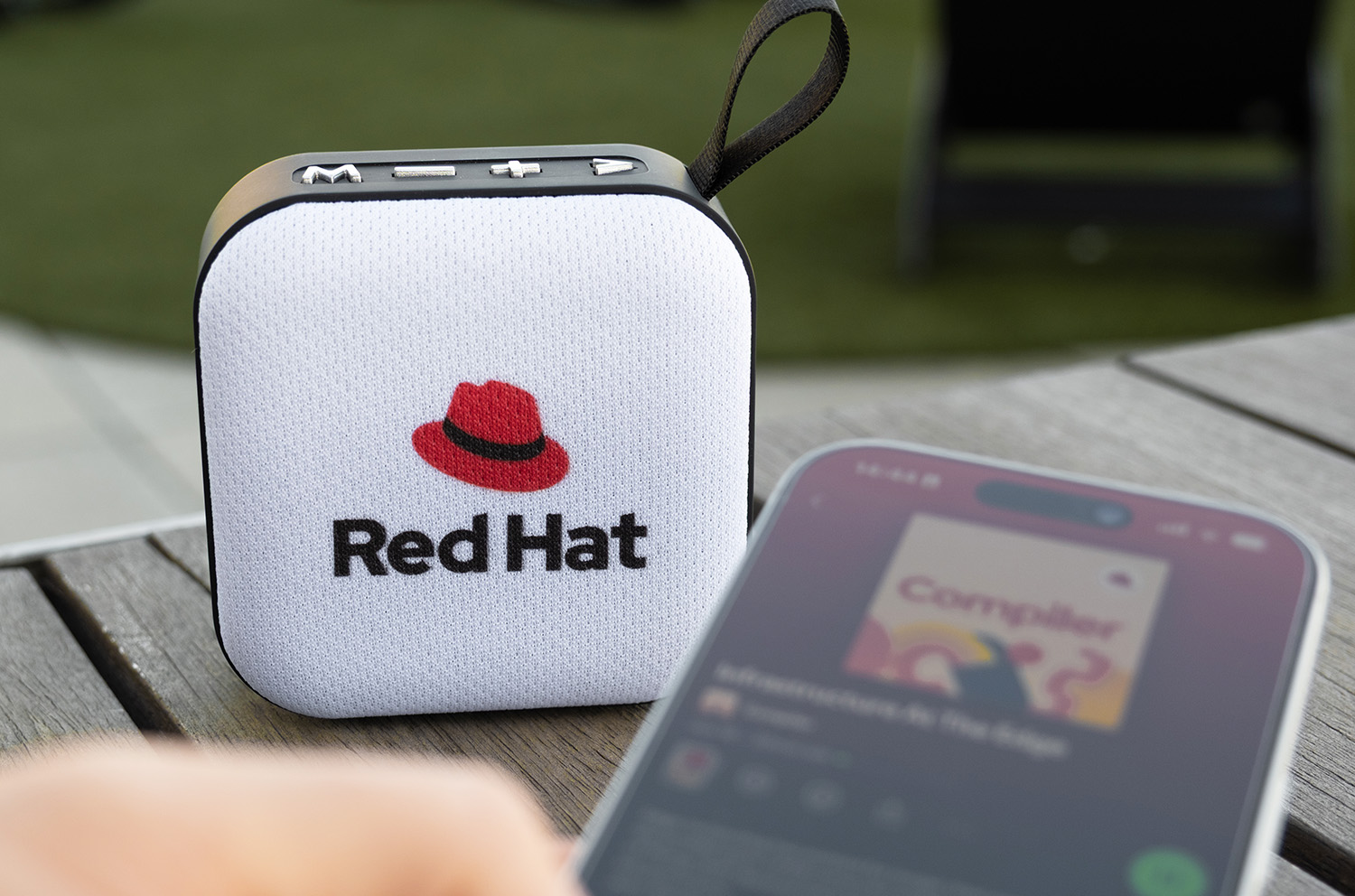
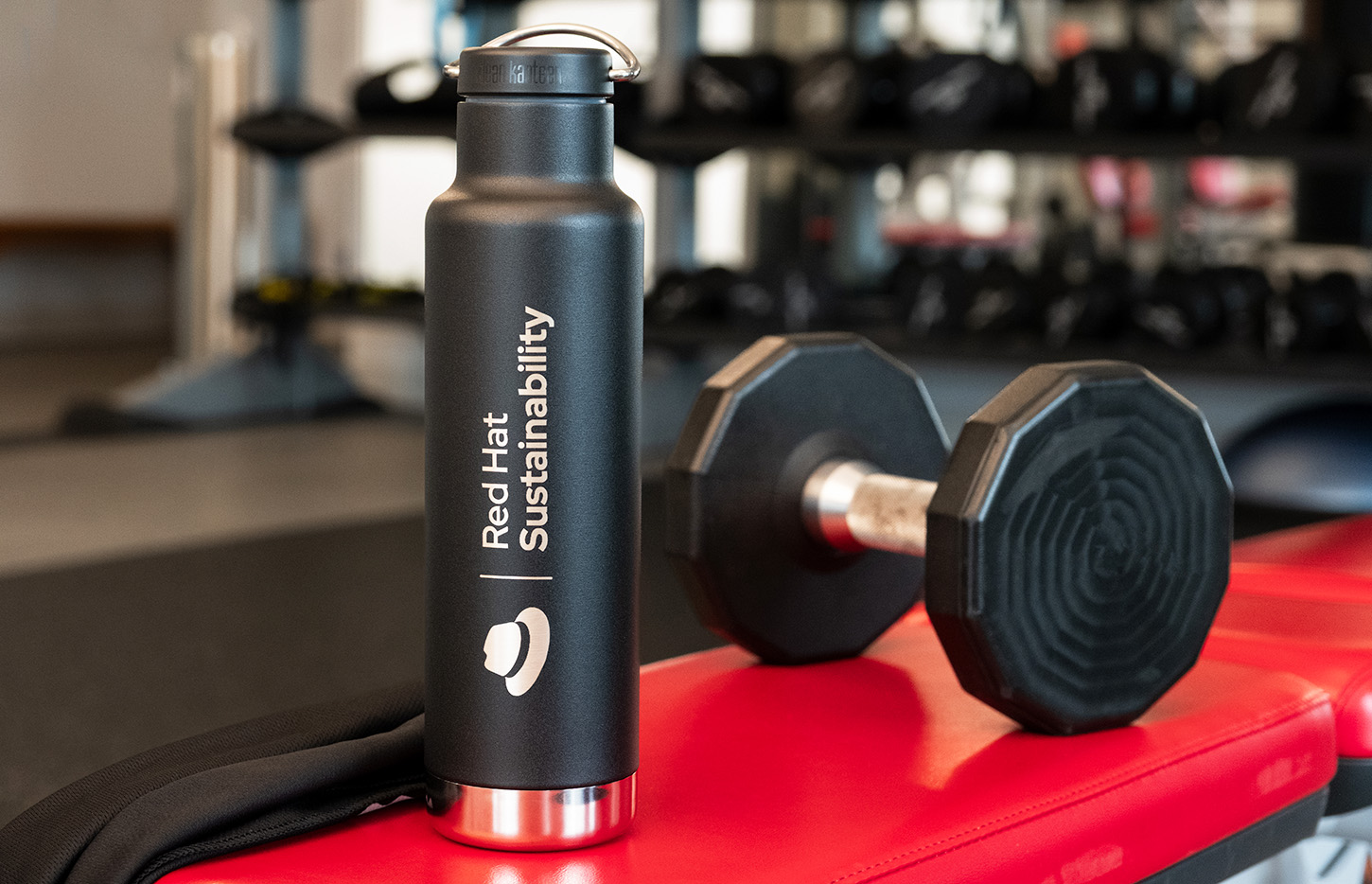


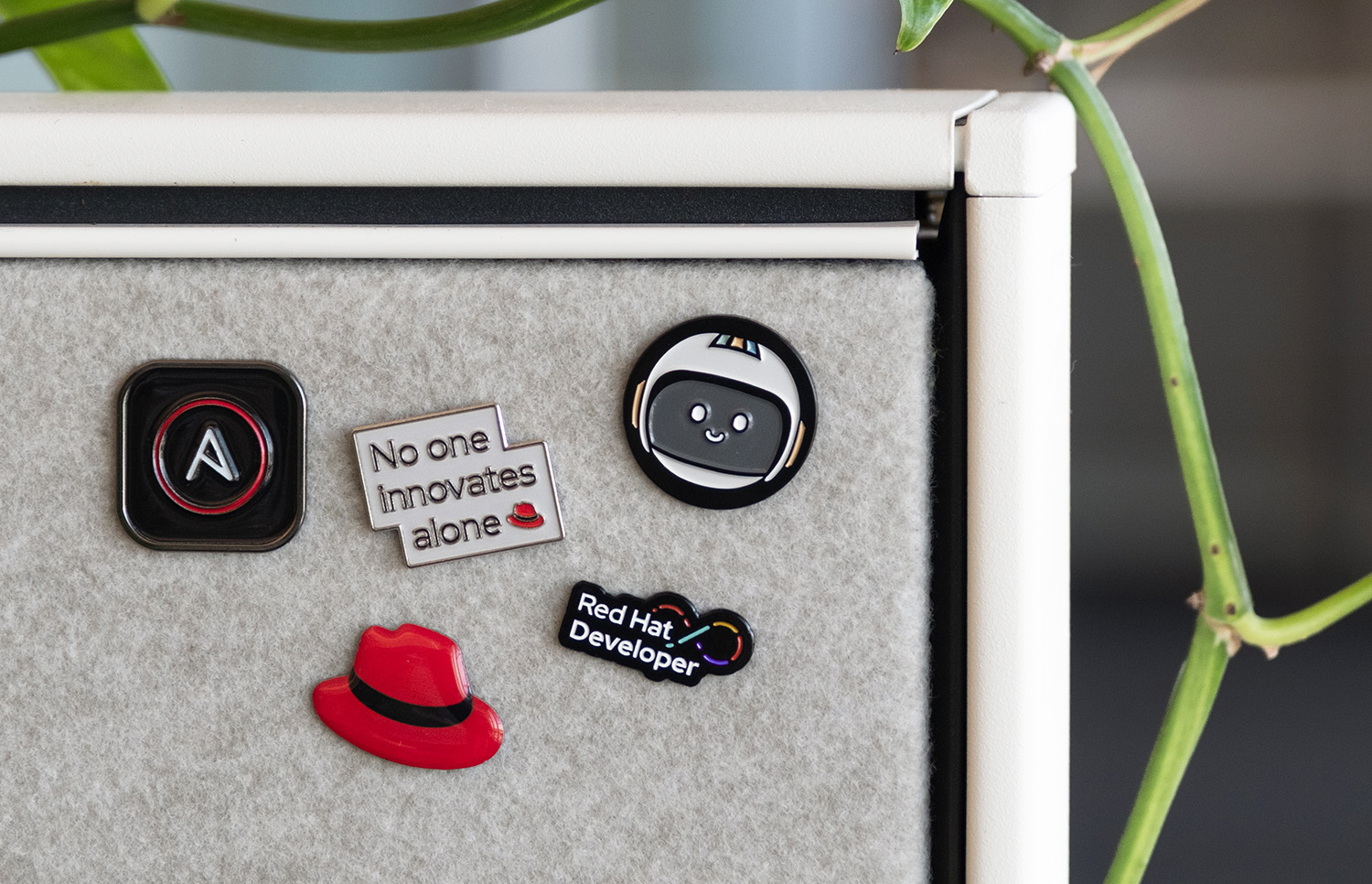


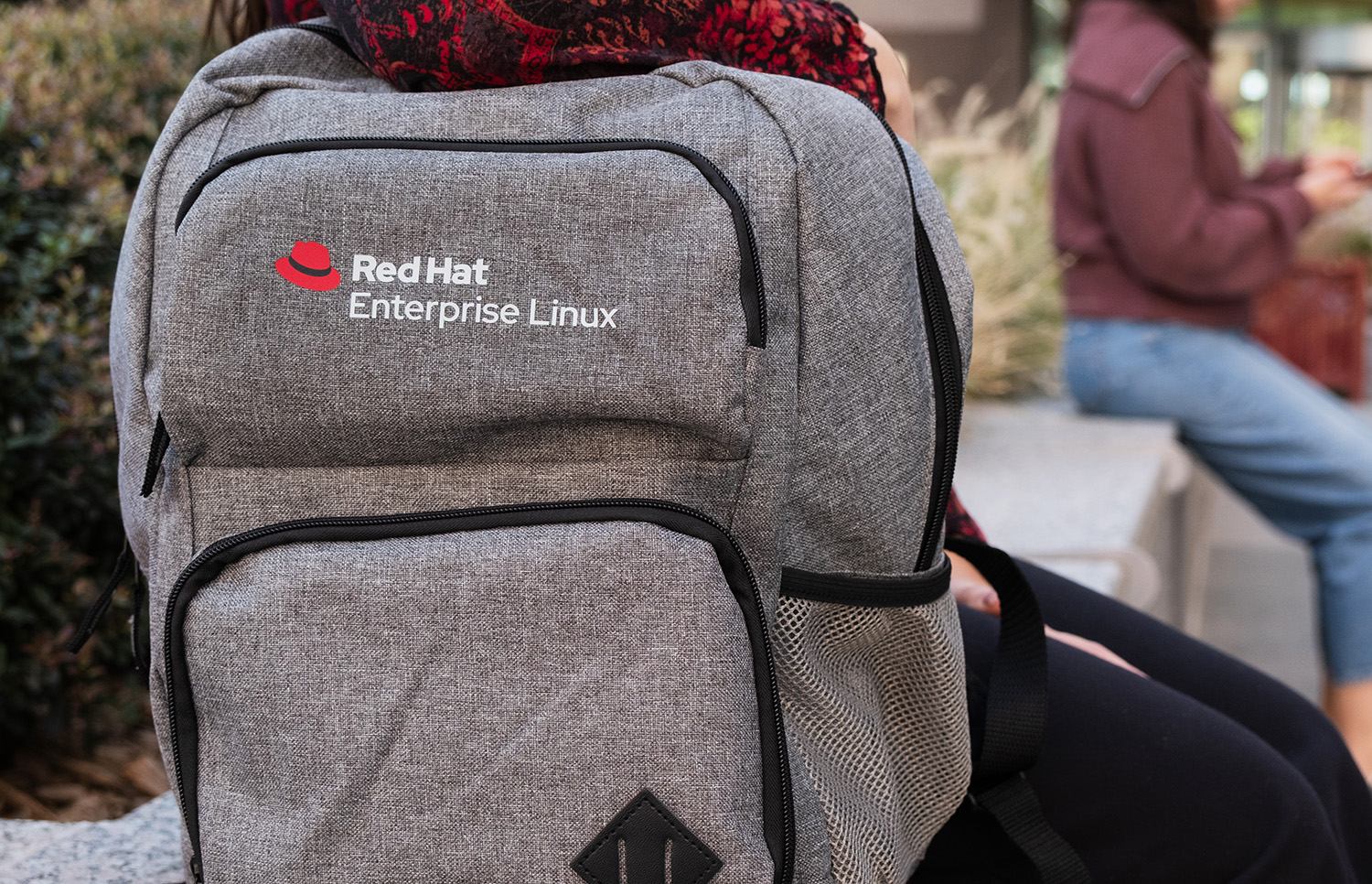
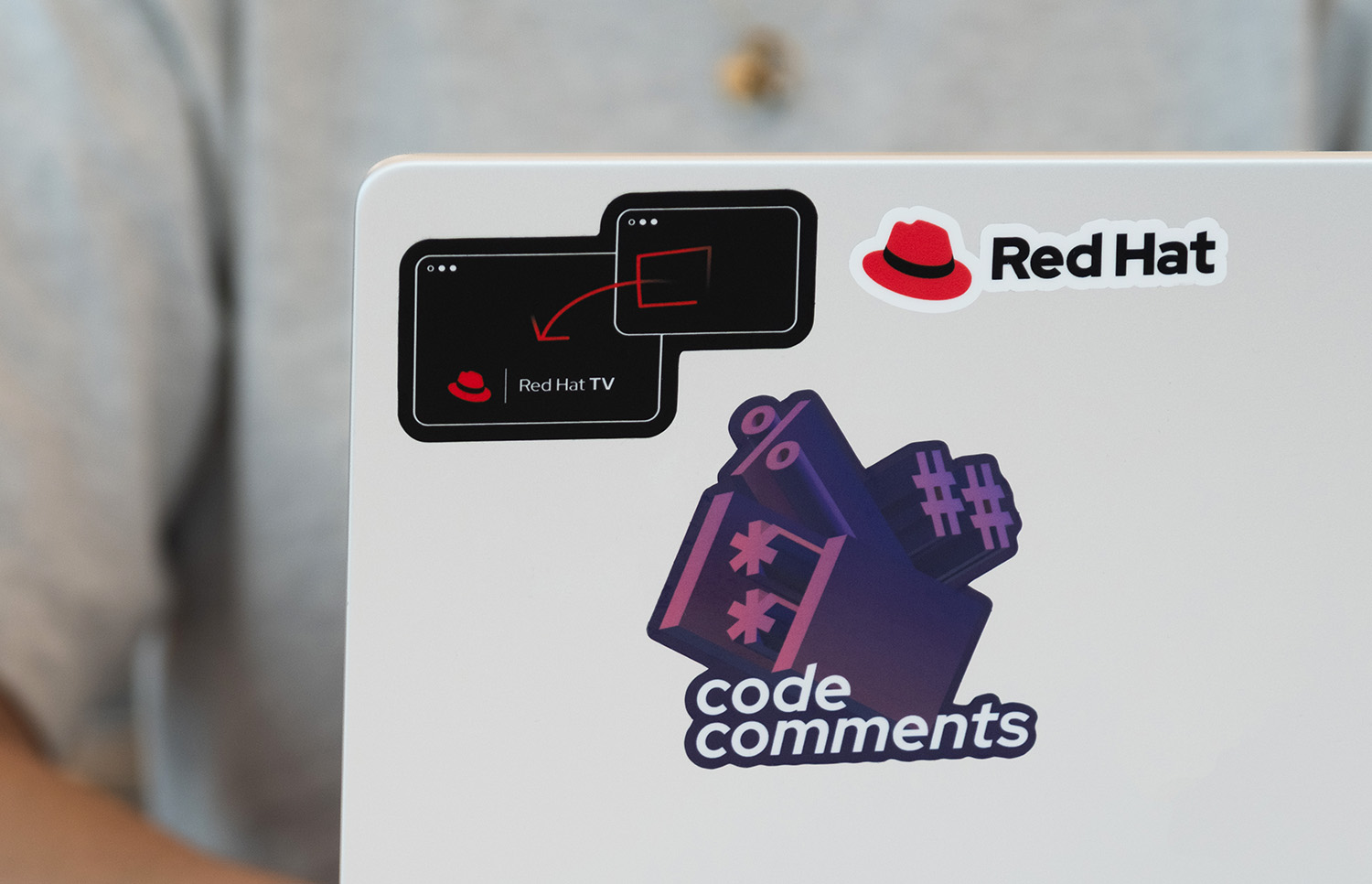
Apparel, drinkware, bags, and office supplies are good examples of swag that are functional and long-lasting. They’re also high-impact because they’ll be worn and used publicly, bringing awareness to our brand. Oftentimes the best design is a logo by itself; it’s simple and direct.
For specific events and programming, limited-edition items like tote bags, plushies, pins, and stickers might have customized designs that include other elements of our brand. All design elements included on Red Hat swag must be brand-approved.
Choosing the right items
When choosing and designing swag, there are a few key things to keep in mind.
Make it unmistakably Red Hat
If another company could give away an identical item, or if the recipient could immediately forget who gave it to them, then the swag isn’t helping to build the Red Hat brand. Make it unmistakably Red Hat by always including our logo and following our standards for colors, fonts, icons, and imagery.
Make it relevant
Items should be tailored to the audience or event so they remember when and why they received it. The design and branding should make items more desirable, not less; avoid things that are gimmicky, silly, or overly cliché. We want people to proudly wear our swag or display it on their desk.
Make it useful
Like our software, the swag we give away should be dependable and solve a problem. Illustrate our commitment to understanding and solving problems by choosing functional items that recipients will keep and use over and over. We don’t want Red Hat branded items to end up at the back of the junk drawer.
Make it sustainable
Think about the long-term impact of swag and look for quality items that will last. Consider sustainable materials and processes, and avoid branding single-use items designed to be thrown away.
Our swag program has several strategies built in to make swag more sustainable, like minimum orders for custom swag and sourcing swag in-region when possible.
What about hats?
Red fedoras are an important symbol for our brand, so we need to use them correctly and respectfully. Remember that seeing a piece of Red Hat swag could be the first time someone has ever seen our logo.
When using the hat on swag—either in printed graphics or on dimensional items like awards or keychains—it must be the exact trademarked shape used in the Red Hat logo. Do not create a 3D object that looks like our hat.

For dimensional applications, create depth by extruding, embossing, or debossing the shape of the hat. Do not recreate the hat as a 3D object.

The hat can be used as decorative artwork by cropping it, masking it inside of shapes, repeating it in a pattern, and more.

When using the hat, a full logo should appear somewhere on the item when possible. If one doesn't fit or looks forced, the item should come with packaging that has a logo.
We also hand out fedoras that people can wear, made from red fabric with a black ribbon around the crown. There are 2 types, depending on the recipient:

Our associates earn their fedora at the beginning of their Red Hat journey and display them proudly as members of a community of innovators worldwide who champion the principles of open source. These felt fedoras are reserved for Red Hatters.

We share special fedoras that have the Red Hat logo printed on the band with partners, customers, and contributors at some events. Reach out to the Global Fulfillment team
Restricted items
Not everything found in a vendor’s catalog is the right choice for Red Hat swag. Besides the general guidelines for choosing swag, some items are not allowed because of challenges with logistics, transportation, or customs, or because they can create negative associations with our brand.
The following items are never approved:

Cosmetic, medical, or pharmaceutical products (soap, lip balm, lotions, hand sanitizer, etc.)
Weapons, including Swiss Army knives, multi-tools, chef’s knives, etc.
Encryption tools or encrypted electronics
Lithium batteries, including power banks
Stress balls and other stress relief items
Perishables, such as food or drinks
Alcohol and tobacco products
Plants or seeds
Laser pointers
Have feedback on the Brand Standards? Submit it here.
Questions? Red Hatters can reach out via #help-brand on Slack.
Materials and finishes
Base material colors
The colors of the fabrics, plastics, metals, and other base materials in vendor catalogs may not perfectly match colors in the Red Hat color palette, and that’s okay. Work with the vendor to ensure the color of the material acts as a neutral foundation that complements the colors in the graphics that will be printed on it.
Neutrals
A neutral base material allows the graphics to stand out. Choose a flat color or subtle texture like heathering. Common neutral color choices include light or dark gray, black, white, navy, and light pink.
Red
If the base material is red, it should be as close to Red Hat red or one of the darker shades of red in our color palette as possible. Graphics printed on red should always be white.

Not this: Don’t choose bright, saturated, neon, or heavily patterned materials.

Not this: Don't use black logos or graphics on red. Use white for maximum contrast.

Not this: Don’t create swag items with little or no contrast. Red Hat items should be clear and bold to build brand awareness.
Application methods
The complexity of the graphics and the type of material they’re applied to will determine what kind of application method is needed. Simpler graphics are often easier, faster, and more cost-effective to produce.
The most common application methods for Red Hat swag include printing, engraving, embossing, and embroidery.

Printing
The most versatile application method, depending on the print process and ink. Graphics can typically be more colorful and complex than those applied with other methods. Remember that each additional ink color can increase the cost.
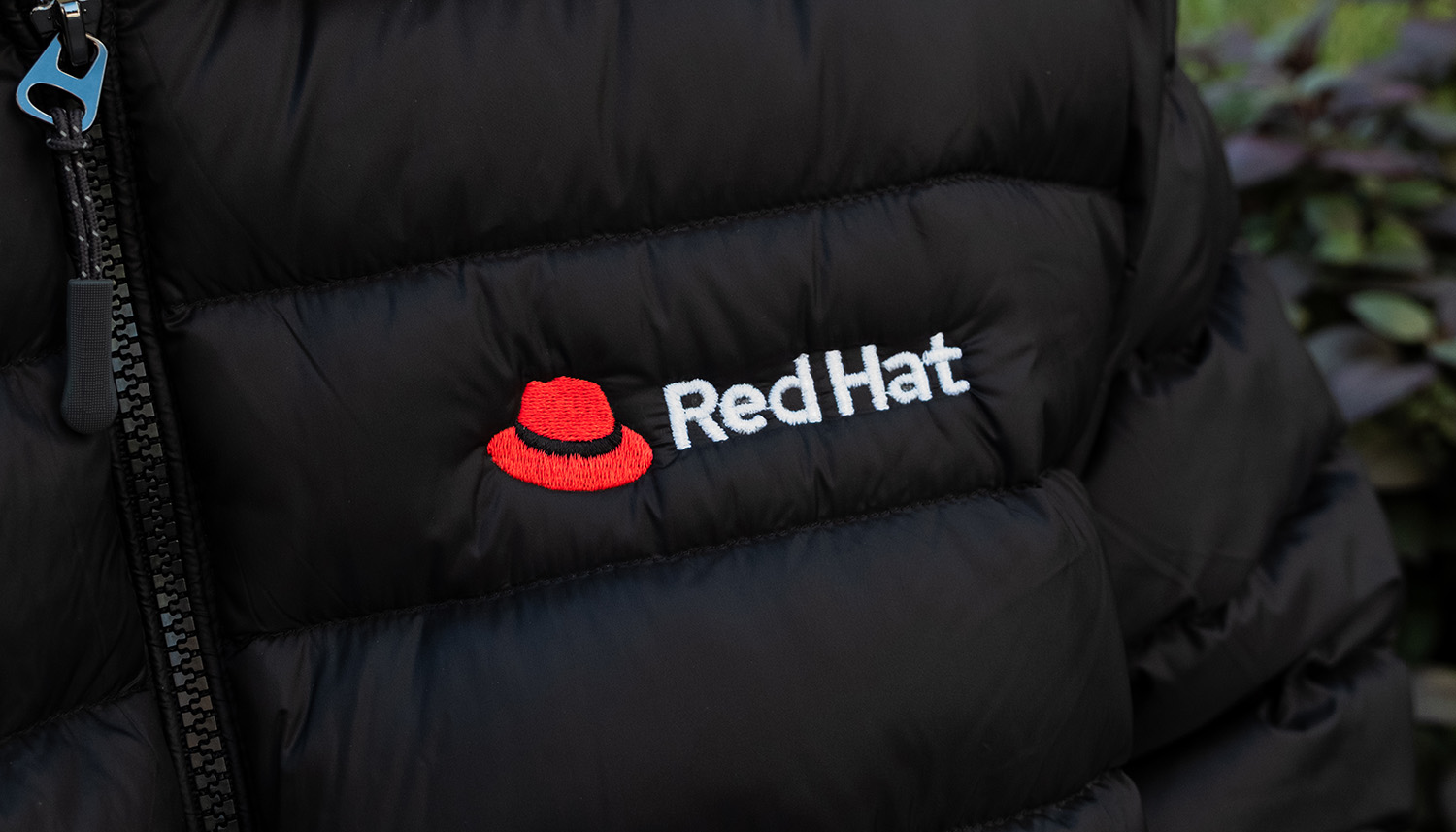
Embroidery and stitching
Sewn into fabric, like shirts or bags. There are often minimum sizes for graphics that are embroidered so that small details (especially text) are able to be rendered correctly.

Laser engraving
Most common on metal, acrylic, or glass items like drinkware and awards. Graphics are physically etched, so they’ll appear in the color of the material itself. This means the graphics must be in one color and flat.

Embossing or debossing
Applied to paper and other pliable materials by stamping a die into the material to create a raised or indented area. The final graphic will usually be the same color as the material that’s stamped.
Regardless of the application method, the final rendering should look as accurate to our brand assets as possible. Work with the vendor to choose the best method for the item and design to avoid lost or flawed details and inaccurate colors.
Imprint areas
An imprint area is where graphics can be applied. Different items will have different size and shape imprint areas, and some will have more than one.
One imprint area
When there’s only one imprint area, all graphics will need to fit inside it. If the imprint area is small, it’s best to just stick with a logo for the most impact.
Multiple imprint areas
When there are multiple imprint areas, graphics can be split into different areas. Give elements breathing room by placing the logo in one area and other graphics in another area.
On apparel, there are a few common imprint areas. Choose one or more of these placements.
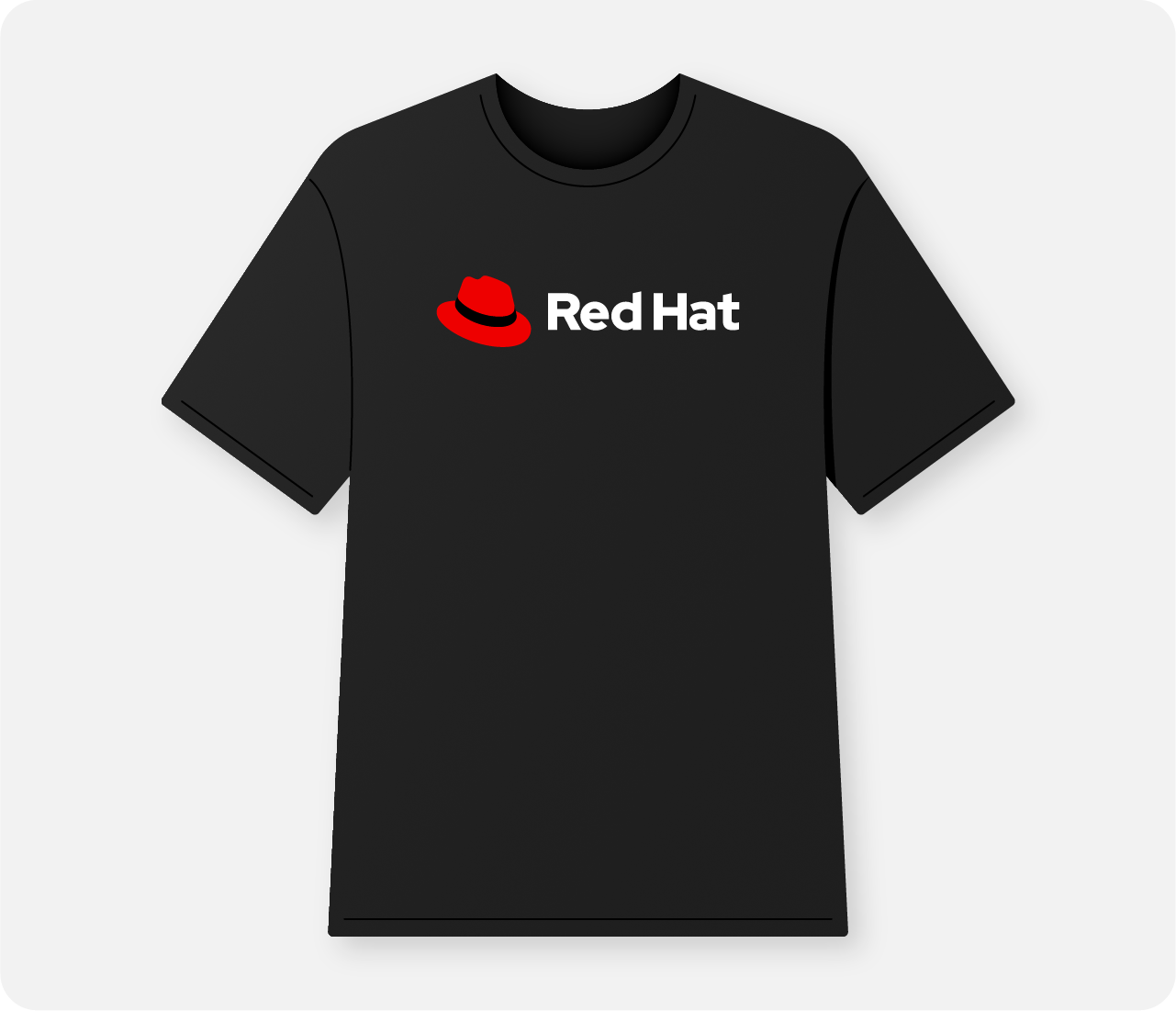
Chest or back
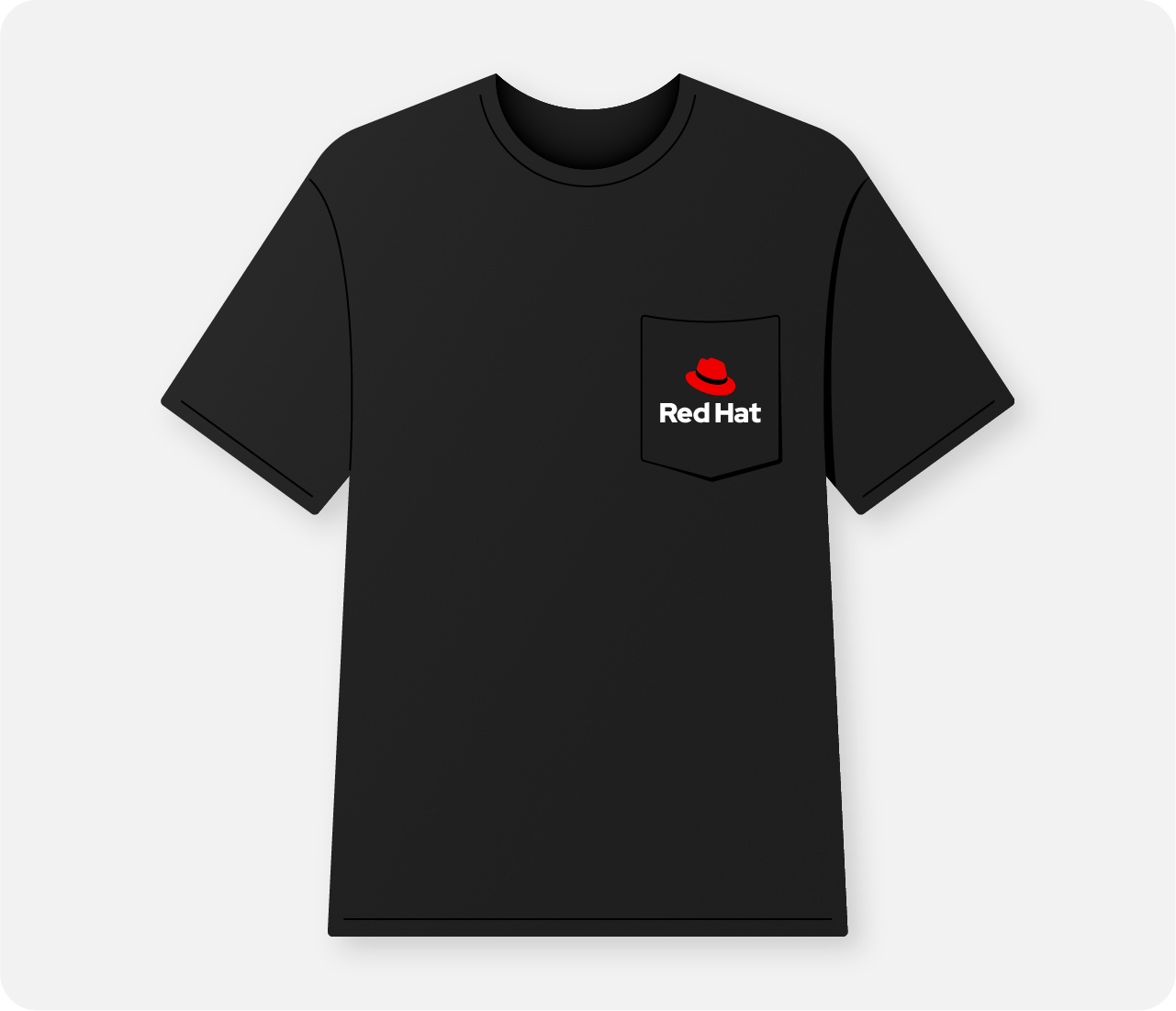
Pocket area
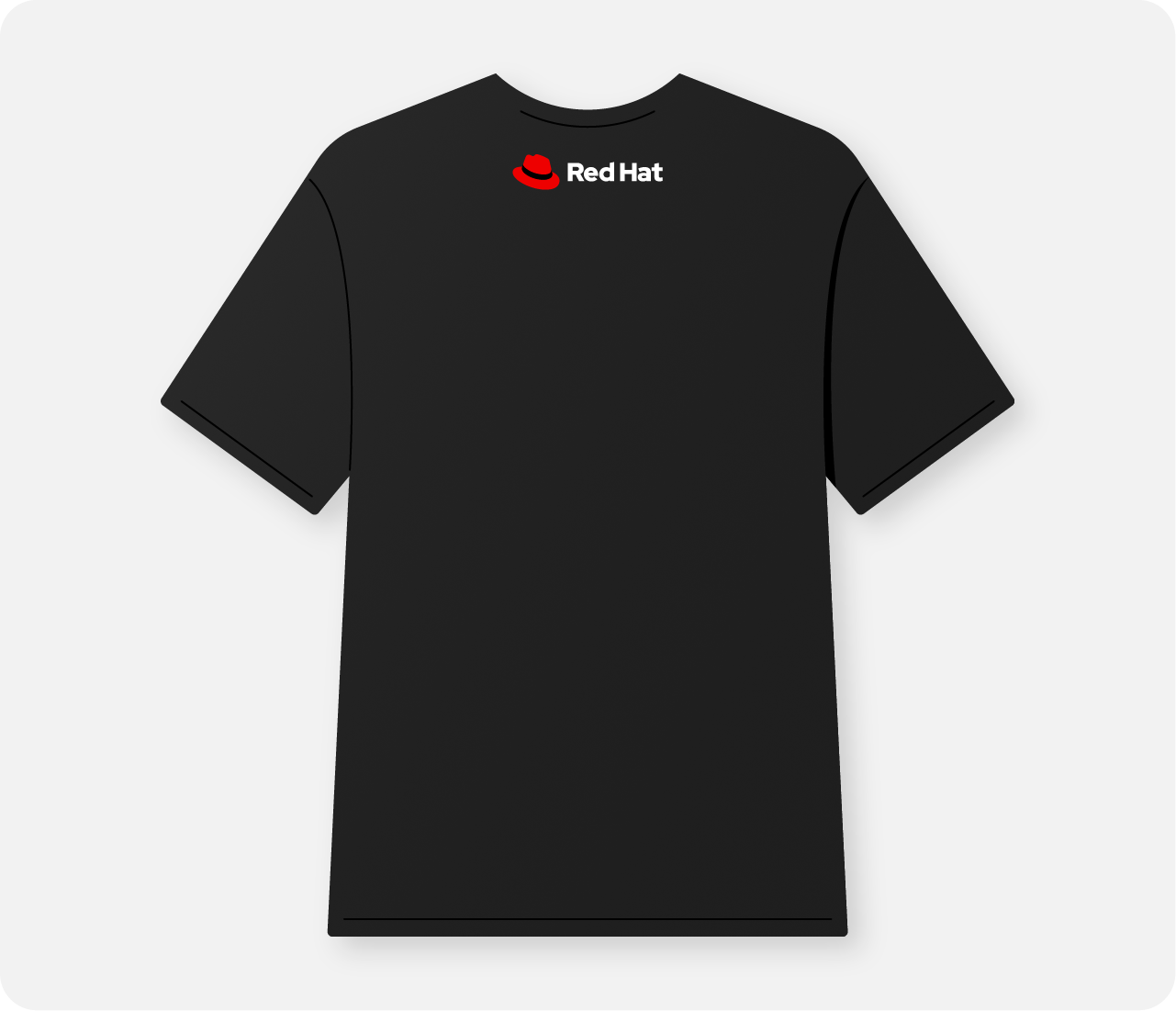
Nape (back of the neck)
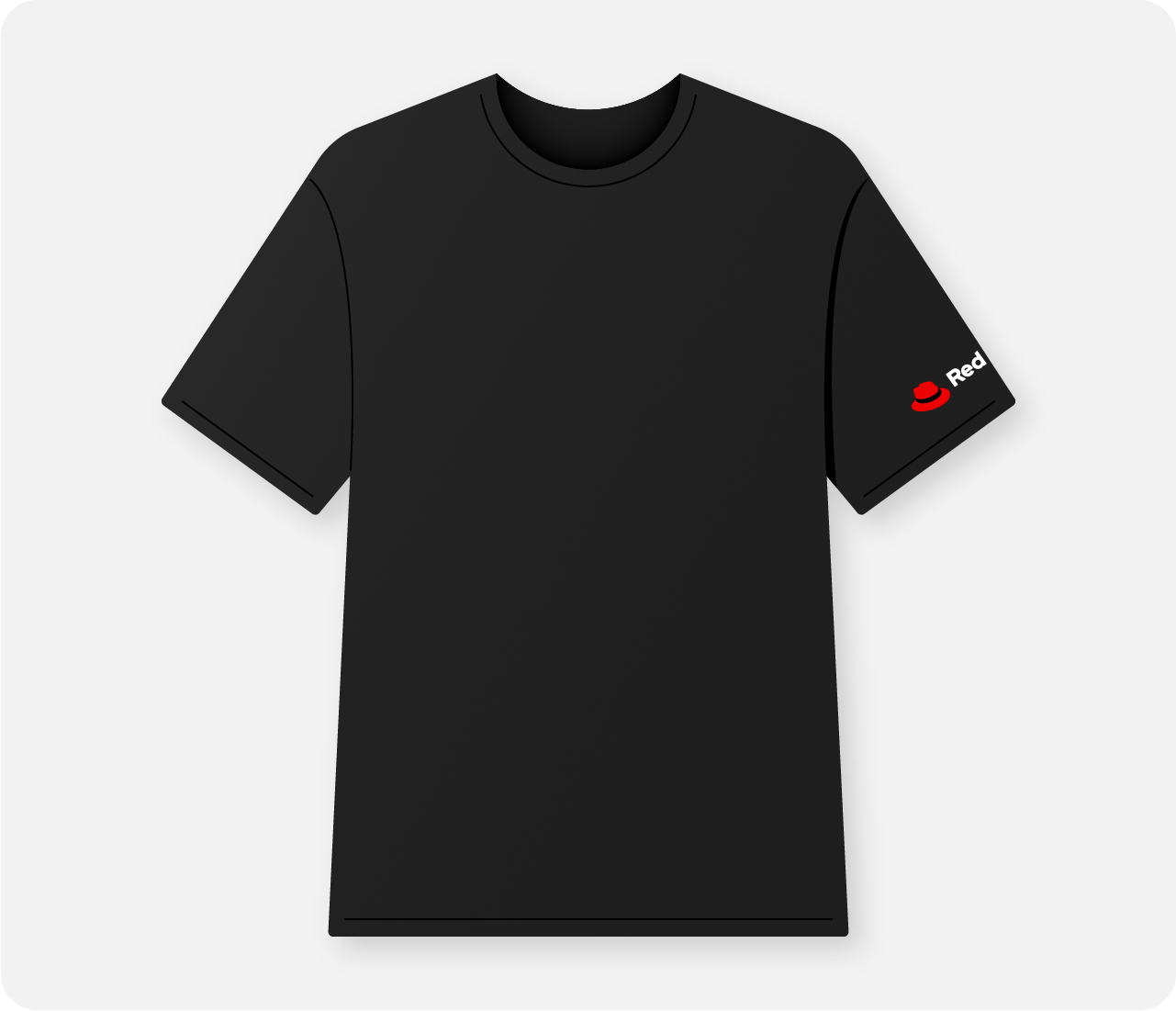
Sleeve (left or right)
Be sure that there’s enough clear space between the graphics and the edge of the item to keep things from feeling cramped. If an imprint area extends all the way to the edge, make sure that the final print will look intentional.
Have feedback on the Brand Standards? Submit it here.
Questions? Red Hatters can reach out via #help-brand on Slack.
Graphics
Logos
The purpose of a swag item is to promote our brand, and our logo is our most recognizable brand asset. Without it, someone who sees the swag item out in the world might not realize that what they’re seeing is from us. One of the following logo types must be present on every swag item:


That means when using the hat alone, the Red Hat Summit logo, or an initiative logo, one of the logos listed above must also be included somewhere.
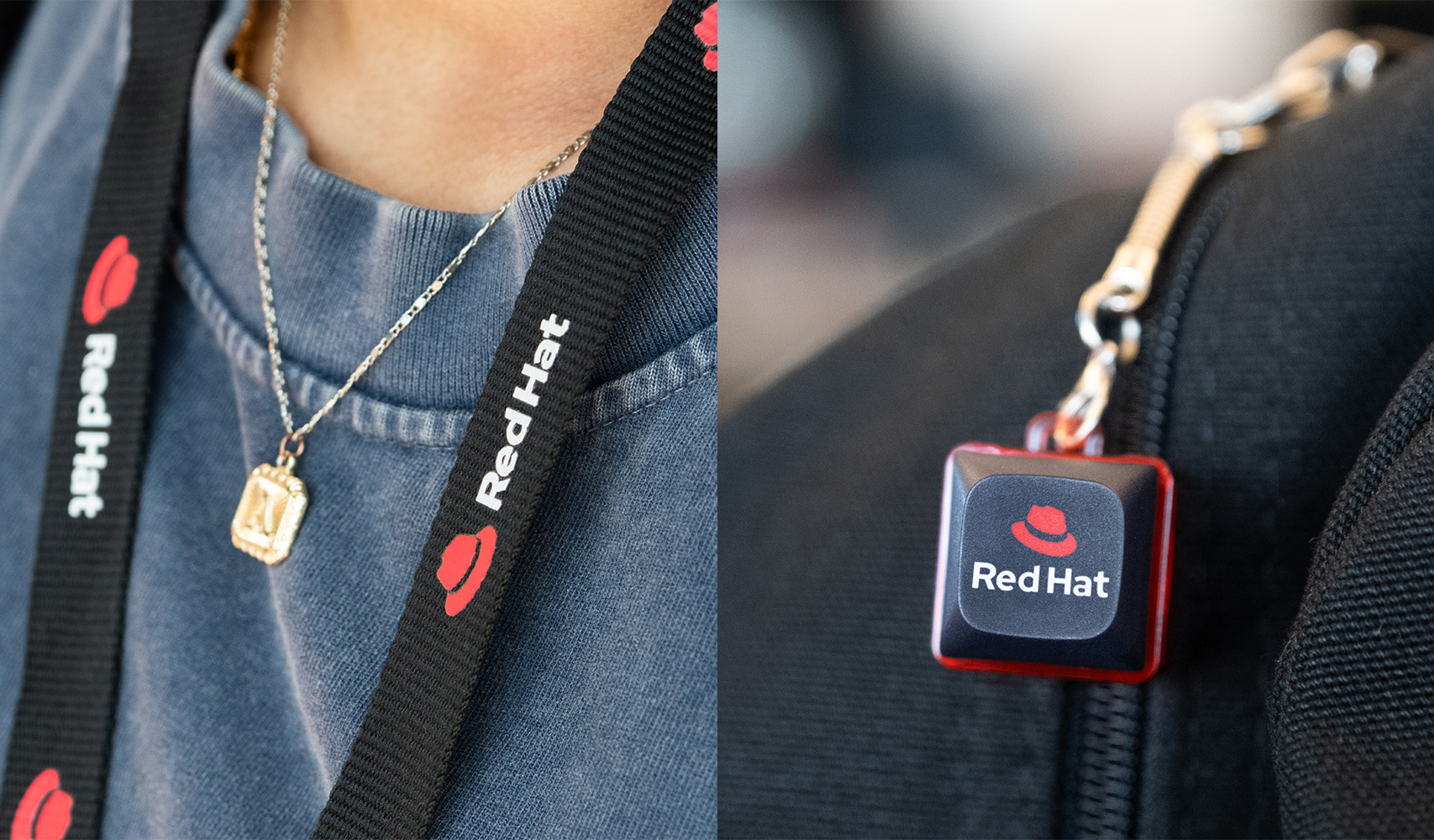
Use the logo version that fits best in the imprint area: horizontal versions fit best in wide imprint areas while stacked versions fit better in square or circular areas. Be sure to follow clear space guidelines so the logo has room to breathe.
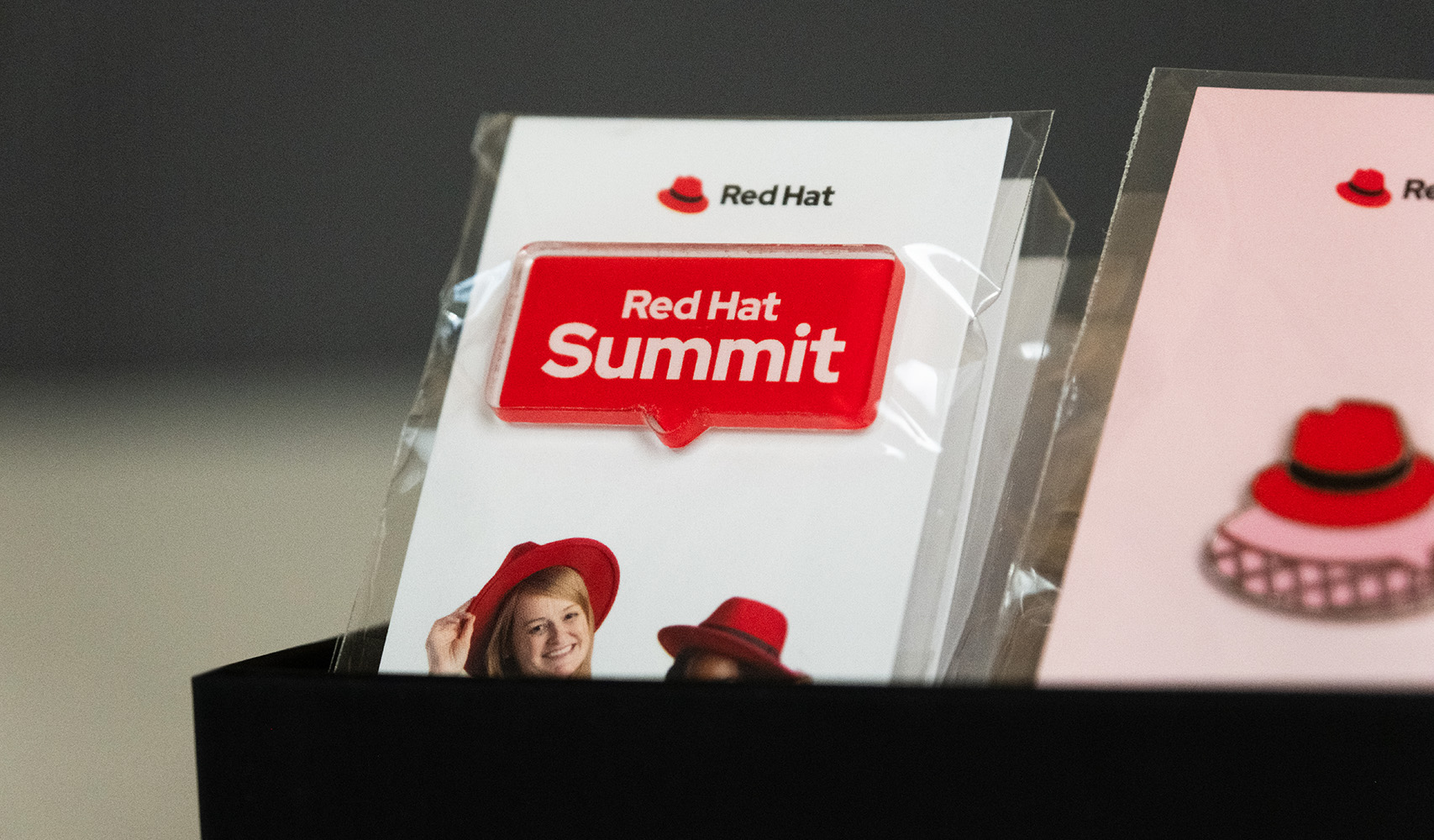
When a swag item itself can’t include the Red Hat logo due to size or material constraints, it should be distributed with a card or box that has the Red Hat logo.

Not this: Avoid placing logos too close together. Follow clear space guidelines.

Not this: Don’t modify the colors or design of any logo. Use a one-color version if necessary.
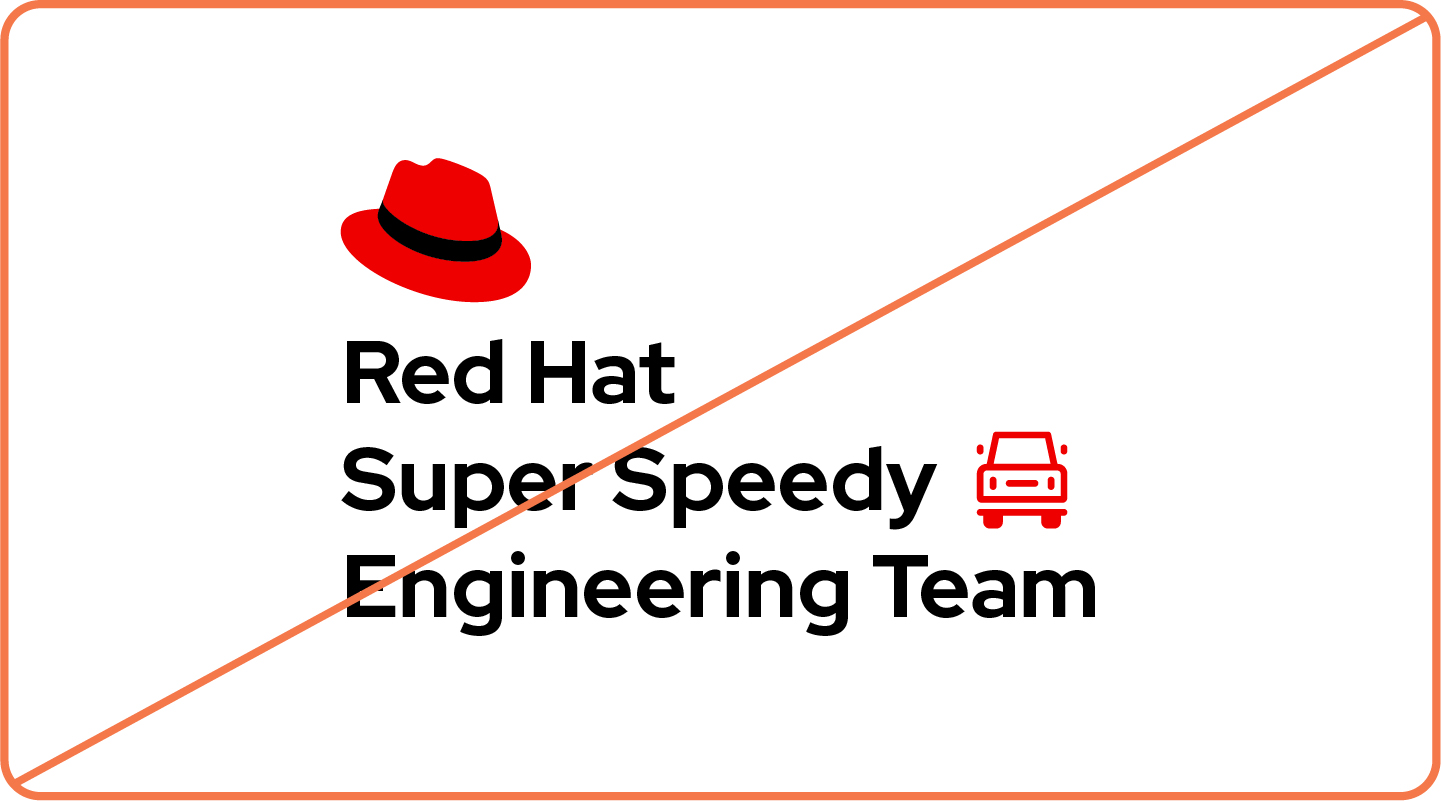
Not this: Don’t create new logos (or things that look like logos). Only approved logos downloaded from Red Hat Brand Portal


Not this: Avoid shapes that make the logo look awkward or cramped, or force it to be too small. Choose the best version and orientation for the space.

Not this: Don’t overdo it with logos.
Other graphics
Most of the time a logo alone is the best design. If needed, swag graphics can incorporate other brand assets like icons, illustrations, and hybrid style collages. All graphics should be in Red Hat’s style and should never reference the intellectual property (IP) of others. Using IP that belongs to someone else has the potential to put Red Hat in legal jeopardy, harm our brand, and damage the reputation of open source as a whole.
Work with the vendor to determine what graphics work best for the swag item. The requestor is responsible for sourcing approved brand assets from the Red Hat Brand Portal

Use icons or technology icons as simple visual references to Red Hat topics or technologies on swag. Use icons in the colorways provided.
Use illustrations and collages for more detailed designs. Remember that each color can add additional cost, so work with the vendor to assess print costs for different assets.

AI-generated graphics
Some AI tools can generate images that look similar to Red Hat illustrations and collages, but the files they generate may not scale correctly. Swag vendors require high-quality images with transparent backgrounds which AI tools struggle to provide. Recreating graphics adds time and cost.
AI tools can also miss the refined details that make graphics truly feel like Red Hat, which means we’re missing out on critical brand impressions. When AI tools can't match our style accurately or don't provide files that work for the swag vendor, use approved assets from our library


Not this: Don't modify technology icons to remove them from their bounding shape. Use the one-color version of the icon if necessary.

Not this: Avoid AI-generated images that don't look like Red Hat.
Messaging
We want to take advantage of the brief moment someone is looking at our swag so, in general, text on swag should be as brief as possible. It should always be set in Red Hat fonts and follow our typography guidelines.
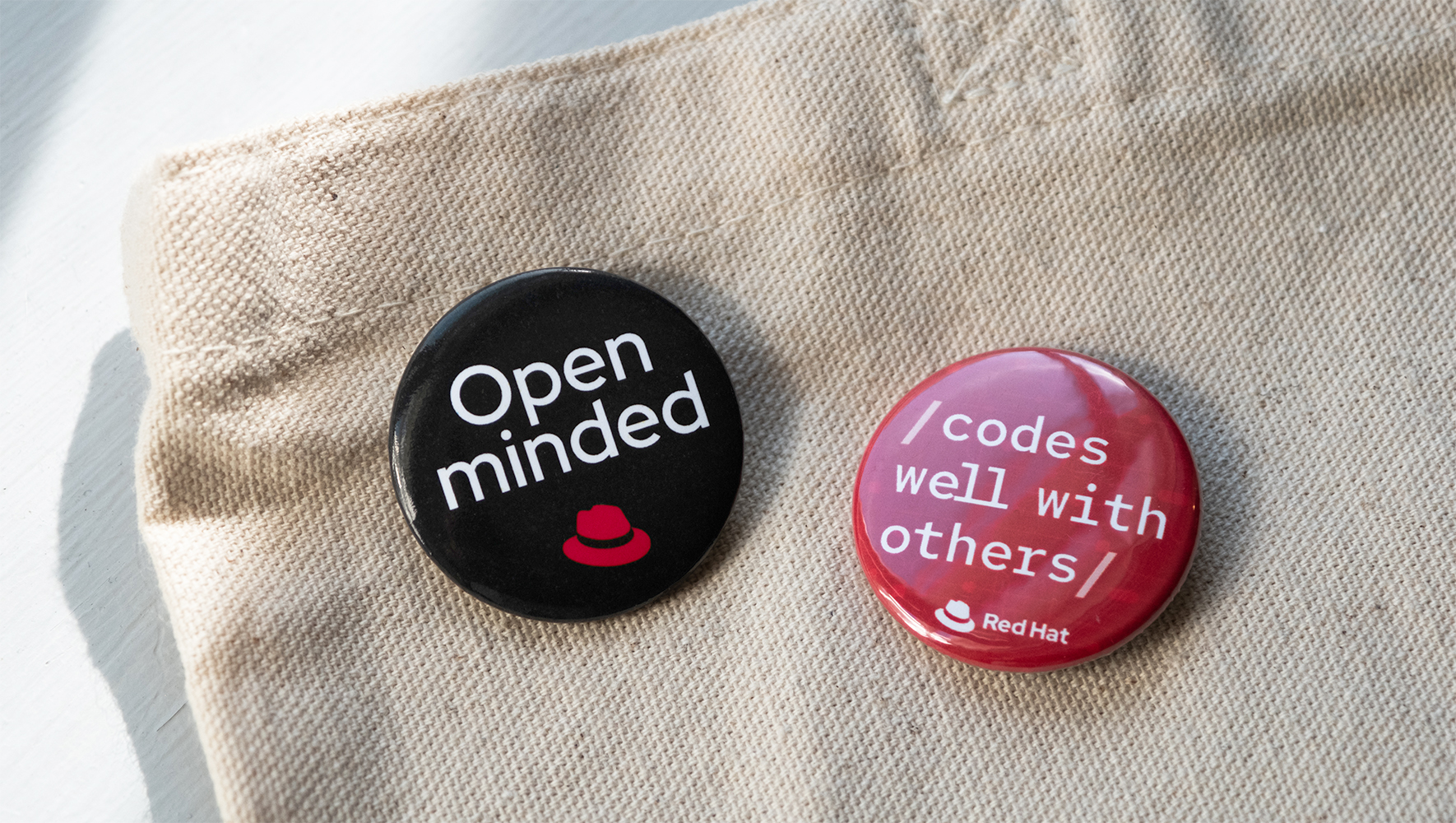
Do this: Use Red Hat Display (or Noto Sans for non-Latin character sets) in most cases. Red Hat Mono may be used for items related to code or technical concepts.

Not this: Don’t use other fonts, or images with text that was generated by AI.
Use language that has correct grammar, punctuation, spelling, and capitalization. Red Hat swag can be seen around the world so messages should be understandable across cultures. Avoid language that might be considered inappropriate or offensive.
Don’t use religious or political concepts. No matter the audience, these topics are sensitive and divisive.
Don’t use slogans or messages popularized by other brands or organizations. It’s a bad look to parrot other organizations’ marketing.
Don’t borrow memes, sayings, lyrics, or quotations. There are limited cases where this might be appropriate, only where the context is extremely clear to the audience.
Don’t make promises or guarantees. Do not make superiority claims or present any kind of product performance metrics.
Don’t refer to customers or competitors. Even if you don't mention them by name, if someone could infer who we’re referring to, the reference should be removed.
Don’t refer to characters, symbols, or logos that are clearly recognizable from copyrighted materials. We must respect the intellectual property of others.
Graphic colors
Graphics provided to the vendor should use colors from the Red Hat color palette. Include Red Hat red whenever possible.
Work with the vendor to ensure assets are provided in the color space that they need (CMYK, Pantone, or RGB) as different vendors use different processes. The final item should reproduce our colors as accurately as possible.
Single-color designs
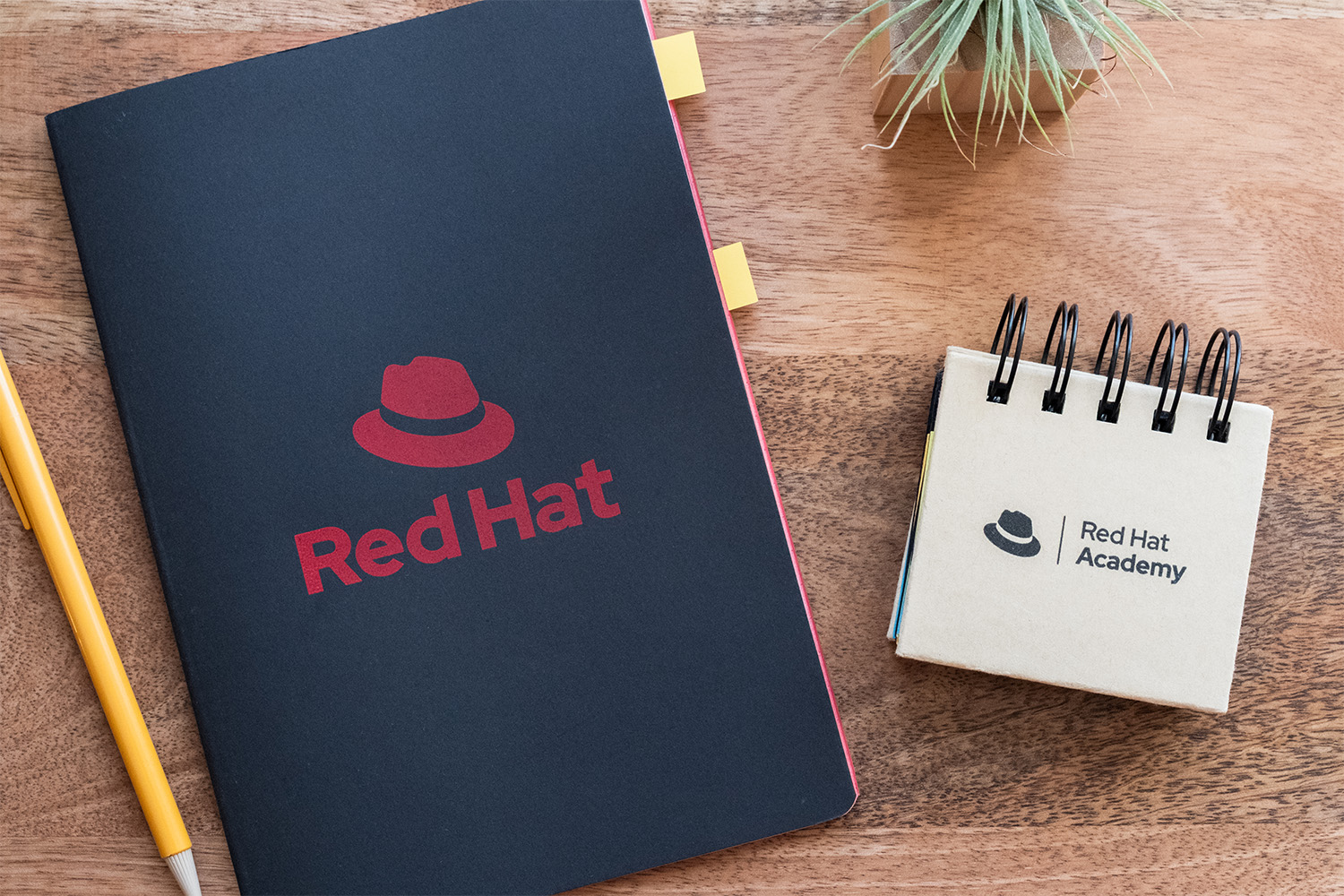
When colors are limited due to cost or how the graphics are being applied, choose one color: red, black, or white. Many of our assets like logos and icons are already available in one-color versions on the Red Hat Brand Portal
Multi-color designs
Depending on the production method, more colors may mean a more expensive product. Always include red as one of the colors, and use the full color logo whenever possible.

Not this: Don’t use colors that are outside of the Red Hat color palette.
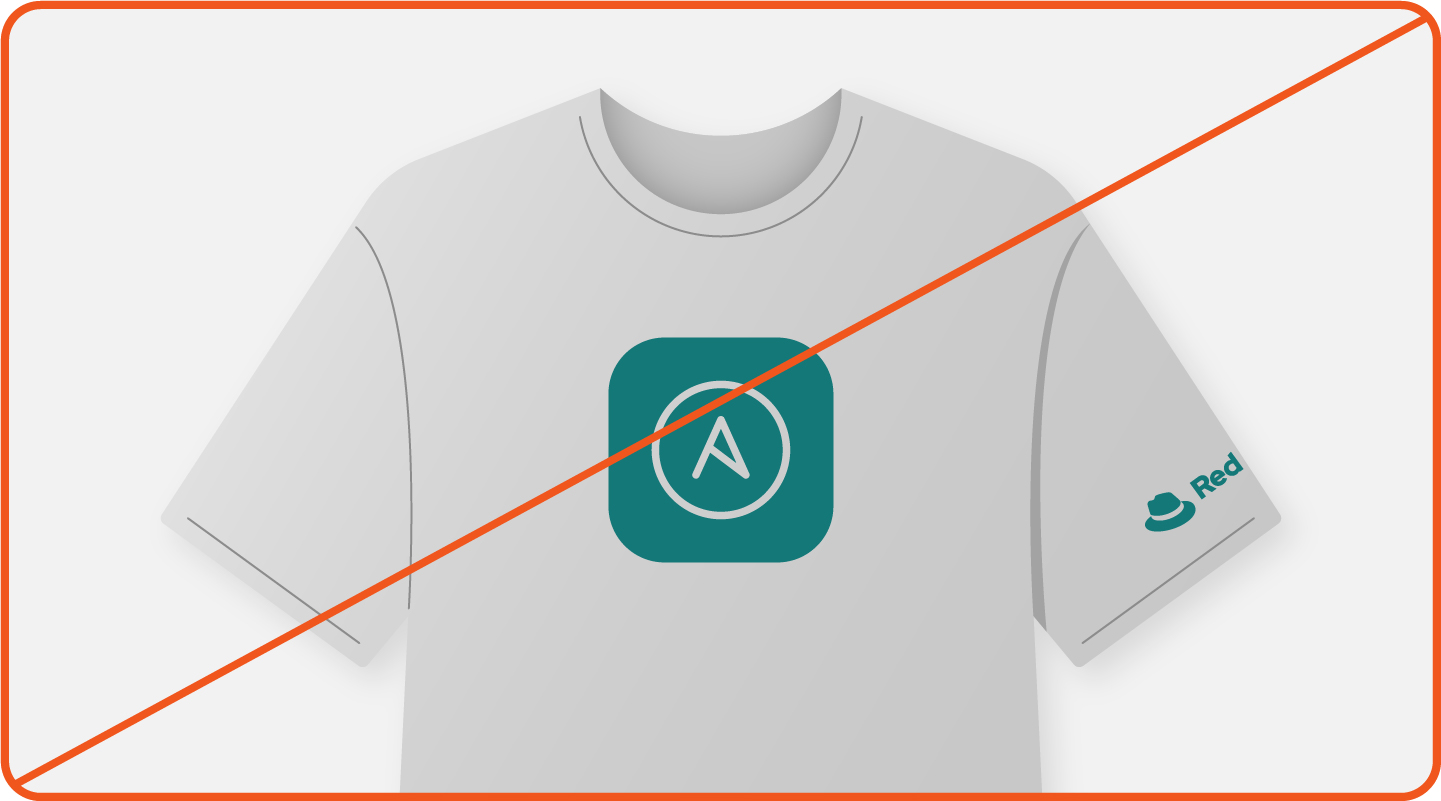
Not this: Don't use a color outside of our core colors (red, black, or white) for one-color applications. Our core colors are our most recognizable.
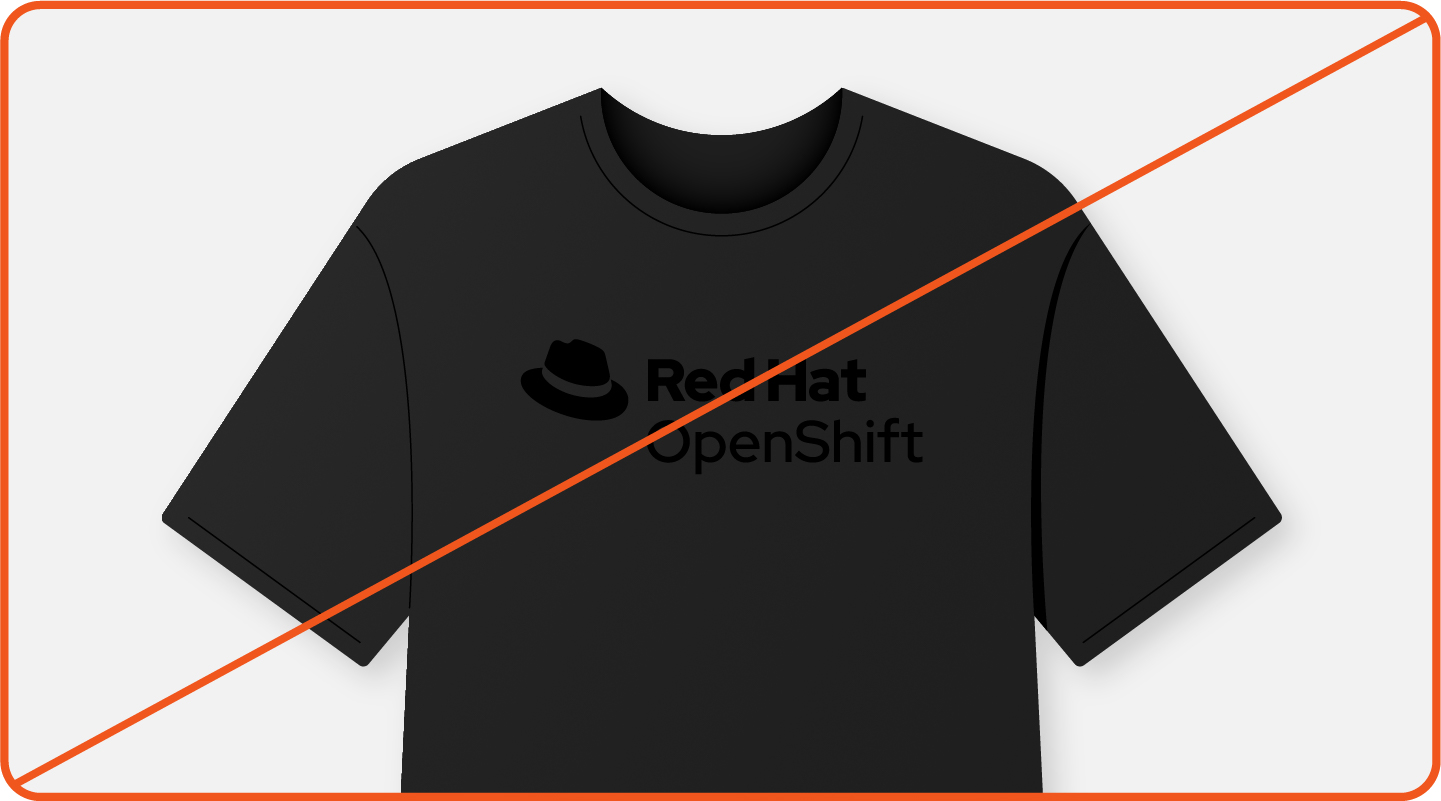
Not this: Don’t create swag items with little or no contrast. Red Hat items should be clear and bold to build brand awareness.
Have feedback on the Brand Standards? Submit it here.
Questions? Red Hatters can reach out via #help-brand on Slack.
Order swag
Red Hat Cool Stuff Store
From apparel to drinkware to electronics, the Cool Stuff Store is stocked with ready-to-ship swag. Sign in with Red Hat SSO or create a free account to order.
Order customized swag
Order customized swag items for a Red Hat team, program, or event. Custom swag fulfillment is handled by the Global Supply Chain Management team in coordination with approved vendors.
Have feedback on the Brand Standards? Submit it here.
Questions? Red Hatters can reach out via #help-brand on Slack.