
In Red Hat OpenShift 4.4, we’re bringing you a new and improved Search page experience. We’ve heard from customers that the ability to view multiple resources at a time would be invaluable to their workflow. So, in this release of the console UI, we’ve introduced just that: multi-resource search. With multi-resource search you can view multiple resources at time and filter across them by name and label, giving you the ability to view the most important resources to you. For command line users, think similar to ‘oc get all’, except you can pick which resources to display!
How it works
Consider a case where you want to see all of your ConfigMaps, Deployments, and PersistentVolumeClaims that have a specific label. Let’s run through how to do this.
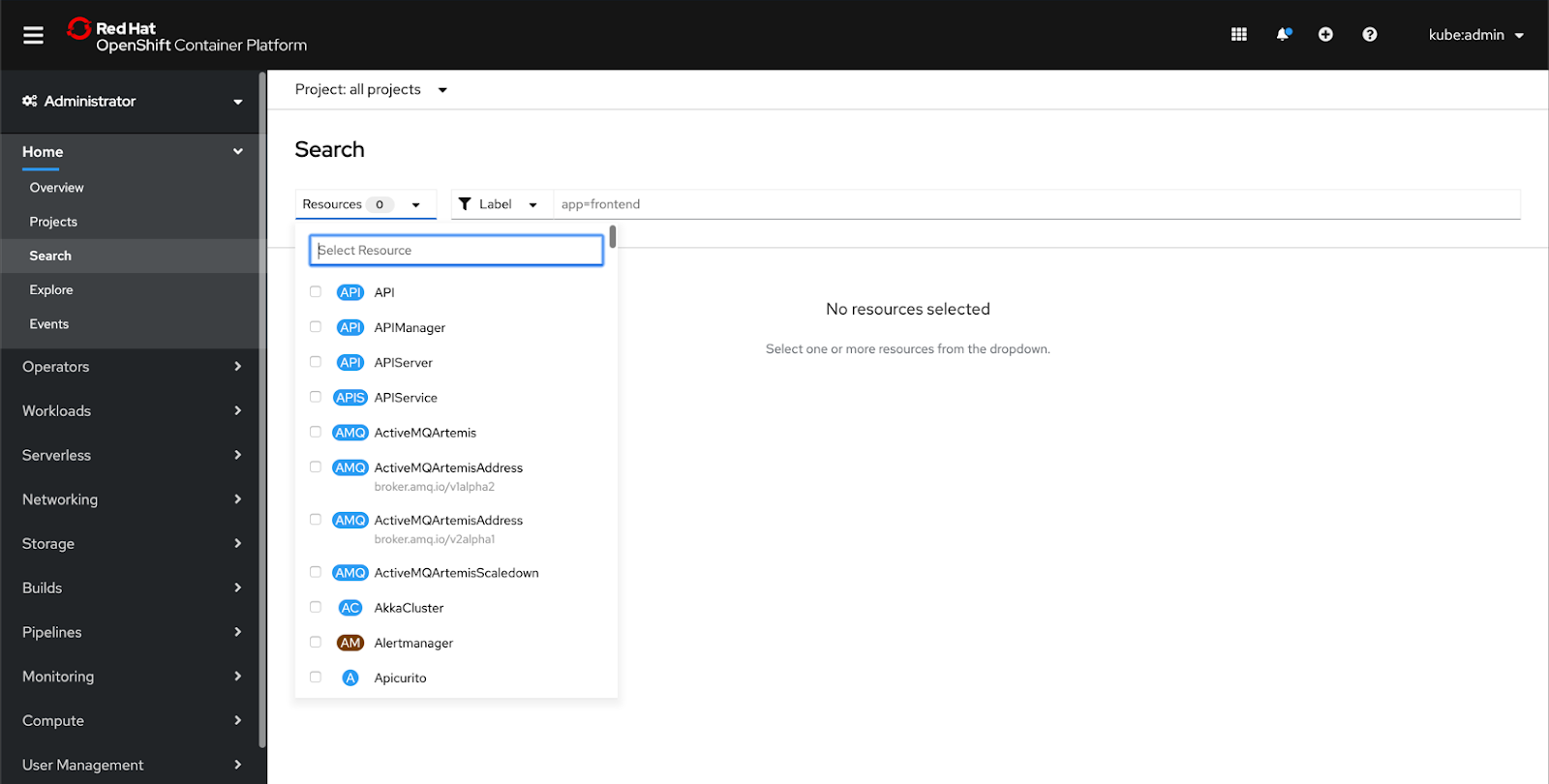
First, navigate to the Search page under the Home section of the navigation. An empty state asks you to select resources. Open the dropdown and select ConfigMap, Deployment, and PersistentVolumeClaim.
Now you can see that the page has loaded all of your resources that you selected. Notice that each resource shows their own columns, based on what information is most important to see for that specific resource. For example, for ConfigMaps, you can see the following columns: Name, Namespace, Size, and Created. For Deployments you can see Name, Namespace, Status, Labels, and Pod Selector. The PersistentVolumeClaims list also shows a different set of columns.
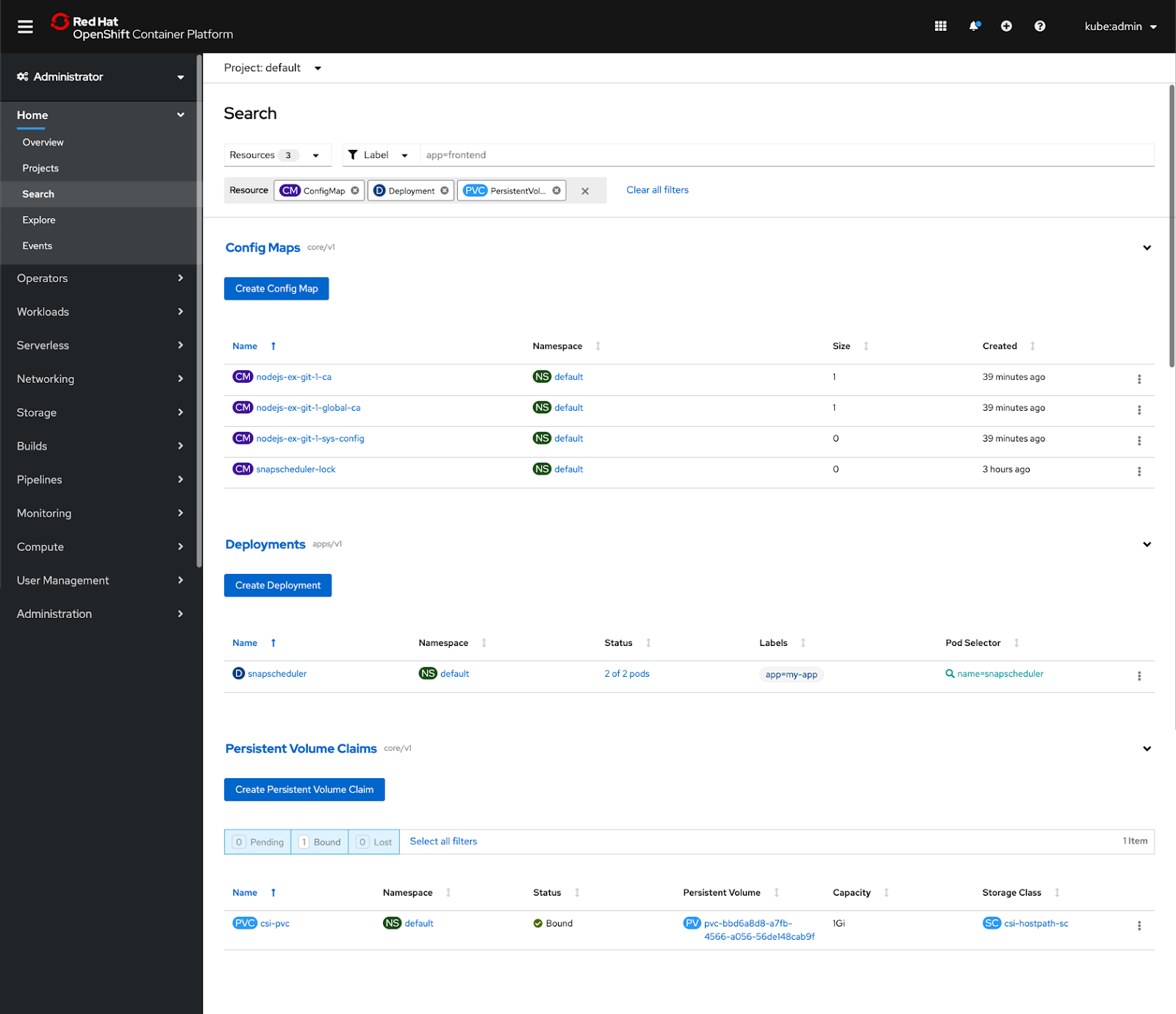
What’s noteworthy here is that the lists also maintain their toolbar if they have one. The differences in each list make sure you can always see the most relevant information for each resource, and can act on them the same way you would if you went to that resource’s page.
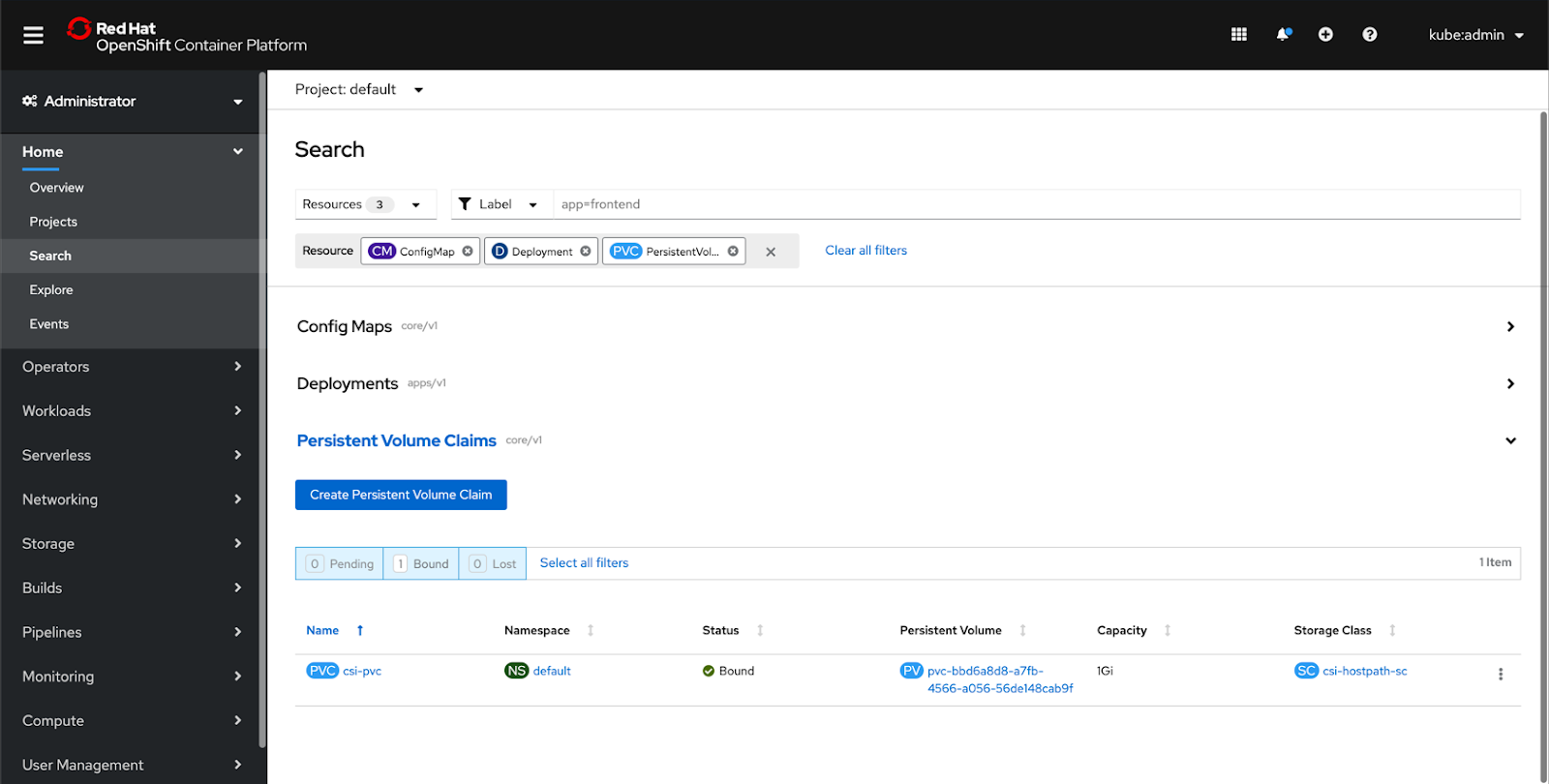
If your lists are long, or you only want to focus on a specific resource for a moment, you can collapse the different resource sections by using the accordion. Open and close a section by clicking anywhere in the resource header area.
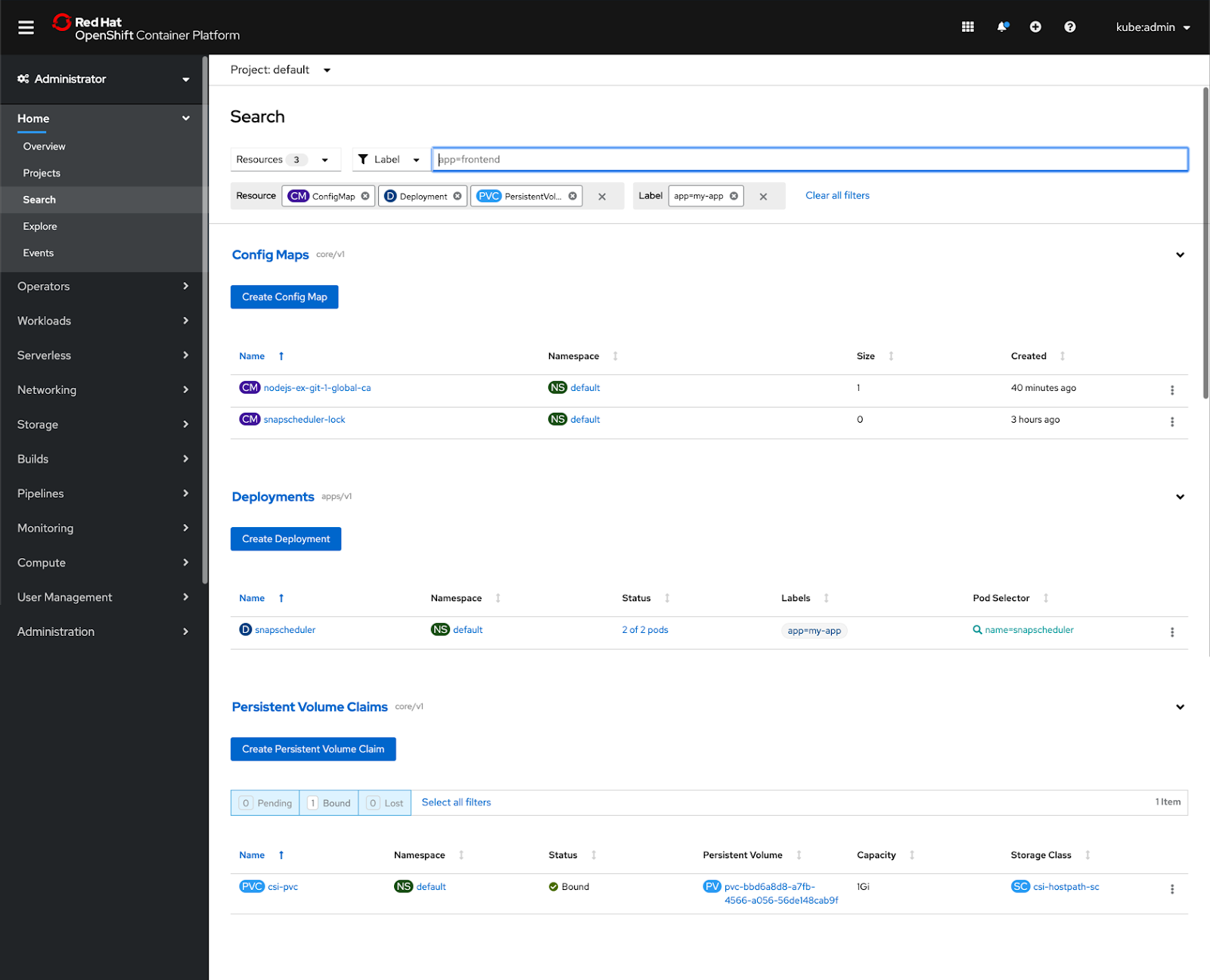
Now let’s try filtering by a label. In the toolbar, make sure that **Label** is selected in the filter dropdown and type in your label. When you hit Enter, a filter chip with your label will appear in the filter chip bar. Each list will only show you instances that match the filter applied. Now you can easily filter across different resource types by label!
You can easily clear the filter by clicking the x in the filter chip. Next, let’s filter by name. The process is the same, but make sure that Name is selected in the filter dropdown. You’ll notice that the name filter will actually filter on your lists as you type, updating the associated filter chip as well.
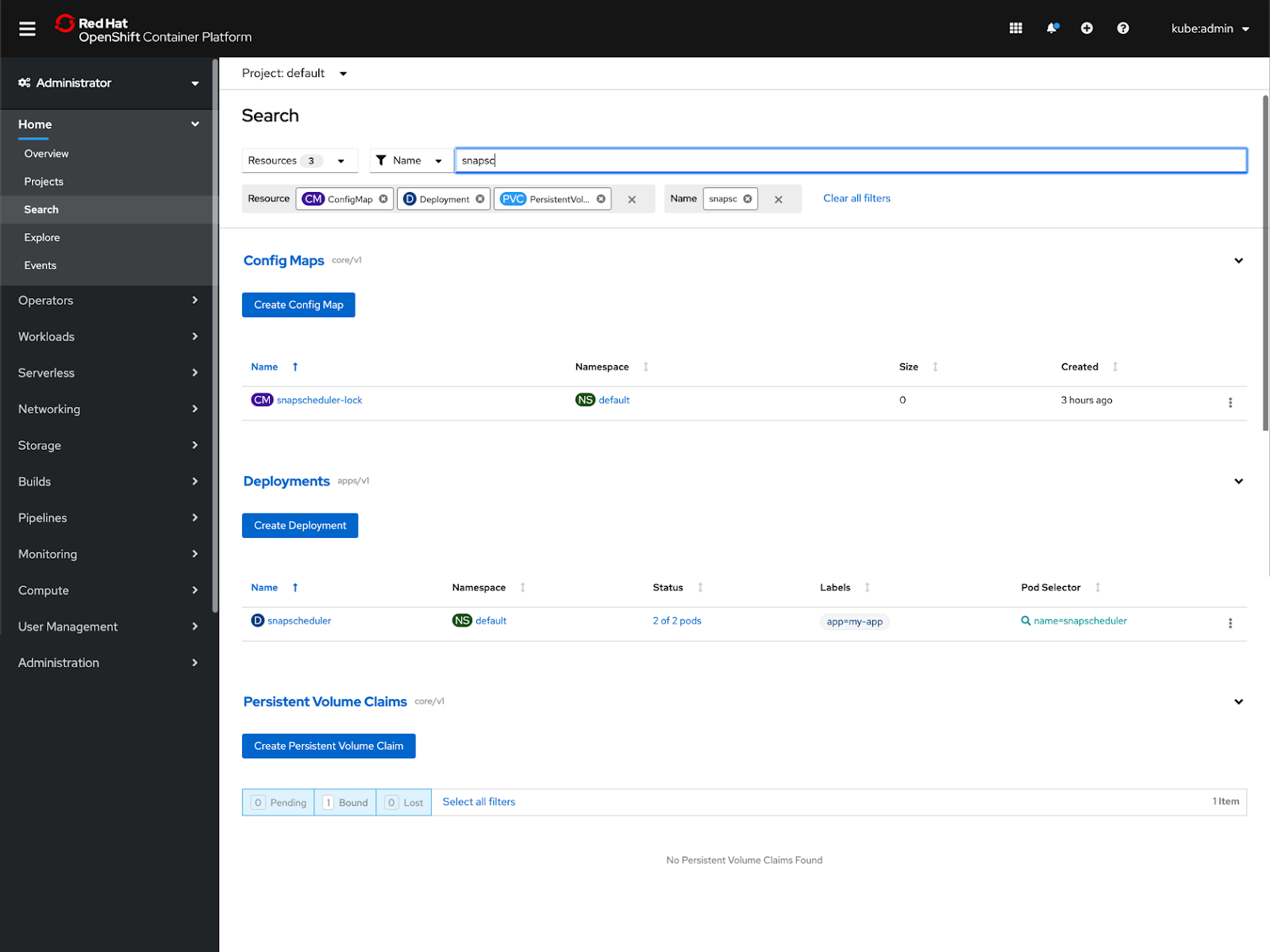
In this example, you can see that there are no PersistentVolumeClaims that match the name filter.
You can also filter by name and label at the same time. You can always search by multiple labels as well, but note that you can only filter by one name at a time.
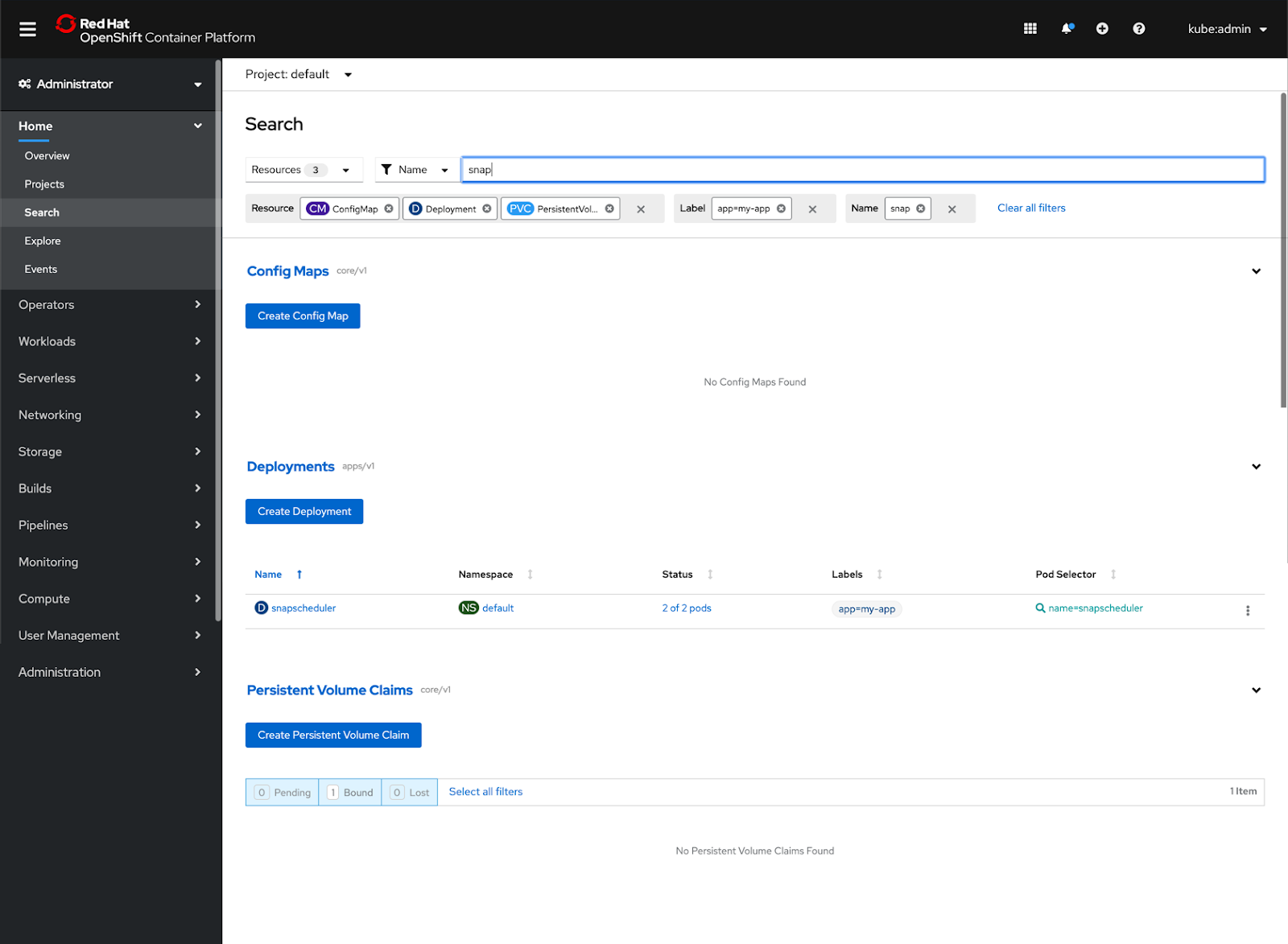
You can easily start a whole new search at any time by clicking **Clear all filters**. And there you have it! That’s how multi-resource search works.
Stay tuned for more
We hope this new functionality improves the way you use OpenShift. In future releases, we plan to take the Search page experience to the next level. Keep an eye out for bulk selection and bulk actions – these coming features will enable you to select multiple resources across resource types and take action on them at once, including adding labels or deleting resources.
In the meantime, be sure to check out OpenShift 4.4 to experience the new Search page in all its multi-resource selection glory! Let us know what you think about the new Search experience by taking this brief 3-minute survey.
Über den Autor
Ähnliche Einträge
Red Hat Partner sind eine wichtige Ressource für Telcos
Das agentische Paradoxon und die hybride KI-Strategie
Crack the Cloud_Open | Command Line Heroes
Edge computing covered and diced | Technically Speaking
Nach Thema durchsuchen

Automatisierung
Das Neueste zum Thema IT-Automatisierung für Technologien, Teams und Umgebungen

Künstliche Intelligenz
Erfahren Sie das Neueste von den Plattformen, die es Kunden ermöglichen, KI-Workloads beliebig auszuführen

Open Hybrid Cloud
Erfahren Sie, wie wir eine flexiblere Zukunft mit Hybrid Clouds schaffen.

Sicherheit
Erfahren Sie, wie wir Risiken in verschiedenen Umgebungen und Technologien reduzieren

Edge Computing
Erfahren Sie das Neueste von den Plattformen, die die Operations am Edge vereinfachen

Infrastruktur
Erfahren Sie das Neueste von der weltweit führenden Linux-Plattform für Unternehmen

Anwendungen
Entdecken Sie unsere Lösungen für komplexe Herausforderungen bei Anwendungen

Virtualisierung
Erfahren Sie das Neueste über die Virtualisierung von Workloads in Cloud- oder On-Premise-Umgebungen
