
With artificial intelligence (AI) models now capable of discovering thousands of vulnerabilities in days and developing exploits in hours, organizations are moving from preventing to containing the breach. This requires enforcing least privilege across identity, secrets, network segmentation, and policy across your IT domains. Perimeter firewalls still matter, but they aren't everything. Hybrid environments, multivendor infrastructure, and lateral traffic leave network operations (NetOps) teams defending a boundary that many attackers already know how to cross. Moving to a zero trust network means enforcing less implicit trust and more verified access, supported by security controls that scale as your IT landscape changes.
Zero trust requires continuous, automated discipline at scale to counter modern security threats. By standardizing on Red Hat Ansible Automation Platform, NetOps teams can integrate smart threat detection with Event-Driven Ansible. This connection helps teams deliver rapid remediation while remaining within human-defined operational guardrails.
5 steps to zero trust NetOps
Unsure of where to begin? Explore these 5 steps to implement zero trust NetOps.
1. Gather network state and inventory
Establishing a zero trust architecture begins with a thorough inventory of your network environment. You must catalog devices, interfaces, VLANs, and configurations across multiple vendors, maintain scheduled backups, and use this data as the foundation for security decisions.
Ansible Automation Platform gathers device facts, interface states, VLANs, and active configurations across disparate vendor environments. It converts unstructured command-line interface (CLI) data into searchable, auditable, and reusable structured JSON or YAML formats, while capturing details such as OS version, device model, serial number, and system type.
By turning inventory into a continuous stream rather than a one-off project, network architects gain accurate topology mapping, operators receive reliable data, and security teams establish a dependable baseline of normal behavior prior to policy enforcement.
For example:
cisco# ansible -m ios_facts cisco
cisco | SUCCESS => {
    "ansible_facts": {
        "ansible_net_iostype": "IOS-XE",
        "ansible_net_version": "16.09.02",
        "ansible_net_serialnum": "9L8KQ482JFZ",
        "ansible_net_model": "CSR1000V",
2. Apply a single source of truth
A centralized source of truth like Git (see figure 1), NetBox, ServiceNow, or a traditional CMDB defines your validated inventory and configuration parameters. Ansible Automation Platform dynamically syncs with these platforms to query data, apply updates, and log configuration backups directly to version control.
This step is the foundation for everything that follows because policy, hardening, and threat response rely on accurate configurations. Teams must agree on what “correct” looks like before they can implement enforcement.
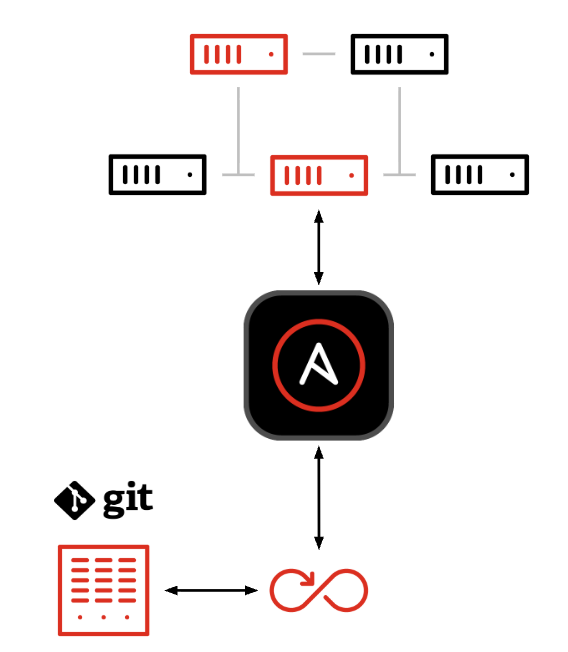
Figure 1: Inventory devices and configurations across vendors
3. Enforce policy and hardening
Zero trust on the network has 2 related layers, and Ansible Automation Platform supports both.
Zero trust access (ZTA) is the broader enterprise strategy where policy is treated as code. Operational updates can be validated using tools like Open Policy Agent (OPA) so that execution occurs only after passing the audit trail. Identity controls, firewall rules, proxy settings, and segmentation can then be implemented uniformly across datacenter, campus, and cloud environments.
Zero trust network access (ZTNA) is the network-level subset. In this context, Ansible Automation Platform acts as the enforcement mechanism for third-party policy engines such as RADIUS, Cisco ISE, and ClearPass. By replacing improvised CLI interactions, the platform turns VLAN assignments, 802.1X/MAB profiles, and switch port configurations into consistent, automated procedures.
Policy enforcement also limits what the automation itself is allowed to execute. Before running any job template, it is validated against policies stored in an OPA server and applied to that template, inventory, or organization. A human still writes the policy and decides where it applies. If validation passes, the job runs. If it fails, the automation is blocked until it is compliant (see figure 2).

Figure 2: Policy as Code for zero trust access
4. Detect and remediate drift and threats
Relying solely on static golden configurations checking during routine change windows makes configuration drift inevitable. Continuous validation is necessary because it helps teams maintain a secure baseline across the multivendor environment and protects against vulnerabilities.
Event-Driven Ansible establishes a continuous operational loop through a three-stage workflow (observe, evaluate, and respond):
- Observe: Integrate real-time signals from existing security and operational tooling, including SIEM/SOAR platforms, observability suites, configuration monitors, and CVE feeds without replacing current investments.
- Evaluate: Analyze incoming data to determine whether it signals compliance drift, an active vulnerability, or malicious activity, and then route the issue directly to the appropriate pre-approved workflow.
- Respond: Execute automated playbooks to remediate issues such as modifying firewall rules, deploying firmware patches, updating configurations, managing ticketing workflows, and refreshing the central source of truth (or take no action if none is required).
By using automated workflows rather than manual CLI updates, teams can accelerate resolution times and lower the risk of human error (see figure 3). While monitoring platforms effectively detect and track network occurrences, automation delivers dependable, proactive remediation alongside a full audit trail.
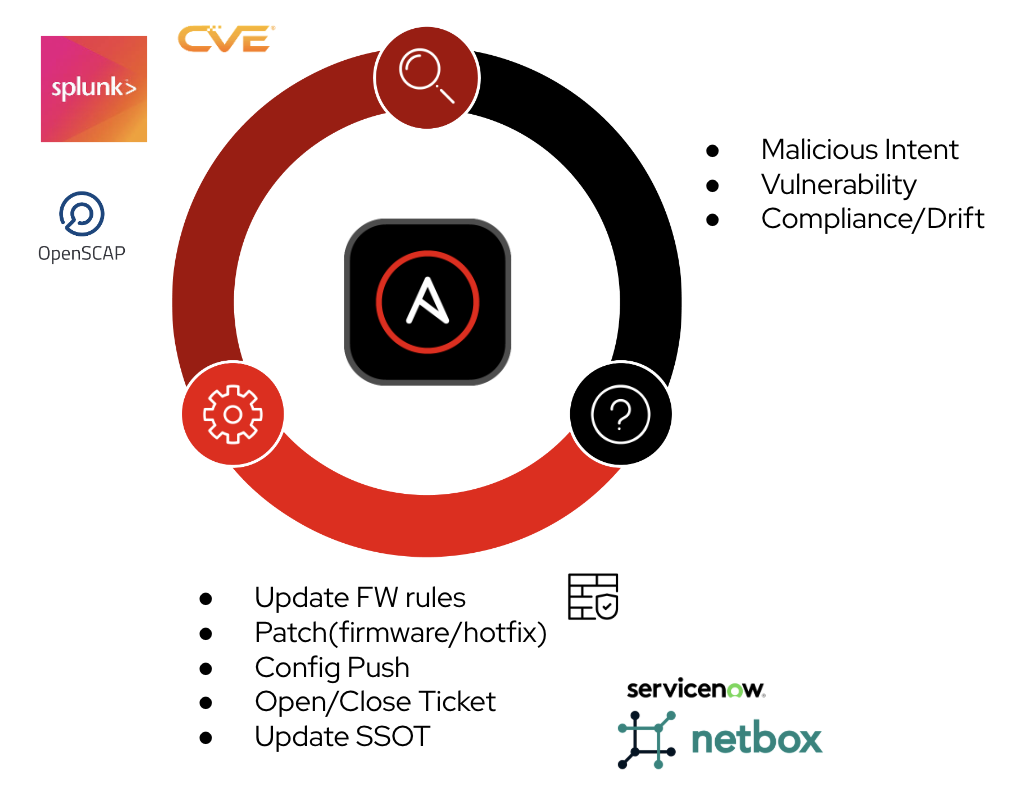
Figure 3: Monitor platforms to detect and track network occurrences, and to adjust configuration accordingly (continuous compliance).
5. Contain threats at machine speed
When a policy engine flags a device as unauthenticated or identifies a compromised port, waiting for someone to manually SSH in is too slow.
In an operational ZTNA model, Event-Driven Ansible continuously monitors external policy engines to assess incoming authentication events and immediately initiate pre-approved workflows. Based on this evaluation, automated actions can grant network access, isolate switch ports, quarantine compromised endpoints, perform configuration diffs, synchronize the CMDB, and manage ticket lifecycles automatically.
This delivers machine-speed containment with human-defined rules while Ansible Automation Platform serves as the policy enforcement point. Rather than assigning long-lived, overprivileged admin access directly to individual devices, credentials remain private within the control plane (figure 4). Identity boundaries are enforced across automation and workloads, extending protection beyond human users.
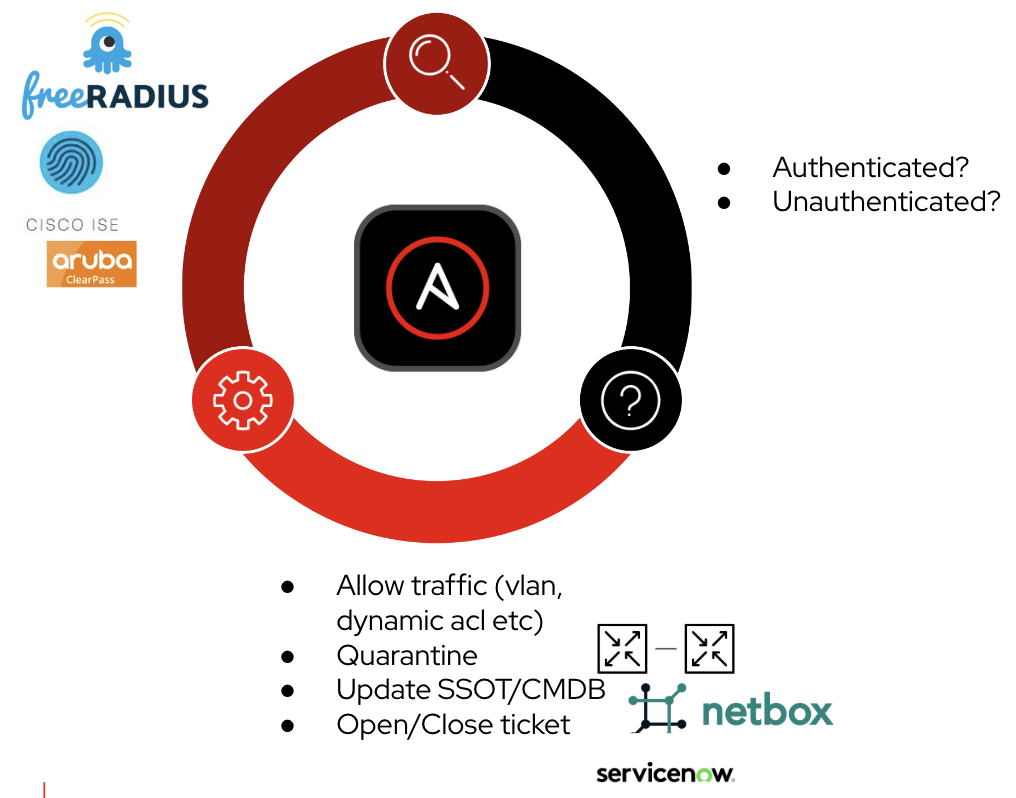
Figure 4: Rather than assigning long-lived, overprivileged admin access directly to individual devices, credentials remain private within the control plane with Event-Driven Ansible (Network Access Control)
What's next?
Moving from perimeter defense to zero-trust-ready NetOps isn't all or nothing: It's a journey. Start where visibility and consistency are weakest, then automate segmentation, governance, and intelligent response so security operations scale with the network you already run.
When you're ready to get started, check out these resources:
- Start your free trial of Red Hat Ansible
- Watch our webinar: Building Zero Trust Networks with Red Hat Ansible
- Read the ebook: Network Automation for Everyone
Produkttest
Red Hat Ansible Automation Platform | Testversion
Über den Autor
Elle is a Senior Product Marketing Manager at Red Hat, working on the Ansible team since 2019. As a part of the Ansible product marketing team, she focuses on network automation to help fuel business growth.
Ähnliche Einträge
Zero Trust: Die letzte Verteidigungslinie bei CVEs
Red Hat OpenShift 4.20: Beschleunigung von Virtualisierung und KI-Innovation
Mehr erfahren
E-Book: Das automatisierte UnternehmenSeite verfügbar in Englisch (Deutsch ist nicht verfügbar) - Red Hat Ansible Automation Platform in selbstbestimmten, praxisorientierten Labs testen
- Red Hat Ansible Automation Platform: Ein Guide für den Einstieg
Nach Thema durchsuchen

Automatisierung
Das Neueste zum Thema IT-Automatisierung für Technologien, Teams und Umgebungen

Künstliche Intelligenz
Erfahren Sie das Neueste von den Plattformen, die es Kunden ermöglichen, KI-Workloads beliebig auszuführen

Open Hybrid Cloud
Erfahren Sie, wie wir eine flexiblere Zukunft mit Hybrid Clouds schaffen.

Sicherheit
Erfahren Sie, wie wir Risiken in verschiedenen Umgebungen und Technologien reduzieren

Edge Computing
Erfahren Sie das Neueste von den Plattformen, die die Operations am Edge vereinfachen

Infrastruktur
Erfahren Sie das Neueste von der weltweit führenden Linux-Plattform für Unternehmen

Anwendungen
Entdecken Sie unsere Lösungen für komplexe Herausforderungen bei Anwendungen

Virtualisierung
Erfahren Sie das Neueste über die Virtualisierung von Workloads in Cloud- oder On-Premise-Umgebungen
