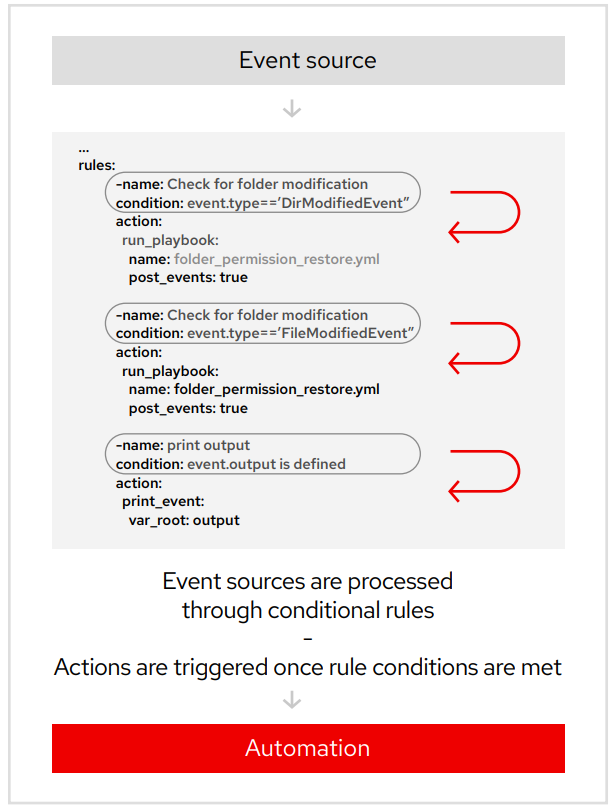
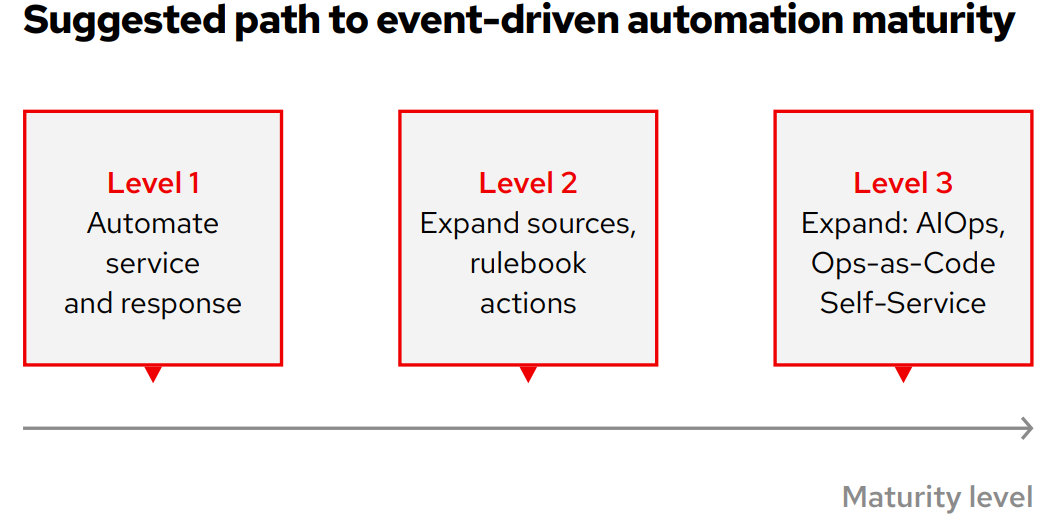
Event-driven automation is the next step in the journey to end-to-end automation. It answers the need to connect intelligence, analytics, and service requests for an environment to automated actions so that activities can take place in a single motion. This model is ideal for high-volume, routine tasks as well as ITSM actions and more.
The benefits of event-driven automation are far-reaching and include the ability to manage massive amounts of complexity across clouds, the multidevice remote workforce, and growing edge implementations. For many businesses, maintaining resilience and reliability is essential and event-driven automation helps teams meet these needs while working around resource constraints and skills gaps.
Defining event-driven automation
So what exactly is event-driven automation and how is it different from the automation that is already widely adopted? Event-driven automationworks by allowing for a predefined and automated response when a certain type of event occurs. For example, in a typical IT operation, a system outage can send an alert (i.e., an “event”) that automatically triggers a specific action such as logging a trouble ticket, gathering the facts needed for troubleshooting, or performing an action such as a reboot—all without manual steps. In a similar way, event-driven automation can help teams respond to a variety of additional “Day 2” operational needs such as configuration management, edge device management, provisioning, user management, tuning, scalability, and more.
Event-Driven Ansible is a highly flexible solution that is used to create advanced end-to-end automation scenarios for a wide variety of needs across your IT operation. It is designed for simplicity and ease of use similar to Red Hat® Ansible® Automation Platform. For example, you can use familiar YAML to create Ansible Rulebooks which are similar to Ansible Playbooks but use “if-then” scenarios instead.
How is Event-Driven Ansible different?
Until now, most event-driven and custom-developed automation projects have been complex and time consuming to deliver because much of the solution is developed to meet a singular need. For example, you can automatically shut down network firewalls when certain activity patterns occur, then notify responsible teams. This is a useful and essential solution, but is limited to this specific need.
Event-Driven Ansible is designed to be more flexible than this option, with faster and more cost-effective ways to stand up new automation projects across any use case. By writing an Ansible Rulebook and allowing Event-Driven Ansible to subscribe to an event listening source, your teams can reduce the time it takes to automate a variety of tasks across the organization.
Think of it like a crescent wrench: a single tool that is easy to adjust to different size bolts. The same idea applies here—a single automation tool that addresses a broad variety of IT automation needs.