Overview
Traditional application architecture is reaching its limits. The old rules are no longer enough.
The rigid monoliths, brittle APIs, and hard-coded data pipelines that powered the last decade of software development were not designed for ambiguity, real-time reasoning, or adaptive intelligence. As organizations attempt to embed dynamic AI capabilities into static systems, complexity rises, maintenance costs grow, and development teams face increasing cognitive overload.
Join us for this Building the Future series, where we explore why legacy architectural patterns are struggling in the AI era — and introduce two foundational concepts redefining how modern applications are built: Model Context Protocol (MCP) and agentic workflows.
You’ll discover how MCP acts as a “handshake” layer that standardizes communication between AI models and enterprise systems, and how agentic workflows replace hard-coded business logic with autonomous, reasoning-driven agents capable of adapting in real time.
We’ll bring these ideas to life through a practical comparison: traditional rule-based loan underwriting versus a modern, agent-driven system that evaluates data dynamically, reasons through uncertainty, and accelerates decisions from days to minutes.
In this session, you will learn how to:
- Identify where monolithic services, brittle APIs, and ETL pipelines break down under AI-driven ambiguity
- Understand Model Context Protocol (MCP) not just as a specification, but as an emerging standard for AI system connectivity
- Compare traditional application logic with autonomous, agent-based workflows in a real-world scenario
- Unlock measurable business value through greater adaptability, reduced maintenance overhead, and faster deployment cycles
This session sets the foundation for the series ahead, where we will dive deeper into MCP architecture, agentic workflow design, and a production-ready underwriting use case.
If you're exploring how to build AI-native applications that are secure, scalable, and enterprise-ready — this is where the shift begins.
Register for this live webinar today and ask your questions to our presenters.
Live event date: Tuesday, April 14, 2026 | 11:00 AM - 11:45 AM ET
On-demand event: Available for one year afterward
Presenters:

Bob Kozdemba
Principal Specialist Solution Architect, Red Hat
Bob Kozdemba is a Principal Specialist Solution Architect at Red Hat who helps customers and business partners build best of breed application developer solutions on enterprise platforms. He has a long standing career working with open source technologies including Linux, Kubernetes, programming languages and AI/ML frameworks. Bob holds an M.S. in Computer and Information Science and an M.B.A from the University of Maryland.

Chad Darby
Principal Specialist Solutions Architect , Red Hat
Chád Darby is a Principal Specialist Solutions Architect at Red Hat who partners with executive stakeholders to address the governance, data privacy, and compliance challenges of enterprise AI. A veteran of the industry with 30 years of experience, he provides the strategic and technical leadership necessary to build reliable, enterprise-grade AI systems on modern cloud platforms. Chád holds a B.S. in Computer Science from Carnegie Mellon University.
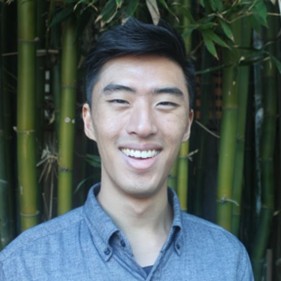
Chris Kang
Principal Specialist Solution Architect, Red Hat
Chris Kang is a Principal Specialist Solution Architect at Red Hat. His focus is helping customers build AI solutions using open source technologies. Prior to Red Hat, Chris worked with Fortune 500 companies to implement cloud native architectures using cloud computing, container platforms, data analytics, and AI/ML. Chris is a passionate learner and driven by customer success. He has a B.S. in Electrical Engineering from Northwestern University and a M.S. in Computer Science from The University of Chicago.
