|
|
Breakfast and Check-in
(Atrium Hall) |
|
|
Opening Remarks
(Atrium Hall)
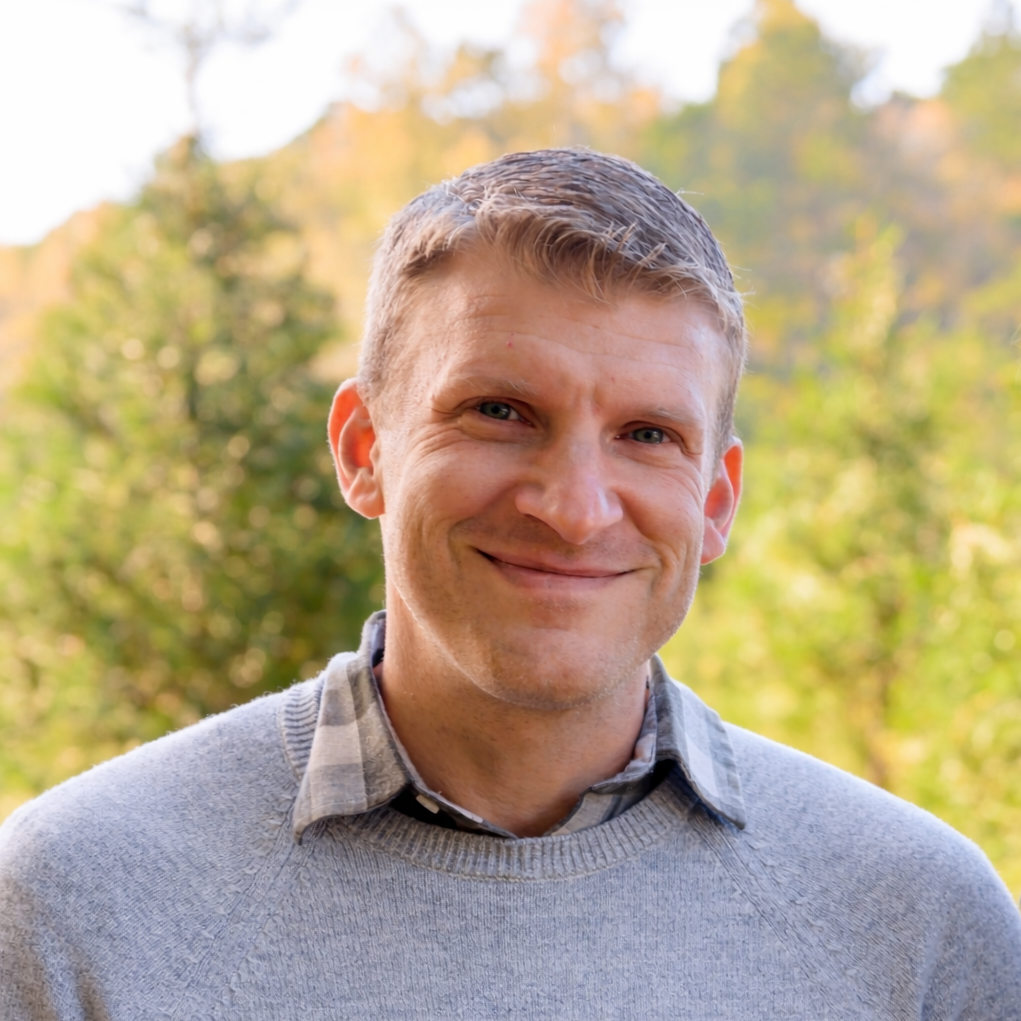
John Dvorak, Chief Technology Officer, Public Sector, Red Hat
|
|
|
Built for impact: AI, security, and the infrastructure decisions that matter
(Atrium Hall)
Enterprise IT teams are being asked to do more than ever, with less room to fail. They’re being asked to deploy AI at a pace the business demands, defend against a threat surface that AI itself is expanding, and modernize infrastructure without disrupting what the business depends on. And do it all without adding headcount or risk. This session is for the teams living that reality. We'll cover what's working, what the fastest-moving organizations are doing differently, and what's now possible that wasn't six months ago.
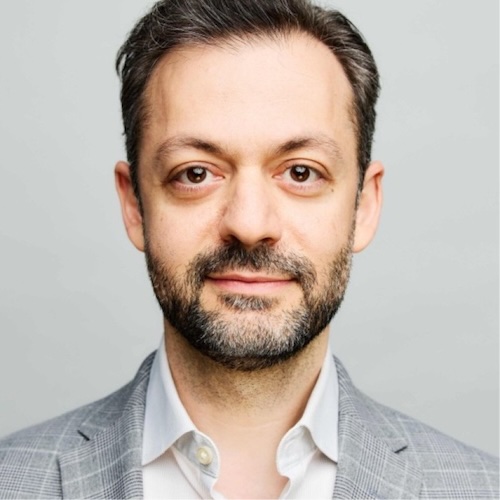
Brian Stevens, Senior Vice President and AI Chief Technology Officer, Red Hat
|
|
|
The Power of 1%, From Platform Strategy to Business Outcomes
(Atrium Hall)
The keynote introduced the idea that 1 + 1 can equal 4. But how does that actually happen? In this session, Red Hat's Business Value Practice explores The Power of 1%, a practical framework for creating the compound effect that transforms technology investments into measurable business outcomes. Discover how small, intentional improvements across people, processes, and technology reinforce one another to accelerate innovation, improve operational efficiency, reduce risk, and maximize the value of investments in AI, automation, virtualization, and hybrid cloud.
Cyrus Gerami, Senior Director, Head of Americas Business Value, Red Hat
|
|
|
Playbook to Platform: Scaling enterprise automation in regulated environments
(Atrium Hall)
Automation at scale can be complex—especially for organizations managing secure, distributed systems across healthcare and defense networks, like the U.S. Defense Health Agency (DHA). To meet mission demands and achieve consistency, the DHA transitioned from isolated automation efforts to an enterprise framework built with Red Hat Ansible Automation Platform. In this session, the DHA will share how they created a unified automation strategy to transition from individual automations to a shared platform to support collaboration, governance, and repeatability. We’ll show how this approach accelerated delivery, reduced manual errors, and improved compliance with varying operational and security requirements across environments. To explore how the DHA achieved automation at scale with Ansible Automation Platform—and how similar organizations can apply these lessons to their own modernization initiatives—we’ll cover: evolving from playbook- to platform-driven automation; fostering automation adoption and culture change across engineering teams; and improving resilience, speed, and security by standardizing automation.
Dave King, Lead Ansible Automation Architect, Defense Health Agency
|
|
|
Closing Remarks
(Atrium Hall)
John Dvorak, Chief Technology Officer, Public Sector, Red Hat
|
|
|
|
|
|
|
|
|
|
Practical image mode for RHEL: delivering more secure application baselines
Deploying production applications to different environments on reusable, security-focused foundations with a clear and simple way to build and manage them is a major challenge for IT. In this lab, we'll explore how using image mode for Red Hat Enterprise Linux (RHEL) to build images can deliver working applications on a more secure and manageable foundation. Creating a production system often requires collaboration and requirements from different teams. We'll build our sample application with a phased approach, detailing the fundamentals of image mode operations in a context you can take with you to your environment. This opinionated method will tackle the needs of the operators, the security team, and the developers in ways that are easy to understand and remix. Along the way, we'll highlight different benefits and approaches that image mode uniquely delivers. Today, you'll create a working application host by:Defining the standard baseline environment.Configuring the security posture and compliance.Delivering a common hardened platform for application deployments.Using a single source image for multiple environments. |
|
|
Experience OpenShift Virtualization
Virtualizing workloads on a modern, container-native platform unlocks new levels of operational efficiency, resilience, and flexibility for teams managing traditional infrastructure. In this hands-on lab, you’ll work through the core capabilities of Red Hat OpenShift Virtualization, from day-one VM operations to advanced migration, storage, networking, and application integration. Attendees will learn how to: manage virtual machine lifecycle — create, configure, and right-size VMs directly on OpenShift; migrate existing VMware vSphere workloads to OpenShift Virtualization using the Migration Toolkit for Virtualization (MTV), with minimal disruption; navigate storage changes and manage persistent storage for VMs within the OpenShift ecosystem; protect workloads with backup and recovery workflows using OpenShift API for Data Protection (OADP); standardize VM deployments with reusable Templates and InstanceTypes to accelerate provisioning and enforce consistency; configure advanced networking, including L2 network mappings and User Defined Networks (UDN), to meet enterprise connectivity requirements; and expose VM-hosted applications through services and routes, bridging the gap between virtualized workloads and modern application delivery. Join us to experience how OpenShift Virtualization delivers a unified, production-ready platform that simplifies VM operations and accelerates the path from legacy infrastructure to a cloud-native future.
John Call, Principal Specialist Solution Architect, Red Hat Jon Keam, Principal Specialist Solution Architect, Red Hat
|
|
|
|
|
Isovalent Networking & Nexus One Integration: Architecting a Secure, Unified Foundation
In an era of hybrid cloud complexity, securing the boundary between virtualized and containerized workloads is a critical challenge. This session examines how Isovalent Networking for Virtualization, integrated with Cisco Nexus One fabrics, establishes a unified, high-performance security posture. By unifying networking and security across Red Hat OpenShift Virtualization and Kubernetes, we eliminate the blind spots that often arise when managing disparate workload environments. We will demonstrate how to enforce consistent, defense-in-depth policies across your entire footprint, ensuring your infrastructure is resilient by design. Topics include: unified Policy Enforcement: How virtual machines and containers share a single, hardened networking and security layer, removing the risks associated with siloed infrastructure; secure Workload Mobility: Leveraging the Isovalent Network Bridge to transition workloads between VMware and Kubernetes environments without compromising IP identity or security integrity; and robust Fabric Security: Implementing EVPN-based integration with Cisco Nexus One to achieve deep, multi-tenant network segmentation, ensuring your infrastructure remains isolated and resilient against lateral movement threats. Attendees will leave with a clear roadmap for integrating these technologies to modernize their security architecture and strengthen their defense-in-depth posture. |
|
|
|
|
|
You Don't Own Your Data Stack. Your Vendor Does.
Your open source vendors have figured out they gave away too much. So they changed the license. Then the pricing model. Then the terms around what "free" actually means. They're not done. This session is about what that costs you, and what you can do about it. We'll discuss open source MySQL, MongoDB, PostgreSQL, and Redis that run on your infrastructure, with engineering support from the people who maintain the code. |
|
|
|
|
Securing the Software Supply Chain in the AI-Era
From "Software is Eating the World" to the "Mythos Moment," organizations' dependency on software has expanded exponentially. With new AI-powered tools, hackers have more ability than ever to build and exploit vulnerabilities. In this session, you'll learn about Project Lightwell, and how Red Hat is helping companies better manage the Vulnerability Gap.
John Dvorak, Chief Technology Officer, Public Sector, Red Hat
|
|
|
|
|
|
Unlock AI-driven automation: From AIOps insights to trusted action
Your observability and AI tools are generating insights faster than your team can act on them. Every manual handoff between detection and remediation introduces delay, inconsistency, and the kind of ungoverned change that keeps operations leaders up at night. The missing piece isn't better insights. It's a trusted, governed execution layer that can close the loop. This session explores how Red Hat Ansible Automation Platform bridges the insight-to-action gap, enabling IT teams to move from reactive firefighting to intelligent, automated remediation without sacrificing the audit trails, change control, and compliance requirements that enterprise operations require. We will cover: A practical framework for architecting the execution layer your AIOps strategy needs; Real-world use cases including automated ticket enrichment, self-healing workflows, and intelligent capacity orchestration; Proven results from enterprise organizations that have operationalized observability data with Ansible Automation Platform; Guidance on integrating AI assistance within enterprise guardrails; How to position your automation practice today to take advantage of agentic AI without introducing unacceptable risk. If you're dealing with alert fatigue, looking to operationalize observability data, or preparing your automation practice for the future of IT operations, this session gives you the blueprint to move from insights to outcomes with confidence.
Raed Soliman, Principal Specialist Solution Architect, Red Hat
|
|
|
|
|
Fast Start DevOps: Accelerating Onboarding with the Federal ADO Collections
Federal agencies often spend weeks or months standing up new environments, onboarding application teams, and integrating platform services across OpenShift, Automation Platform, identity providers, observability tools, and supporting infrastructure.
This session demonstrates how the Automation Development Office (ADO) Collections framework enables a Fast Start approach to platform onboarding by transforming complex deployment and configuration activities into repeatable, automated workflows.
Attendees will see how ADO Collections generate standardized deployment artifacts, bootstrap Automation Platform configurations, create reusable workflows, and automate the deployment of common federal platform services including OpenShift, Red Hat Ansible Automation Platform, Identity Management, Keycloak, Grafana, GitLab, Kafka, and other shared services.
The session will showcase a component-driven onboarding model that allows platform teams to rapidly generate environment configurations, deployment playbooks, job templates, and workflow automation while maintaining consistency, governance, and operational standards across environments.
Chad Elliott, Dedicated Operations Technical Account Manager, Red Hat
|
|
|
|
|
|
Architecting for Scale: The Blueprint for Enterprise Automation Governance
For organizations operating in high-stakes, regulated environments—like the U.S. Defense Health Agency (DHA)—automation is no longer a luxury; it is a mission-critical requirement for security and resilience. However, moving from "pockets of automation" to a unified enterprise strategy requires more than just technical skill—it requires a fundamental shift in architecture and culture. In this expanded 40-minute session, we go behind the scenes of the DHA’s transformation using Red Hat Ansible Automation Platform. We will move beyond the basic "what" and dive deep into the "how," exploring the specific architectural hurdles, governance frameworks, and security guardrails necessary to support distributed systems across healthcare and defense networks. We will provide an in-depth look at: The Architecture of Scale: Transitioning from individual, isolated playbooks to a centralized, shared-platform model that maintains strict compliance; The "Culture of Code": Proven strategies for fostering adoption across siloed engineering teams and overcoming resistance in highly regulated sectors; and Governance & Security Guardrails: How to standardize automation to improve speed and resilience without bypassing mandatory security protocols.
Dave King, Lead Anisble Automation Architect, Defense Health Agency
|
|
|
|
|
|
|
|
|
|
|
The Data Foundation for Modern Infrastructure: VMs, Containers, and AI on Red Hat with Everpure
Enterprises are being asked to modernize virtualization, run modern applications, and stand up AI, often all at once and often on separate stacks. How do you do all three without trading one lock-in for another? Everpure (formerly Pure Storage) and Red Hat make it one decision, not three: a single platform on Red Hat OpenShift, with a shared data foundation beneath it all. In this session, we'll discuss how Everpure and Portworx deliver reliable performance, protection, mobility, and resilience across every VM, containerized application, and AI workload on OpenShift, whether at the Edge, in the Data Center, or in the cloud. |
|
|
Build Applications, Not Platforms: Reduce Costs and Move Faster with AWS + Red Hat
Your cloud is running. But is it creating as much value as it could? Imagine spending less time managing platforms and more time building applications. In this session, hear from experts helping organizations reduce complexity and deploy hybrid and cloud-native architectures with RHEL, Red Hat OpenShift, and Ansible Automation Platform, all integrated with AWS services. Explore practical ways to optimize cloud costs, give developers and operations teams valuable time back, migrate and modernize VMs at your own pace, and build a foundation for what's next, including AI. Whether you're running IT operations, building applications, defining enterprise architecture, or making technology investment decisions, you'll discover how AWS and Red Hat can work together to address your challenges, strengthen your technology foundation, and preserve flexibility for the future. |
|
|
|
|
|
|
|
|
|
|
From Migration to AI Innovation: Modernizing VMs, Containers, and Apps with Microsoft and Red Hat
Organizations are navigating virtualization shifts, application transformation, and AI-driven innovation while balancing operational complexity, security, compliance, and cost. As they modernize infrastructure and applications, they need a platform that reduces operational complexity, strengthens security and compliance, and provides a scalable foundation for future innovation.
Join Microsoft and Red Hat for a session showcasing how organizations are modernizing through a consistent open-source foundation built on Red Hat Enterprise Linux (RHEL) on Azure, Red Hat Ansible Automation Platform on Azure, and Azure Red Hat OpenShift (ARO).
Learn how customers use RHEL on Azure to run business-critical workloads across on-premises, hybrid, and cloud environments, improve operational consistency with automation, and accelerate application modernization with ARO. Discover how organizations simplify operations, improve cost efficiency, and build secure, compliant application platforms while leveraging Azure’s global scale, reliability, sovereignty capabilities, and AI ecosystem.
The session will also explore how customers extend their modernization journey through OpenShift Virtualization, AI-enabled applications, and emerging agentic AI scenarios. See how Microsoft and Red Hat help organizations reduce complexity, manage risk, strengthen security and compliance postures, and build a foundation for frontier transformation.
Pishoy Bous, Director, Cloud and AI Solution Engineering for National Security Group, Microsoft
|
|
|
Day 2 and Beyond: Running OpenShift with Confidence at Enterprise Scale
Your migration plan got you to Red Hat OpenShift. So what’s your plan for Day 2?
Enterprises rarely fail the migration itself. They struggle a year in, when clusters have multiplied, backup policy ownership has blurred across teams, and VM, container, and now OpenShift AI workloads all need protection without three different tools and an overworked admin.
This session is for the platform and infrastructure teams living in that gap. Veeam Kasten walks through how leading enterprises keep pace: automated policy enrollment that holds as environments grows, unified recovery across containers and VMs from a single control plane, and governance that endures an audit instead of dodging one. If your team is heading toward Day 2 (or already living it), this is the session that names what actually breaks, and how to fix it before it does.
Matt Slotten, Principal Solutions Architect, Cloud-Native Technical Partnerships, Veeam
|
|
|
|
|
|
|
|
|
|
|
Machine-Speed Security: Defend, Contain, Comply
Security threats move in seconds, but manual incident response can take hours. In this hands-on workshop, you’ll learn how to transform slow, reactive security tasks into automated, production-safe workflows using Red Hat Ansible Automation Platform and Event-Driven Ansible.
Through a series of practical lab exercises, you’ll respond to a live security vulnerability from initial alert to safe remediation. You will build and test automated pipelines across three core phases:
Defend: Instantly isolate affected services, contain threats, and revoke compromised credentials using event-driven triggers the moment a vulnerability is detected.
Contain: Apply critical patches quickly using policy-gated workflows that run safety checks and gather necessary approvals before changes touch production.
Comply: Enforce continuous security guardrails by packaging hardened configurations into scanned, audit-ready deployments that satisfy compliance standards.
Whether you manage enterprise infrastructure or oversee security operations, you will leave this session with actionable techniques to slash your Mean Time to Respond (MTTR) while keeping your environment safe and compliant. |
|
|
AgentOps in production: Agentic end-to-end observability with Red Hat AI
Agentic AI apps don’t fail silently; they fail distributedly. This hands-on lab shows how to make multi-agent AI systems observable end-to-end on Red Hat AI. By exploring a multi-agent app integrated with Model Context Protocol (MCP) tools, we demonstrate an AgentOps discipline that delivers visibility from infrastructure to AI model backends. As organizations scale, teams face cascading errors, hidden latency, and complex integration bottlenecks. Attendees will leave with practical patterns for observing, troubleshooting, and evaluating agentic workflows. Attendees will also learn how to:Monitor the stack: Use Red Hat AI’s out-of-the-box observability stack to track key metrics and logs.Trace multi-agent executions: Track requests across multi-agent frameworks (like LangGraph/LangChain) and MCP tools to understand the complete decision-making path using Red Hat AI and MLFlow tracing features.Diagnose and fix distributed failures: Simulate real-world rollout issues, such as artificial delays in MCP servers or failing multi-agent communications, and use tracing to pinpoint the root cause and deploy the fix.Large language model (LLM) evaluations: Go beyond basic observability by combining tracing with LLM evaluations in MLflow, ensuring your agents maintain high-quality outputs alongside system reliability.
Tola Awofulu, Senior AI Specialist Solution Architect, Red Hat
|
|
|
|
|
From VMware to OpenShift: Real-World Migration Strategies, Challenges, and Success Stories
As organizations modernize their IT environments, many are evaluating how to transition from traditional virtualization platforms to cloud-native application platforms. In this session, industry experts will share practical lessons learned from real-world VMware-to-OpenShift migrations, including assessment methodologies, migration strategies, common technical and operational challenges, and proven best practices. Attendees will gain insights into overcoming obstacles, minimizing risk, accelerating adoption, and achieving measurable business outcomes through successful OpenShift deployments. Whether you're beginning your migration journey or optimizing an existing strategy, this session will provide actionable guidance and customer success stories to help drive transformation with confidence. |
|
|
|
|
|
AMD + Red Hat: A Unified Blueprint for Modern Enterprise Infrastructure
Datacenter virtualization migration and AI implementation don’t have to be managed as separate IT projects or remain as isolated clusters. Modernization for operational efficiency and AI deployment can be pursued in a digestible and unifying way, resulting in ready-for-AI, energy-friendly and memory-efficient designs. Red Hat software platforms deployed over AMD-enabled compute, storage and networking systems offer the widest span of modern enterprise infrastructure available, simplifying staff training, manageability, scale, and resiliency. In this session, AMD will walk you through emerging enterprise computing functions, the Red Hat stacks that enable them, giving you the insight needed to help plan your ideal datacenter operation of the future, implementable now. You will leave with a planning roadmap you can use internally to help begin your modernization process.
Paul Croteau, Senior Business Development Manager, Modern Virtualization and Enterprise AI, AMD
|
|
|
|
|
Cyber Resilience: Agentic AI and Post-Quantum Cryptography
As organizations confront a step-change in cyber risk, the threat is no longer incremental. Frontier AI capabilities, including systems such as Anthropic’s Claude Mythos, point to a future where adversaries can discover vulnerabilities, develop exploits, and scale cyber operations faster than traditional security models can respond. At the same time, Q-Day and “harvest now, decrypt later” risks make post-quantum readiness a present mission concern, not a distant planning exercise.
This session will examine how Agentic AI and post-quantum cryptography (PQC) are integrated into Red Hat technologies to reduce risk, strengthen resilience, and protect mission delivery. The session will include a live demo and a discussion focused on:
- Proactive resilience: Moving from reactive patching to AI-assisted detection, prioritization, remediation, and self-healing infrastructure.
- Post-quantum readiness: Practical steps for cryptographic discovery, crypto-agility, and legacy modernization.
- Mission-safe AI adoption: Preserving control, auditability, determinism, and compliance while adopting agentic capabilities. |
|
|
|
|
|
Red Hat OpenShift Virtualization 2026 Roadmap: Migrating and modernizing virtual machines
Many enterprises are anchored to legacy virtualization, facing vendor lock-in and modernization challenges. How do you seamlessly migrate thousands of virtual machines (VMs) and manage them alongside containers? How do you accelerate your application modernization strategy with so many VM-based workloads? Red Hat OpenShift Virtualization provides the answers. With OpenShift Virtualization as your strategic platform, you can run VMs on dedicated clusters, begin modernizing VM-based applications with cloud-native tools and processes, and eventually simultaneously convert them to cloud-native containers in the same environment. Join us and discover the capabilities OpenShift Virtualization provides to help you migrate and modernize VMs and applications at scale—whether in the cloud, in your datacenter, or at the edge of your network. In this interactive session, you will: Get a comprehensive look at the current features of Red Hat OpenShift Virtualization. Gain insight into key strategic themes and the 2026 roadmap. Learn from live demos showcasing day 2 virtualization operations.Get an opportunity to ask questions and offer feedback about how Red Hat can better adapt to meet your evolving needs.This session is ideal for IT administrators, solution architects, and technical decision makers planning their datacenter modernization and cloud-native journey.
Jon Keam, Principal Specialist Solution Architect, Red Hat Stu Miniman, Senior Director, Market Insights, Hybrid Platforms, Red Hat
|
|
|
|
|
Addressing Mythos and Enterprise Patching with Lightwell and Automation Orchestrator
In today's fast-moving era of AI-driven cyber threats, modern organizations must drastically accelerate vulnerability remediation to protect critical digital infrastructure. Join Joon Paik at Red Hat Summit Connect to discover how to supercharge your patch management strategy using the Ansible Automation Platform. This session demonstrates a scalable, patching pipeline that seamlessly leverages Red Hat Enterprise Linux (RHEL) Lightspeed's intelligent capabilities alongside Red Hat Satellite's robust environment management. Learn to orchestrate automated scanning, execute rapid cross-platform patch deployments and configuration management, and maintain strict compliance while preserving application stability using event-driven automation. Turn reactive maintenance into proactive enterprise defense.
Joon Paik, Senior Specialist Solution Architect, Red Hat
|
|
|
|
|
|
The Sovereign and Secure Control Plane: Mitigating Risk in Highly Regulated Industries with Red Hat Solutions
For highly regulated sectors—such as financial services, healthcare, defense, and the public sector—technological innovation is fundamentally bound by strict risk parameters. Navigating the modern threat landscape requires balancing stringent compliance directives (like DORA, NIS2, and the EU AI Act) against an explosion of AI-driven vulnerabilities, fragile software supply chains, and public cloud vendor lock-in.
This session explores how Red Hat’s comprehensive portfolio addresses these challenges by transforming risk mitigation from a manual security checklist into an automated, architectural reality. We will analyze the core announcements from Red Hat Summit, focusing on the newly introduced Digital Autonomy Framework and its four foundational pillars: Data, Technical, Operational, and Assurance sovereignty. Crucially, the session will break down the groundbreaking Project Lightwell—a massive $5 billion joint initiative between IBM and Red Hat that combines advanced AI with over 20,000 engineers to form an industry-first security clearinghouse for open-source software. Attendees will discover how Red Hat enables enterprises to lower their active risk profile, eliminate configuration drift, and establish airtight guardrails from the upstream open-source supply chain to global cloud environments without sacrificing operational velocity. |
|
|
|
Networking Mixer
(Atrium) |