
Any OpenShift Container Platform 4 cluster can be upgraded using the web console or the OpenShift CLI. In this blog we review the tools we have at our disposal to plan OpenShift cluster updates. This blog can be used as reference for all the tools available to help you keep your clusters updated in the maintenance window, with latest security fixes and minimal disruption to workloads.
Types of OCP clusters
OpenShift clusters come in different flavors. The update experience differs based on the type of installation. For Self-Managed OpenShift, there can be a Connected and Disconnected Cluster. And Red Hat also provides Fully Managed OpenShift clusters on AWS, Azure, GCP and IBM cloud.
Tools and Resources
Red Hat provides a number of tools and resources to help plan updates, from long-term strategy to low-latency insights. The tools and resources listed below are useful for admins managing OpenShift updates.
Red Hat OpenShift Container Platform Life Cycle Policy
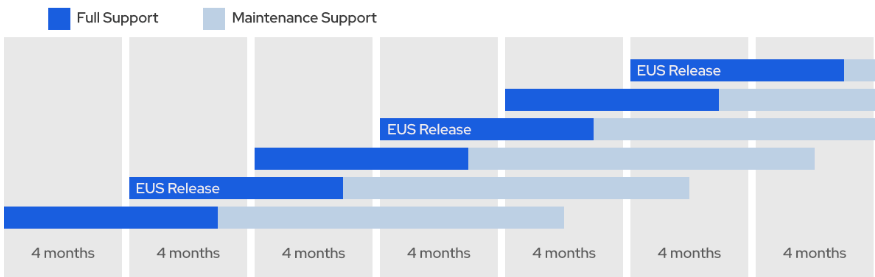
Red Hat provides a published product life cycle for customers to plan, deploy and support their infrastructure. Customers can track which OCP versions are Fully supported, Maintenance Supported and Extended Update Supported and also know the life cycle dates.
Red Hat Product Errata
Red Hat Errata helps customers determine the latest Bug Fix, Enhancement and Security Advisories for OCP versions. Each OCP release is available as soon as errata is released for the version. There is also an application on Customer Portal labs which retrieves information about errata advisories called the Red Hat Product errata advisory checker.
Red Hat Documentation
OCP documentation page is the most useful resource for learning about Updating clusters . Docs cover topics like channels, EUS-to-EUS upgrades, the canary rollout strategy, updating OCP clusters in restricted-network environments, etc.
Red Hat Knowledge Articles
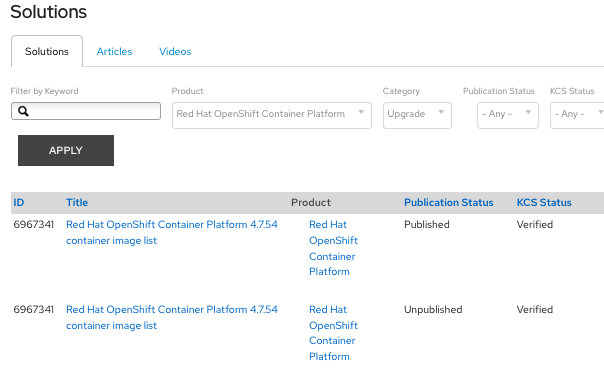
KCS Article and Solution pages are useful to learn about solutions and workarounds for specific problems related to updates and supported but not recommended updates.
Red Hat Insights
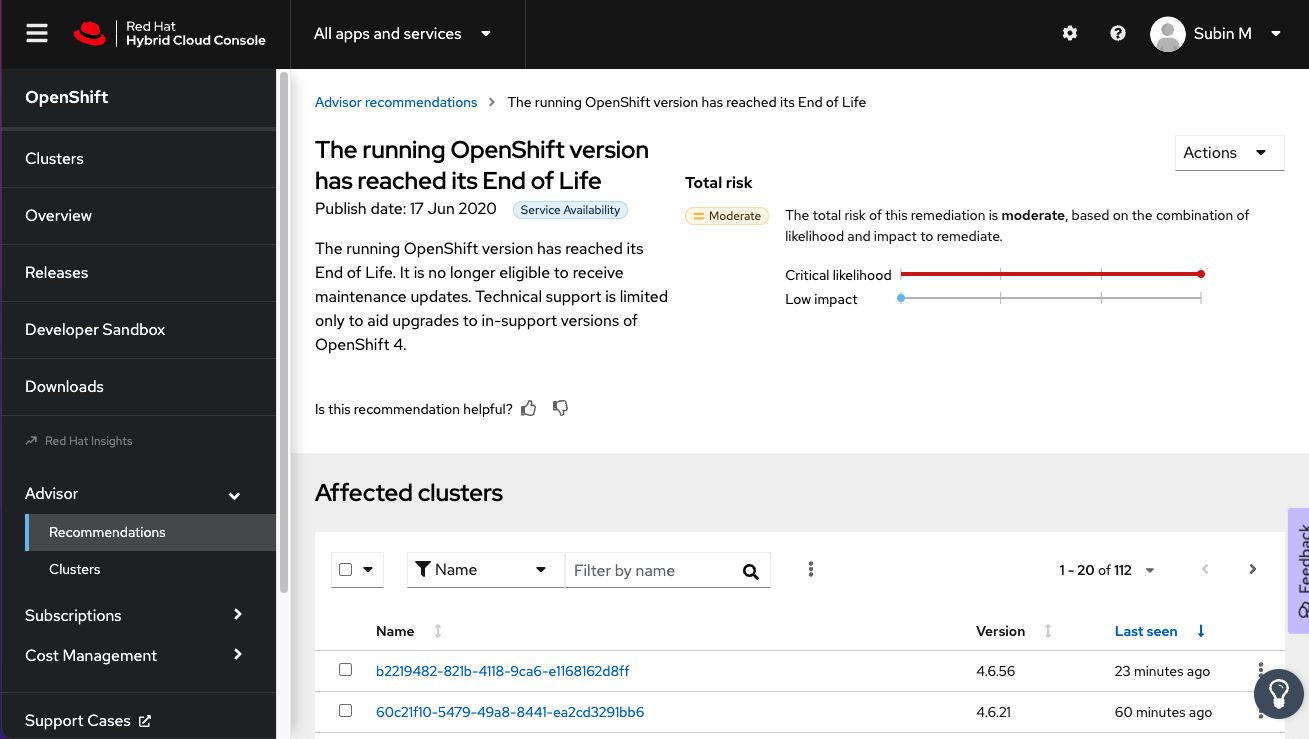
Red Hat Insights is available for Red Hat OpenShift 4 customers as a new feature of Red Hat OpenShift Cluster Manager. Insights provides recommendations for updates which is useful for planning the next update and assisting with cluster management.
OCP WebConsole


This interface allows you to plan updates from within the cluster. It exposes the update service's recommendations for your configured channel, so you can get tailored advice by configuring the update channel that aligns with your intentions. And since 4.10.14, it allows you to pause and unpause compute machine-config pools to customize your cluster updates. And since 4.10.16, it supports conditional updates.
By default, the cluster connects to an OpenShift Update Service hosted by Red Hat. But you can run the OpenShift Update Service locally to get the same experience for clusters in restricted-network environments.
OpenShift Container Platform Update Graph
This application helps visualize the recommended updates of Red Hat OCP. You can also visualize update paths by channel. This tool simplifies the planning for the shortest update path between two versions. It also provides the instructions to upgrade the cluster using CLI and Web Console.

執筆者紹介
Subin Modeel is a principal technical product manager at Red Hat.
類似検索
Red Hat パートナーが通信ビジネスにおける究極の資産である理由
エージェント型のパラドックスとハイブリッド AI の事例
Crack the Cloud_Open | Command Line Heroes
Edge computing covered and diced | Technically Speaking
チャンネル別に見る

自動化
テクノロジー、チームおよび環境に関する IT 自動化の最新情報

AI (人工知能)
お客様が AI ワークロードをどこでも自由に実行することを可能にするプラットフォームについてのアップデート

オープン・ハイブリッドクラウド
ハイブリッドクラウドで柔軟に未来を築く方法をご確認ください。

セキュリティ
環境やテクノロジー全体に及ぶリスクを軽減する方法に関する最新情報

エッジコンピューティング
エッジでの運用を単純化するプラットフォームのアップデート

インフラストラクチャ
世界有数のエンタープライズ向け Linux プラットフォームの最新情報

アプリケーション
アプリケーションの最も困難な課題に対する Red Hat ソリューションの詳細

仮想化
オンプレミスまたは複数クラウドでのワークロードに対応するエンタープライズ仮想化の将来についてご覧ください
