
Over the last several years, many users I have spoken with have told me they are down to just two operating systems in their production environments: RHEL and Windows Server. They have accomplished a lot with containers in OpenShift and want to replicate that success on the Windows platform. They see signs that Microsoft is committed to making containerization a first-class citizen in Windows Server, and they want Red Hat and Microsoft to come together to offer a container platform.
Although the core reasons may vary, many enterprises have thousands of existing .NET based applications that would be too costly to port to .NET Core. At the same time, they want these investments to take part in their journey to the public cloud or an automated infrastructure on premises. They want to know how they can receive the same application portability, high consolidation ratios, deeper integrations with Jenkins pipelines and git-based solutions, better software version and patching control, and a more efficient use of the network. Could container orchestration deliver the same operational and development workflow benefits for Windows that it has for Linux?
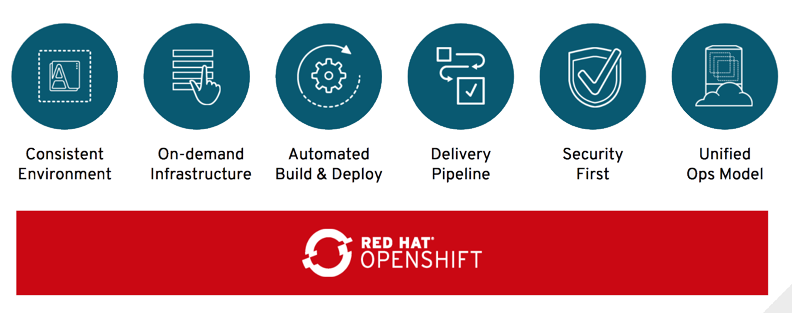
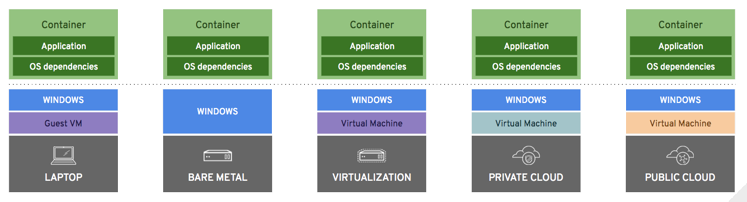
The Red Hat OpenShift and Microsoft Windows engineering teams have been working on bringing Windows containers to OpenShift for the past several months. The teams publicly committed to the project back in August. Over the course of that time, Microsoft has been working with the Kubernetes community to add the core competencies required to make the project possible. Windows support in Kubernetes is really the first time the upstream project has been extended to support a popular operating system other than the Linux derivatives. It is thanks to the dedication and passion of the Kubertnetes community that we now have Windows containers running in OpenShift. In addition to that work, Microsoft has been enhancing their core container support over the last few releases starting from Windows Server 2016 and leading to Windows Server 1709, Windows Server 1803, and later this year Windows Server 2019. OpenShift Origin was the last bit of code that needed to finish. The core areas that caused our joint engineering teams to dig in the deepest where:
- The template relationship to deploymentConfig
- Tags on Windows containers
- TLS bootstraping nodes to join the cluster
- Support for persistent volumes
- Resource quotas
- OVN networking integration
- DNS and MTU configuration automations
Once we had those problems solved, we knew it was time to start allowing users to try out the solution. We don't have all the versions of the core technologies in place yet, but we do have an ability to start soliciting feedback on the solution. If you are interested in offering feedback, please contact openshift-windows@redhat.com for more information about the Developer Preview Program we are launching at the Red Hat 2018 Summit. Reach out via the email address and come see what application portability through container orchestration can bring to your cloud today.
執筆者紹介
Mike Barrett is the Vice President and General Manager of Red Hat Hybrid Platforms. He looks after Red Hat OpenShift, Red Hat Cloud Services, and most of Red Hat’s Cloud Native Computing Foundation investments.
He joined Red Hat in 2013 and specializes in accelerating application platforms through the use of operating systems, cloud, and hardware technologies. Mike has more than 25 years of experience in datacenter architecture. He previously worked in both services and product management roles at Sun Microsystems and Oracle before joining Red Hat.
類似検索
パッチ適用が追いつきませんか?最後の防衛線としてのゼロトラスト
Red Hat パートナーが通信ビジネスにおける究極の資産である理由
Scaling with Orchestrators | Compiler
Container Roundup | Compiler
チャンネル別に見る

自動化
テクノロジー、チームおよび環境に関する IT 自動化の最新情報

AI (人工知能)
お客様が AI ワークロードをどこでも自由に実行することを可能にするプラットフォームについてのアップデート

オープン・ハイブリッドクラウド
ハイブリッドクラウドで柔軟に未来を築く方法をご確認ください。

セキュリティ
環境やテクノロジー全体に及ぶリスクを軽減する方法に関する最新情報

エッジコンピューティング
エッジでの運用を単純化するプラットフォームのアップデート

インフラストラクチャ
世界有数のエンタープライズ向け Linux プラットフォームの最新情報

アプリケーション
アプリケーションの最も困難な課題に対する Red Hat ソリューションの詳細

仮想化
オンプレミスまたは複数クラウドでのワークロードに対応するエンタープライズ仮想化の将来についてご覧ください
