
GitLab and Red Hat have been collaborative and successful technology partners for over 2 years. GitLab began their Red Hat integration and certification journey with the GitLab Runner, an open-source GitLab component used to run pipeline tasks.
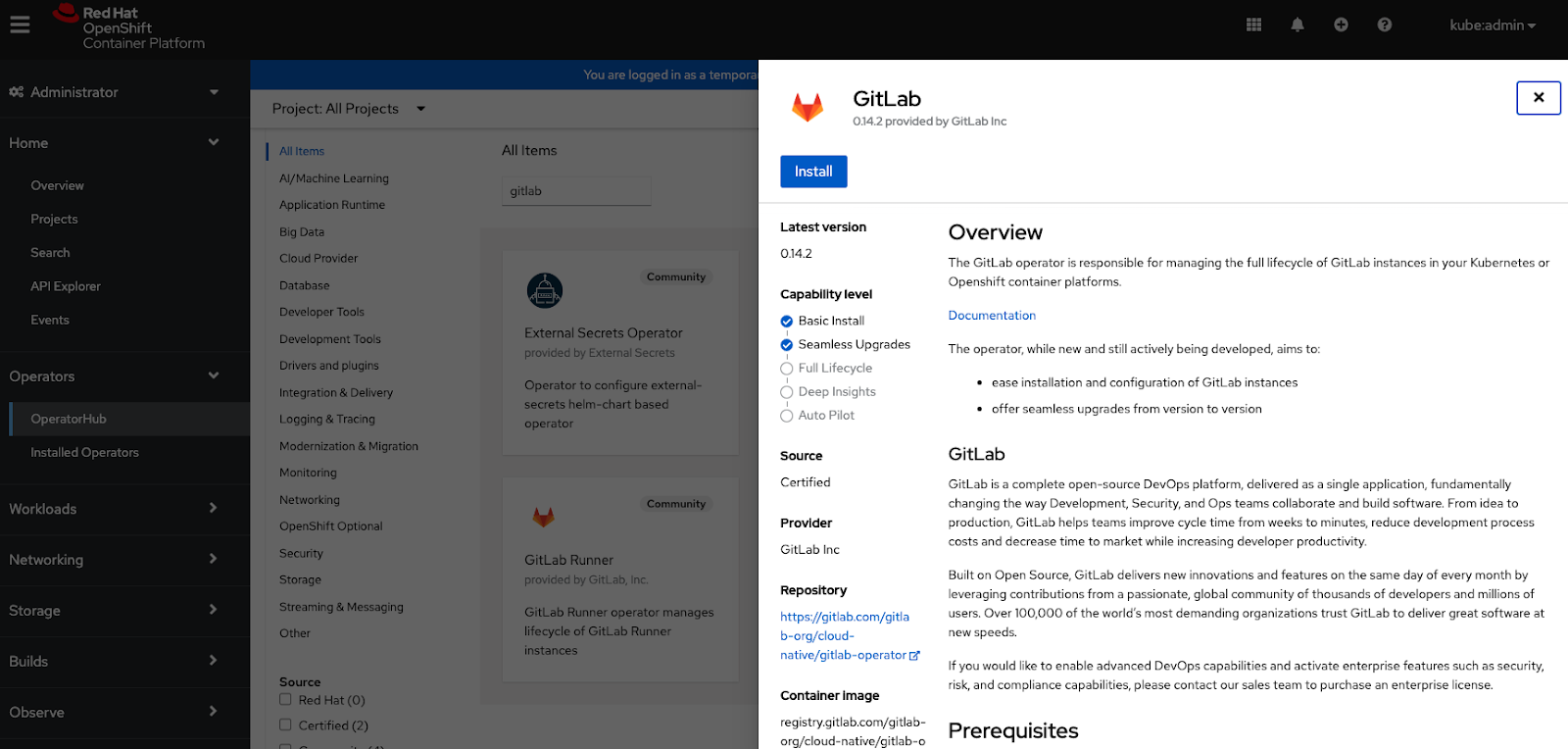
Now, in collaboration with the team over at GitLab, we are announcing the certification of the GitLab Server operator to allow users to install GitLab instances directly on their OpenShift clusters. Customers can now have their DevOps lifecycle and infrastructure all on the same stack.
Please Note: The Operator is ready for development testing and feedback, but not yet recommended for production environments.
Complex deployment
The GitLab application and its operator are complex, with a large amount of required components and configurations. This gave us the opportunity to work hand in hand between Red Hat and GitLab engineering teams to enable the creation and certification of the operator and its components. We wanted to ensure the product complexity was abstracted away from the customer, which is what the operator deployment achieves.
Completing this operator certification is a significant milestone and gives customers the confidence and assurance that GitLab runs effectively, jointly supported by Red Hat, on OpenShift.
Run GitLab directly on your OpenShift cluster
With the use of the GitLab operator, you can run your self-hosted GitLab instance directly on any OpenShift or Kubernetes cluster. This enables development teams to access and work within their GitLab DevOps platform from any location, on the same trusted infrastructure used for other shared applications and services.
This operator functionality is an extension and advancement of the existing cloud native GitLab Helm chart and, as of early 2022, the Kubernetes community operator. The operator deployment model, in contrast to Helm, facilitates a simple, streamlined installation and integration for the end-user and ensures seamless upgrades of both the OpenShift clusters and GitLab components. Operators help to reduce application deployment complexity for our joint customers.
Now, with the Red Hat OpenShift certification in place, the GitLab product components run on Red Hat’s Universal Base Image (UBI) and have gone through our operator certification program to ensure successful deployment and functionality based on Red Hat policy requirements. This allows the GitLab platform on OpenShift to be supported collaboratively with Red Hat, to the benefit of current and future joint customers.
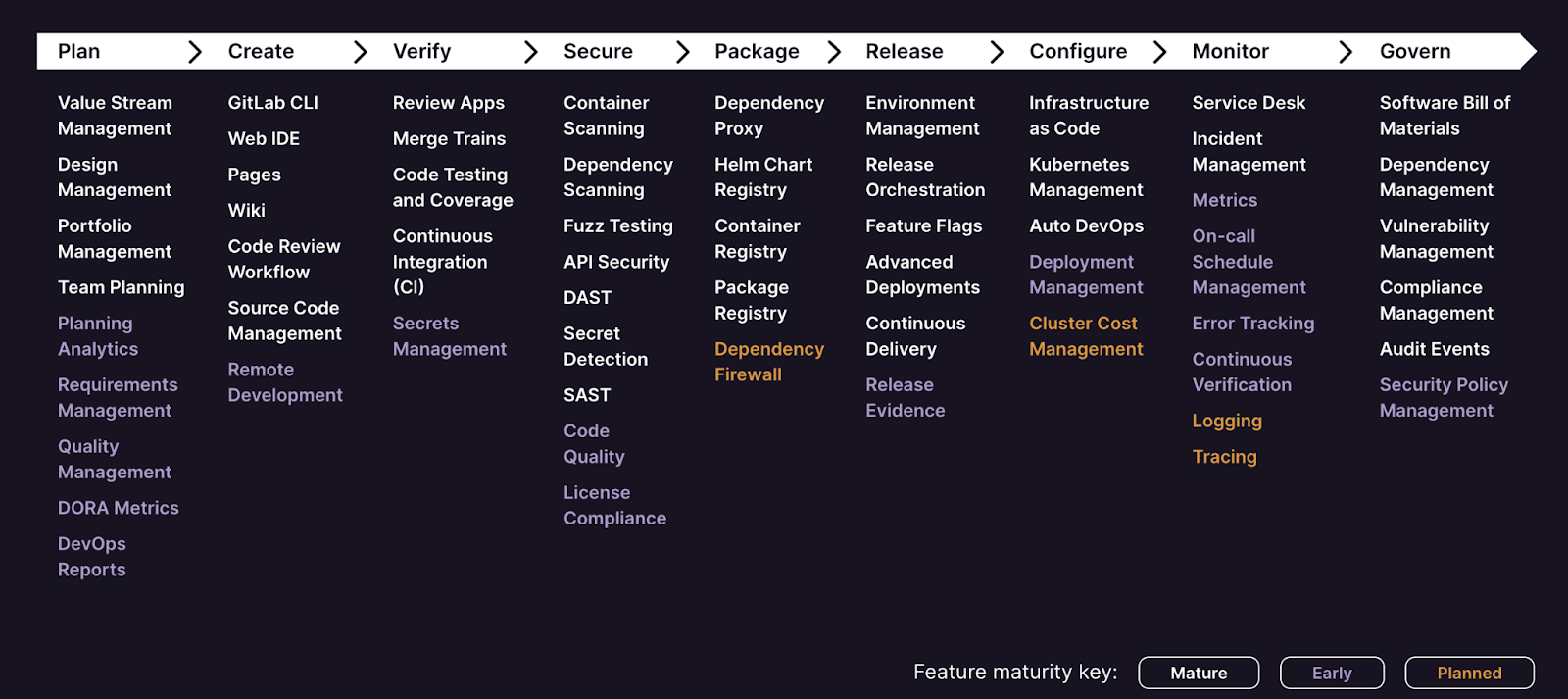
The DevSecOps Platform
GitLab accelerates software development by streamlining version control, CI/CD, and security within a single DevSecOps platform.
Utilizing GitLab, as Red Hat internal teams and many of our customers do today, improves cycle time from weeks to minutes, reduces operational costs, speeds time to market, and delivers more secure and compliant applications.
Check out some of the platform features:
Try it out
The GitLab Operator is available now in the OpenShift console via the embedded OperatorHub. Check out the catalog listing for links to documentation and installation instructions. For a self-managed free trial to host GitLab on your OpenShift cluster, submit this form.
執筆者紹介
類似検索
Service Mesh を使用した Red Hat OpenShift での仮想マシンの管理
Red Hat がパートナーによるビジネス価値の最大化を支援する 5 つの新しい方法
Scaling with Orchestrators | Compiler
Container Roundup | Compiler
チャンネル別に見る

自動化
テクノロジー、チームおよび環境に関する IT 自動化の最新情報

AI (人工知能)
お客様が AI ワークロードをどこでも自由に実行することを可能にするプラットフォームについてのアップデート

オープン・ハイブリッドクラウド
ハイブリッドクラウドで柔軟に未来を築く方法をご確認ください。

セキュリティ
環境やテクノロジー全体に及ぶリスクを軽減する方法に関する最新情報

エッジコンピューティング
エッジでの運用を単純化するプラットフォームのアップデート

インフラストラクチャ
世界有数のエンタープライズ向け Linux プラットフォームの最新情報

アプリケーション
アプリケーションの最も困難な課題に対する Red Hat ソリューションの詳細

仮想化
オンプレミスまたは複数クラウドでのワークロードに対応するエンタープライズ仮想化の将来についてご覧ください
