One of the strengths of Red Hat Ansible Automation Platform is its flexible automation of an array of use cases across ITOps. It includes multiple options to help you jumpstart new automation projects, using Ansible Content Collections. With these collections, you can access more than 200 Red Hat Ansible-certified and validated collections, built and delivered by partners and Red Hat so you can automate more quickly. In this blog post, you’ll learn about new and updated content for some of the most common use cases. So, let’s jump into it!
Comprehensive Microsoft Windows automation
Many companies need to manage their windows environments. To supplement the existing capability of the Ansible Windows and Microsoft Active Directory collections, we offer a full suite of new content:
- Microsoft MECM collection enables granular patch management, orchestration, and zero-downtime patching while integrating with Microsoft Endpoint Configuration Manager (MECM) as the compliance source of truth for Windows environments.
- MECM Operations collection completes operational tasks by bridging MECM with Ansible Automation Platform for Windows, simplifying routine Windows operations, such as orchestrating monthly patch lifecycles and performing infrastructure health checks.
- Microsoft SCOM collection integrates System Center Operations Manager (SCOM) with Event-Driven Ansible, part of Ansible Automation Platform, to enable real-time remediation triggers, eliminate complex polling scripts, and facilitate self-healing and automated ticketing workflows with AIOps.
- Microsoft Compliance collection offers automated baseline enforcement, continuous compliance verification, non-disruptive drift detection, and audit-ready documentation to perform complex compliance workflows for STIG, CIS, and other standards.
These additions allow users to accelerate automation, improve compliance, and streamline operations across their hybrid Microsoft infrastructure. You can learn more about this group of collections here.

Figure 1: Ansible Content Collections for Microsoft Windows and Active Directory enable comprehensive management across the Microsoft Windows Server platform.
AIOps with Splunk and Ansible Automation Platform: Insights to action solution
Splunk, a Cisco company, offers widely used IT and security observability tools. Red Hat and Splunk have been collaborating to create content and integrations to help improve MTTR or ease management of changing conditions. Together, these collections enable Splunk-insights-to-Ansible-action scenarios. An additional collection lets you manage Splunk solutions “as code” across your enterprise.
From foundational add-ons to new lifecycle modules, these collections allow you to automate the entire Splunk ecosystem—from deployment to closed-loop remediation:
- The Event-Driven Ansible add-on for Splunk, available on Splunkbase, was the first delivery of this collaboration. As a foundation, it enables alerts to come from Splunk into the Event-Driven Ansible capability to automate actions in response to an alert.
- Splunk Enterprise Security (Splunk ES) is updated to help manage Splunk ES configurations, send Splunk events to Ansible Automation Platform for action, and enable closed-loop communications with Splunk ES, for example, by attaching information about actions taken to the Splunk alert.
- Splunk IT Service Intelligence (Splunk ITSI) is a new collection that is designed to automate the management and configuration of ITSI. Integrating it with Ansible Automation Platform, the collection provides event-driven automation workflows so you can automatically remediate issues, gather diagnostics, or update service configurations in response to real-time observability data. It includes similar closed-loop capabilities as for Splunk ES.
- Splunk Enterprise lifecycle collection now introduces modules for managing the Splunk agent, called Universal Forwarder, which is installed on target technologies for Splunk monitoring. This collection automates the operational lifecycle of these agents across Linux and Windows environments.
- Cisco Splunk OpenTelemetry Collector is a new collection that automates the installation and configuration of the Splunk distribution of OpenTelemetry Collector. It streamlines the deployment of the collector across multiple Linux and Windows hosts, helping unify the collection of metrics, traces, and logs. This enables consistent telemetry data delivery to Splunk Observability Cloud or Splunk Enterprise.
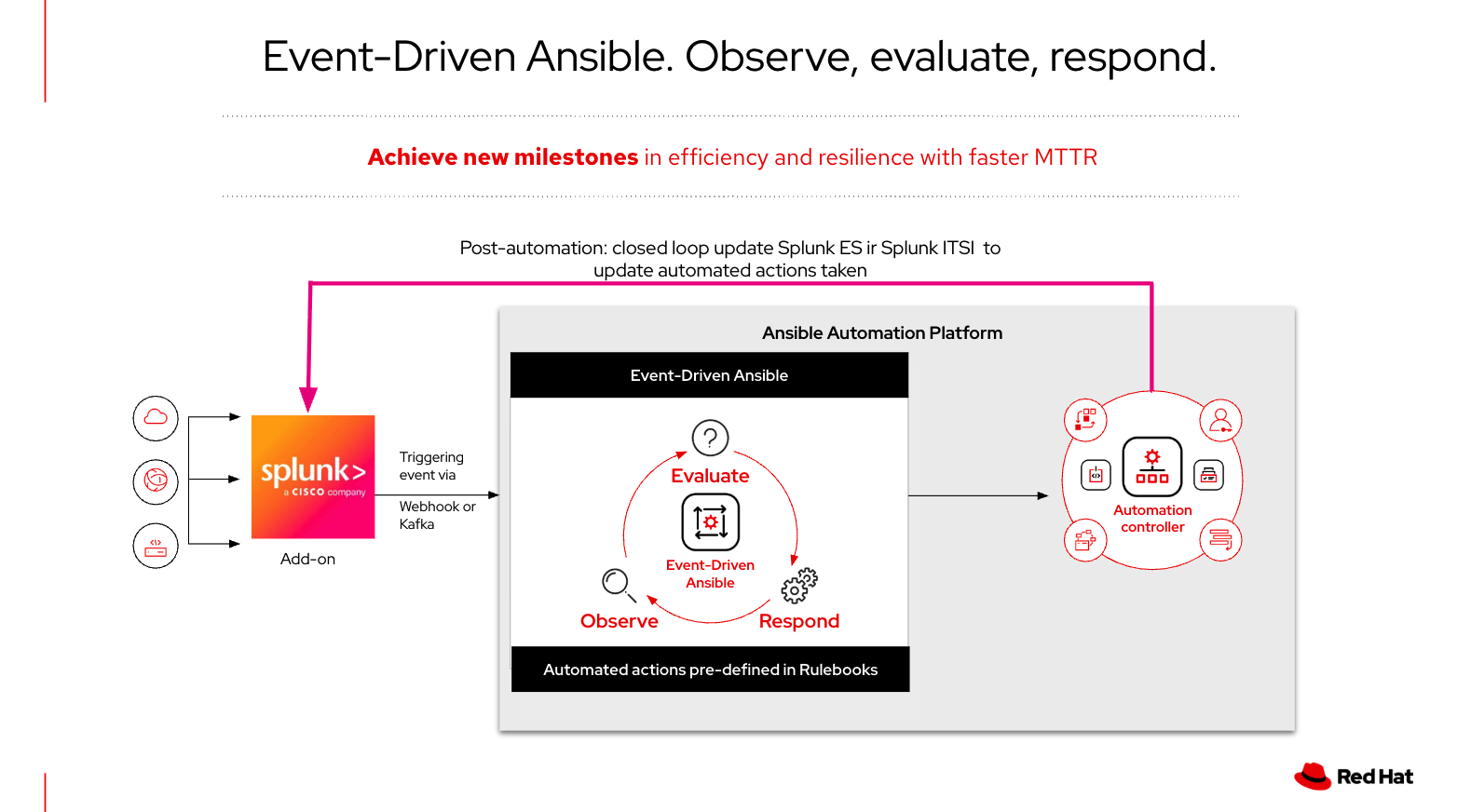
Figure 2: Enable automated action on Splunk alerts and use new Ansible Content Collections to close the loop post-automation.
New AI content for Ansible Automation Platform
As you build out your AI capabilities, Red Hat has created several new content collections to help you implement and manage them:
- Ansible builder allows you to embed Model Context Protocol (MCP) servers directly into your execution environment. While currently in Technology Preview, this addition lays the groundwork for safely connecting your automation infrastructure with AI models and assistants.
- Ansible MCP collection complements the Ansible builder by acting as your execution interface, enabling your automation to interact with MCP servers. It allows playbooks to dynamically discover available MCP servers, retrieve lists of their associated tools, and execute those tools from within automation workflows.
- Red Hat AI is purpose-built foundational automation to manage Red Hat AI environments, allowing you to efficiently deploy models on Red Hat Enterprise Linux AI, streamline complex MLOps pipelines, and manage AI model inferencing directly through Ansible Automation Platform.
Automated AI infrastructure and operations management on the cloud
To manage your key deployments on the cloud, Amazon Web Services (AWS) and Google Cloud collections are available to help you build, deploy, and manage new AI capabilities. To meet your needs for AI, the following content collections have been updated:
- Google Cloud content natively supports Vertex AI, enabling operations and data science teams to automate the complete AI lifecycle. When integrated with Event-Driven Ansible, teams can shift from reactive troubleshooting to a proactive, self-healing ecosystem for both MLOps and AIOps.
- AWS release content collection strengthens automation by improving S3 reliability, standardizing module behavior, removing long‑deprecated features, and aligning with modern AWS SDKs to deliver more stable and maintainable cloud operations.
- HashiCorp Terraform and HashiCorp Vault are both updated to deliver API‑first integration with HCP Terraform and Terraform Enterprise along with security-focused, automated secrets management through Vault Enterprise. These collections strengthen Infrastructure as Code (IaC) workflows, streamline infrastructure lifecycle operations, and provide a supported, enterprise‑ready foundation for hybrid cloud automation. Learn more here.
Virtual infrastructure automation
Many companies are re-evaluating their virtualization strategies to determine the best fit for their needs and budget. One thing remains constant: the need to manage virtualization along with related infrastructure, such as networks, storage, and applications. Ansible Automation Platform is a powerful, flexible solution capable of managing these complex requirements on any virtualization platform. A key option in this space is the Cisco Unified Computing System (UCS), which uses the Cisco Intersight policy-based management solution that works with a new Ansible Content Collection:
- Cisco Intersight content bridges the gap between software-defined automation and physical hardware. Now over 100 modules, this collection allows you to automate server management throughout its full lifecycle. It allows you to define its state, configuration, and actions entirely through code. Key capabilities include Server Profile Templates as Code, policy enforcement at scale (such as for compliance and drift), automated firewall firmware management, dynamic inventory management in conjunction with Cisco Intersight, and more. See additional detail.
Expanding the reach of multivendor network automation
As demand for Ansible Automation Platform grows, Red Hat and our partners continue to extend support through a series of enhancements. While we’ve summarized the new collections below, you can find an in-depth look in this blog post.
- ansible.netcommon is a updated foundational collection that includes a new option to provide Security Technical Implementation Guide (STIG)-compliant Secure Shell (SSH) transport capabilities for Netconf-based automation.
- Cisco Meraki content collection now includes capabilities to ease Ansible Automation Platform license management.
- The unified Juniper Device content collection now includes capabilities that existed in junipernetworks.junos through a single collection, supported by HPE Juniper Networking. You can find more details here.
- Cisco Catalyst Center is new content that automates device onboarding, software image management, and site-wide policy enforcement.
- F5 has delivered a new collection that enables network modernization and migration of F5 platforms.
- Palo Alto NGFW policy automation is new and allows automated policy enforcement for Next Generation Firewalls (NGFWs).
- Arista AVD is a new collection that enables organizations to automatically design, deploy, and validate Arista network fabrics using Infrastructure as Code (IaC).
Level up your automation: Recent updates to the Ansible Automation Platform collection
Recent updates to the Ansible Automation Platform collection have been rolling out since late last year to make automation more security-focused, predictable, and easier to manage. It now includes hardening integrations and a more streamlined user experience. Whether you're wrangling complex access controls or aiming for stricter security compliance, the recent patches help to improve the reliability of day-to-day playbooks.
Here’s a look at what these recent updates mean for your environments:
- Enhanced security with mTLS Support: New certificate modules and routing attributes allow you to natively configure mutual Transport Layer Security (mTLS), making it easier to enforce zero trust policies and meet strict compliance standards in all of your Ansible Automation Platform projects, including event-driven ones.
- Smoother API integrations: Updates to the Gateway API lookup plugins help build URLs correctly, providing reliable, error-free API interactions.
- Streamlined access control: If you rely on custom roles for team assignments, recent updates ensure that granular access controls apply accurately and as intended.
- Playbook execution improvements: Deep improvements to idempotency logic mean your automation will run more predictably without making unintended configuration changes, saving you from unintended drift.
- Stability improvements: Behind-the-scenes improvements to testing pipelines and timeout handling help support a stable, dependable collection for critical workflows.
Automate full workflows faster with Ansible Content Collections
While each collection offers immediate time savings, the true value of Ansible Automation Platform lies in its ability to integrate these tools into a unified workflow. By chaining automation together–including calling other management tools from within playbooks–you can orchestrate end-to-end IT workflows that deliver unmatched speed, efficiency, and consistency.
Imagine a single, unified workflow that handles the entire lifecycle: provisioning a new Microsoft Windows server, safely fetching credentials from HashiCorp Vault, registering the asset in ServiceNow Configuration Management Database (CMDB), deploying the Splunk agent, and running automated security hardening checks. As you build this automation footprint one playbook or rulebook at a time, you naturally bridge cross-functional IT bottlenecks and reclaim hours for high-value innovation.
Red Hat and our partner ecosystem aim to provide you with pre-built, constantly updated content. Our goal is to help you launch new automation projects faster and maximize your existing resources, so your team can focus on the priorities that truly drive your business forward.
Resources
Ready to dive in? Explore these resources to learn more:
- Webinar series: Automate your ecosystem with Red Hat Ansible Automation Platform
- Additional details in these blogs:
- Automating the modern network: A Q1 network automation recap
- Strategic momentum: The new era of Red Hat and HPE Juniper network automation
- IT automation with agentic AI: Introducing MCP server for Red Hat Ansible Automation Platform
- Improving VirtOps: Manage, migrate or modernize with Red Hat and Cisco
- New Red Hat Ansible Certified Content Collections for HashiCorp Terraform and HashiCorp Vault
- Automating Microsoft Endpoint Configuration Manager with Red Hat Ansible Automation Platform
- E-book: Automate infrastructure workflows
- Red Hat interactive demos: Ansible Automation Platform
- E-book: Red Hat Ansible Automation Platform: A beginner’s guide
Resource
5 steps to automate your business
About the author

Stephen Fulmer is a Product Manager at Red Hat, leading Ansible content strategy. With a background in virtualization and IT operations, he works closely with customers, partners, and engineering teams to deliver trusted, scalable automation content for platforms like OpenShift, Windows, and public cloud. Stephen is passionate about enabling organizations to simplify complex workflows and accelerate their automation journeys with Red Hat Ansible Automation Platform.
More like this
Streamlining Red Hat OpenShift multicluster management with Red Hat Ansible Automation Platform
Strengthening security and consistency in the cloud with Red Hat and HashiCorp
Technically Speaking | Taming AI agents with observability
You Can’t Automate The Difficult Decisions | Code Comments
Browse by channel

Automation
The latest on IT automation for tech, teams, and environments

Artificial intelligence
Updates on the platforms that free customers to run AI workloads anywhere

Open hybrid cloud
Explore how we build a more flexible future with hybrid cloud

Security
The latest on how we reduce risks across environments and technologies

Edge computing
Updates on the platforms that simplify operations at the edge

Infrastructure
The latest on the world’s leading enterprise Linux platform

Applications
Inside our solutions to the toughest application challenges

Virtualization
The future of enterprise virtualization for your workloads on-premise or across clouds
