Enterprise Linux
-
Explore Red Hat Enterprise Linux 10
Our latest release delivers bold innovation to help address today’s most pressing IT challenges, from the Linux skills gap to getting started with post-quantum security.
Red Hat Enterprise Linux is here. Because innovation can’t wait.
Red Hat Enterprise Linux 10 features
-
Product variants Red Hat Enterprise Linux variants:
Optimized to run on servers or high-performance workstations, supporting a range of hardware architectures and hyperscalers.
-
Use cases -
Learn - Documentation
Red Hat Enterprise Linux
Features and benefits
Red Hat® Enterprise Linux® provides a stable, scalable foundation that lowers costs and boosts performance for your most important applications. It is the trusted choice for cloud and data center infrastructure, offering built-in automation and long-term reliability without the burden of vendor lock-in.
Jump to section
Advanced security and compliance capabilities
Red Hat Enterprise Linux has significant security advantages over community-supported distros, with integrated tools and AI-native analysis to detect vulnerabilities at scale. Built-in security capabilities help organizations reduce risk, save time, and prevent downtime while supporting compliance.
Features
- Post quantum-ready algorithms (Red Hat Enterprise Linux 10)
Help protect your sensitive data against "harvest now, decrypt later" threats with NIST-approved, quantum-resistant algorithms. - Red Hat Lightspeed (formerly Red Hat Insights)
Stay ahead of security threats with monitoring, malware detection, security framework compliance and common vulnerabilities and exposures (CVEs) tracking capabilities, tailored to your unique environment. - Built-in compliance capabilities
Tools like the FIPS cryptographic module, OpenSCAP, Red Hat Lightspeed, and system roles simplify the complex and time-consuming tasks of achieving and maintaining compliance. This reduces the burden on IT teams and helps them implement Zero Trust strategies. - Confidential computing
Protects sensitive workloads and data with hardware-based Trusted Execution Environments (TEEs) and Confidential Virtual Machines (CVMs). - Red Hat Identity Management (IdM)
A component that controls user identities, access policies, and authentication (like passwords and SSH keys) across an entire network of Linux servers. - SELinux
An included security layer that offers mandatory access controls and granular process and system file management. - Fapolicyd
An application allowlisting framework that enhances system integrity by blocking unauthorized or unknown binaries from running, even if they have the correct file permissions.
Build and deploy options
Red Hat Enterprise Linux promotes a shift left philosophy: building the right way at the start prevents problems later in the process. It also eliminates the friction of moving workloads between local servers, virtual machines, and public clouds. Whether your team is managing a high-performance database in a private data center or scaling web services in the cloud, the underlying environment remains consistent, which significantly lowers the risk of configuration drift. Additionally, Red Hat Enterprise Linux is engineered for air-gapped environments, supporting cross-border data protection for sensitive workloads and an unencumbered cloud exit strategy.
Features
- Planning for Red Hat Enterprise Linux
Navigate the product lifecycle more effectively with proactive visibility into future releases with Red Hat Lightspeed. - Image builder
Create customized, optimized system images for any platform. Access proactive package recommendations based on your selections to help you make more informed decisions at build time. - Image mode for Red Hat Enterprise Linux
This new approach to management treats the entire OS as a container image, letting you manage and deploy it using the same tools and logic you use for your applications. - Cloud-optimized Red Hat Enterprise Linux
Red Hat Enterprise Linux is certified on hundreds of public clouds. For major partners like Microsoft Azure, Amazon Web Services (AWS), and Google Cloud, Red Hat Enterprise Linux images are deeply integrated into the cloud provider’s fabric and preconfigured for performance with cloud provider-specific profiles. - Red Hat Enterprise Linux system roles
A collection of Red Hat Ansible® Automation Platform (AAP) roles included in a Red Hat Enterprise Linux subscription that help automate the management and configuration of Red Hat Enterprise Linux systems.
Management and automation capabilities
Stay ahead of trouble by spotting risks early and automating the repetitive tasks that drain your team's resources. Every Red Hat Enterprise Linux subscription comes with Red Hat Lightspeed, a hosted, AI-powered management and security tool built on decades of Red Hat's Linux knowledge and expertise.
Features
- Red Hat Lightspeed
Get a centralized view of applicable security advisories and software updates, allowing you to prioritize and schedule fixes across your entire infrastructure. The notifications feature helps you stay informed of these critical events by delivering real-time alerts to your existing workflows or third-party integrations, helping your team respond quickly to potential risks. - Command-line assistant
An optional, built-in AI assistant that lets you ask questions and receive guidance in plain language directly from the terminal. - Model Context Protocol (MCP) servers (in Developer Preview)
Red Hat Enterprise Linux, Red Hat Satellite, and Red Hat Lightspeed include MCP servers that act as bridges between your infrastructure and AI models. This standardized interface allows AI agents to process your operational data in real time. By connecting tools like goose, teams can use agentic AI to troubleshoot specific servers and analyze logs using natural language. - Red Hat Satellite (extra fee)
Simplify provisioning, patching, and management of Red Hat Enterprise Linux environments at scale, keeping them running efficiently and securely across all footprints—from on-premise to the cloud to the edge—from a single console. - Ansible Automation Platform (extra fee)
Allows teams to scale consistent management across their entire infrastructure by automating manual remediation, patching, and configuration tasks.
Upgrade flexibility with optional lifecycle support options
Red Hat Enterprise Linux releases now provide maintenance support well beyond the standard 10-year lifecycle, and Red Hat supports multiple versions of the OS at the same time. How and when to upgrade depends on a number of factors, and Red Hat offers tools to assess your readiness and identify roadblocks.
Features
- Leapp
This supported utility enables in-place upgrades for major numbered versions. To facilitate a smooth transition, it generates a pre-upgrade assessment report that identifies potential risks before any changes are made. For a faster upgrade path, use Red Hat Ansible® Automation Platform to resolve technical issues identified in the Leapp assessment report, reducing manual troubleshooting. - Extended Lifecycle options
If your business needs more time on a specific version, Red Hat offers flexible support add-ons to extend your timeline, including Red Hat Enterprise Linux Extended Life Cycle, Premium, which provides support for major and minor versions beyond the standard 10-year window.
Migrations
Red Hat Enterprise Linux offers a path from aging community distributions to a fully supported, enterprise-grade environment whether you’re staying on premise or moving to the cloud.
Features
- Convert2RHEL
If you’re using another popular distribution like Oracle Linux, AlmaLinux, CentOS Linux, or Rocky Linux, the Convert2RHEL tool acts as an automated migration assistant. It provides a pre-migration assessment report that identifies potential compatibility issues and hardware conflicts, helping you establish a clear and predictable path to a successful migration. - Cloud migration
Red Hat Enterprise Linux provides pre-tuned, ready-to-run images uniquely optimized for AWS, Azure, and Google Cloud to accelerate deployment and reduce manual configuration. Built-in capabilities such as secure boot and image attestation maintain workload integrity throughout migration.
Access to other resources
As a Red Hat user, you also have access to decades of our Linux knowledge and expertise.
Features
- Red Hat Customer Portal
A centralized hub that gives you direct access to award-winning support engineers. - Knowledgebase
A comprehensive repository filled with thousands of verified technical articles, reference architectures, and security advisories.
Who uses Red Hat Enterprise Linux
Enterprise architects choose Red Hat Enterprise Linux to build a standardized, scalable foundation that ensures interoperability across hybrid clouds while maintaining strict, long-term security compliance.
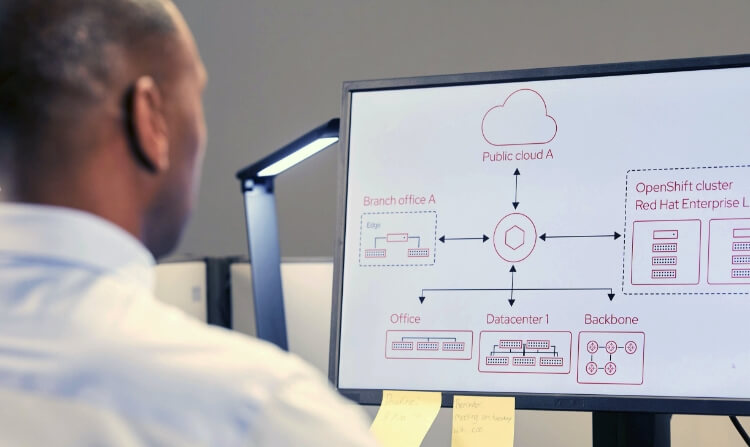
System administrators rely on Red Hat Enterprise Linux for its stability and powerful management tools like Red Hat Lightspeed and Red Hat Satellite, which helps them automate repetitive tasks and simplify patching.
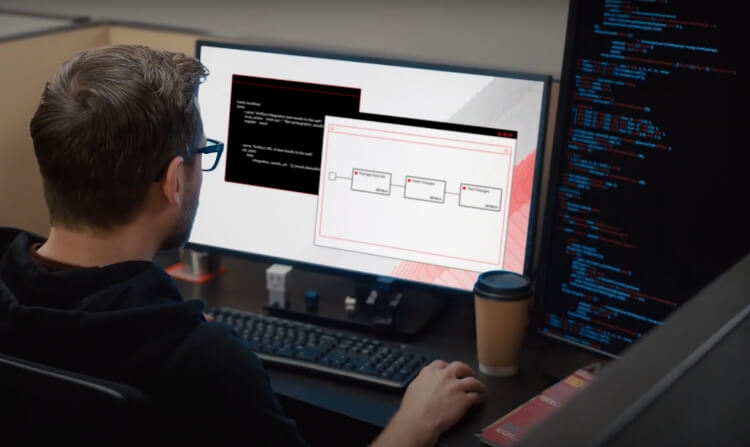
IT operations leaders value Red Hat Enterprise Linux for reducing downtime and total cost of ownership through world-class support, predictable lifecycles, and proactive analytics.
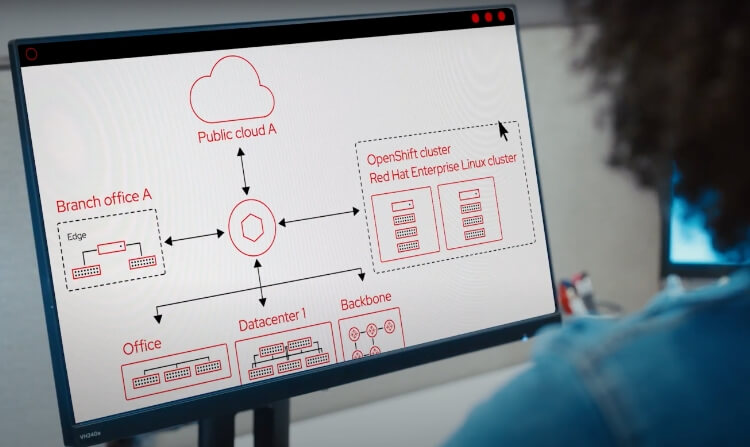
Developers use Red Hat Enterprise Linux to access the latest languages via Application Streams and container tools like Podman, ensuring code moves smoothly into production.

What’s new in Red Hat Enterprise Linux