
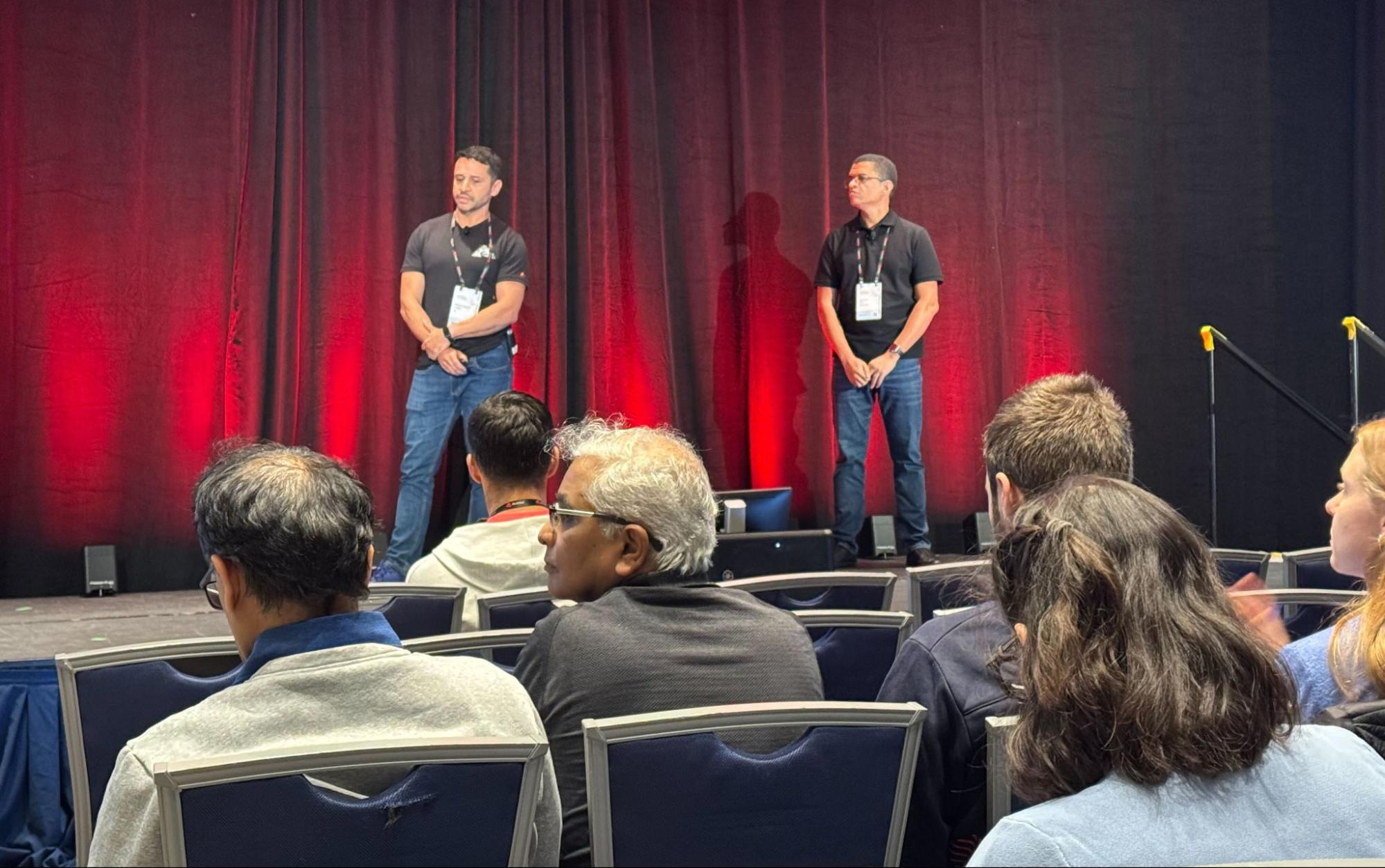
At the recent OpenShift Commons gathering in Atlanta, we had the opportunity to hear from Gustavo Fiuza, IT leader, and Welton Felipe, DevOps engineer, about the remarkable digital transformation at Banco do Brasil. As the second-largest bank in Latin America, they manage a massive scale, serving 87 million customers and processing over 900 million business transactions daily. We learned how they evolved from a siloed community Kubernetes environment to a highly efficient, hybrid multicloud platform powered by Red Hat OpenShift.
Scalability through capabilities and hyperautomation
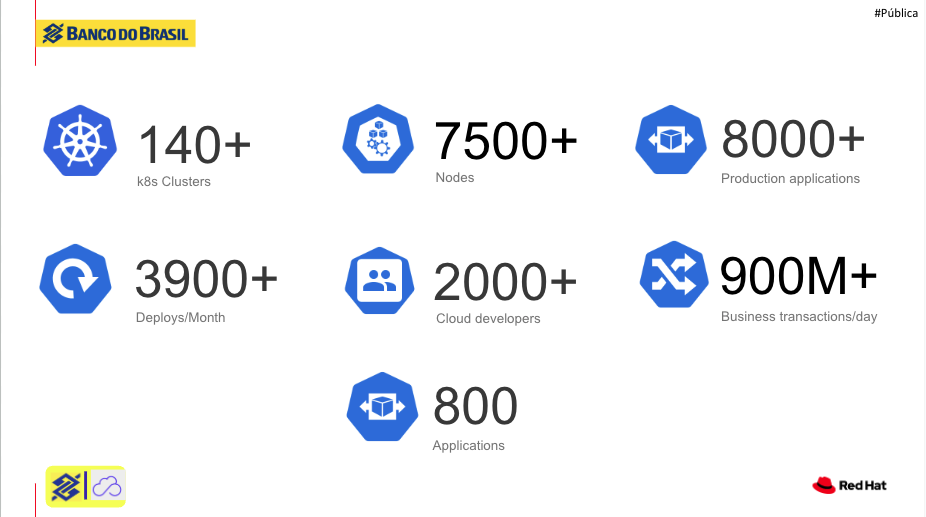
A primary takeaway from their session was the concept of "capabilities" as the building blocks of their standardized environment. Instead of managing hundreds of unique clusters manually, the team treats infrastructure features—such as ingress controllers and monitoring stacks—as versionable components with dedicated owners. This shift allows them to bring new clusters to life using a metadata-driven "hyperautomation" stack that leverages Red Hat operators and Argo CD. Their containerized environment now spans over 140 clusters comprising more than 7,500 nodes.
"Capabilities and hyperautomation are what makes scalable management possible." — Welton Felipe, Banco do Brasil
Driving sustainability with FinOps and GreenOps
We were particularly impressed by how Banco do Brasil integrates efficiency and sustainability directly into its platform engineering. By implementing "quality processes" like FinOps and GreenOps, they track real-time resource allocation and carbon footprints across thousands of namespaces. This data-driven approach has already helped the bank reach 33% efficiency across its environments, moving steadily toward its strategic target of 40%.
Transforming the developer experience
The transition to OpenShift has fundamentally empowered more than 2,000 developers who now carry out an average of 3,900 monthly deployments. By using an internal developer platform (IDP) and automated recommendations, the bank has turned potential infrastructure offenders into efficient users. The results of this empowerment are clear: in just 2 weekends, the team successfully migrated 800 applications to the public cloud with no incidents.
Accelerating the journey with artificial intelligence
The journey at Banco do Brasil also highlights the powerful role of AI in modern platform operations. They utilize specialized AI agents, such as "Marvin-bot" for troubleshooting and pod distribution, and "Delfos" for integrated cloud management queries. These tools, combined with the flexibility of OpenShift, helps the platform remain stable even as the cluster footprint for workloads was reduced by half through rapid autoscaler adjustments.
"I hope... that our case will help you in your challenges inspiring you to grow your business with Red Hat OpenShift." — Gustavo Fiuza, Banco do Brasil
Start your own automation journey
Are you ready to scale your infrastructure while improving efficiency and sustainability? We encourage you to explore these Red Hat resources to learn how to build your own high-velocity platform:
Resource
5 steps to automate your business
About the author
Debbie Margulies is a principal product marketing manager for Red Hat OpenShift and has been at Red Hat since 2019 through the acquisition of StackRox.
More like this
Using on-premise Red Hat Lightspeed capabilities to monitor vulnerabilities and apply advisor remediations
Red Hat is named a Leader in IDC MarketScape: Worldwide Private and Hybrid Cloud Management with Automation
Random Acts Of Automation | Compiler
Untangling Networks | Compiler
Keep exploring
- The automated enterprise
E-book - Try Red Hat Ansible Automation Platform with self-paced, hands-on labsInteractive lab
- Red Hat Ansible Automation Platform: A beginner’s guide
E-book
Browse by channel

Automation
The latest on IT automation for tech, teams, and environments

Artificial intelligence
Updates on the platforms that free customers to run AI workloads anywhere

Open hybrid cloud
Explore how we build a more flexible future with hybrid cloud

Security
The latest on how we reduce risks across environments and technologies

Edge computing
Updates on the platforms that simplify operations at the edge

Infrastructure
The latest on the world’s leading enterprise Linux platform

Applications
Inside our solutions to the toughest application challenges

Virtualization
The future of enterprise virtualization for your workloads on-premise or across clouds
