

Red Hat OpenShift Virtualization 4.21 is now Generally Available. The release of Red Hat OpenShift Virtualization 4.21 introduces new capabilities that simplify virtual machine (VM) management, enhance operational efficiency, and expand deployment flexibility across hybrid and multi-cloud environments. This release brings streamlined VM administration with multi-cluster management, guided networking configuration through new physical and virtual network creation workflows, and generative AI–powered assistance with OpenShift Lightspeed integrated directly into virtualization operations. Additional highlights include cross-cluster live migration with zero downtime, storage-agnostic incremental backups through change block tracking, MIG vGPU support for shared GPU resources, expanded availability on Google Cloud bare metal, and enhanced networking and high-availability capabilities for mission-critical workloads. Read below to learn more about this release.
Simplified VM admin management
Managing VMs at scale often involves operational tasks that can slow teams down, introducing complexity. With simplified VM administrator capabilities, OpenShift Virtualization streamlines common lifecycle operations such as provisioning, configuration, and ongoing management directly within the OpenShift Console.
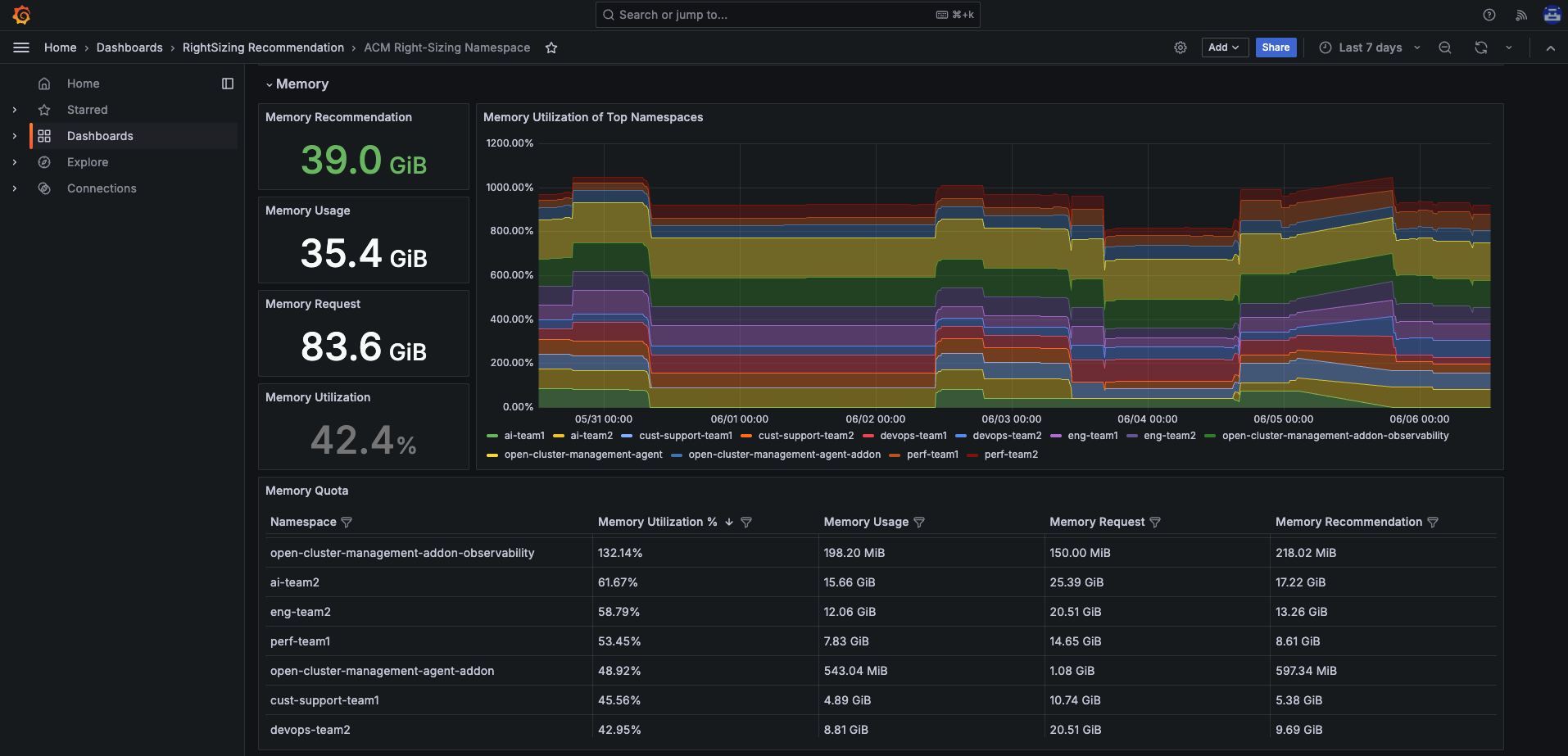
Red Hat OpenShift Virtualization 4.21 includes new multi-cluster management capabilities and Advanced Cluster Management right-sizing recommendations that provide centralized visibility and operational control across multiple clusters, allowing administrators to manage VM workloads from a unified console.
Physical network creation user interface
Configuring physical networking for VMs can traditionally require complex manual setup and deep networking expertise. With the new physical network creation interface, OpenShift Virtualization introduces guided workflows that simplify how admins can define and configure host-level networking directly within the UI.
By simplifying network configuration, teams can accelerate deployments and reduce configuration errors. This is important when you're migrating workloads with specific networking requirements, because it helps ensure reliable connectivity from day one.
Virtual VM network creation wizard
A virtual VM network creation wizard is now available. The new VM network creation wizard provides a guided, step-by-step experience for configuring VM networking. It steps you through configuration options with built-in validation, helping ensure settings align with best practices before you deploy. Check it out in the demo below.
Red Hat OpenShift Lightspeed generative AI assistance
OpenShift Lightspeed is now integrated with OpenShift Virtualization, bringing generative AI–powered assistance directly into virtualization workflows within the OpenShift interface. Administrators can access contextual guidance, operational insights, and recommended actions while managing VMs, helping streamline both VM migrations and day-to-day lifecycle operations.
Watch the demo below.
Support for UI plugins for third-party integration
Customers generally rely on an ecosystem of tools that support storage, networking, security, and observability. UI plugin support with OpenShift Virtualization 4.21 now enables organizations to incorporate partner capabilities directly into their workflows allowing teams to access critical tools without leaving the platform.
Optimize your infrastructure
There are several new features that help you get the most out of your existing infrastructure.
Mitigate between clusters with zero downtime
Live cross-cluster migration is now generally available. You can move VMs between Red Hat OpenShift clusters with zero downtime to balance your workloads. This option is fully supported in the latest release and allows for smooth transitions. Check out the guided demo for more information.
Change block tracking (Tech Preview)
Data protection becomes more complex as VM environments scale. Storage-agnostic incremental backup introduces change block tracking functionality (as a tech preview) that captures only modified data blocks rather than entire disks, regardless of the underlying storage platform. This saves both time and disk capacity for improved data protection scenarios.
MIG vGPU support for VMs
Support for Multi-Instance GPU (MIG) enables GPU resources to be partitioned and shared across multiple virtual machines, allowing you to allocate GPU capacity dynamically based on workload needs.
Expansion to Google Cloud
Red Hat OpenShift Virtualization is now available with Red Hat OpenShift on Google Cloud C3 bare-metal instances and Red Hat’s managed offering, Red Hat OpenShift Dedicated powered by Google’s C3 bare metal instances, expands deployment options for hybrid cloud environments. Organizations can run VM workloads on dedicated bare metal infrastructure within Google Cloud while maintaining operational consistency with existing OpenShift environments. This enables performance-sensitive workloads to benefit from cloud infrastructure while supporting modernization on a consistent operational experience across the hybrid cloud. Read more about the availability here and check out the demo below.
Microsoft Windows Server Failover Cluster with multipath failover
By strengthening high-availability configurations, organizations can better protect applications against storage or connectivity disruptions. Enhanced Microsoft Windows Server Failover Cluster support introduces multipath failover capabilities, improving resiliency for mission-critical Windows workloads running on OpenShift Virtualization.
Networking enhancements
IPv6 single-stack support for the control plane and secondary networks enables fully IPv6-based deployments, simplifying infrastructure by eliminating dual-stack complexity while supporting modern networking and long-term scalability.
Migration workflows now support importing VMs connected to overlay networks, preserving network configurations during the migration process leading to smoother transitions.
Workload migration is now even faster
Make sure you check out the latest version of the Migration toolkit for virtualization 2.11, now super-powered with storage offload, to get your VMs into OpenShift as fast as possible.
More Resources
Read the documentation.
Explore additional resources.
Check out the agenda for Red Hat Summit 2026 in Atlanta, GA.
Upstream project and community
Red Hat initiated and continues to be a leading contributor to KubeVirt, the upstream Cloud Native Computing Foundation (CNCF) project that users and vendors are adopting to integrate VMs in Kubernetes. We're also seeing additional companies choosing KubeVirt as a proven key technology. Explore the upstream innovation from the KubeVirt 2025 Summit agenda and KubeVirt Summit 2025 playlist.
Become a certified specialist
As with other Red Hat platforms, such as Red Hat Enterprise Linux (RHEL) and Red Hat OpenShift, modernizing your infrastructure and operations is a skill set that is valuable for both your company and your career. You can continue your training to become a Red Hat Certified Specialist in OpenShift Virtualization, and check out these additional resources:
- OpenShift Virtualization: Why Bring Your Virtual Machines to Kubernetes?
- OpenShift Virtualization blogs
- OpenShift Virtualization demos on demo.openshift.com
- OpenShift Livestream
- OpenShift TV library of recorded OpenShift videos and streams
To learn more about Red Hat OpenShift Virtualization, visit the official documentation, and read about additional resources to get started.
Finally, be sure to watch the webinar to get even more insight into what OpenShift can help you achieve.
Product trial
Red Hat OpenShift Virtualization Engine | Product Trial
About the authors
Courtney started at Red Hat in 2021 on the OpenShift team. With degrees in Marketing and Economics and certificates through AWS and Microsoft she is passionate about cloud computing and product marketing.
Peter is a product manager in Cloud Platforms, focused on virtualization. He has been in high tech for storage, virtualization, databases, and hyperconverged solutions for longer than he cares to admit.
Browse by channel

Automation
The latest on IT automation for tech, teams, and environments

Artificial intelligence
Updates on the platforms that free customers to run AI workloads anywhere

Open hybrid cloud
Explore how we build a more flexible future with hybrid cloud

Security
The latest on how we reduce risks across environments and technologies

Edge computing
Updates on the platforms that simplify operations at the edge

Infrastructure
The latest on the world’s leading enterprise Linux platform

Applications
Inside our solutions to the toughest application challenges

Virtualization
The future of enterprise virtualization for your workloads on-premise or across clouds
