Skip to content AI
  • Overview

    • AI news
    • Technical blog
    • Live AI events
    • Inference explained
    • See our approach
  • Products

    • Lightwell
    • Red Hat AI Enterprise
    • Red Hat AI Inference
    • Red Hat Enterprise Linux AI
    • Red Hat OpenShift AI
    • Explore Red Hat AI
  • Engage & learn

    • Learning hub
    • AI topics
    • AI partners
    • Services for AI
Hybrid cloud
  • Platform solutions

    • Artificial intelligence

      Build, deploy, and monitor AI models and apps.

    • Linux standardization

      Get consistency across operating environments.

    • Application development

      Simplify the way you build, deploy, and manage apps.

    • Automation

      Scale automation and unite tech, teams, and environments.

  • Use cases

    • Virtualization

      Modernize operations for virtualized and containerized workloads.

    • Digital sovereignty

      Control and protect critical infrastructure.

    • Security

      Code, build, deploy, and monitor security-focused software.

    • Edge computing

      Deploy workloads closer to the source with edge technology.

  • Explore solutions
  • Solutions by industry

    • Automotive
    • Financial services
    • Healthcare
    • Industrial sector
    • Media and entertainment
    • Public sector (Global)
    • Public sector (U.S.)
    • Telecommunications

Discover cloud technologies

Learn how to use our cloud products and solutions at your own pace in the Red Hat® Hybrid Cloud Console.

Products
  • Platforms

    • Red Hat AI icon artificial intelligence, Red Hat Enterprise Linux AI, Red Hat OpenShift AI, RHEL AI, machine learning Red Hat AI

      Develop and deploy AI solutions across the hybrid cloud.

    • Red Hat Enterprise Linux icon RHEL, Linux platforms, CentOS Red Hat Enterprise Linux

      Support hybrid cloud innovation on a flexible operating system.

    • Red Hat OpenShift icon Cloud, Containers, Kubernetes Red Hat OpenShift

      Build, modernize, and deploy apps at scale.

    • Red Hat Ansible Automation Platform icon Management, edge Red Hat Ansible Automation Platform

      Implement enterprise-wide automation.

  • Featured

    • Lightwell
    • Red Hat AI Enterprise
    • Red Hat OpenShift Virtualization Engine
    • Red Hat Desktop
    • See all products
  • Try & buy

    • Start a trial
    • Buy online
    • Integrate with major cloud providers
  • Services & support

    • Consulting
    • Product support
    • Services for AI
    • Technical Account Management
    • Explore services
Training
  • Training & certification

    • Courses and exams
    • Certifications
    • Skills assessments
    • Red Hat Academy
    • Learning subscription
    • Explore training
  • Featured

    • Red Hat Certified System Administrator exam
    • Red Hat System Administration I
    • Red Hat Learning Subscription trial (No cost)
    • Red Hat Certified Engineer exam
    • Red Hat Certified OpenShift Administrator exam
  • Services

    • Consulting
    • Partner training
    • Product support
    • Services for AI
    • Technical Account Management
Learn
  • Build your skills

    • Documentation
    • Hands-on labs
    • Red Hat learning hub
    • Interactive demos
    • Training and certification
  • More ways to learn

    • Blog
    • Events and webinars
    • Podcasts and video series
    • Red Hat TV
    • Resource library

For developers

Discover resources and tools to help you build, deliver, and manage cloud-native applications and services.

Partners
  • For customers

    • Our partners
    • Red Hat Ecosystem Catalog
    • Find a partner
  • For partners

    • Partner Connect
    • Become a partner
    • Training
    • Support
    • Access the partner portal

Build solutions powered by trusted partners

Find solutions from our collaborative community of experts and technologies in the Red Hat® Ecosystem Catalog.

ConsoleDocsSupport Search

I'd like to:

  • Start a trial
  • Buy a learning subscription
  • Manage subscriptions
  • Contact sales
  • Contact customer service
  • See Red Hat jobs

Help me find:

  • Documentation
  • Developer resources
  • Tech topics
  • Architecture center
  • Security updates
  • Customer support

I want to learn more about:

  • AI
  • Application modernization
  • Automation
  • Cloud-native applications
  • Linux
  • Virtualization
New For you

Recommended

We'll recommend resources you may like as you browse. Try these suggestions for now.

  • Product trial center
  • Courses and exams
  • All products
  • Tech topics
  • Resource library
Log in

Get more with a Red Hat account

  • Console access
  • Event registration
  • Training & trials
  • World-class support
Explore more account benefitsLog in or register

A subscription may be required for some services.

Contact us
Red Hat logo
  1. Home
  2. Resources
  3. Transform your applications with Red Hat and Google Cloud

Transform your applications with Red Hat and Google Cloud

April 10, 2025•
Resource type: E-book
Download PDF

Application development and modernization trends

Organizations use multiple technologies and methodologies to transform and modernize their applications and workloads.

Innovative applications are at the core of modern business. They connect organizations, partners, and customers to deliver valuable user experiences for all. Today, organizations are transforming their application portfolios to increase customer engagement, create differentiated services, improve operational efficiency, and compete in fast-changing markets. At the same time, organizations must also maintain their existing technology infrastructure and business processes, taking critical time and resources away from strategic and innovative projects.

An incremental, ongoing approach to application transformation is needed for success. While each organization’s journey is different, there are several common themes and initiatives.

Hybrid and multicloud strategies

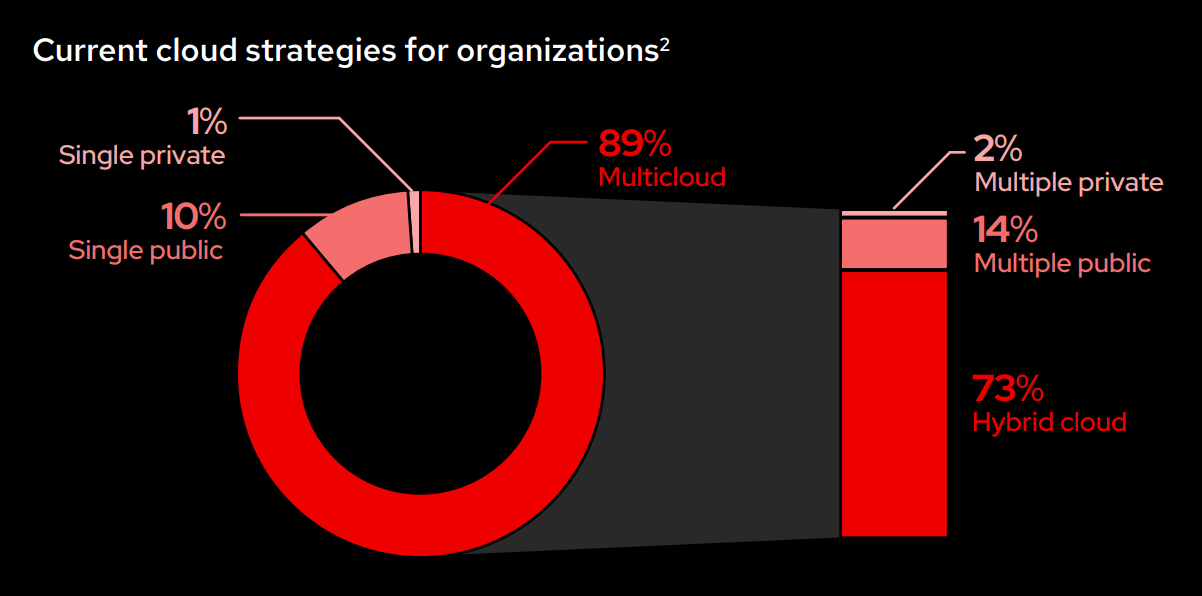
Hybrid and multicloud strategies are central to application development and modernization. In fact, 89% of organizations have a multicloud strategy in place today, with 73% implementing a hybrid cloud strategy using at least 1 public and 1 private cloud environment.1 

By distributing workloads across on-site infrastructure and public cloud platforms, developers can take advantage of the unique strengths of each environment—from cost efficiency to performance optimization and regulatory compliance. Support for microservices architectures, containerization, and orchestration tools in modern cloud deployments let teams build cloud-native, resilient applications that can dynamically scale and recover from localized failures. And with automation and continuous integration/continuous delivery (CI/CD) pipelines optimized for multi-environment deployments, development teams can adopt more efficient DevOps practices. The result is an agile, distributed application development ecosystem that can better respond to evolving business needs and market demands.

chart showing Current cloud strategies for organizations

AI technologies

Artificial Intelligence (AI) is reshaping application development, both as a tool for enhancing development processes and as a core component of modern applications. Accordingly, 78% of organizations are using or plan to use AI to support application modernization efforts.2 Developers are increasingly integrating generative AI (gen AI) models and traditional AI-driven analytics to create smarter, more responsive applications that interact naturally with users. And by integrating these AI technologies into cloud services, development teams can experiment with and deploy new intelligent features efficiently and in less time. Gen AI tools also assist developers in writing, debugging, and refactoring code. These systems reduce routine manual tasks, allowing teams to focus on more complex and creative aspects of software design. Together, these tools and technologies not only improve the efficiency and quality of application development but also help organizations rapidly adapt to evolving market demands and technological advancements.

chart showing AI use within application modernization efforts in percentages

Operational resilience

Operational resilience is a critical focus in application development, ensuring that applications remain available when unexpected disruptions occur. This trend emphasizes designing systems that can maintain or rapidly resume critical operations as workload demands change or infrastructure issues arise. Key practices include incorporating redundancy, automated failover mechanisms, and built-in fault tolerance capabilities—along with regular testing—to improve system robustness. Observability and real-time monitoring, tracing, and alerting mechanisms are also essential, allowing teams to detect issues earlier and respond proactively. As a result, developers can build applications that not only perform well under ideal conditions but are also equipped to handle the inevitable challenges of a complex digital landscape.

Security

Security is now a critical discipline in application development, with security practices integrated early and often in the development lifecycle. For example:

  • Embedding static and dynamic analysis tools into CI/CD pipelines lets developers detect and address vulnerabilities before the software reaches production.
  • DevSecOps practices foster collaboration between development, operations, and security teams and ensure that security is a shared responsibility.
  • Zero trust architectures and robust identity and access management (IAM) practices help development teams safeguard sensitive data and operations with strict authentication and authorization protocols.

With an emphasis on secure-by-design principles, modern development practices ensure that security is not an afterthought but a fundamental aspect of the application’s architecture.

Top causes of service disruptions4

  1. Failures in critical IT services
  2. Network failures
  3. Cybersecurity breaches
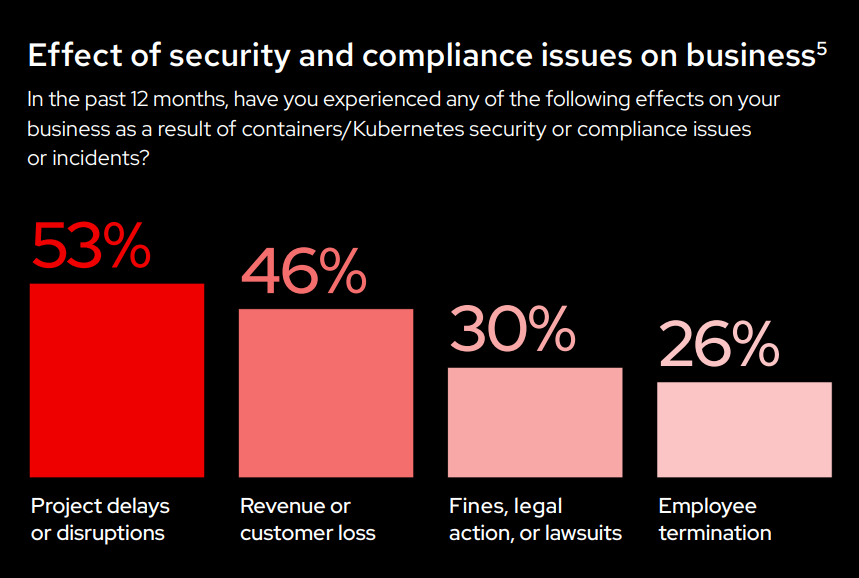
bar chart showing the Effect of security and compliance issues on business in percentages

Kubernetes

Kubernetes is a central technology in application development. With its ability to manage containerized applications at scale and a large ecosystem of tools and extensions—including service meshes, operator frameworks, and multicluster management solutions—Kubernetes helps to increase innovation and operational efficiency across development organizations.

Managed Kubernetes services simplify cluster management by handling control plane operations, upgrades, and security patches, allowing development teams to focus on building and deploying applications rather than managing infrastructure. Using a single source of truth for Kubernetes configurations, GitOps helps organizations enhance operational consistency and speed development cycles, as development teams can rapidly release updates and roll back changes when necessary. Finally, advancements in automation and the introduction of Kubernetes operators help streamline management of complex stateful applications by encapsulating operational knowledge reusable content.

Cloud services

Streamlining IT operations can boost speed and efficiency. Cloud services can offload time-consuming platform and infrastructure management to dedicated third-party teams, so your IT operations, security, and development team can concentrate on innovation and core competencies rather than ongoing platform or resource management. 

Container-based hybrid cloud application platforms provide an ideal foundation for application development and transformation. These platforms can deliver the agility, consistency, efficiency, and scalability needed to build, deploy, run, and manage applications across datacenter, edge, and public cloud infrastructures. Even so, integrating these platforms into complex IT environments yourself can be difficult and time consuming. When moving to a container-based application platform, you must reassess how you perform common operations and manage security and compliance, while developing your staff’s container expertise. Adopting a fully managed, cloud-based application platform can simplify workload deployment and scaling, streamline operations, and speed time to value compared to in-house solutions. With on-demand consumption models and expert guidance, your teams can focus on strategic projects that support your business initiatives. 

Workloads run in Kubernetes environments6

72%

Databases

67%

Analytics (data processing)

54%

 AI and machine learning (ML)

Public cloud services currently used by enterprises7

67%

Data warehouse

56%

Relational database-as-a-Service (DBaaS) 

52%

Container-as-a-Service

What you need to transform applications

To effectively and efficiently build, deploy, and manage applications in containers and Kubernetes, you need a unified, integrated hybrid cloud application platform.

Look for a platform that includes the following features and capabilities.

A consistent foundation for applications

A secure Linux® container host operating system and Kubernetes orchestration and cluster services—including automated installation, over-the-air updates, monitoring, and logging—provide consistent operations and lifecycle management across your environment. The ability to run both existing virtualized and new cloud-native applications lets you consolidate all workloads onto a single platform for streamlined operations and costs.

Cloud-native development and operations

Platform, application, data, and developer services—including CI/CD pipelines, integrated development environments (IDEs), programming languages, runtimes, build tools, observability capabilities, and application programming interface (API) management—provide capabilities for efficiently and consistently building, deploying, and managing intelligent, cloud-native applications.

Integration with cloud services and third-party products

Simplified integration with cloud services and third-party products lets you take advantage of your preferred directories, management and automation platforms, databases, frameworks, AI/ML tools, and more, within your applications and operations.

Streamlined security and management

Consistent, unified security, management, and container image registry services simplify administration of large, distributed, hybrid cloud environments.

Operational flexibility and deployment options

A hybrid cloud platform that can be deployed in-house, in the cloud, and as a cloud service gives you the flexibility to choose where you run your applications and how much internal time and effort you devote to platform operations and management.

AI capabilities

AI capabilities based on machine learning, predictive analytics, and intelligent automation help simplify container orchestration, optimize application performance, and proactively manage your hybrid cloud environment.

Choose a platform for application innovation

An ideal hybrid cloud application platform should incorporate all of the services and capabilities needed to effectively modernize existing applications and develop new cloud-native applications, while offering deployment flexibility, expert managed services, and integrated AI-driven insights that support intelligent automation, real-time performance optimization, and data-driven innovation.

Architecture of a hybrid cloud platform, from Linux host to multicluster management, across five footprints

Simplify your application development journey with an innovative foundation

Red Hat and Google Cloud provide a foundation for hybrid and multicloud environments to support your business goals. Our solutions can help you speed application development and innovation, improve business insight and intelligence, and streamline operations and control costs.

With flexible configuration, an open source, security-focused foundation, global network infrastructure, and advanced data analytics, we give you the tools and technologies you need to build and operate hybrid and multicloud environments effectively and efficiently. Together, Red Hat® OpenShift® and Google Cloud form an integrated hybrid cloud environment that supports cloud-native application development, data management, DevOps, analytics, and AI/ML technologies.

Why Red Hat OpenShift?

Red Hat OpenShift is a unified, security-focused hybrid cloud application platform for innovation. Powered by a trusted core container engine, it provides a consistent experience with a comprehensive application platform for modernizing existing applications, building cloud-native ones, streamlining development, adding intelligence to applications, and integrating third-party services.

OpenShift OperatorHub is a centralized marketplace within Red Hat OpenShift that allows administrators to discover, install, and manage Kubernetes-native applications called operators. OperatorHub simplifies complex software deployment and lifecycle management through a unified interface where third-party software providers can publish certified operators. As a result, you can smoothly incorporate enterprise applications, databases, monitoring tools, and storage solutions into your Red Hat OpenShift clusters. This approach also lets you maintain consistent deployment patterns, automated updates, and standardized operational procedures across different vendor technologies—effectively turning traditionally complex software integration tasks into point-and-click operations that follow Kubernetes best practices.

Why Google Cloud?

Google Cloud delivers innovative, security-focused cloud infrastructure and services that support digital transformation and operations. Modern security approaches, advanced tools, data encryption, experience-based best practices, and certifications to stringent security standards help protect your workloads and your business. Based on a large selection of cloud-native services, Google Cloud solutions help you build effective data clouds, streamline multicloud environments, and boost collaboration.

Google Cloud’s Bare Metal Solution provides dedicated physical hardware within Google Cloud datacenters, allowing you to run specialized workloads that need the power of an entire server, custom operating system configurations, or specific licensing setups without virtualization overhead. This infrastructure option delivers high-performance computing capabilities while maintaining proximity to other Google Cloud services. Red Hat OpenShift supports C3 bare-metal for direct hardware access, alongside C4, C4A, and N4 machines for general-purpose workloads like databases, caches, and web servers.

Together, these technologies form an integrated hybrid cloud environment that supports cloud-native application development, data management, DevOps, analytics, and AI/ML technologies.

Red Hat OpenShift solutions on Google Cloud

You can deploy Red Hat OpenShift on Google Cloud in a variety of ways to meet your organization’s requirements. These solutions also work together, so you can build, deploy, and manage applications across a reliable, flexible, and production-ready hybrid cloud environment.

Red Hat OpenShift Container Platform

Red Hat OpenShift Container Platform is a trusted, comprehensive, consistent hybrid cloud foundation for building, modernizing, and scaling containerized applications. It brings together tools and services that streamline the entire application lifecycle—from development to delivery to management. You can migrate existing workloads—including AI, traditional, and virtualized applications—to the cloud and build new cloud-native experiences on a single platform. The platform includes built-in security features, dedicated support, a trusted software supply chain, and an operating foundation based on Red Hat Enterprise Linux®.

Red Hat OpenShift Platform Plus

Red Hat OpenShift Platform Plus combines OpenShift Container Platform with powerful, optimized, security-focused tools that help you protect and manage your applications on a unified foundation. With multicluster security, compliance, and application and data management capabilities,OpenShift Platform Plus provides consistency throughout your critical software supply chains. OpenShift Platform Plus includes OpenShift Container Platform and a set of integrated technology solutions for delivering exceptional experiences without compromising quality or security:

  • Red Hat Advanced Cluster Management for Kubernetes provides application lifecycle management and governance across multiple Kubernetes clusters.
  • Red Hat Advanced Cluster Security for Kubernetes protects your Kubernetes workloads across hybrid cloud environments.
  • Red Hat OpenShift Data Foundation provides persistent software-defined storage and essential data services.
  • Red Hat Quay is a scalable, central registry for efficient distribution of software across multiple clusters.

Red Hat OpenShift Kubernetes Engine

Red Hat OpenShift Kubernetes Engine delivers core Red Hat OpenShift capabilities in an entry-level solution. Built from innovative upstream open source projects, it lets you explore enterprise benefits with expert support from Red Hat. OpenShift Kubernetes Engine provides essential cluster services and an enterprise-ready Kubernetes environment—built on Red Hat Enterprise Linux CoreOS and Kubernetes—with a fully automated installer. It also includes an extensive compatibility test matrix with many commonly used software elements.

Red Hat OpenShift Dedicated

Available on Google Cloud, Red Hat OpenShift Dedicated is a fully managed turnkey application platform that automates the deployment of Red Hat OpenShift clusters. OpenShift Dedicated reduces operational complexity, so you can focus on building and scaling applications that add value to your business rather than managing the platform or resources. 

  • Accelerate time to value
    Build, deploy, and manage applications at scale on a comprehensive platform integrated with the tools and technologies you need to get started immediately. 
  • Simplify operations and reduce risk
    Simplify the delivery, operations, and scaling of workloads with 24x7 support from Red Hat Site Reliability Engineers (SREs).
  • Focus on innovation
    Streamline operations so your teams can concentrate on innovation and creating business value, rather than managing infrastructure. 
  • Gain flexibility
    Deliver a consistent user experience that’s the same for developers and operations teams across your hybrid cloud environment. Deploy applications on the infrastructure that makes the most sense, no matter if you are building new applications or modernizing existing ones. 

Choose a Leader in cloud application platforms

Red Hat has been positioned by Gartner® as a Leader and in the first Magic Quadrant® for Cloud Application Platforms for its Red Hat OpenShift cloud services offerings, including Red Hat OpenShift Dedicated on Google Cloud.8

A woman uses a laptop connected to a server and a secure cloud
technology stack of  Red Hat OpenShift on Google Cloud

Deploying Red Hat OpenShift on Google Cloud delivers a broad range of benefits for your organization. Here are some key features and benefits of our solutions.

Complete, integrated platform

Deploy an integrated infrastructure software foundation, cloud-native application and data services, and security and management controls with a modular platform that is trusted by industry innovators around the world. Native capabilities—as well as integration with Red Hat Application Services, cloud services, and certified partner ecosystem—deliver speed, efficiency, and scalability across a broad selection of technologies and applications.

Built-in developer tools

Access integrated, certified tools, development environments, and self-service capabilities that let developers code at speed and improve consistency throughout application lifecycles. Red Hat OpenShift Dev Spaces and a command-line interface (CLI) give developers consistent, zero-configuration development environments, while maintaining centralized control for IT operations. Red Hat OpenShift Serverless, Red Hat OpenShift Service Mesh, and Red Hat Application Services offer self-service access to the runtimes, frameworks, API management, data streaming, and event-driven services that developers need to be productive.

Streamlined management and automation

Adopt CI/CD approaches with included, integrated tools. Red Hat OpenShift Pipelines and Red Hat OpenShift GitOps bring native CI/CD and GitOps capabilities to your teams, so you can automate application delivery and use Git as a single source of trust for your environment. Support for Kubernetes Operators and Helm simplifies application lifecycle management. Deploy and manage your preferred partner applications more easily and confidently using certified operators and Helm charts that encompass detailed vendor expertise.

Built-in security and DevSecOps capabilities

Adopt DevSecOps practices with integrated features and protection. Red Hat OpenShift includes core security features—like access controls, network security, and an enterprise registry with a built-in scanner—to protect your platform from the start. Red Hat Advanced Cluster Security (included with OpenShift Platform Plus) delivers consistent security and compliance capabilities that integrate directly with your DevSecOps tools and workflows to enforce best practices. And you can access additional security capabilities—like runtime threat detection, lifecycle vulnerability management, and risk profiling—through our certified partner ecosystem.

Plus, OpenShift Dedicated on Google Cloud is compliant with International Organization for Standardization (ISO) 27001, Payment Card Industry Data Security Standard (PCI DSS), and Service Organization Control (SOC) 2 Type 2.

Integrated AI/ML capabilities

Add intelligence to your cloud-native applications more easily. Integration with  Google Cloud AI and ML products, Red Hat OpenShift AI, and AI/ML products from our certified partner ecosystem let you implement machine learning operations (MLOps). You can create a self-service MLOps platform for data scientists, data engineers, and developers to build models, incorporate them into applications, and perform inferencing tasks.

Multiple deployment options

Deploy and manage Red Hat OpenShift yourself or take advantage of a fully managed and supported service on Google Cloud. OpenShift Dedicated provides complete, full-stack environments with all necessary services, simple self-service options, and expert 24x7 support via stringent service-level agreements (SLAs). This flexible approach ensures you can choose the option that best fits your organization’s needs.

Flexible pricing and streamlined procurement

Achieve the right balance of flexibility and cost for your organization with your choice of purchasing options. You can buy Red Hat OpenShift and OpenShift Dedicated directly from the Google Cloud Marketplace to simplify purchasing, billing, and subscription management. All costs associated with your deployment are combined into a single bill from Google Cloud. On-demand, consumption-based pricing lets you pay only for the instances you use. You can also take advantage of discounted pricing with multiyear, reserved instance purchasing models. Plus, you can use your Google Cloud Commit for Red Hat OpenShift deployments, including those purchased via Google Cloud resellers.

Finally, our private offer options give you lower pricing in return for your commitment to Red Hat. We can construct private offers for Red Hat products purchased both through the Google Cloud Marketplace and via the Google Cloud console. Private offers are available directly from Red Hat or via our reseller partners, and count against your committed spend agreements with Google Cloud.

Maximize your value

Red Hat and Google Cloud bring together everything you need to modernize your existing workloads and build modern, cloud-native applications.

Integrated portfolio and services

Build an ideal software foundation for all application transformation use cases using a complete, integrated portfolio of products and cloud services that work together reliably. Use services like Google Cloud Smart Analytics Platform,  Google Cloud AI and ML products, and Google Cloud security and identity products to build insights, intelligence, and security into your applications.

Expert consulting services 

Get help modernizing, migrating, and developing applications with expert services, detailed guidance, and practical tools that incorporate culture, process, and technology.

Validated patterns

Deploy the applications your business relies on more rapidly with validated deployment patterns. These patterns are detailed, customizable deployments created for specific use cases and are based on real customer implementations.

Migration tools

Take advantage of Red Hat migration tools and the Konveyor community to help you plan your transformation journey and move your applications to Red Hat OpenShift.

Certified partner ecosystem

Access a broad ecosystem of Red Hat certified ISV products to customize your environment with the application, data, AI/ML, developer, and IT operations services that work best for your organization.

Top use cases

You can use Red Hat OpenShift solutions on Google Cloud for a variety of use cases. Here are a few examples of what you can achieve with an innovative, integrated hybrid cloud foundation for application development and deployment.

Adopt AI

AI is becoming a critical tool for businesses that want to boost innovation and stay ahead in rapidly changing markets. In fact, 83% of IT leaders say gen AI models that use their own business data will give their organization a significant competitive advantage.9 

Even so, for many organizations, the journey to full-scale AI deployment comes with significant challenges. Efficient AI workload management requires substantial compute resources, including modern hardware acceleration, continuous monitoring capabilities, and comprehensive governance. Skills gaps can hinder development, deployment, and management of AI workloads, so you may need to invest in employee training or hire specialized talent. Finally, ensuring that AI training data and storage comply with security, regulatory, and industry standards is essential to avoid legal and operational risks.

Red Hat OpenShift solutions on Google Cloud integrate with Red Hat OpenShift AI to help you speed AI innovation and operational consistency at scale. As an enterprise-ready AI application platform, OpenShift AI lets data scientists, engineers, and developers collaborate to prepare data and train, fine-tune, serve, and monitor models. An open ecosystem of hardware and software partners lets you customize your deployment, knowing each component will work reliably together. And with bias and drift detection, access to hardware accelerators, and a centralized registry for sharing, deploying, and tracking models, OpenShift AI provides the flexibility your organization needs to rapidly deliver innovative AI solutions.

Read the webpage to learn more about the Red Hat AI portfolio.

Modernize and migrate virtual machines

Virtualization technologies are essential to modern datacenter operations, helping businesses reduce costs, improve resiliency, enhance efficiency, and meet sustainability goals. However, as IT complexity increases and virtualization solutions and offerings evolve, organizations must regularly reassess their virtualization strategies in response to emerging challenges. A unified approach to migrating and managing both virtual machines (VMs)and containers on a single application platform can help you reduce complexity, adapt to changing business conditions, and manage associated risks.

Red Hat OpenShift solutions on Google Cloud provide a foundation for both virtualized and cloud-native applications across hybrid, multicloud, and edge environments, so you can take advantage of the scalability, flexibility, and cost-effectiveness of Google Cloud even when running traditional virtualized applications. Included as a self-managed operator with Red Hat OpenShift on Google Cloud’s Bare Metal Solution and with OpenShift Dedicated, Red Hat OpenShift Virtualization supports VM operations directly in the Red Hat OpenShift console. Create, manage, clone, and import VMs. Run containerized and VM workloads simultaneously in a single cluster. Manage VM network interfaces and storage disks. Live migrate VMs between cluster nodes.

Optimize storage for stateful applications in the cloud

Stateful applications like databases, messaging systems, and monitoring solutions require persistent storage to save data that needs to survive beyond the lifecycle of the application container. These storage solutions need to be managed to deliver high performance and availability while maximizing efficiency to be cost effective.

Red Hat OpenShift solutions on Google Cloud works with Google Cloud NetApp Volumes, a fully managed file storage solution that can provide persistent storage for stateful applications. Simply lift and optimize your critical shared file workloads to boost performance without refactoring or redesigning the applications. Automation and optimization controls, combined with instant, zero-footprint snapshots and volume clones, help reduce the amount of storage needed. Cross-region replication, cloning, and backups and instant data restoration provide business continuity in the event of unplanned data loss, ransomware, or data corruption.

Read the article to learn more about this integration.

Ready to transform your applications?

Together, Red Hat and Google Cloud simplify application development, transformation, and modernization.

With Red Hat OpenShift solutions on Google Cloud, you can take advantage of a unified foundation, integrated products and services, a large partner ecosystem, and expert support and services to transform your applications with less effort.

Get started today: red.ht/googlemarketplace

  1. Flexera. “Flexera 2024 State of the Cloud Report,” 2024.

  2. Flexera. “Flexera 2024 State of the Cloud Report,” 2024.

  3. Red Hat. “The state of application modernization,” June 2024.

  4. A Forrester Consulting Thought Leadership Paper Commissioned By Red Hat And Intel. “The Path To Operational Resilience Begins With Reliability And Risk Management”, March 2024.

  5. Red Hat. “The state of Kubernetes security report: 2024 edition,” June 2024.

  6. Portworx by PureStorage. “The Voice of Kubernetes Experts Report 2024,” June 2024.

  7. Flexera. “Flexera 2024 State of the Cloud Report,” 2024.

  8. Gartner, Magic Quadrant for Cloud Application Platforms, By Tigran Egiazarov, Mukul Saha, Anne Thomas, Steve Schwent, 4 November 2024

  9. IDC eBook. “Are You Ready for AI Everywhere?” 2024.

Tags:Hybrid cloud, Linux, Partners, Virtualization

Red Hat logo

About Red Hat

Red Hat is the open hybrid cloud technology leader, delivering a trusted, consistent and comprehensive foundation for transformative IT innovation and AI applications. Its portfolio of cloud, developer, AI, Linux, automation and application platform technologies enables any application, anywhere—from the datacenter to the edge. As the world's leading provider of enterprise open source software solutions, Red Hat invests in open ecosystems and communities to solve tomorrow's IT challenges. Collaborating with partners and customers, Red Hat helps them build, connect, automate, secure, and manage their IT environments, supported by consulting services and award-winning training and certification offerings.

  • North America
  • Asia Pacific
  • Latin America
  • Europe, Middle East, and Africa
  • 888-REDHAT1
  • +6564904200
  • +5443297300
  • +0080073342835
  • www.redhat.com
  • apace@redhat.com
  • info-latam@redhat.com
  • europe@redhat.com
  • @red-hat
  • @redhat
  • @redhat
  • @red_hat

Copyright © 2026 Red Hat. Red Hat, the Red Hat logo, Ansible, and OpenShift are trademarks or registered trademarks of Red Hat, LLC or its subsidiaries in the United States and other countries. Linux® is the registered trademark of Linus Torvalds in the U.S. and other countries. The OPENSTACK logo and word mark are trademarks or registered trademarks of OpenInfra Foundation, used under license. All other trademarks are the property of their respective owners.

Red Hat logo

Platforms

  • Red Hat AI
  • Red Hat Enterprise Linux
  • Red Hat OpenShift
  • Red Hat Ansible Automation Platform
  • See all products

Tools

  • Training and certification
  • My account
  • Customer support
  • Developer resources
  • Find a partner
  • Red Hat Ecosystem Catalog
  • Documentation

Try, buy, & sell

  • Product trial center
  • Red Hat Store
  • Buy online (Japan)
  • Console

Communicate

  • Contact sales
  • Contact customer service
  • Contact training
  • Social

About Red Hat

Red Hat is an open hybrid cloud technology leader, delivering a consistent, comprehensive foundation for transformative IT and artificial intelligence (AI) applications in the enterprise. As a trusted adviser to the Fortune 500, Red Hat offers cloud, developer, Linux, automation, and application platform technologies, as well as award-winning services.

  • Our company
  • How we work
  • Customer success stories
  • Newsroom
  • Open source commitments
  • Our social impact
  • Jobs

Red Hat legal and privacy links

  • About Red Hat
  • Jobs
  • Events
  • Locations
  • Contact Red Hat
  • Red Hat Blog
  • Inclusion at Red Hat
  • Cool Stuff Store
  • Red Hat Summit

Red Hat legal and privacy links

  • Privacy statement
  • Terms of use
  • All policies and guidelines
  • Digital accessibility
© 2026 Red Hat