-
Product editions -
Cloud services editions
Fully managed in the public cloud of your choice
-
Red Hat OpenShift Service on AWS
Jointly managed and supported by Red Hat and AWS
-
Microsoft Azure Red Hat OpenShift
Jointly managed and supported by Red Hat and Microsoft
-
Red Hat OpenShift Dedicated
Managed offering available on AWS or Google Cloud
-
Red Hat OpenShift on IBM Cloud
Jointly supported by Red Hat and IBM; managed by IBM
-
Self-managed editions
Granular control on your own infrastructure
-
Red Hat OpenShift Platform Plus
A complete platform for accelerating application development and application modernizations
-
Red Hat OpenShift Container Platform
A full set of operations and developer services and tools
-
Red Hat OpenShift Kubernetes Engine
Basic functionality of enterprise Kubernetes
-
Red Hat OpenShift Virtualization Engine
A streamlined solution focused exclusively on virtual machine workloads
-
Services & add-ons
A portfolio of managed cloud services and tools for Red Hat OpenShift
- Red Hat OpenShift AI
- Red Hat OpenShift Lightspeed
- Red Hat OpenShift Virtualization
- Red Hat Quay
- Red Hat Advanced Cluster Management for Kubernetes
- Red Hat Advanced Cluster Security for Kubernetes
- Red Hat Advanced Developer Suite
- Red Hat OpenShift Consulting
-
-
Documentation Cloud services editions
-
Explore -
Learn Guided offerings
Hands-on training and experiences to develop knowledge and skills for using OpenShift
- Red Hat OpenShift Virtualization training and certification
- Containers, Kubernetes and Red Hat OpenShift Technical Overview
- Red Hat OpenShift Administration I: Operating a Production Cluster
- Red Hat OpenShift Administration II: Operating a Production Kubernetes Cluster with exam
- Developing Applications with Red Hat OpenShift Serverless and Knative
- Modern Application Development Roadshow
Learning hubs
Learning materials and tools organized by top tasks for key OpenShift services
On-demand
-
Interactive labs
Scenario-based, preconfigured OpenShift environments in your web browser
-
OpenShift learning paths
Resources for beginners or experts, dev or ops
-
Red Hat OpenShift essentials
Materials divided into chapters for self-managed and managed OpenShift customers
-
Ask an OpenShift Expert
Livestream episodes on OpenShift topics and cloud-native tooling
-
Get started Try Red Hat OpenShift
-
Red Hat OpenShift Service on AWS hands-on experience
Get access to a free 8 hour hands-on experience of ROSA in a Red Hat owned demo environment
-
Red Hat OpenShift Container Platform
Self-managed on OpenShift Container Platform, in the cloud, on your computer, or in your datacenter
-
Red Hat OpenShift Dedicated
Fully managed OpenShift Dedicated trial cluster with self-service sign-up and cluster provisioning in your Google Cloud account
-
Developer sandbox
Instant access to your own minimal, preconfigured environment for development and testing
Buy Red Hat OpenShift
-
Red Hat OpenShift Service on AWS
A pay-as-you-go, fully managed turnkey application platform which allows organizations to quickly build, deploy, and scale applications in a native AWS environment
-
Azure Red Hat OpenShift
A pay-as-you-go, turnkey application platform that provides highly available, fully managed OpenShift clusters on demand
-
Red Hat OpenShift Service on AWS hands-on experience
Red Hat OpenShift Service Mesh

Overview
As your applications evolve into collections of decentralized microservices, monitoring and managing the network communications and security among those multiple services becomes more challenging.
Red Hat® OpenShift® Service Mesh offers a uniform way to connect, manage, observe, and provide security for microservices-based applications. It includes behavioral insight into—and control of—the networked microservices in your service mesh.
OpenShift Service Mesh is based on the open source Istio, Envoy, and Kiali projects. It supports both the traditional sidecar-based data plane and Istio’s newer sidecar-less ambient mode data plane. This includes the Istioctl command line utility for diagnostics and management of the control plane and data plane, along with the Kiali and OpenShift Service Mesh Console dashboards.
Red Hat OpenShift: Service Mesh. Video duration: 3:08.
Red Hat OpenShift 5 is here
Why choose Red Hat
OpenShift Service Mesh helps developers increase productivity by integrating communications policies without changing application code or integrating language-specific libraries. It’s production-ready, pre-validated, and fully supported to work on Red Hat OpenShift, a unified platform to build, modernize, and deploy applications at scale.
OpenShift Service Mesh integrates with Red Hat OpenShift Container Platform features and other open source solutions to help extend the security, control, and management of your service mesh. Integrations include Red Hat Connectivity Link, Red Hat OpenShift Observability, cert-manager Operator for Red Hat OpenShift, Red Hat OpenShift Gitops, and Red Hat OpenShift Virtualization. OpenShift Service Mesh also comes with access to Red Hat’s award-winning support.

Features and benefits
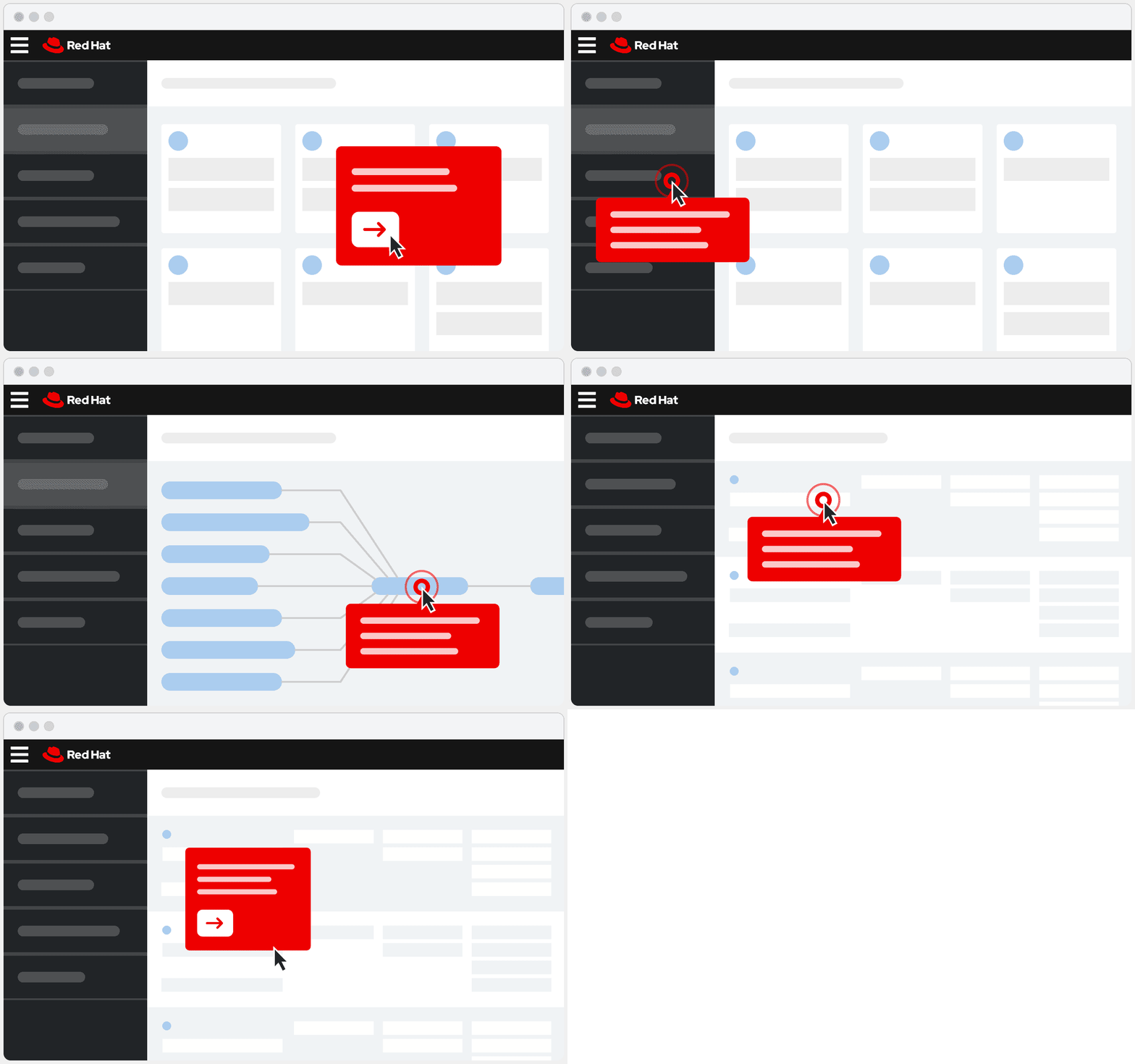
Tour Red Hat OpenShift Service Mesh 3
Preview Red Hat OpenShift Service Mesh 3 in this interactive walkthrough that provides an overview of what OpenShift Service Mesh 3 includes, a guide for installation, and an opportunity to deploy a sample application. Get started today.
Keep learning about Red Hat OpenShift Service Mesh
E-book
Istio service mesh for microservices
Learn about several key microservices capabilities that Istio provides for Kubernetes and Red Hat OpenShift.
Blog
OpenShift Service Mesh 3.2 with Istio’s ambient mode
Find out more about OpenShift Service Mesh 3.2, which includes Istio’s ambient mode.
Documentation
Introduction to Red Hat OpenShift Service Mesh
Get the latest documentation for Red Hat OpenShift Service Mesh. Explore key capabilities and the latest features.
Blog
Introducing Red Hat OpenShift Service Mesh 3.0
Get information about OpenShift Service Mesh 3.0 and the new operator it's built on, and find out how to migrate.
Start using Red Hat OpenShift